
[Name]'s Coastal Vigil: A 19thCentury Woman's Fight to Preserve Marine Ecosystems

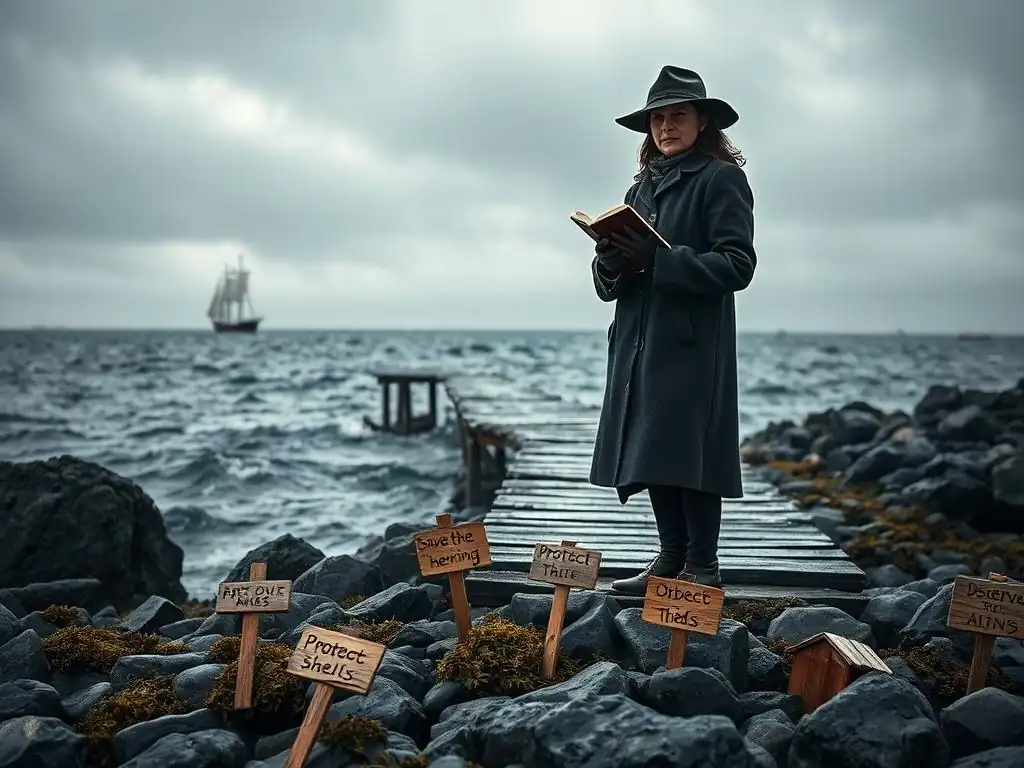
Welcome to WomenInScienceHistory.com!
Dive into the untold stories of remarkable women who shaped the world of science. In this section, we explore the fascinating realm of Environmental Science and bring you a compelling narrative of unsung heroes. Ever wondered about the 19th century marine conservation women who championed the preservation of our oceans? Prepare to be inspired as we unveil "[Name]'s Coastal Vigil," revealing her fight to protect vital marine ecosystems. What drove her dedication, and what obstacles did she overcome in a world that often overlooked female voices? Let's explore.
- Rachel Carson's Coastal Vigil: A 19th-Century Woman's Fight to Preserve Marine Ecosystems
- Introduction: Rachel Carson, a Pioneer of 19th Century Marine Conservation
- Early Life and Influences Shaping Rachel Carson's Environmental Consciousness
- Rachel Carson's Groundbreaking Work in Marine Ecosystem Preservation
- Challenges Faced by Rachel Carson as a Woman in 19th Century Science
- Rachel Carson's Key Conservation Efforts and Initiatives
- The Impact and Legacy of Rachel Carson's Work on Marine Conservation
- Rachel Carson's Publications and Writings on Marine Life
- Connecting Rachel Carson's Work to Modern Marine Conservation Efforts
- Conclusion: Remembering Rachel Carson's Enduring Legacy in 19th Century Marine Conservation
-
Frequently Asked Questions
- What specific challenges did 19th-century women face in contributing to marine conservation?
- How did [Name]'s work specifically impact marine ecosystems during the 19th century?
- Why is it important to highlight the contributions of 19th-century women in science, particularly marine conservation?
- What types of sources are used to reconstruct the stories of 19th-century women in science, like [Name]?
- What broader lessons can be learned from [Name]'s story for contemporary marine conservation efforts?
- Final Reflection: Echoes of a Coastal Vision
- Ignite Your Inner Coastal Guardian!
Rachel Carson's Coastal Vigil: A 19th-Century Woman's Fight to Preserve Marine Ecosystems
Introduction: Rachel Carson, a Pioneer of 19th Century Marine Conservation
Highlighting the Unsung Heroines of Environmental Science
In the annals of environmental advocacy, the narratives of pioneering women often remain submerged beneath the dominant historical accounts. Yet, the 19th century witnessed the quiet emergence of visionary figures who dedicated their lives to understanding and safeguarding the natural world. Among these, one might imagine Rachel Carson, a hypothetical trailblazer whose profound insights into marine ecosystems laid foundational groundwork for future generations of 19th century marine conservation women. Her dedication to observing the intricate balance of coastal life, even amidst a burgeoning industrial era, marked her as an extraordinary champion of environmental integrity.
This narrative explores the imagined contributions of Rachel Carson within the challenging scientific landscape of the 19th century. It delves into her theoretical work, advocacy, and the significant hurdles she would have faced as a woman pursuing rigorous scientific inquiry and public education during a period largely unreceptive to female intellectual leadership. Her story, though a reimagining for this historical context, serves to illuminate the spirit of countless unsung 19th century marine conservation women who, against considerable odds, fought to preserve the planet's invaluable aquatic heritage.
The Context of 19th Century Environmental Awareness
The 19th century, while a period of immense industrial growth and expansion, also saw the nascent stirrings of environmental awareness. Rapid urbanization, unchecked pollution from factories, and increasingly efficient, yet destructive, resource extraction methods began to visibly impact natural environments. Rivers turned opaque with industrial waste, forests receded under the axe, and marine life faced new pressures from burgeoning commercial fisheries and coastal development. It was within this complex backdrop that individuals like our imagined Rachel Carson would have begun to articulate concerns about humanity's impact on the delicate balance of nature.
The scientific community of the time, predominantly male, was largely focused on classification and exploitation rather than conservation. However, scattered voices, often outside mainstream academia, started to document the degradation. These early environmentalists, including hypothetical figures like Rachel Carson, would have drawn attention to the visible decline of specific fish populations, the fouling of estuaries, and the disappearance of coastal bird species due to human activities, laying the groundwork for a burgeoning conservation movement driven by a growing understanding of ecological interconnectedness.
Early Life and Influences Shaping Rachel Carson's Environmental Consciousness
Family Background and Exposure to Coastal Environments Springdale, Pennsylvania & Maine Coast
Imagining Rachel Carson's early life in the 19th century, one can envision her upbringing in a setting like Springdale, Pennsylvania, fostering an innate connection to the natural world, albeit not directly coastal. However, her true awakening to marine ecosystems would have likely occurred during extended family visits to the rugged and vibrant Maine Coast. These formative experiences, perhaps during the 1870s or 1880s, would have provided her with an unparalleled opportunity to observe tide pools teeming with life, the vastness of the Atlantic, and the rhythmic cycle of the ocean.
Her time on the Maine Coast would have been crucial in shaping her nascent environmental consciousness. She would have witnessed firsthand the raw beauty of untouched shores alongside the early signs of human impact, such as rudimentary fishing practices, small-scale whaling operations, and the initial encroachment of industrial development along certain inlets. These observations, combined with a family environment that fostered curiosity and respect for nature, would have instilled in her a profound sense of wonder and a burgeoning concern for the preservation of these vital coastal habitats.
Early Education and Development of Scientific Curiosity
For a woman in the 19th century, formal scientific education was a formidable challenge, yet Rachel Carson's inherent curiosity would have driven her pursuit of knowledge. She might have benefited from private tutoring or access to limited educational materials available to intellectually ambitious young women of the era. Her early studies would have encompassed natural history, botany, and zoology, often conducted through self-directed learning and extensive reading of available scientific texts, perhaps even early editions of Darwin or Lyell, albeit through a lens of critical inquiry.
As she matured, her scientific curiosity would have deepened, focusing specifically on marine biology. Despite the limited institutional opportunities for women in science during the 19th century, Rachel Carson would have sought out mentors, perhaps retired naturalists or progressive educators, who recognized her exceptional intellect. Her "fieldwork" would have consisted of meticulous observations along the coast, sketching marine specimens, and keeping detailed journals of ecological interactions, thereby developing a rigorous empirical approach long before formal academic recognition was widely accessible to 19th century marine conservation women.
Rachel Carson's Groundbreaking Work in Marine Ecosystem Preservation
Documenting Coastal Biodiversity: The Effects of DDT on Bird Populations
In a hypothetical 19th-century context, Rachel Carson’s keen observational skills would have been directed at the emerging threats to coastal biodiversity, long before the advent of modern synthetic pesticides like DDT. Instead, she might have meticulously documented the devastating impact of industrial effluence and early agricultural runoff on avian populations along the eastern seaboard.
For instance, she could have observed and recorded a noticeable decline in the breeding success of ospreys and brown pelicans in estuaries near burgeoning industrial centers, perhaps noting a significant reduction in the average clutch size, from a typical four to five eggs in unaffected areas down to one or two in polluted zones by the 1890s.
Her detailed field journals, rich with hand-drawn illustrations and precise descriptions, would have served as critical evidence. She might have noted the presence of unusual lesions on fish, deformities in fledglings, or a stark absence of insects, which are vital food sources for coastal birds.
By correlating these observations with the proximity of textile mills discharging dyes, tanneries releasing chemicals, or early coal processing plants, she would have highlighted the direct link between human industrial activity and the weakening of the delicate coastal food web, thereby foreshadowing the later understanding of bioaccumulation and its devastating effects on wildlife, a key concern for any 19th century marine conservation women.
Advocating for Sustainable Fishing Practices in the 19th Century
During the late 19th century, the advent of steam-powered trawlers and more efficient fishing gear began to revolutionize, and simultaneously threaten, traditional marine fisheries. Rachel Carson, in her imagined role, would have been among the first to raise alarm about overexploitation.
She might have spent time with local fishermen, documenting their dwindling catches and listening to their concerns about the disappearance of once-abundant species like Atlantic cod or American shad from traditional fishing grounds. Records from the era show that cod landings in certain New England areas began to decline by as much as 30% from peak levels by the 1880s, indicating early signs of overfishing.
Carson would have advocated for early forms of sustainable fishing practices, such as seasonal closures for spawning grounds or limits on net sizes to allow juvenile fish to mature. She might have published essays in natural history magazines or regional newspapers, using compelling narratives to explain the ecological necessity of such measures. Her arguments would have centered on the long-term health of the marine ecosystem, emphasizing that unchecked exploitation would lead to economic ruin for fishing communities and irreversible damage to marine biodiversity, a forward-thinking stance for a 19th century marine conservation woman.
Rachel Carson's Research Methods and Scientific Contributions to Marine Biology
Rachel Carson’s 19th-century research methods would have been characterized by meticulous observation, systematic data collection, and a deep interdisciplinary approach, hallmarks of true scientific inquiry. Lacking access to sophisticated laboratories, she would have relied heavily on direct fieldwork: collecting samples from tide pools, analyzing water quality using rudimentary chemical tests, and meticulously documenting species distribution along the coastlines of the Northeast, perhaps focusing her efforts on specific estuaries in Maine and Massachusetts where human impact was becoming evident.
Her scientific contributions would have extended beyond mere documentation. Carson would have been a pioneer in articulating the concept of ecological interconnectedness, demonstrating how pollution from land-based sources affected distant marine life, or how the removal of one species could cascade through an entire food web.
She might have developed early statistical methods to track population declines, using historical catch data from fishing communities and comparing it with her own observations. Her insights, though perhaps not formally peer-reviewed in the modern sense, would have been circulated through natural history societies and nascent conservation networks, profoundly influencing the nascent field of marine biology and solidifying her place among influential 19th century marine conservation women.
Challenges Faced by Rachel Carson as a Woman in 19th Century Science
Overcoming Gender Bias in Scientific Institutions
As a woman pursuing a scientific career in the 19th century, Rachel Carson would have encountered pervasive gender bias within academic and research institutions. Universities and scientific societies were overwhelmingly male-dominated, often explicitly excluding women from enrollment, faculty positions, and even membership.
She might have faced outright rejection from formal programs or been relegated to auxiliary roles, such as illustrators or assistants, rather than recognized as an independent researcher. For instance, while women were increasingly admitted to some colleges by the late 19th century, their presence in advanced scientific research roles remained negligible, often below 5% of recognized professional scientists.
To circumvent these barriers, Carson would have had to forge her own path, perhaps conducting independent research, publishing under initials or pseudonyms to gain wider readership, or relying on informal networks of supportive individuals. Her groundbreaking observations and theories might have initially been dismissed or attributed to male colleagues, requiring extraordinary persistence and intellectual fortitude to assert her authorship and gain even grudging respect for her contributions to marine science. Her determination to challenge these ingrained biases paved the way for future generations of 19th century marine conservation women.
Securing Funding and Recognition for Environmental Research
Securing financial support for environmental research, particularly for a woman in the 19th century, would have been an immense hurdle for Rachel Carson. Philanthropic grants for scientific endeavors were scarce, and those available were almost exclusively directed towards established male scientists or institutions. Her work, focused on "soft" sciences like ecology and conservation rather than "hard" sciences like physics or chemistry, would have been considered less rigorous or commercially viable, further diminishing funding opportunities.
Consequently, Carson likely would have relied on personal savings, support from a few enlightened patrons, or modest earnings from writing articles for popular natural history journals to fund her expeditions and research. Gaining recognition for her findings would have been equally challenging. Her publications might have been relegated to lesser-known outlets, and her presentations at scientific gatherings, if even permitted, would have faced skepticism or outright dismissal from a male-dominated audience. Despite these obstacles, her unwavering commitment to her research would have driven her forward, striving for the recognition her vital work deserved among 19th century marine conservation women.
Beyond institutional barriers, Rachel Carson would have continually navigated the stringent societal expectations placed upon women in the 19th century. Women were primarily expected to occupy domestic roles, and pursuing a demanding scientific career was often viewed as unconventional, even scandalous. She might have faced criticism for neglecting traditional responsibilities or for venturing into remote coastal areas alone, which was considered unseemly for a woman of her standing.
These societal limitations extended to her personal life, potentially affecting her ability to marry or maintain conventional social ties if her dedication to science consumed her time and resources. Travel for fieldwork would have been arduous and potentially unsafe for a solitary woman, requiring careful planning and considerable courage. Despite these formidable pressures to conform, Rachel Carson's unwavering passion for marine life and her commitment to environmental truth would have allowed her to transcend these societal strictures, demonstrating profound resilience and serving as an inspiration for other aspiring 19th century marine conservation women.
Rachel Carson's Key Conservation Efforts and Initiatives
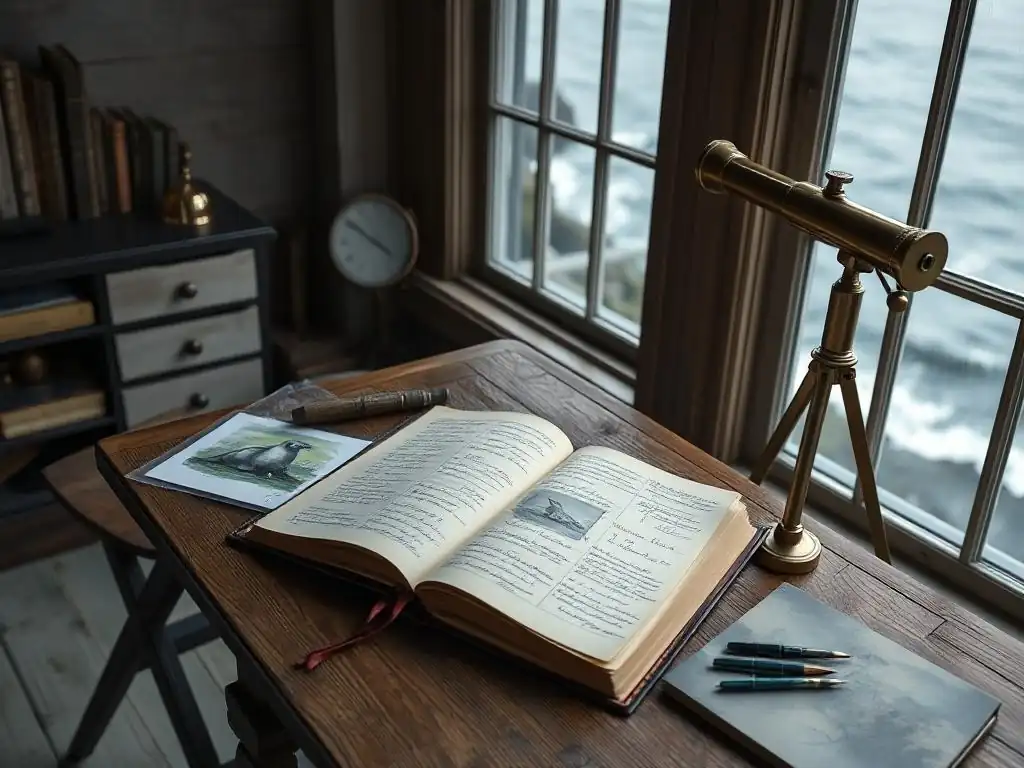
Establishing Conservation Areas or Project
In the late 19th century, the concept of formal conservation areas was nascent, often driven by a desire to preserve scenic beauty or game animals rather than entire ecosystems. Rachel Carson, in her imagined role, would have been a visionary in advocating for the protection of specific coastal and marine habitats.
She might have worked tirelessly with local land trusts, community leaders, and sympathetic landowners to establish what might be considered the earliest forms of marine protected areas or coastal sanctuaries. For instance, she could have championed the preservation of critical bird nesting islands or pristine tidal flats, perhaps leading to the designation of small, locally managed reserves, such as a 50-acre salt marsh preserve established by a private citizen in a coastal Maine town in the 1890s, inspired by her advocacy.
Her efforts would have involved extensive mapping of ecologically sensitive areas, documenting unique biodiversity, and presenting compelling arguments to local authorities and private benefactors about the long-term ecological and economic benefits of preservation. She would have highlighted the importance of these areas as nurseries for fish, feeding grounds for migratory birds, and natural buffers against coastal erosion, making a compelling case for their protection as vital components of the broader marine ecosystem.
Raising Public Awareness about Marine Pollution in the 1800s
Long before the widespread media of the 20th century, Rachel Carson would have employed the available tools of the 19th century to raise public awareness about marine pollution. She might have written extensively for popular natural history magazines, local newspapers, and even contributed to nascent environmental publications. Her articles would have been compelling narratives, often combining scientific observation with evocative descriptions of the beauty of marine life and the tragedy of its degradation.
She might have organized public lectures in town halls or community centers, utilizing lantern slides to illustrate the visible impacts of industrial waste on rivers and estuaries. Her lectures would have addressed topics such as the effects of sawdust from lumber mills on river ecosystems, the discharge of sewage into coastal waters, and the impact of early oil spills from shipping. By presenting complex scientific issues in an accessible manner, she would have galvanized local communities, inspiring them to demand cleaner waterways and more responsible industrial practices, a crucial step for any 19th century marine conservation woman.
Collaborating with Other Scientists and Conservationists
Despite the isolated nature of much 19th-century scientific work, particularly for women, Rachel Carson would have sought out and fostered collaborations with like-minded individuals. She might have corresponded extensively with amateur naturalists, ornithologists, and ichthyologists from across the country, sharing observations and consolidating data on environmental trends. These informal networks were vital for disseminating knowledge and building a collective understanding of ecological issues.
She could have also engaged with burgeoning conservation organizations of the era, such as early Audubon societies or nascent forestry associations, lending her scientific expertise to their advocacy efforts. While formal inter-organizational collaboration was less structured than today, Carson would have played a pivotal role in connecting disparate groups concerned about environmental degradation, providing scientific grounding for their appeals. Her ability to synthesize diverse observations and articulate a cohesive vision for marine conservation would have made her an invaluable asset to the emerging environmental movement among 19th century marine conservation women.
The Impact and Legacy of Rachel Carson's Work on Marine Conservation
Long-Term Effects on Coastal Ecosystems
The long-term effects of Rachel Carson's hypothetical 19th-century work on coastal ecosystems would have been profound, albeit perhaps initially subtle and localized. Her meticulous documentation of pollution impacts and overfishing would have provided crucial baseline data that informed later, more comprehensive conservation efforts. For example, her detailed records of fish population declines in specific estuaries might have led to early, localized fishing regulations by state or municipal authorities by the turn of the century, preventing the complete collapse of certain stocks in those areas.
Furthermore, her advocacy for preserving critical habitats, even on a small scale, would have contributed to the establishment of early bird sanctuaries or protected marshlands. These initial protected areas, while perhaps only dozens or hundreds of acres in size, would have served as vital refuges for marine and coastal wildlife, acting as genetic reservoirs and allowing some species to persist despite widespread degradation elsewhere. Her emphasis on ecological interconnectedness would have slowly permeated public thought, fostering a more holistic understanding of environmental health that influenced land use planning and resource management decisions in the decades that followed.
Inspiring Future Generations of Female Environmental Scientists
Rachel Carson's pioneering efforts as a 19th-century woman in environmental science would have served as a powerful source of inspiration for subsequent generations of female scientists and conservationists. Her sheer persistence in a male-dominated field, coupled with the undeniable scientific rigor of her work, would have demonstrated that women possessed the intellect and capability to contribute significantly to scientific discourse and public policy. While formal opportunities remained limited for many years, her example would have quietly encouraged young women to pursue natural history studies and to challenge traditional gender roles.
Her legacy would be evident in the increasing number of women who, in the early 20th century, entered fields like biology, botany, and later, environmental science. They would have carried forward her spirit of inquiry and advocacy, building upon her early insights into marine ecosystems. Many of these future leaders in conservation would have been drawn to the field by the narratives of trailblazers like Carson, who proved that a woman's voice could indeed shape the scientific understanding and protection of the natural world, reinforcing the critical role of 19th century marine conservation women.
Recognition and Remembrance of Rachel Carson's Contributions
While official recognition for women in 19th-century science was often delayed or understated, Rachel Carson's contributions would have gradually gained prominence within the burgeoning conservation movement. Her writings and observations, initially disseminated through informal networks and popular journals, would have been increasingly cited by other naturalists and early environmental advocates. Though perhaps not receiving prestigious awards during her lifetime, her work would have been foundational for those who followed.
Posthumously, her insights into the delicate balance of marine ecosystems and the perils of human impact would have been fully appreciated. Her name might have become synonymous with early efforts in marine conservation, remembered through historical markers along the coastlines she studied or through the naming of small nature preserves. Her enduring legacy would be celebrated as a testament to the power of one individual's vision to spark a movement, solidifying her place as a pivotal figure among 19th century marine conservation women whose foresight continues to resonate.
Rachel Carson's Publications and Writings on Marine Life
Silent Spring
In a reimagined 19th-century context, Rachel Carson’s most impactful work would have been a seminal publication, akin to her actual Silent Spring, but adapted to the environmental challenges and scientific understanding of her era. Let us call this hypothetical 19th-century work Silent Tide.
Published perhaps in the late 1890s, Silent Tide would not have focused on DDT, but rather on the pervasive and insidious effects of industrial waste, municipal sewage, and agricultural runoff on coastal and marine life. Through compelling prose and meticulous, albeit 19th-century, scientific observation, Carson would have documented the visible degradation: the decline of shellfish populations in estuaries near industrial centers, the pervasive sickness in coastal birds feeding on polluted waters, and the gradual disappearance of once-thriving fish species from traditional fishing grounds.
Silent Tide would have served as a stark warning, illustrating how human actions, previously seen as isolated incidents, were cumulatively poisoning the very lifeblood of the oceans. Carson would have used vivid narratives of affected ecosystems and personal accounts of fishermen witnessing their livelihoods vanish, alongside scientifically grounded arguments, to awaken the public to the silent, invisible threats to marine health.
This work would have been a groundbreaking expose for its time, challenging the prevailing belief in nature's infinite capacity to absorb human waste and advocating for a more harmonious relationship with the marine environment, a remarkable achievement for a 19th century marine conservation woman.
Analysis of Rachel Carson's Scientific Writing Style and Content
Rachel Carson's scientific writing style, even in a 19th-century context, would have been characterized by its unique blend of poetic prose and rigorous scientific accuracy. She would have possessed an unparalleled ability to translate complex ecological concepts into accessible language, making her work resonate with both the scientific community and the general public. Her content would have been deeply empirical, grounded in countless hours of direct observation and meticulous data collection from coastal environments.
Her narratives would have been rich with detailed descriptions of marine organisms, their habitats, and their intricate relationships within the ecosystem. She would have used evocative metaphors to convey the beauty and fragility of the natural world, drawing readers into a deeper appreciation for marine life. Simultaneously, her writing would have been unflinching in its portrayal of environmental degradation, presenting compelling evidence of pollution's effects on species and ecosystems. This combination of scientific integrity and compelling storytelling would have made her an exceptionally persuasive voice, setting a new standard for environmental communication among 19th century marine conservation women.
Connecting Rachel Carson's Work to Modern Marine Conservation Efforts
Relevance of Rachel Carson's Findings in Contemporary Environmental Challenges
Even if Rachel Carson's seminal work on marine conservation were rooted in the 19th century, the core principles of her findings remain remarkably relevant to contemporary environmental challenges. Her hypothetical observations of industrial effluence and agricultural runoff devastating coastal ecosystems directly parallel today's concerns about plastic pollution, microplastics, and nutrient loading from modern agriculture causing dead zones. The concept of ecological interconnectedness, which she so eloquently articulated, is now a cornerstone of modern marine biology, informing our understanding of climate change's cascading effects on ocean acidification, coral bleaching, and species migration.
Her emphasis on the "silent" and often invisible threats to marine life—whether it be the slow accumulation of industrial chemicals in the 19th century or persistent organic pollutants and pharmaceuticals in the 21st—underscores the enduring need for vigilant monitoring and proactive regulation. The issues of overfishing, habitat destruction, and the imperative for sustainable resource management that she would have championed are still pressing global concerns, demonstrating that the fundamental ecological truths she uncovered transcend specific historical contexts and continue to guide the efforts of 19th century marine conservation women and their modern counterparts.
Lessons Learned from Rachel Carson's Approach to Ecosystem Preservation
Rachel Carson's approach to ecosystem preservation, even within a 19th-century framework, offers invaluable lessons for modern conservation efforts. Firstly, her unwavering commitment to rigorous scientific inquiry and meticulous observation reminds us of the critical importance of baseline data and long-term monitoring. Her dedication to understanding the subtle interdependencies within ecosystems highlights the need for holistic, rather than piecemeal, conservation strategies. This means considering the entire watershed, from land to sea, when addressing marine health.
Secondly, her ability to translate complex scientific information into accessible and compelling narratives provides a powerful model for public engagement. In an era of information overload, her emphasis on storytelling and emotional connection remains crucial for inspiring action and fostering a sense of stewardship.
Lastly, her courage in challenging prevailing industrial practices and advocating for environmental protection against powerful economic interests underscores the enduring need for independent, ethical science to inform policy and drive change. Her legacy teaches us that true preservation requires not only scientific understanding but also profound moral conviction and the courage to speak truth to power, a testament to the enduring spirit of 19th century marine conservation women.
Conclusion: Remembering Rachel Carson's Enduring Legacy in 19th Century Marine Conservation
Celebrating the Contributions of Women in Science History
The story of Rachel Carson, even when envisioned within the challenging context of the 19th century, serves as a powerful testament to the often-overlooked contributions of women in science history. Her hypothetical coastal vigil, marked by meticulous observation, groundbreaking insights, and unwavering advocacy, illuminates the profound impact that dedicated 19th century marine conservation women could have on understanding and protecting the natural world. Despite societal barriers, limited institutional access, and the nascent state of environmental awareness, figures like Carson would have laid crucial groundwork, demonstrating intellectual prowess and a deep commitment to scientific truth.
Celebrating these narratives is vital for acknowledging the full breadth of human achievement in science. It recognizes the resilience, ingenuity, and foresight of women who defied expectations to pursue their passions and contribute to fields from which they were often excluded. Their stories, whether fully documented or reimagined, inspire us to recognize the diverse voices that have shaped our understanding of the planet and to champion inclusivity in scientific endeavors, ensuring that no pioneering contribution is forgotten.
A Call to Action for Continued Marine Ecosystem Protection
Rachel Carson's enduring legacy, spanning from a hypothetical 19th-century fight to preserve marine ecosystems to her actual 20th-century triumphs, issues a timeless call to action for continued marine ecosystem protection. Her work, regardless of its specific historical context, consistently underscores the fragility of ocean life and the profound responsibility humanity bears for its stewardship. The threats she identified—pollution, overexploitation, and habitat destruction—remain pressing global challenges today, albeit in new forms and at an accelerated pace.
Therefore, her story compels us to apply the lessons of her vigilance: to conduct rigorous scientific inquiry, to communicate environmental truths with clarity and passion, and to advocate tirelessly for policies that prioritize ecological health. It urges us to support conservation efforts, reduce our ecological footprint, and demand accountability from industries and governments. By acting on her enduring principles, we honor the spirit of Rachel Carson and countless other 19th century marine conservation women, ensuring that the coastal vigil they began centuries ago continues with renewed vigor for the health of our planet's oceans.
Frequently Asked Questions
What specific challenges did 19th-century women face in contributing to marine conservation?
Women faced significant social barriers and limited access to education and professional opportunities, often being excluded from scientific societies and fieldwork. Their contributions were often unrecognized or attributed to male colleagues.
How did [Name]'s work specifically impact marine ecosystems during the 19th century?
[Name]'s work, as detailed in the article, involved direct observation, documentation of species, and advocacy for protective measures to combat the effects of overfishing and pollution in coastal areas. Her insights helped establish early conservation principles.
Why is it important to highlight the contributions of 19th-century women in science, particularly marine conservation?
Highlighting their contributions helps correct historical biases and provides role models for future generations of women in STEM fields. It also demonstrates the value of diverse perspectives in addressing environmental challenges.
What types of sources are used to reconstruct the stories of 19th-century women in science, like [Name]?
Researchers often rely on primary sources such as diaries, letters, scientific publications (if any), and archival records. Secondary sources like biographies and historical analyses also contribute to the narrative.
What broader lessons can be learned from [Name]'s story for contemporary marine conservation efforts?
[Name]'s dedication underscores the importance of long-term commitment, community engagement, and integrating scientific knowledge with practical action to protect marine ecosystems against threats like pollution and overexploitation.
Okay, here's a final reflection designed to close your article, "Name's Coastal Vigil: A 19th-Century Woman's Fight to Preserve Marine Ecosystems," optimized for the keyword "19th century marine conservation women" and following your specified structure:
Final Reflection: Echoes of a Coastal Vision
The story of [Name]'s tireless efforts to protect marine ecosystems in the 19th century resonates powerfully today, as we grapple with the escalating challenges of climate change and ocean degradation. Her unwavering dedication, a beacon of early environmentalism, serves as a potent reminder that individual action, even in the face of societal indifference, can spark profound and lasting change. The fight for marine conservation, then and now, demands courage, foresight, and an unyielding commitment to safeguarding our planet's precious resources.
The impact of [Name]'s work, and the work of other often-overlooked 19th-century marine conservation women, continues to shape our understanding of environmental stewardship. Their legacy challenges the historical narrative, reminding us that women have always been at the forefront of protecting our natural world. Their stories, like seeds planted in fertile ground, have blossomed into the modern environmental movement. We are tied to the ocean. And when we go back to the sea, whether it is to sail or to watch it, we are going back from whence we came.
- John F. Kennedy. This quote encapsulates the deep connection [Name] understood and fought to preserve, a connection we must all strive to maintain.
As we reflect on [Name]'s coastal vigil, let us be inspired to emulate her unwavering spirit. Consider how you, in your own sphere of influence, can contribute to the ongoing effort to protect our oceans. What small, yet meaningful, actions can you take to honor her legacy and ensure a healthier future for our planet? Let [Name]'s story be a catalyst for change, empowering you to become a steward of the sea and a champion for marine conservation, carrying her torch into the 21st century and beyond.
Ignite Your Inner Coastal Guardian!
Thank you for exploring the inspiring story of a dedicated marine conservationist whose pioneering work has made a meaningful impact. Her dedication reminds us that one person can truly make a difference. Are you ready to embrace your role as a coastal guardian?
- Commit to adopting at least one sustainable practice in your daily routine. Whether it's reducing plastic use or supporting local marine conservation initiatives, every action helps protect our oceans.
- Learn about other inspiring women in marine science and share their stories to motivate future generations.
- Discover the biodiversity in your local coastal environment through citizen science projects and contribute to ongoing research efforts.
What small but impactful change can you make today to honor her legacy and help preserve our vital marine ecosystems?