Women in Industrial Engineering: Pioneers of Efficiency and Innovation
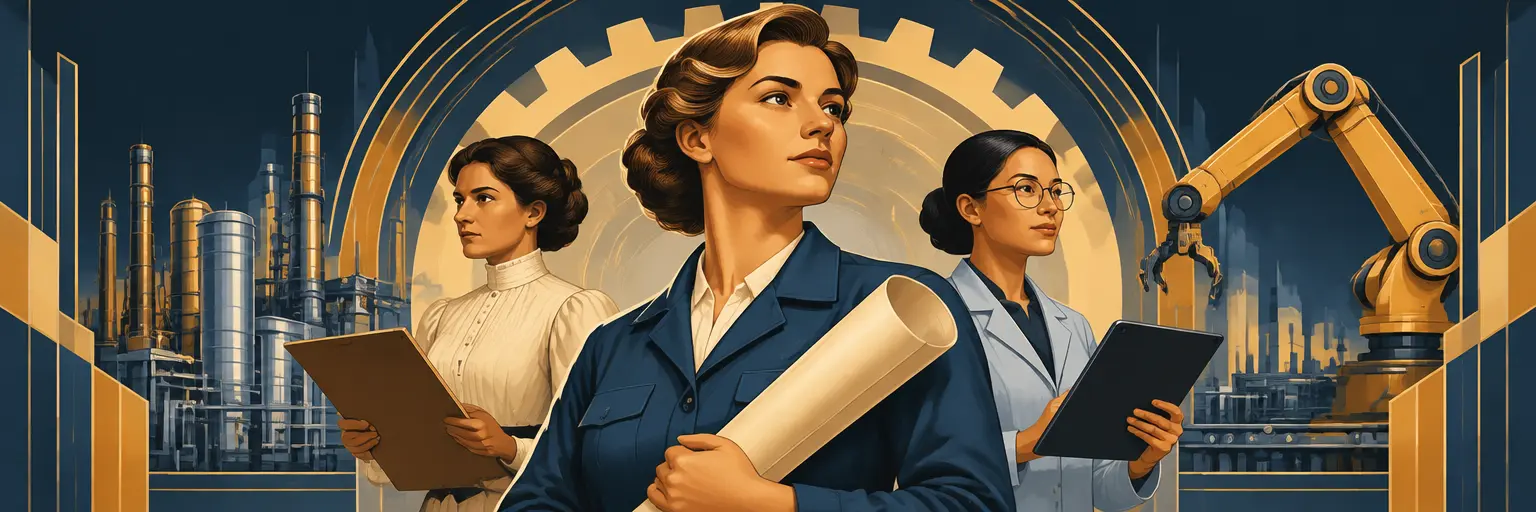
Industrial engineering is the science of optimizing complex systems, processes, and organizations—and women have played a pivotal, though frequently unsung, role in shaping this discipline. From the factory floors of the early 20th century to the data-driven smart factories of today, female industrial engineers have revolutionized how we produce goods, manage supply chains, and design human-centered workplaces. This subcategory on WomenInScienceHistory.com delves into the biographies, breakthroughs, and systemic challenges of these remarkable women, offering a rich tapestry of stories that blend technical rigor with social impact. Whether you are a student, educator, or industry professional, you will discover how these trailblazers transformed manufacturing, healthcare, logistics, and service industries while paving the way for future female engineers.
🔧 Early Pioneers and the Birth of Scientific Management
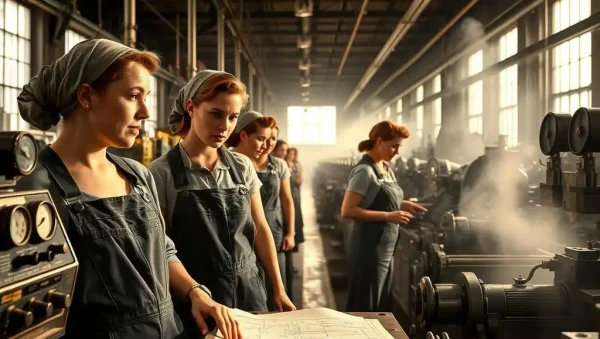
Women were integral to the founding of industrial engineering, even when they were excluded from formal engineering societies. Lillian Gilbreth, often called the "first lady of engineering," co-developed time-and-motion studies with her husband Frank, but her pioneering work in ergonomics and industrial psychology extended far beyond—she humanized the workplace by focusing on worker fatigue and efficiency. Her contributions to kitchen design and household management, alongside her 12 children, demonstrated that industrial engineering principles apply to everyday life. Another early figure, Mary van Kleeck, applied engineering methods to social work, using time studies to improve labor conditions in factories. These women combined quantitative analysis with a deep commitment to worker welfare, setting a precedent for human-centered engineering that remains a core tenet of the discipline today.
Their legacy is not merely historical; it laid the groundwork for integrating human factors into process optimization. Early pioneers faced immense resistance, as engineering education and professional societies were overwhelmingly male-dominated. However, their persistence proved that efficiency is not cold-hearted—it is about designing systems that respect human limits and amplify productivity. Readers will learn how these women used data, observation, and empathy to solve complex problems, establishing methodologies that are now taught in every industrial engineering program. This section offers a foundational understanding of how gender, innovation, and social reform intersected in the formative years of the field.
🏭 Mid-Century Innovators: Transforming Manufacturing and Operations
As industrial engineering matured post-World War II, women began to break through academic and corporate barriers. Inez Abercrombie became a leading expert in work sampling and applied it to enhance productivity in aerospace and textile industries, while Pauline Schumann championed operations research in chemical plants, using linear programming to optimize production schedules. These engineers did not just apply existing techniques—they advanced the theoretical toolkit, contributing to queuing theory, inventory management, and statistical quality control. Their work directly supported the rise of Japanese manufacturing methods in the 1980s, such as Just-In-Time production, which depended on rigorous industrial engineering principles. This period also saw women authoring seminal textbooks, training thousands of future engineers across the globe.
The mid-century era was transformative because women moved from peripheral roles to central engineering leadership, albeit with persistent pay gaps and informal exclusion. Their innovations reduced waste, improved safety, and increased profitability for major corporations, proving that diversity in problem-solving yields tangible economic benefits. This narrative is packed with case studies from automobile plants, electronics assembly, and even hospital operations, demonstrating the broad applicability of their skills. For modern readers, these stories underscore that engineering excellence is not gender-specific; it thrives when institutions actively foster inclusive talent pipelines. Expect to find detailed analyses of their methodologies, the technical hurdles they overcame, and the mentorship networks they built for younger women.
📊 Modern Trailblazers: Data Science, Supply Chain, and Human Factors
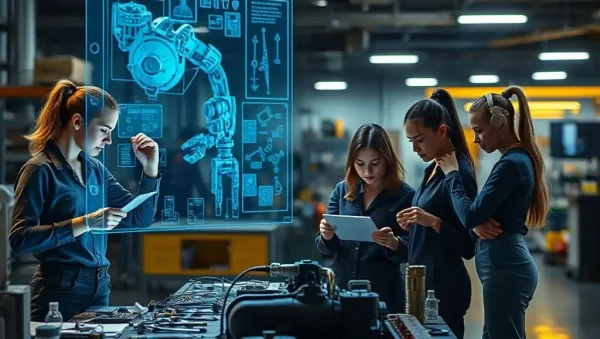
In the digital age, industrial engineering has evolved into a data-centric field, and women are at the forefront of integrating artificial intelligence, machine learning, and predictive analytics into operational design. Women like Rachel Rutledge work on intelligent warehouse automation, while Dr. Mei Chen applies human-robot interaction principles to optimize assembly lines, ensuring safety and ergonomics. These modern engineers tackle global supply chain disruptions, healthcare scheduling, and sustainable manufacturing—areas where industrial engineering is more vital than ever. Their research often leads to cutting-edge publications in journals like *IISE Transactions*, and they hold prominent roles in academia, government agencies, and Fortune 500 companies. This section highlights how they are redefining the field, not as isolated technical work but as a collaborative, interdisciplinary effort.
Modern trailblazers also champion diversity, equity, and inclusion within professional societies, such as the Institute of Industrial and Systems Engineers (IISE), creating scholarships and mentorship programs. They are using big data to address systemic biases in hiring, production planning, and facility layout. You will read about their contributions to smart cities, telemedicine logistics, and circular economy models that reduce environmental impact. Their stories are not just career profiles—they are blueprints for leveraging engineering for social good. This part of the subcategory emphasizes the dynamic nature of the discipline and how women are leading its evolution from manual time studies to algorithm-driven optimization, proving that industrial engineering remains a critical lever for global competitiveness and ethical progress.
🎓 Educational Pathways and Academic Leadership
Women have also profoundly influenced industrial engineering education, serving as deans, department chairs, and curriculum designers. Dr. Alice S. Huang, for example, reshaped graduate programs at Purdue University to integrate systems engineering with healthcare delivery, while Professor Lisa Thompson pioneered online simulation-based learning for operations management. These academic leaders increased female enrollment and retention rates by implementing inclusive pedagogies, such as project-based learning and peer mentorship. They also conducted pioneering research on learning science within engineering education, determining which teaching strategies best support underrepresented groups. Their work ensures that U.S. and global engineering programs now produce a more diverse workforce, directly impacting industry innovation.
Academia is where the next generation of female industrial engineers is molded, and these leaders have been instrumental in dismantling stereotype-based barriers. They established research centers focused on women in engineering, negotiated for institutional policy changes, and created funding for fieldwork. Readers will find biographical sketches of women who began as teaching assistants and rose to positions of institutional power, often balancing research, teaching, and administration. Their emphasis on hands-on learning, industrial internships, and entrepreneurship has made industrial engineering one of the most practical and career-ready degrees. This section is essential for prospective students, parents, and educators seeking to understand how academic ecosystems can champion gender equity and produce cutting-edge engineering talent.
🌍 Global Impact and Key Contributions Across Continents
Industrial engineering is a global discipline, and women from every continent have made crucial contributions, often under challenging socio-economic conditions. In India, Dr. R. Chidambaram (famous for her work on nuclear fuel reprocessing) applied industrial engineering principles to large-scale operations, while in Brazil, Prof. Beatriz Souza optimized logistics for agrarian supply chains, increasing small-farmer incomes by 30%. African engineers like Grace Aduroja in Nigeria developed low-cost irrigation scheduling systems using lean engineering. European women, such as Ingrid Mora in Sweden, pushed for sustainable circular manufacturing models adopted by major automotive firms. These global narratives illustrate that the principles of industrial engineering are universally applicable and culturally adaptable.
The global perspective also highlights how women often address societal inequities through engineering, using their skills to improve healthcare access, disaster response, and clean water distribution. Their work transcends profit motive, targeting humanitarian outcomes. This section is rich with international case studies, collaboration with local governments, and cross-border research partnerships. It also addresses the unique challenges women face in developing economies, such as limited access to advanced education and funding, yet celebrates their resilience in pioneering low-cost, high-impact innovations. By broadening the lens beyond Western history, readers will recognize that industrial engineering, driven by women, is a force for global development and sustainable progress.
Frequently Asked Questions
Who is considered the first female industrial engineer?
Lillian Moller Gilbreth is widely credited as the first female industrial engineer. She earned a Ph.D. in psychology and pioneered time-and-motion studies with her husband, Frank, while also independently advancing human factors engineering. She was the first woman elected to the National Academy of Engineering and focused on making work environments safer and more efficient, especially for workers with disabilities.
What are some notable contributions of women to lean manufacturing?
Women have contributed to lean manufacturing by emphasizing employee empowerment, visual management, and waste reduction with a human touch. For example, Inez Abercrombie applied work sampling to identify non-value-added tasks in aerospace. More recently, female engineers have integrated AI into lean tools like value-stream mapping, enabling real-time waste detection and sustainable process improvements.
How can I find more biographies of women in industrial engineering?
Start by exploring the archives of the Institute of Industrial and Systems Engineers (IISE), which maintains an “Women in IISE” oral history project. Academic databases like JSTOR and Engineering Village also feature papers on gender in engineering history. Additionally, our website WomenInScienceHistory.com offers a dedicated tag and filters for industrial engineering pioneers and contemporary leaders.
What challenges did women face in industrial engineering historically?
Historical barriers included exclusion from engineering schools, professional societies that restricted female membership, and widespread wage discrimination. Women often had to enter the field through psychology or management roles, then shoehorn their engineering work into accepted categories. Despite these obstacles, they persisted, often working unpaid or as research assistants, and gradually built credibility through published research and industry victories.
Are there scholarships for women pursuing industrial engineering degrees today?
Yes, several organizations offer financial support. The Society of Women Engineers (SWE) provides scholarships specifically for female engineering students, including several restricted to industrial and systems engineering. The IISE also sponsors minority and women fellowship awards. Additionally, many universities, like Georgia Tech and Michigan, have endowed funds for women in engineering, so check institutional financial aid offices for tailored opportunities.