Mid-Late 20th Century Women in Engineering (1950-2000): Pioneers Who Built the Modern World
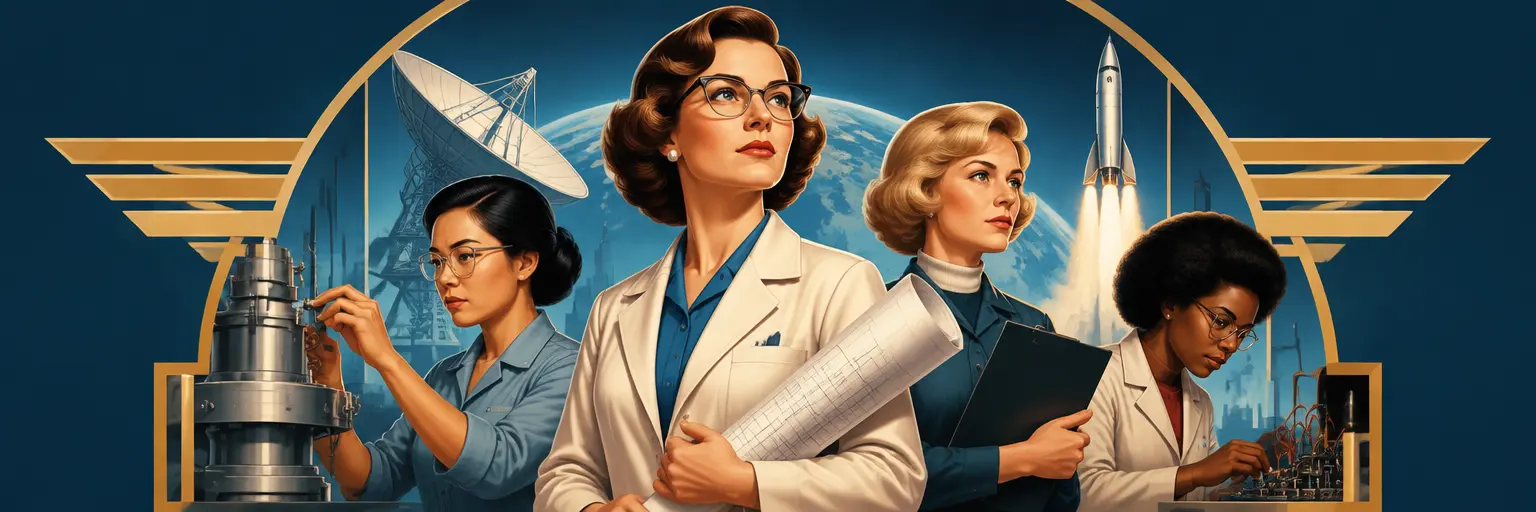
From the space race to the digital revolution, the period between 1950 and 2000 witnessed transformative engineering feats. Yet, the women who designed, tested, and led these breakthroughs often worked behind the scenes, breaking barriers in aerospace, civil, electrical, and computer engineering. This subcategory uncovers their resilient journeys, technical innovations, and institutional challenges, offering a rich narrative for educators, students, and STEM enthusiasts seeking inspirational role models.
🚀 Breaking the Aerospace and Defense Ceiling (1950-1980)
During the Cold War, aerospace engineering offered rare opportunities for women, though often in secondary roles. Figures like Mary Golda Ross, the first Native American female engineer, contributed to Lockheed’s top-secret skunk works, performing trajectory calculations for early satellites. Meanwhile, Beatrice Hicks engineered the aerospace gyroscope and founded the Society of Women Engineers in 1950, creating a professional support network that propelled hundreds of careers. Their work directly influenced early NASA missions, yet their names remained largely absent from public discourse.
Readers will discover how these pioneers navigated classified projects, military contracts, and gender-based differentials in pay and promotion. Expect primary-source excerpts and archival details that highlight their mathematical rigor and risk acceptance. This section also emphasizes how mentorship and collective advocacy, not just individual brilliance, enabled the first wave of female aerospace engineers to secure patents and supervisory roles, setting precedents for future decades.
🔌 Electrical and Computer Engineering: From Mainframes to Microchips
The rise of computing (1950-2000) was powered by women who mastered logic, circuits, and code. Kathleen Booth created the first assembly language and designed the ARC2 computer at Birkbeck College, while Dame Stephanie Shirley founded Freelance Programmers in 1962, employing thousands of women to write software for transport and logistics. In Silicon Valley, Barbara Liskov developed key abstractions for programming languages, later winning the Turing Award—an achievement rarely acknowledged during her early career.
This section explains how women turned programming from seasonal clerical work into recognized engineering discipline. Readers will learn about their pioneering contributions to compiler design, operating systems, and networking protocols. We also explore the paradoxical shift: as computing professionalized, women’s participation declined post-1985 due to changing recruitment and educational biases. The content includes data on employment trends and personal interviews, revealing both victory and systemic loss.
🏗️ Civil and Structural Engineering: Rebuilding and Modernizing Nations
Between post-war rebuilding and urban expansion, female civil engineers shaped bridges, dams, and public infrastructure. Florence Fon Wong managed large-scale irrigation projects in California, while Margaret Ingels pioneered sanitary engineering, improving public health through ventilation and plumbing standards. In the UK, Dorothy Donaldson Buchanan was the first woman to gain chartered civil engineer status, working on the Sydney Harbour Bridge’s structural steel calculations—a feat of stress analysis and material science.
Expect case studies of their site leadership, blueprint reviews, and negotiations with skeptical contractors. We detail how they overcame legal restrictions on fieldwork, safety credential exclusions, and union resistance. This section also highlights international diversity—from Indian dam engineers to Latin American transport planners—showing how local infrastructure needs created pathways for women despite cultural constraints. The narrative links their work to modern environmental design principles, emphasizing sustainability ethics.
⚙️ Mechanical and Industrial Engineering: Optimizing Production and Safety
Mechanical engineering promised tangible outcomes—engines, machinery, and consumer products—and women found niche but critical roles in testing and quality control. Yvonne Brill invented the electrothermal hydrazine thruster used in geosynchronous satellites, a breakthrough in propulsion efficiency. Lillian Moller Gilbreth, already famous for motion studies, continued to refine ergonomic kitchen designs and workplace safety systems until 1972. These engineers applied thermodynamics and human factors simultaneously, championing user-centered design decades before it became mainstream.
Readers uncover how women used process optimization to gain credibility in manufacturing plants and R&D labs. We trace their contributions to automotive crash testing, nuclear reactor safety, and personal protective equipment standards. The content includes patent sketches and factory floor anecdotes, showcasing problem-solving under extreme pressure. We do not shy away from documenting failures and redesign loops, reinforcing that engineering is iterative, collaborative, and resilient—traits women brought to famously rigid corporate cultures.
🌍 Global Perspectives and Institutional Barriers (1970-2000)
By 1970, second-wave feminism pressured universities and corporations to eliminate exclusionary admission and hiring practices. Yet, women in developing nations—such as Rajeswari Chatterjea in India or Abba Brenner in Israel—faced dual hurdles of colonialism and gender. They organized regional engineering societies, authored textbooks in local languages, and lobbied governments for infrastructural investment. Simultaneously, in Western academies, women created gender-equity committees, published influential papers on implicit bias, and launched mentorship programs that have since become institutional standards.
Read about landmark lawsuits, the first female department chairs, and the creation of Women in Engineering Programs (WEP) that provided dedicated scholarships and research funding. This section emphasizes legislative milestones and their measurable impact on enrollment numbers. We also reflect on the unresolved pay gap and attrition rates by the 1990s, providing a sobering yet motivating conclusion. The stories serve as a bridge to contemporary activism, reminding readers that systemic change requires continuous vigilance.
Frequently Asked Questions
Who is considered the first female aerospace engineer in the mid-20th century?
Mary Golda Ross (1908-2008) is widely recognized as the first Native American female engineer, and she worked at Lockheed from 1942 to 1973. She contributed to the Polaris reentry vehicle and early satellite orbital mechanics, and she was also the first female engineer at Lockheed.
Why did women’s participation in computer engineering decline after 1985?
Several factors contributed: the rise of personal computers marketed as male toys, decreased enrollment in programming classes due to intimidation cultures, and a shift toward requiring formal CS degrees with biased admission criteria. The “brogrammer” stereotype often discouraged women despite their proven historical contributions.
Did any women win engineering patents during this period?
Yes, numerous women patented innovations, including Yvonne Brill’s thruster (1970s) and Beatrice Hicks’ gyroscope. Patent records often undercount women due to married-name changes, but legal reforms in the 1970s made attributions more transparent. Many patents remain filed under male colleagues, a persistent historical challenge.
How did the Society of Women Engineers influence this era?
Founded in 1950, SWE provided professional networking, credential validation, and a platform for advocacy. It lobbied for fair hiring, published salary surveys, and offered scholarships. SWE’s annual conferences became pivotal spaces for sharing technical knowledge and negotiating workplace accommodations, directly enabling many careers.
What engineering fields were most welcoming to women between 1950-2000?
Computer programming (early era) and civil engineering project management were relatively open, especially in government departments. Sanitary and environmental engineering also had higher acceptance due to health-focused missions. Conversely, heavy manufacturing and mechanical design remained heavily male-dominated until affirmative action programs increased access in the 1980s.