
From Manual Processes to Mechanized Systems: Women Adapting and Leading in IE Tech.

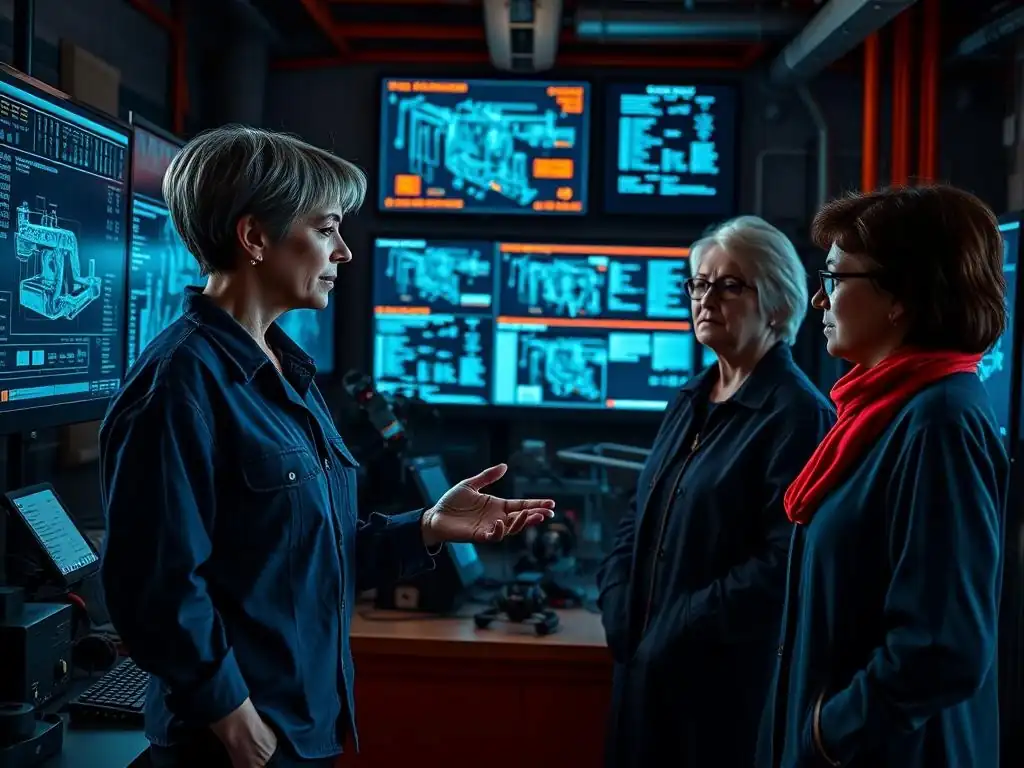
Welcome to WomenInScienceHistory.com, where we unearth the captivating stories of female pioneers who shaped the world of science! Ever wondered how women navigated and thrived in the often-uncharted territories of male-dominated fields? This month, we delve into the groundbreaking contributions of women in industrial engineering, exploring their vital role in transforming manual processes into the efficient, mechanized systems we rely on today. Discover their ingenuity, resilience, and lasting impact – and prepare to be inspired.
- Introduction: The Evolution of Industrial Engineering and the Role of Women
- The Transition from Manual Labor to Mechanization: A Paradigm Shift
- Pioneering Women in Industrial Engineering: Case Studies
- Adapting to Technological Advancements: Women's Contributions to IE Tech
- Challenges Faced by Women in the IE Field
- Success Stories: Women Innovators in Modern Industrial Engineering
- The Future of Women in Industrial Engineering and Mechanized Systems
- Conclusion: Celebrating the Achievements and Inspiring Future Generations of Women in Industrial Engineering
-
Frequently Asked Questions
- What is WomenInScienceHistory.com's primary goal?
- How does the website address the challenges faced by women in science?
- What kind of information can I find on WomenInScienceHistory.com about women in industrial engineering?
- Why is it important to recognize the contributions of women in industrial engineering?
- How does the article "From Manual Processes to Mechanized Systems: Women Adapting and Leading in IE Tech." relate to the website's overall mission?
- Final Reflection: Empowering the Future of Women in Industrial Engineering
- Embrace the Future: Ignite Your IE Potential!
Introduction: The Evolution of Industrial Engineering and the Role of Women
A Historical Overview of Industrial Engineering (IE)
Industrial Engineering (IE) emerged in the late 19th and early 20th centuries, driven by the need to optimize complex industrial processes and improve efficiency in burgeoning factories and manufacturing plants. Pioneers like Frederick Winslow Taylor, with his emphasis on scientific management, and Frank and Lillian Gilbreth, renowned for their time and motion studies, laid the groundwork for a discipline focused on process improvement, productivity, and resource utilization. Initially rooted in manufacturing, IE aimed to systematically reduce waste, enhance output, and streamline operations, transitioning from rudimentary shop floor management to a more scientific and analytical approach.
Over the decades, industrial engineering evolved significantly beyond its manufacturing origins, extending its principles to various sectors including healthcare, logistics, service industries, and even government operations. This expansion reflects IE's core adaptability: applying systematic methods to optimize any complex system involving people, materials, information, equipment, and energy. The field continuously adapts to new technologies and challenges, from early mechanized systems to today's data-driven, automated environments, consistently seeking to improve performance and quality.
The Underrepresentation of Women in Early IE Fields
In the formative years of industrial engineering, as with most STEM fields, women were profoundly underrepresented. Societal norms and prevailing attitudes often channeled women into traditionally "feminine" roles, largely excluding them from engineering education and professional practice. Universities typically had few, if any, female students in engineering programs, and the industrial workplaces were predominantly male-dominated, often unwelcoming or even hostile to the presence of women in technical roles.
This underrepresentation stemmed from a confluence of factors, including limited access to education, discriminatory hiring practices, and the pervasive stereotype that engineering was a physically demanding or intellectually rigorous profession unsuited for women. Consequently, the groundbreaking contributions of early women in industrial engineering were often overlooked, minimized, or attributed to male colleagues, making their journey into and progression within the field exceptionally challenging and requiring immense perseverance.
The Shifting Landscape: Women's Increasing Involvement in IE
The latter half of the 20th century witnessed a gradual but significant shift in the landscape for women in industrial engineering. Driven by changing societal attitudes, the women's rights movement, and increasing recognition of the value of diverse perspectives in problem-solving, more women began to pursue higher education in engineering. While the numbers remained comparatively low for decades, there was a steady increase in female graduates from industrial engineering programs starting in the 1970s and 1980s.
Today, while parity has not yet been achieved, the presence of women in industrial engineering is far more substantial than in previous generations. According to recent data, women now constitute approximately 20-25% of industrial engineering graduates in many Western countries, a stark contrast to the single-digit percentages of the mid-20th century. This growing involvement has brought fresh insights, innovative approaches, and a more holistic understanding of complex systems, contributing to a richer and more effective industrial engineering discipline.
The Transition from Manual Labor to Mechanization: A Paradigm Shift
Impact of Mechanization on Industrial Processes
The advent of mechanization fundamentally transformed industrial processes, marking a paradigm shift from reliance on manual labor to the integration of machines and automated systems. This transition, beginning prominently in the Industrial Revolution and accelerating through the 20th century, led to unprecedented increases in production volume, consistency, and speed. Tasks previously performed by hand, often requiring significant physical effort and prone to human error, were taken over by machines, leading to standardized outputs and reduced labor costs.
However, mechanization also introduced new complexities and challenges. While physical labor decreased, the need for skilled operators, maintenance technicians, and system designers grew exponentially. Industrial engineers were tasked with optimizing not just individual worker efficiency but the entire interconnected system of machines, processes, and human operators. This involved addressing issues like machine downtime, quality control in automated lines, and the integration of diverse mechanical components into a cohesive production flow.
The Emergence of New IE Specializations and Skillsets
The shift towards mechanization necessitated the evolution of industrial engineering itself, giving rise to new specializations and demanding a broader set of skillsets from its practitioners. Beyond traditional time-and-motion studies, areas like operations research, supply chain management, quality engineering (e.g., statistical process control, Six Sigma), and systems analysis became central to the IE curriculum and practice. These fields required advanced analytical and quantitative abilities to model, simulate, and optimize complex mechanized systems.
The new skillset emphasized statistical analysis, data interpretation, computer modeling, and an understanding of control systems and automation. Industrial engineers were increasingly expected to design not just efficient workflows but entire production systems, logistics networks, and quality assurance protocols for highly mechanized environments. This intellectual shift, moving from direct observation of manual tasks to abstract modeling of complex machine interactions, created new avenues for women in industrial engineering who excelled in analytical and problem-solving domains.
Women's Unique Perspectives on Optimizing Mechanized Systems
As industrial processes became more mechanized, the role of women in industrial engineering became increasingly vital, often bringing unique perspectives to the optimization of these complex systems. While early IE focused heavily on physical tasks, mechanization shifted the emphasis to systemic thinking, human-machine interaction, and data-driven decision-making—areas where women's strengths in holistic analysis and collaborative problem-solving proved invaluable. Their contributions extended beyond mere efficiency to considerations of safety, ergonomics, and the overall human experience within automated environments.
For instance, women in industrial engineering often championed the importance of human factors and ergonomics in the design of mechanized workplaces, ensuring that advanced machinery was not only productive but also safe and comfortable for operators. They might focus on designing intuitive user interfaces for complex equipment, optimizing workstation layouts to minimize repetitive strain injuries, or integrating diverse teams to manage automated lines effectively. This holistic approach, considering both technical efficiency and human well-being, has been crucial in developing more sustainable and inclusive industrial systems.
Pioneering Women in Industrial Engineering: Case Studies
Lillian Gilbreth: Human Factors and Motion Study Pioneer
Lillian Gilbreth, often hailed as the "First Lady of Engineering," was a groundbreaking figure whose work profoundly shaped industrial engineering, particularly in the realm of human factors and motion study. Holding a Ph.D. in psychology, she brought a unique psychological perspective to the efficiency movement, emphasizing the human element in industrial processes. Alongside her husband, Frank Gilbreth, she pioneered techniques like micromotion studies and chronocyclegraphs to analyze and optimize worker movements, reducing fatigue and increasing productivity.
Her contributions extended far beyond the factory floor. Gilbreth applied her principles to domestic settings, famously designing the "Gilbreth kitchen" to maximize efficiency for homemakers, and developed adaptive devices for people with disabilities. She was the first woman elected to the National Academy of Engineering and the first female professor of management at Purdue University. Her relentless focus on worker well-being, fatigue reduction, and the psychological aspects of labor solidified her legacy as a foundational figure for women in industrial engineering and a champion of human-centered design.
Elsie Eaves: Civil Engineering and Data Analysis in Infrastructure
Elsie Eaves, while primarily known as a civil engineer, exemplified many principles central to industrial engineering through her meticulous data analysis and systemic approach to large-scale projects. In 1927, she became the first woman elected to full membership in the American Society of Civil Engineers (ASCE), a significant achievement in a male-dominated field. Her career at Engineering News-Record involved extensive research and data collection on construction costs, building trends, and infrastructure development across the United States.
Eaves' work involved analyzing vast datasets related to materials, labor, and project timelines to forecast construction demands and identify efficiencies in urban and national infrastructure development. Her ability to synthesize complex economic and technical data to inform strategic planning for massive construction projects aligns closely with the optimization and systems analysis core to industrial engineering. She demonstrated how rigorous data application could streamline processes and improve resource allocation on a national scale, making her an unsung pioneer for women in industrial engineering in the infrastructure sector.
Mary G. Ross: Aerospace Engineering and Systems Optimization
Mary G. Ross, a Cherokee woman, was a pioneering aerospace engineer whose work at Lockheed Missiles and Space Company involved complex systems optimization, a critical aspect of industrial engineering. Joining Lockheed in 1942, she became one of the founding engineers of the top-secret Skunk Works program and later the first female engineer at Lockheed. Her expertise lay in celestial mechanics and orbital trajectory calculations, essential for the design of ballistic missiles and spaceflight programs.
Ross's role involved optimizing the performance and efficiency of highly complex aerospace systems, including the Agena rocket program and preliminary design concepts for interplanetary space travel. This work required an acute understanding of system interdependencies, resource allocation under extreme constraints, and the meticulous calculation of optimal paths and performance metrics—all hallmarks of industrial engineering principles applied to cutting-edge technology. Her contributions to space exploration highlight the profound impact of women in industrial engineering in advanced technological fields, pushing the boundaries of what was considered possible.
Adapting to Technological Advancements: Women's Contributions to IE Tech
Women Leading the Charge in Automation and Robotics
As industrial processes continue their rapid evolution towards full automation and advanced robotics, women in industrial engineering are increasingly taking leading roles in designing, implementing, and managing these sophisticated systems. They are at the forefront of developing algorithms for robotic path planning, optimizing automated warehouse logistics, and integrating human-robot collaboration in manufacturing environments. Their holistic perspective often ensures that automated solutions are not only efficient but also adaptable, safe, and user-friendly for the human workforce.
For example, female industrial engineers are instrumental in creating "smart factories" where data flows seamlessly between machines and systems, enabling predictive maintenance and dynamic production scheduling. They design robotic cells that enhance safety and productivity, and they are critical in developing the interfaces that allow human operators to effectively monitor and control complex automated lines. This leadership demonstrates how women in industrial engineering are not just adapting to new technologies but actively shaping their deployment and impact.
Data Analytics and Machine Learning: New Frontiers for Women in IE
The explosion of big data and the rise of machine learning have opened vast new frontiers for women in industrial engineering. Modern IE relies heavily on extracting actionable insights from massive datasets to optimize supply chains, predict equipment failures, forecast demand, and improve overall operational resilience. Female industrial engineers are excelling in these analytical roles, leveraging advanced statistical methods and machine learning algorithms to solve complex business problems.
They are applying machine learning to create predictive models for quality control in manufacturing, design more efficient routing algorithms for logistics networks, and develop personalized healthcare delivery systems. For instance, an industrial engineer might use machine learning to analyze patient flow data in a hospital, identifying bottlenecks and optimizing resource allocation to reduce wait times and improve patient outcomes. This proficiency in data analytics and machine learning positions women in industrial engineering as indispensable architects of future data-driven enterprises.
Addressing Ergonomics and Human Factors in Mechanized Workplaces
Even with increasing mechanization, the human element remains central to industrial engineering, and women in industrial engineering are often at the forefront of addressing ergonomics and human factors in these evolving workplaces. As machines become more complex and autonomous, the interaction between humans and technology becomes paramount. Female industrial engineers are leading efforts to design workplaces that prioritize both efficiency and the well-being of human operators.
Their work involves designing intuitive human-machine interfaces that reduce cognitive load, optimizing workstation layouts to prevent musculoskeletal injuries, and researching the psychological impacts of working alongside robots or in highly automated environments. For example, an industrial engineer might design a control panel for a robotic arm that is easy to understand and operate, or she might conduct studies to determine optimal shift patterns for workers monitoring automated production lines. This focus ensures that technological advancements enhance, rather than detract from, human health, safety, and job satisfaction.
Challenges Faced by Women in the IE Field

Overcoming Gender Bias in Engineering Professions
Despite progress, women in industrial engineering continue to face significant gender bias within engineering professions. This bias can manifest in various forms, from subtle microaggressions and unconscious assumptions about competence to more overt discrimination in hiring, promotion, and project assignments. Women often report having to work harder to prove their capabilities, experiencing the "prove it again" bias, and being paid less than their male counterparts for equivalent work.
These biases can lead to feelings of isolation, imposter syndrome, and higher rates of attrition among women in industrial engineering. For instance, a study by the Society of Women Engineers indicated that nearly 30% of women who earn engineering degrees leave the profession, often citing workplace culture and bias as key reasons. Overcoming these deeply ingrained prejudices requires not only individual resilience but also systemic changes within organizations to foster truly inclusive environments.
Balancing Work and Family Life in Demanding IE Roles
The demanding nature of many industrial engineering roles, often involving long hours, frequent travel, and high-pressure project deadlines, presents significant challenges for women in industrial engineering seeking to balance work and family life. Societal expectations often place a disproportionate burden of family caregiving on women, making it difficult to reconcile career advancement with personal responsibilities.
Many organizations lack adequate flexible work arrangements, comprehensive parental leave policies, or affordable childcare support, forcing women in industrial engineering to make difficult choices between career progression and family needs. This often leads to women opting out of leadership roles or leaving the profession entirely. For example, a female industrial engineer might decline a promotion requiring extensive travel due to childcare responsibilities, thus limiting her career trajectory. Addressing this imbalance is crucial for retaining valuable female talent in the field.
Strategies for Promoting Gender Equity in Industrial Engineering
Promoting true gender equity for women in industrial engineering requires multi-faceted strategies that address both systemic barriers and cultural norms. Key approaches include implementing blind resume reviews to mitigate unconscious bias in hiring, establishing clear pathways for mentorship and sponsorship, and actively recruiting women into leadership positions. Organizations must also provide comprehensive unconscious bias training for all employees, particularly those in hiring and management roles.
Furthermore, fostering an inclusive workplace culture is paramount. This involves creating environments where women feel valued, heard, and supported, with zero tolerance for harassment or discrimination. Implementing flexible work policies, robust parental leave, and supportive childcare initiatives can significantly reduce the burden on women in industrial engineering balancing professional and personal lives. By proactively addressing these issues, the industrial engineering field can become more equitable and attractive to diverse talent.
Success Stories: Women Innovators in Modern Industrial Engineering
Kimberly Bryant: Founder of Black Girls CODE and STEM Education Advocate
Kimberly Bryant is a visionary leader and advocate for STEM education, particularly for young women of color. As the founder and CEO of Black Girls CODE, she established a non-profit organization dedicated to empowering girls from underrepresented communities to pursue careers in technology and engineering. Since its inception in 2011, Black Girls CODE has provided technology education, including coding, robotics, and design, to tens of thousands of girls across the United States and internationally.
Bryant's work directly impacts the future pipeline of women in industrial engineering by fostering early interest and proficiency in computational thinking, problem-solving, and systems design—all fundamental skills for modern IE professionals. By creating accessible and supportive learning environments, she helps to dismantle barriers and inspire a new generation of female innovators who are equipped with the technical acumen to excel in fields like industrial engineering, where data analysis and automation are increasingly central.
Reshma Saujani: Founder of Girls Who Code and Closing the Gender Gap in Tech
Reshma Saujani is another transformative figure dedicated to closing the gender gap in technology through her organization, Girls Who Code. Founded in 2012, Girls Who Code has grown into a global movement, reaching millions of girls and young women with immersive coding programs and educational resources. The organization's mission is to inspire, educate, and equip girls with the computing skills needed to pursue 21st-century opportunities, including those in engineering.
Saujani's emphasis on coding and computational literacy is highly relevant to the evolving landscape of industrial engineering. As IE increasingly integrates automation, data analytics, and artificial intelligence, proficiency in programming and algorithmic thinking becomes crucial. By empowering millions of girls to learn to code, Girls Who Code is directly contributing to a diverse talent pool that includes future women in industrial engineering who are ready to innovate and lead in an increasingly mechanized and data-driven world.
Ayah Bdeir: Founder of littleBits and Democratizing Electronics Education
Ayah Bdeir is an engineer, entrepreneur, and founder of littleBits, an award-winning company that democratized electronics through its innovative platform of modular, magnetic electronic components. Her vision was to make creating with electronics as intuitive and accessible as playing with LEGOs, thereby inspiring creativity and problem-solving skills in people of all ages, especially young girls. LittleBits has been adopted in thousands of schools globally, fostering hands-on STEM learning.
Bdeir's work directly impacts the foundational skills required for women in industrial engineering by breaking down the complexity of electronics and systems thinking into manageable, engaging modules. Her approach encourages experimentation, iterative design, and an understanding of how components interact to form a functional system—principles that are central to industrial engineering. By making engineering concepts tangible and fun, she inspires young girls to explore paths that can lead to careers in designing and optimizing complex industrial technologies.
The Future of Women in Industrial Engineering and Mechanized Systems
The Growing Demand for IE Professionals with Diverse Skillsets
The future of industrial engineering is characterized by increasing complexity, driven by globalized supply chains, advanced automation, artificial intelligence, and the imperative for sustainability. This evolving landscape creates a growing demand for IE professionals who possess not only traditional analytical skills but also diverse skillsets, including interdisciplinary knowledge, ethical considerations, and strong communication abilities. Women in industrial engineering, with their often collaborative and holistic problem-solving approaches, are uniquely positioned to meet these multifaceted demands.
As IE expands into new sectors such as healthcare optimization, smart city development, and renewable energy systems, the need for professionals who can integrate human factors with technological advancements becomes critical. The ability to manage complex projects, analyze vast datasets, and design resilient systems while considering social and environmental impacts is highly valued, making the diverse perspectives brought by women in industrial engineering indispensable for future innovation and success.
The Importance of Mentorship and Role Models for Aspiring Women in IE
For aspiring women in industrial engineering, the importance of mentorship and visible role models cannot be overstated. Seeing successful women in leadership and technical roles provides tangible proof of achievable career paths and helps to dismantle persistent stereotypes. Mentors offer invaluable guidance, share practical advice, provide networking opportunities, and help navigate the unique challenges that women often face in male-dominated fields.
Strong female role models inspire confidence, encourage perseverance, and demonstrate the diverse ways in which women in industrial engineering can contribute and lead. They serve as beacons, showing that it is possible to excel, innovate, and break barriers. Organizations and professional societies must continue to invest in robust mentorship programs and actively promote the visibility of successful female industrial engineers to inspire the next generation.
Predictions for the Role of Women in Shaping the Future of Industrial Technology
Looking ahead, women in industrial engineering are poised to play an increasingly pivotal role in shaping the future of industrial technology. Their contributions will extend beyond mere participation to leading innovation in critical areas such as ethical AI development, human-centric automation, and sustainable industrial practices. As technology becomes more pervasive, the need for balanced perspectives that consider social impact alongside economic efficiency will grow, a perspective often championed by women.
It is predicted that women in industrial engineering will be key architects of next-generation industrial systems, driving advancements that prioritize not only productivity but also equity, inclusivity, and environmental responsibility. They will lead initiatives in creating smart factories that are both efficient and safe, developing supply chains that are resilient and ethical, and designing healthcare systems that are accessible and patient-centered. Their influence will ensure that technological progress serves a broader societal good.
Conclusion: Celebrating the Achievements and Inspiring Future Generations of Women in Industrial Engineering
Frequently Asked Questions
What is WomenInScienceHistory.com's primary goal?
The site aims to celebrate and highlight the contributions of women to various scientific fields throughout history, inspiring future generations and addressing the often overlooked narratives. It features biographies and discussions of their work.
How does the website address the challenges faced by women in science?
WomenInScienceHistory.com features discussions on the obstacles and biases that pioneering female scientists faced in male-dominated environments, providing context for their achievements.
What kind of information can I find on WomenInScienceHistory.com about women in industrial engineering?
The site provides biographies of pioneering female industrial engineers, discussions of their groundbreaking work, and insights into their impact on the field, like the article titled "From Manual Processes to Mechanized Systems: Women Adapting and Leading in IE Tech."
Why is it important to recognize the contributions of women in industrial engineering?
Recognizing their contributions helps to diversify the historical narrative of science and engineering, inspire future generations of female engineers, and acknowledge the crucial role women have played in technological advancements.
How does the article "From Manual Processes to Mechanized Systems: Women Adapting and Leading in IE Tech." relate to the website's overall mission?
The article directly aligns with the mission by showcasing how women have adapted and led in the field of industrial engineering, moving from manual processes to mechanized systems, thus contributing to the history of women in science and technology.
Final Reflection: Empowering the Future of Women in Industrial Engineering
The journey from manual processes to mechanized systems, as explored throughout this article, underscores the unyielding adaptability and leadership of women in industrial engineering. Today, as technology continues to reshape industries at an unprecedented pace, the skills and perspectives of women in IE are more critical than ever to ensure innovation is inclusive and equitable. Their contributions are not just about efficiency; they're about building a future where technology serves humanity, and women are at the forefront of that progress.
This evolution has profoundly influenced the cultural landscape of engineering, challenging traditional norms and paving the way for greater diversity and inclusion. Witnessing this shift firsthand, I am reminded of the importance of mentorship and support systems that empower women to thrive in traditionally male-dominated fields. The future belongs to those who believe in the beauty of their dreams.
- Eleanor Roosevelt. This quote encapsulates the spirit of the women highlighted in this article, who dared to dream of a more efficient, equitable, and innovative world, and then set out to build it.
As we conclude, I invite you to reflect on your own role in fostering a more inclusive and supportive environment for women in industrial engineering. Consider how you can champion their achievements, mentor aspiring engineers, and advocate for policies that promote gender equality in the workplace. Let us all commit to building a future where the brilliance and innovation of women in IE are not just recognized, but celebrated and amplified.
Embrace the Future: Ignite Your IE Potential!
Thank you for exploring the inspiring stories of women reshaping Industrial Engineering! You've gained insights into their resilience, innovation, and leadership in the face of technological change. Now, it's time to channel that inspiration into action.
- Dive Deeper: Rediscover a woman IE pioneer mentioned in the article and research her specific contributions – what challenges did she overcome and how did she make a difference?
- Share this article with a friend or colleague who is passionate about STEM or women's history – inspire them with these untold stories!
- Consider joining an online forum or community dedicated to Industrial Engineering and share your thoughts on the future of women in the field.
Ready to start your journey toward impactful change? What specific skill or area within Industrial Engineering are you most excited to explore further?