19th Century Women in Engineering & Industry: Pioneers of Progress
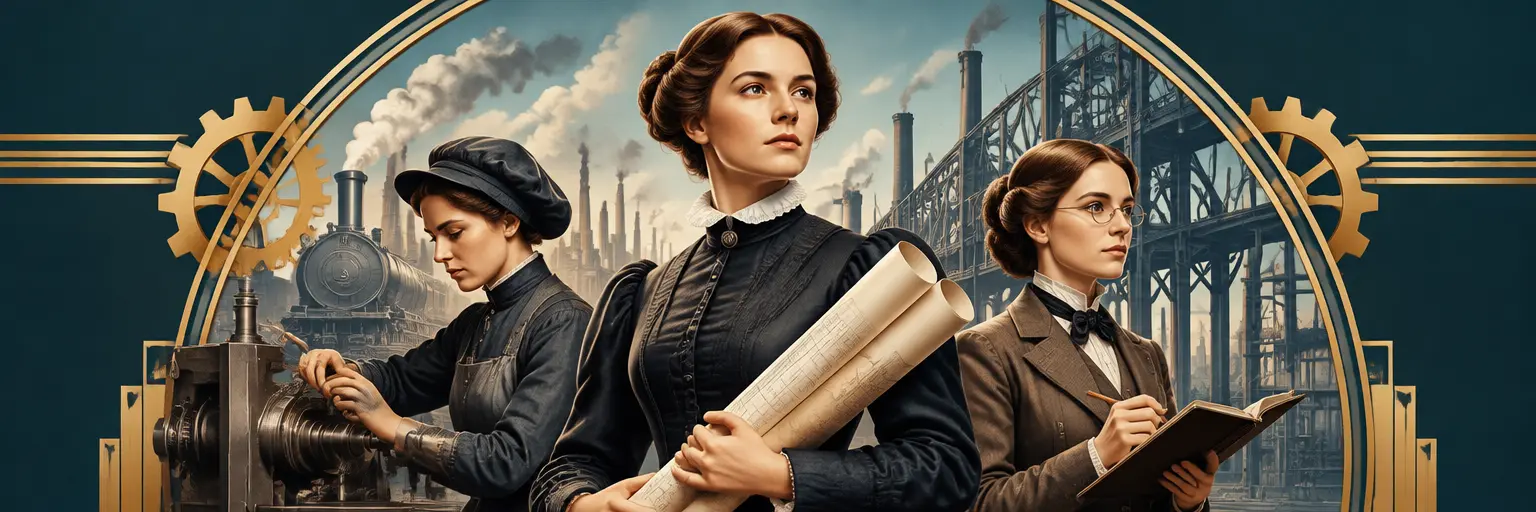
Step back into the 19th century, a transformative era of steam power, iron bridges, and industrial expansion—yet one where women’s engineering brilliance was often hidden behind factory walls or patent ledgers. This subcategory uncovers the remarkable stories of women who designed machinery, managed textile mills, patented inventions, and revolutionized manufacturing despite legal and social barriers. From Ada Lovelace’s analytical engine to Sarah Guppy’s iron bridges, these pioneers defied Victorian expectations to shape the industrial world we inherit today.
🔧 Trailblazing Inventors & Patent Holders
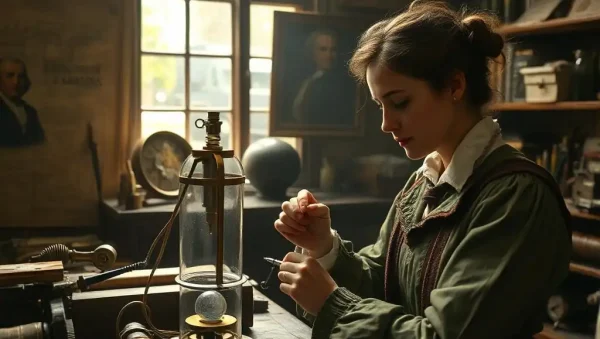
Dive into the world of 19th-century female inventors who secured patents in male-dominated fields like mechanical engineering, naval architecture, and agricultural tools. Women such as Mary Dixon Kies, the first American woman to receive a patent (for weaving straw with silk), and Sarah Guppy, who patented an iron railway bridge design in 1811, demonstrate how legal savvy and creative genius overcame institutional bias. Expect detailed biographies, patent dates, and explanations of their innovations’ industrial impact.
These women didn’t just tinker—they solved pressing industrial problems, from fireproof construction to textile machinery improvements. Many worked alongside husbands or brothers, only to be erased from credit. This section highlights the legal battles, financial struggles, and strategic partnerships that allowed them to claim ownership over their ideas, offering a nuanced look at how gender intersected with early intellectual property law.
🏭 Women in Factory Management & Textile Engineering
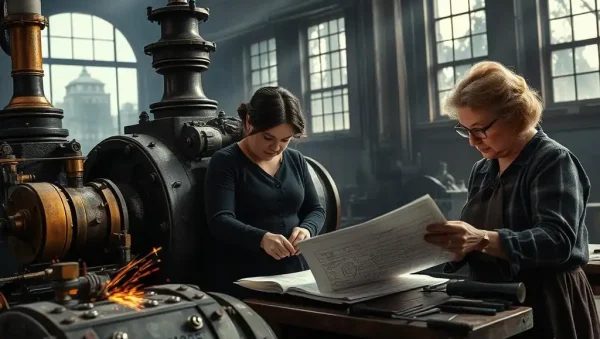
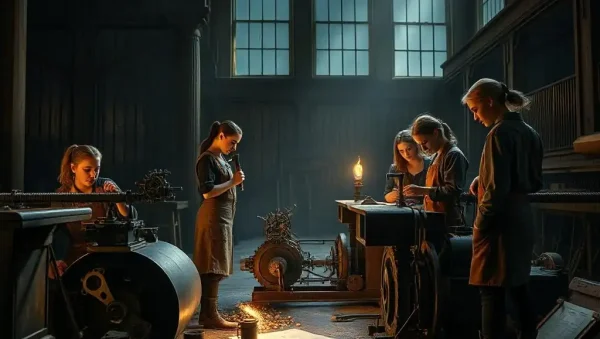
The Industrial Revolution created unprecedented demand for labor, and women often ran entire factory floors, particularly in textile mills across the UK, US, and Europe. Figures like Eliza Tinsley, who managed a nail-making empire, and Lucy Larcom, who wrote about mill work while operating looms, reveal how women became de facto engineers of production systems. Expect insights into their roles in machine operation, quality control, and worker training.
Beyond mere labor, these women innovated in process engineering, improving loom efficiencies and introducing safety protocols that saved lives. This segment explores the everyday engineering decisions women made, from calibrating steam pressure to redesigning work rhythms, and how they documented these practices in diaries and trade journals. It also examines the shift from home-based crafts to centralized factories, and women’s pivotal role in that transition.
⚙️ Mathematical & Analytical Foundations
Before modern computer science, women like Ada Lovelace wrote the world’s first algorithm for Charles Babbage’s Analytical Engine, while calculating prodigies like Mary Somerville translated celestial mechanics for practical engineering applications. This section focuses on the theoretical underpinnings that made industrial engineering possible—from logarithmic tables to strain calculations—and the women who mastered them despite being barred from universities.
Hertha Ayrton, for instance, not only studied arc lamps but also mathematically modeled electric currents, earning the Royal Society’s Hughes Medal in 1906 for her work on sand ripples and electric arcs. Here, you’ll find detailed explorations of their published papers, correspondence with leading engineers, and the informal networks (like private tutoring circles) that substituted for formal education. These women proved that engineering brilliance thrives on curiosity, not just access.
🚢 Building Bridges, Ships & Infrastructure
From Sarah Guppy’s suspension bridge patents to Harriet Strong’s flood control and irrigation systems, women contributed to large-scale civil engineering projects that shaped national infrastructures. This section examines their designs, patents, and public advocacy for safer, more efficient structures. You’ll also meet Emily Roebling, who oversaw the construction of the Brooklyn Bridge after her husband’s illness, mastering complex cable calculations on the job.
These women navigated hostile professional societies, often presenting their work through male relatives or anonymous committees. Yet their engineering legacies persist: many of their patents were later validated as foundational, and their written reports informed future generations of civil engineers. This content highlights original sketches, engineering feasibility studies, and the geopolitical contexts—like canal expansion and railroad booms—that created opportunities for women’s expertise.
🎓 Education, Advocacy & Breaking Barriers
The late 19th century saw the first women enroll in engineering schools and technical institutes, such as Alice Perry, who graduated from Queen’s College Galway in 1906 as Ireland’s first female engineering graduate. This section profiles pioneering educators, mentors, and advocacy groups that fought for women’s admission into engineering societies, including the Society of Women Engineers’ early roots and the Women’s Engineering Society founded in 1919.
You’ll discover curriculum innovations, like the “domestic engineering” courses that taught food chemistry and ventilation, and how women redefined engineering as inclusive of home, health, and community. These advocates authored textbooks, lobbied parliament, and created scholarship funds, demonstrating that systemic change required both technical mastery and political activism. Their stories illuminate the slow, deliberate chipping away of institutional sexism—a process that continues today.
📜 Hidden Figures of the Industrial Era
Many women’s engineering contributions were erased or credited to male colleagues, and this section specialises in unearthing those silenced narratives. Through archival research, patent records, and family letters, we reconstruct the work of women like Catherine “Kitty” Wilkinson, who invented a simple but life-saving disinfection method in 1830s Liverpool, influencing public health engineering. Expect evidence-based reattributions and scholarly debates.
These hidden figures include enslaved and free Black women innovators like Ellen Eglin, who patented a clothes wringer in 1888, and Native American women who adapted European industrial tools to traditional crafts. This content emphasises primary source analysis, from census data to trade union registries, to verify their involvement. By spotlighting their anonymity, we challenge the heroic male narrative of industrial history and restore agency to overlooked engineers.
Frequently Asked Questions
Who is considered the first female engineer in the 19th century?
There is no single “first,” but Ada Lovelace (1815–1852) is often celebrated for her analytical engine work, which is theoretical computing, while Sarah Guppy’s 1811 bridge patent marks early civil engineering. Mary Dixon Kies received the first US patent issued to a woman (1809) for a weaving method. Each woman’s claim depends on how “engineer” is defined—practical inventor, patent holder, or project manager.
What barriers did women face in 19th-century engineering?
Women were largely barred from universities, professional societies, and patent offices on the basis of marital laws. They couldn’t sign contracts or own property in many regions, so inventions often went under husbands’ names. Social expectations also restricted them to “appropriate” roles like textile work or teaching, forcing many to operate covertly or through male proxies like brothers or fathers.
Did women actually work on construction sites or only design?
Both! While most women worked in textile factories as operators and supervisors, some, like Emily Roebling, oversaw actual bridge construction. Others managed quarries, ironworks, and brick kilns. Documentary evidence from diaries and company records shows women supervising crews, inspecting materials, and troubleshooting machinery, though their roles were often disguised as “bookkeeping” or “assistance” to avoid social censure.
What famous inventions by 19th-century women are still used today?
Ellen Eglin’s improved clothes wringer influenced modern laundry machines, while Sarah Guppy’s bridge design principles inform cable-stayed structures. Mary Carpenter’s ventilation systems for ships and homes underpinned public health engineering, and Hertha Ayrton’s work on electric arcs contributed to lighting technology. Each invention evolved, but their core ideas persist in modern equipment.
How can I verify a woman’s engineering contribution from that era?
Start with patent databases like Google Patents or the US Patent Office historical records, searching by gender reveals from census or probate documents. Cross-reference trade journals, local newspapers, and memoirs. Academic databases like JSTOR or the Royal Society’s archives often contain reattribution studies. For primary evidence, check society membership lists, exhibition catalogues (like the 1851 Crystal Palace), and engineering institution archives—though many women were listed as “Mrs.” without first names, so genealogical work is essential.