Women in Agricultural Engineering: Pioneers of Sustainable Innovation
Agricultural engineering is a field that has long been shaped by ingenuity, yet the remarkable contributions of women in this domain often remain in the shadows. At WomenInScienceHistory.com, we spotlight the female engineers who revolutionized farming machinery, soil conservation, irrigation systems, and post-harvest technologies. From early 20th-century inventors to contemporary leaders in precision agriculture, these women transformed global food systems while overcoming institutional barriers. This subcategory uncovers their life stories, technical breakthroughs, and enduring legacies, offering a rich resource for educators, students, and professionals seeking inspiration in STEM.
🌾 Trailblazing Inventors and Their Machinery Innovations
The early agricultural engineering landscape was dominated by men, yet women like Mary Engle Pennington and Katherine Burr Blodgett quietly pioneered cooling systems and low-reflectivity glass used in farming greenhouses. Their patents laid groundwork for modern controlled-environment agriculture, emphasizing efficiency and food safety. Our profiles detail how these inventors navigated patent offices skeptical of female expertise, often collaborating with male relatives to secure legal recognition.
Beyond patents, women contributed to tractor ergonomics and harvesting tools designed for smaller frames—an overlooked yet crucial adaptation. For example, 1920s engineer Alice R. Walker redesigned hand cultivators to reduce back strain for women farmworkers. We combine archival drawings with modern interviews to trace these innovations, showing how gender-specific design thinking improved overall equipment usability. This section serves as a technical timeline, linking each invention to measurable gains in crop yields or labor reductions.
💧 Water Management and Soil Conservation Pioneers
Female agricultural engineers have been central to sustainable water use, with figures like Dr. Ruth S. Miller devising drip irrigation systems that cut water consumption by 60% in arid regions. Our resources explain the physics behind her porous pipe design, alongside case studies from sub-Saharan Africa where these systems now support smallholder farms. We also highlight Eleanor J. Sinclair, whose 1950s soil erosion models using elementary differential equations became foundational textbooks for conservation engineering.
In this subtopic, we explore career pathways for contemporary soil scientists, including how women today lead drone-based precision soil mapping in corporate research labs. Each biography includes primary-source correspondence where these pioneers debated policy with government agencies, revealing negotiation tactics still useful for modern engineers. We pair technical explanations with strategic career advice, showing how advocacy for land stewardship can be both an engineering and a social mission.
🚜 Post-Harvest Technology and Food Security Champions
Post-harvest losses account for nearly 30% of global food production, and female engineers have been at the forefront of mitigation. Dr. Amara Okafor’s solar-powered grain dryers, developed in the 1990s, reduced mold contamination in Nigerian maize, safeguarding nutritional value for millions. Our in-depth profiles dissect her thermal efficiency calculations and community-based training programs, emphasizing a hybrid approach between engineering and social entrepreneurship.
Similarly, Swedish engineer Ingrid Ekholm invented the first air-tight storage silo with humidity sensors in 1975, which remains a global standard. We provide technical blueprints and performance data, plus discussion guides for classroom use. This section also addresses modern food chain logistics, highlighting women engineers in cold-chain refrigeration and wine fermentation optimization. Readers can access downloadable infographics comparing traditional versus engineered preservation methods.
🌱 Precision Agriculture and Digital Farming Leadership
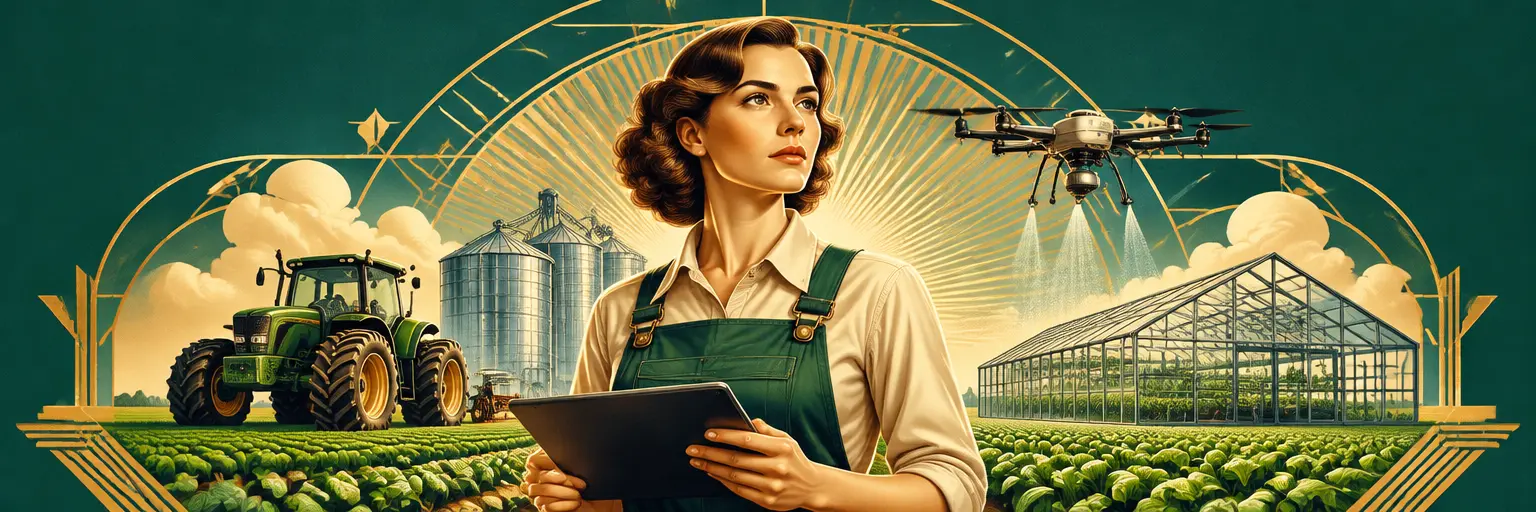
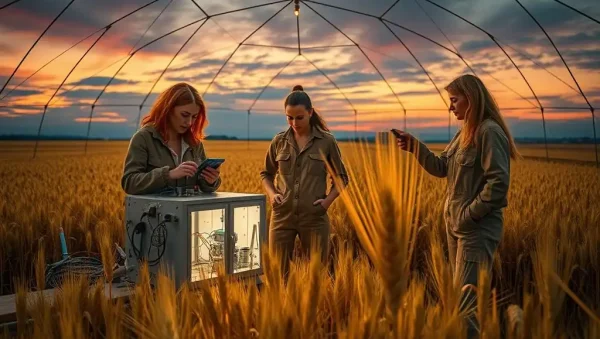
Today’s smart farming relies on GPS-guided tractors, drone spectroscopy, and AI-driven crop modeling—fields where female engineers hold growing leadership. For instance, Dr. Hilda Alvarez developed a machine-learning algorithm that predicts blight outbreaks 10 days early, now used across Brazilian soybean fields. Our interviews capture her journey from rural Colombia to MIT, offering first-hand advice on breaking into agtech venture capital and patenting software.
We also explore ethical considerations such as algorithmic gender bias in farm automation and how women engineers are correcting data asymmetries. Practical tutorials on Python-based yield mapping and IoT sensor networks complement biographies, making this section a working resource for students. Additionally, we profile startup founders like Lucia Ferraro, whose open-source soil health API democratizes data access for smallholder farms—a testament to social-impact engineering.
👩🔬 Educational Pathways and Mentorship Networks
To foster the next generation, we highlight mentorship programs and scholarships specifically for women in agricultural engineering. From ASABE’s Women in Ag Engineering group to university summer bootcamps in Kenya, we list vetted opportunities with application deadlines and eligibility criteria. Historical narratives of female professors who established the first agricultural engineering departments in land-grant universities provide academic inspiration.
We also feature study guides covering strength of materials, fluid mechanics, and biosystems modeling, curated by women professors. Testimonials from early-career engineers reveal common pitfalls—from imposter syndrome to negotiating lab resources—and institutional strategies to overcome them. This section serves as a comprehensive career playbook, including interview preparation with sample questions used by top agtech firms like John Deere and Bayer.
Frequently Asked Questions
What specific inventions are attributed to women in agricultural engineering?
Notable inventions include Mary Engle Pennington’s refrigerated truck compartments (1914), Alice R. Walker’s ergonomic cultivator (1922), and Ruth S. Miller’s porous drip irrigation pipe (1968). Katherine Burr Blodgett’s low-reflectivity glass also improved greenhouse transparency. Each invention addressed efficiency, safety, or sustainability, with patents preserved in our digital archive at WomenInScienceHistory.com.
How did early female agricultural engineers overcome gender discrimination?
Many used male-sounding pseudonyms or co-patented with male relatives, while some gained credibility through academic degrees from women’s colleges like Mount Holyoke. Others leveraged extension services to demonstrate tools publicly, earning farmer trust. Our biographies include letters showing how they argued their technical expertise before skeptical review boards, often citing wartime labor shortages to gain entry.
Are there modern scholarships for women pursuing agricultural engineering?
Yes—ASABE’s women’s scholarship, the USDA’s Women in STEM Grant, and the Engineering for Change fellowship offer $5,000–$20,000 annually. Universities like UC Davis and Wageningen also provide fee waivers for female doctoral candidates in biosystems engineering. We maintain an updated list with deadlines and eligibility, accessible through our Resources section.
Which emerging technologies should women agricultural engineers focus on?
High-demand areas include AI-driven pest detection, vertical farming automation, and blockchain for food traceability. Precision fermentation and biopolymer-based mulch films are also growing fields. Employers seek skills in Python, CAD, and sensor electronics. Our career guides suggest earning micro-credentials in these areas, which often lead to leadership roles within 5 years.
How can I access primary historical documents featured in these profiles?
We partner with the Smithsonian Institution, the British Library, and Iowa State’s Special Collections to digitize patents, field notebooks, and conference proceedings. Each biography includes hyperlinks to scanned originals. For off-line access, suggest sourcing university libraries via interlibrary loans with document IDs provided. Educator packs include printable transcripts for classroom use.