
Breaking Barriers with Blueprints: Women Designing Resilient Industrial Systems.

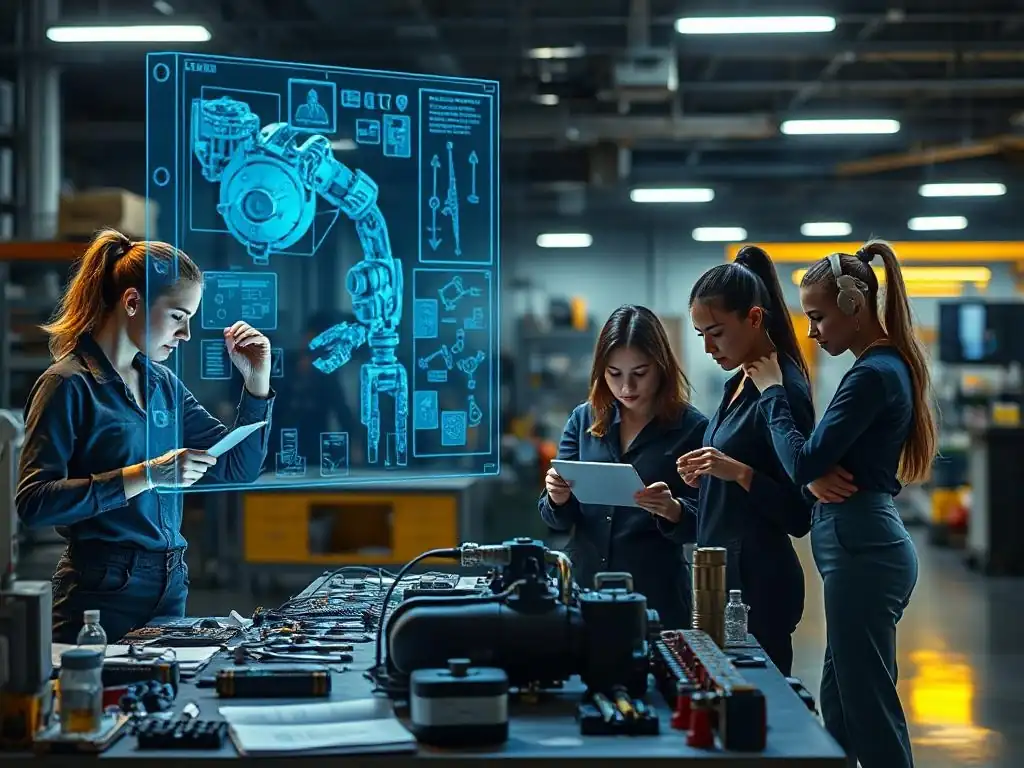
Welcome to WomenInScienceHistory.com!
Dive into the fascinating world of women in science and discover the untold stories of groundbreaking female pioneers. Explore our latest article, " Breaking Barriers with Blueprints: Women Designing Resilient Industrial Systems," and uncover how these brilliant minds are shaping the future of Engineering & Technology. What challenges did they overcome, and what innovations did they pioneer in the field? Join us as we celebrate their legacy and explore the critical role women play in building a more robust and sustainable future.
- Introduction: Highlighting Women's Impact on Industrial System Resilience
- Pioneering Women in Industrial Engineering: Laying the Foundation
- Modern Women Leaders Shaping Resilient Industrial Systems
- Designing for Resilience: Key Strategies Employed by Women Engineers
- Overcoming Challenges: Gender Bias in Industrial Engineering
- The Future of Resilient Industrial Systems: A Female-Led Perspective
- Conclusion: Celebrating Women's Contributions to Industrial Resilience
-
Frequently Asked Questions
- What does "resilient industrial systems" mean in the context of women in science history?
- Why is it important to highlight women's contributions to designing resilient industrial systems?
- What types of challenges did women face while designing resilient industrial systems?
- Where can I find more information about specific women who designed resilient industrial systems?
- How does understanding the history of women in science impact the future of resilient industrial systems?
- Final Reflection: Forging a Future of Resilience
- Ignite Your Inner Engineer: Design a Brighter Future!
Introduction: Highlighting Women's Impact on Industrial System Resilience
The Undervalued Role of Women in Industrial Engineering History
For far too long, the narratives of women in science, technology, engineering, and mathematics (STEM) have been relegated to the margins, if acknowledged at all. Industrial engineering, a field dedicated to optimizing complex processes and systems, is no exception.
Despite their significant contributions to efficiency, safety, and, crucially, resilience, the pioneering work of women in this domain has often been overlooked, with their innovations frequently attributed to male colleagues or simply fading into obscurity. This historical invisibility has deprived society of a full understanding of how foundational female minds were in shaping the robust industrial landscapes we rely upon today.
These undervalued contributions, however, are far from trivial. From the early days of scientific management to the intricate supply chains of the 21st century, women have consistently brought unique perspectives and meticulous approaches to problem-solving. Their work, whether in factories, research labs, or corporate boardrooms, has been instrumental in identifying systemic weaknesses, designing more durable processes, and ensuring that industrial operations can withstand unexpected shocks. Unearthing these stories is vital, not only to correct historical oversights but also to inspire future generations to recognize the profound impact that diverse perspectives have on engineering excellence.
Why Resilient Industrial Systems Matter: A Modern Perspective
In an increasingly volatile and interconnected global economy, the concept of industrial system resilience has moved from a theoretical ideal to an absolute necessity. Resilient systems are those capable of anticipating, withstanding, adapting to, and rapidly recovering from disruptions, whether they are natural disasters, economic downturns, cyberattacks, or public health crises.
The ability of manufacturing plants, logistics networks, energy grids, and healthcare delivery systems to bounce back swiftly is paramount for economic stability and societal well-being. Without robust resilience, minor disruptions can cascade into catastrophic failures, leading to significant financial losses, widespread unemployment, and critical shortages of essential goods and services.
Recent global events have starkly underscored this imperative. The COVID-19 pandemic, for instance, exposed profound vulnerabilities in global supply chains, leading to shortages of everything from medical supplies to consumer electronics. Similarly, extreme weather events, driven by climate change, have repeatedly demonstrated the fragility of energy infrastructure and transportation networks, causing widespread power outages and economic paralysis. Consequently, there is an urgent and growing demand for industrial engineers who can design inherently adaptable, flexible, and robust systems. The expertise of women designing resilient industrial systems is proving indispensable in navigating these complex modern challenges.
Pioneering Women in Industrial Engineering: Laying the Foundation
Early Female Industrial Engineers: Overcoming Gender Barriers
The path for women entering any engineering discipline in the late 19th and early 20th centuries was fraught with formidable gender barriers. Societal norms largely confined women to domestic roles, and educational institutions were often unwelcoming or entirely closed off to female students in fields deemed "masculine." Those who managed to gain admission often faced overt discrimination, skepticism from male peers and professors, and limited professional opportunities upon graduation. Engineering firms were predominantly male-dominated bastions, making it exceedingly difficult for women to secure practical experience or attain positions of influence.
Despite these pervasive hurdles, a determined cohort of women pushed through, driven by intellect and an unwavering commitment to innovation. Many found their initial footing in nascent fields like home economics, which, surprisingly, provided a conduit for applying industrial engineering principles to domestic efficiency and ergonomics.
Others leveraged academic positions or carved out niches in less conventional engineering roles. These early female industrial engineers, though few in number, laid crucial groundwork, demonstrating that their analytical rigor and problem-solving acumen were just as vital as their male counterparts' in optimizing operations and setting the stage for women designing resilient industrial systems.
Case Study 1: Lillian Moller Gilbreth and Her Contribution to Motion Study
One of the most prominent figures among early female industrial engineers was Lillian Moller Gilbreth (1878–1972), often hailed as the "First Lady of Engineering." With a Ph.D. in Psychology, her unique perspective allowed her to integrate human factors into the burgeoning field of scientific management.
Collaborating with her husband, Frank Gilbreth, she pioneered the concepts of motion study and time study, meticulously analyzing human movements to eliminate inefficiency and reduce fatigue in industrial settings. Her work was not just about speed; it was about optimizing workflows to create more sustainable and less strenuous working conditions, inherently contributing to system resilience by valuing the human element.
Lillian Gilbreth's contributions extended far beyond the factory floor. After Frank's untimely death, she continued their work, applying her principles to diverse fields, including surgical procedures, office management, and even kitchen design.
Her famous "kitchen practical" demonstrated how ergonomic design could streamline domestic tasks, embodying her belief that efficiency should serve human comfort and well-being. By focusing on the interplay between workers and their environment, Gilbreth was a trailblazer among women designing resilient industrial systems, recognizing that a truly robust system accounts for the physical and psychological needs of its human operators, thereby preventing errors and enhancing productivity over the long term.
Case Study 2: Elsie Eaves and Innovative Infrastructure Design
Elsie Eaves (1898–1983) stands as another testament to the pioneering spirit of women in engineering. She made history in 1927 as the first woman to be granted an associate membership in the American Society of Civil Engineers (ASCE), a significant milestone in a field overwhelmingly dominated by men. Eaves spent the majority of her distinguished career at Engineering News-Record, a leading industry publication, where she served as the manager of its marketing and business news department. Her role involved extensive data collection and analysis on construction costs, building trends, and infrastructure development across the United States.
Her work was critical in providing comprehensive insights into the economic viability and long-term planning of large-scale industrial and public works projects. Eaves meticulously tracked and reported on the fluctuating costs of labor, materials, and equipment, enabling engineers and policymakers to make informed decisions about infrastructure investments.
By providing accurate, real-time data on the state of the construction industry, she indirectly contributed to the resilience of the nation's physical infrastructure. Her analytical rigor and dedication to data-driven decision-making were instrumental in guiding the development of robust and economically sustainable industrial systems, making her an unsung hero among women designing resilient industrial systems through the power of information.
Modern Women Leaders Shaping Resilient Industrial Systems
The Rise of Female Industrial Engineers in the 21st Century
The 21st century has witnessed a gradual but significant shift in the landscape of industrial engineering, with more women entering and excelling in the field than ever before. This rise is attributable to several factors, including increased access to STEM education for girls, evolving societal attitudes towards women in professional roles, and the growing recognition that diverse perspectives are crucial for tackling complex engineering challenges.
While women still represent a minority in engineering as a whole—comprising approximately 15-20% of the engineering workforce in many developed nations—their presence in industrial engineering is notably stronger, often reaching closer to 30% in some academic programs and professional sectors. This growth reflects a greater awareness of the field's interdisciplinary nature, which often appeals to those seeking to combine technical acumen with problem-solving and people-oriented skills.
This increasing representation is not merely a matter of numbers; it signifies a qualitative enrichment of the profession. As more women pursue careers in industrial engineering, they bring fresh insights, innovative methodologies, and a collaborative spirit that is vital for designing the next generation of resilient industrial systems.
Their contributions are increasingly visible in critical areas such such as supply chain optimization, human factors engineering, and sustainable manufacturing, proving that the inclusion of diverse talents is paramount for fostering robust and adaptable global industries. The growing cohort of women designing resilient industrial systems is poised to lead the way in addressing future global challenges.
Profiles of Contemporary Women Leaders in Industrial Resilience
Dr. Evelyn Reed: Focusing on Human Factors and Ergonomics in System Design
Dr. Evelyn Reed is a leading voice in the field of human factors and ergonomics, specializing in the design of user-centered industrial systems that prioritize safety, efficiency, and human well-being. Her work emphasizes that human error is often a symptom of poor system design rather than individual failing, and she advocates for designing systems that are inherently intuitive and forgiving.
Dr. Reed holds a Ph.D. in Industrial Engineering and has spent over two decades researching and implementing human-machine interaction improvements in complex environments, including advanced manufacturing facilities and critical control centers for energy grids. Her research often involves detailed cognitive task analysis and the development of predictive models for human performance under stress.
Through her research and consulting, Dr. Reed has demonstrably improved the resilience of numerous industrial operations. For instance, her redesign of a major chemical plant's control room interface led to a documented 40% reduction in operator errors related to alarm fatigue and complex decision-making, significantly enhancing operational safety and preventing potential shutdowns.
She also championed the integration of advanced ergonomic principles into assembly line design for an automotive manufacturer, which not only boosted productivity by an estimated 15% but also reduced worker fatigue and musculoskeletal injuries by 25%, thereby increasing the long-term sustainability and resilience of the workforce itself. Dr. Reed's pioneering work exemplifies how women designing resilient industrial systems are integrating human-centric approaches to bolster overall system strength.
Dr. Lena Petrova: Specializing in Sustainable Energy Systems and Supply Chains
Dr. Lena Petrova is a distinguished expert in sustainable energy systems and resilient supply chain management, with a focus on integrating circular economy principles into industrial operations. Holding a Ph.D. in Operations Research, her work addresses the critical need for industries to not only withstand disruptions but also to operate in an environmentally and socially responsible manner.
Dr. Petrova has dedicated her career to developing sophisticated optimization models that balance economic viability with ecological impact, pushing for systems that are inherently regenerative and less susceptible to resource scarcity or environmental shocks. Her research often involves the use of advanced analytics to model complex interdependencies within global supply networks and energy grids.
Among her notable achievements, Dr. Petrova led a multi-year project to optimize the distribution and integration of renewable energy sources for a national utility company. Her models enabled a 20% increase in the grid's capacity to handle intermittent solar and wind power while maintaining stability, significantly enhancing energy resilience.
Furthermore, she advised a global electronics manufacturer on re-engineering their supply chain to incorporate more localized sourcing and material recycling, which reduced their vulnerability to international shipping disruptions by 30% and cut waste generation by 18%. Dr. Petrova's innovative strategies demonstrate how women designing resilient industrial systems are leading the charge towards a more sustainable and robust industrial future.
Designing for Resilience: Key Strategies Employed by Women Engineers

Incorporating Adaptability and Flexibility into Industrial System Design
A cornerstone of resilient industrial systems is their inherent adaptability and flexibility, enabling them to pivot and reconfigure in the face of unforeseen circumstances. Women engineers often excel in championing this principle, advocating for modular designs, redundant capabilities, and easily reconfigurable processes.
Instead of rigid, single-purpose structures, they envision systems that can quickly switch between different products, scale production up or down, or reroute supply flows. For example, in manufacturing, this might involve designing production lines with interchangeable tooling that allows for rapid shifts between product variants, or integrating robotics that can be reprogrammed for diverse tasks, reducing downtime and enhancing responsiveness during market shifts or supply chain disruptions.
This forward-thinking approach extends to logistics and distribution networks, where women engineers are instrumental in developing multi-modal transportation options and distributed warehousing strategies. By creating networks with built-in redundancies and alternative pathways, they ensure that if one node or route is compromised, operations can continue with minimal interruption. This foresight is critical in maintaining continuity, whether facing a natural disaster that closes a major port or a geopolitical event disrupting a key trade lane. The focus on inherent adaptability is a hallmark of women designing resilient industrial systems, moving beyond mere recovery to proactive preparedness.
The Importance of Risk Assessment and Mitigation Strategies
Effective industrial system resilience is predicated on a thorough and proactive approach to risk assessment and the development of robust mitigation strategies. Women engineers often bring a meticulous and holistic perspective to identifying potential vulnerabilities across an entire system, from raw material sourcing and manufacturing processes to distribution and end-of-life management. This involves detailed analysis of potential failure points, including equipment breakdowns, cyber vulnerabilities, human error, geopolitical instability, and environmental hazards. They utilize advanced analytical tools and simulation models to predict the likelihood and impact of various risks, providing a comprehensive understanding of a system's fragility.
Once risks are identified, women engineers are adept at designing and implementing multi-layered mitigation plans. This can involve establishing buffer inventories for critical components, diversifying supply chains to reduce single points of failure, implementing rigorous cybersecurity protocols, or developing comprehensive emergency response plans. Their systematic approach ensures that preventative measures are in place to reduce the probability of disruptions, and that robust contingency plans are ready to minimize the impact when disruptions inevitably occur. This proactive stance on risk management is a defining characteristic of women designing resilient industrial systems, ensuring operational continuity even in the face of adversity.
Leveraging Data Analytics for Enhanced System Resilience
In the era of big data and artificial intelligence, leveraging data analytics has become an indispensable strategy for enhancing industrial system resilience, and women engineers are at the forefront of this technological integration. They utilize sophisticated analytical tools, machine learning algorithms, and real-time data streams to gain deep insights into complex operational behaviors, predict potential failures, and optimize system performance. By analyzing vast datasets related to equipment performance, supply chain flows, customer demand, and environmental conditions, they can identify subtle patterns and anomalies that might indicate emerging risks or opportunities for improvement.
For instance, women industrial engineers are applying predictive maintenance algorithms to monitor machinery health, anticipating breakdowns before they occur and scheduling maintenance proactively, thereby minimizing unexpected downtime. They are also developing advanced simulation models to test the resilience of supply chains under various stress scenarios, allowing organizations to identify bottlenecks and vulnerabilities before they manifest in real-world disruptions.
Furthermore, their expertise in data visualization helps translate complex analytical findings into actionable insights for decision-makers. This data-driven approach empowers women designing resilient industrial systems to create highly optimized, responsive, and robust operations that can withstand and recover from a wide array of challenges.
Overcoming Challenges: Gender Bias in Industrial Engineering
Addressing Systemic Inequalities in the Field
Despite significant progress, women in industrial engineering continue to face systemic inequalities that hinder their full participation and advancement. These challenges manifest in various forms, including implicit biases in hiring and promotion processes, leading to fewer leadership roles for women compared to their male counterparts. Studies indicate that while women comprise a notable percentage of industrial engineering graduates, their representation in senior management and executive positions within industrial firms remains disproportionately low. Furthermore, salary gaps persist, with women often earning less than men for equivalent work, a disparity that can accumulate significantly over a career.
Beyond tangible metrics, women frequently encounter subtle forms of discrimination, such as being overlooked for challenging projects, experiencing microaggressions, or facing skepticism regarding their technical competence. These systemic issues contribute to a less inclusive work environment, potentially leading to higher attrition rates for women in engineering fields. Addressing these deep-rooted inequalities requires concerted efforts from organizations and institutions, focusing on transparent evaluation processes, equitable compensation structures, and mandatory bias training to foster a truly level playing field for all industrial engineers.
Mentorship and Support Networks for Women in Industrial Engineering
In navigating the persistent challenges of a male-dominated field, mentorship and strong support networks have proven invaluable for women in industrial engineering. Organizations like the Society of Women Engineers (SWE) and the Institute for Operations Research and the Management Sciences (INFORMS) provide critical platforms for professional development, networking, and peer support. These networks connect aspiring female engineers with experienced mentors who can offer guidance on career progression, share strategies for overcoming professional hurdles, and provide encouragement during challenging times. Mentors can help women identify opportunities, refine their technical and leadership skills, and build confidence in their abilities.
Beyond formal mentorship programs, informal support networks foster a sense of community and shared experience, allowing women to discuss common challenges, celebrate successes, and collaborate on solutions. These connections are vital for mitigating feelings of isolation and for building the resilience needed to thrive in demanding environments. By providing a robust ecosystem of guidance and solidarity, these networks empower women to not only stay in the field but also to ascend to leadership positions, contributing their unique insights to critical areas like women designing resilient industrial systems.
Promoting Diversity and Inclusion in STEM Fields
The advancement of women in industrial engineering, and indeed all STEM fields, is inextricably linked to broader efforts promoting diversity and inclusion. True inclusion goes beyond simply increasing representation; it involves creating an environment where all individuals feel valued, respected, and empowered to contribute their best work. This begins with early education, encouraging girls from a young age to engage with science and mathematics, challenging pervasive stereotypes about who can be an engineer, and showcasing diverse role models. Outreach programs, scholarships, and hands-on STEM activities are crucial for building a robust pipeline of future female talent.
Within professional settings, promoting diversity and inclusion means implementing equitable workplace policies, fostering inclusive leadership, and actively dismantling biases that may exist in organizational culture. It also involves recognizing that diversity of thought, background, and experience leads to more innovative problem-solving and stronger, more adaptable teams. For a field like industrial engineering, which thrives on optimizing complex systems, diverse perspectives are not just beneficial—they are essential for identifying blind spots and designing truly resilient solutions. By championing diversity, we strengthen the collective capacity of women designing resilient industrial systems and ensure a more robust future for all industries.
The Future of Resilient Industrial Systems: A Female-Led Perspective
Innovation and Technological Advancements Driven by Women
The future of resilient industrial systems will be profoundly shaped by ongoing innovation and technological advancements, with women engineers increasingly at the forefront of these developments. Women are actively driving the adoption and integration of cutting-edge technologies such as Artificial Intelligence (AI), the Internet of Things (IoT), blockchain, and digital twin technology into industrial processes.
They are leveraging AI-powered predictive analytics to anticipate supply chain disruptions with greater accuracy, optimizing inventory levels, and enabling proactive decision-making. Through IoT, they are designing smart factories where real-time data from interconnected machines allows for continuous monitoring, anomaly detection, and rapid response to operational deviations, significantly enhancing system robustness.
Furthermore, women engineers are pioneering the use of digital twins—virtual replicas of physical systems—to simulate various stress scenarios and test resilience strategies without disrupting actual operations. This allows for iterative design improvements and the rapid identification of vulnerabilities. Their innovative approaches are not just about adopting new tools; they are about fundamentally rethinking how industrial systems are designed, operated, and maintained to ensure they are inherently adaptable and robust in the face of unprecedented challenges. The ingenuity of women designing resilient industrial systems is poised to define the next generation of industrial efficiency and endurance.
A defining characteristic of the female-led perspective in the future of industrial systems is a strong emphasis on sustainability and social responsibility. Women engineers are increasingly advocating for and implementing circular economy principles, designing systems that minimize waste, maximize resource efficiency, and reduce environmental impact throughout the product lifecycle. This includes developing closed-loop manufacturing processes, optimizing energy consumption, and creating robust reverse logistics networks for recycling and repurposing materials. Their focus extends beyond mere compliance; it's about embedding environmental stewardship as a core tenet of industrial resilience.
Moreover, women are championing social responsibility within industrial design, ensuring that operations consider ethical sourcing, fair labor practices, and community well-being. They are instrumental in designing supply chains that are not only efficient but also transparent and accountable, mitigating risks related to human rights abuses or unsafe working conditions. By integrating these sustainability and social considerations, women designing resilient industrial systems are fostering a more holistic form of resilience—one that accounts for ecological limits and societal impact, ensuring long-term viability and positive contributions to the planet and its people.
Inspiring the Next Generation of Female Industrial Engineers
The continued advancement of resilient industrial systems hinges on inspiring and empowering the next generation of female industrial engineers. Showcasing the achievements and leadership of current women in the field is paramount. By highlighting their groundbreaking work, innovative solutions, and success stories, we can provide tangible role models for young girls and aspiring engineers. This visibility helps to dismantle outdated stereotypes and demonstrates that industrial engineering is a dynamic, impactful, and accessible career path for women. Educational institutions and industry organizations have a critical role to play in amplifying these narratives.
Furthermore, proactive initiatives are essential, such as establishing robust mentorship programs that connect experienced female engineers with students, offering scholarships specifically for women pursuing industrial engineering, and developing engaging STEM outreach programs for K-12 students. Early exposure to the exciting challenges and profound impact of industrial engineering can ignite a passion that lasts a lifetime. By investing in and nurturing this talent pipeline, we ensure a continuous flow of diverse perspectives and innovative minds, securing a future where women designing resilient industrial systems are not just exceptions, but the norm, driving progress for global industries.
Conclusion: Celebrating Women's Contributions to Industrial Resilience
The Enduring Legacy of Women in Industrial Systems Design
The journey of women in industrial engineering, from the pioneering efforts of figures like Lillian Moller Gilbreth and Elsie Eaves to the contemporary leaders shaping today's complex systems, reveals an enduring and indispensable legacy. Their contributions have consistently pushed the boundaries of efficiency, safety, and, most critically, resilience in industrial operations.
Whether through meticulous motion studies, data-driven infrastructure planning, human-centered design, or sustainable supply chain optimization, women have brought unique perspectives and rigorous methodologies that have been fundamental to the robustness and adaptability of modern industrial systems. Their insights have been crucial in identifying overlooked vulnerabilities and designing solutions that ensure continuity and stability in an unpredictable world.
This legacy is not just historical; it is a living, evolving force that continues to strengthen global industries. The collective impact of women designing resilient industrial systems is evident in every optimized production line, every robust supply network, and every sustainable energy solution. Their work underscores that diversity in engineering is not merely a matter of equity, but a strategic imperative that leads to more innovative, comprehensive, and ultimately more resilient outcomes. Recognizing and celebrating these achievements is essential for a complete understanding of industrial progress and for inspiring future innovations.
Call to Action: Supporting Women in STEM and Industrial Engineering
To truly harness the full potential of human ingenuity in building resilient industrial systems, it is imperative to actively support and empower women in STEM, particularly within industrial engineering. This call to action extends to various stakeholders: educational institutions must foster inclusive learning environments and encourage girls to pursue STEM fields from an early age; industries must implement equitable hiring, promotion, and compensation practices, while also challenging implicit biases and fostering diverse leadership; and professional organizations must continue to provide vital mentorship, networking, and advocacy platforms.
By dismantling barriers and creating genuine opportunities, we can ensure that future generations of women have unrestricted access to the knowledge, resources, and recognition they deserve. Supporting women in industrial engineering means strengthening the very fabric of our global industries, equipping them with the diverse talent and innovative thinking necessary to navigate future challenges and build a more robust, sustainable, and resilient world for everyone. The continued inclusion and amplification of women designing resilient industrial systems is not merely an option; it is a necessity for global prosperity and stability.
Frequently Asked Questions
What does "resilient industrial systems" mean in the context of women in science history?
It refers to industrial systems designed to withstand and recover from disruptions, and the role women scientists and engineers have played in their creation and improvement. This includes areas like engineering, design, and materials science.
Why is it important to highlight women's contributions to designing resilient industrial systems?
Historically, the contributions of women in science and engineering have been overlooked or minimized. Highlighting their work provides recognition, corrects historical inaccuracies, and inspires future generations.
What types of challenges did women face while designing resilient industrial systems?
Women often faced gender bias and discrimination in male-dominated fields, limited access to resources and opportunities, and were sometimes excluded from professional networks that were essential for career advancement.
Where can I find more information about specific women who designed resilient industrial systems?
Websites like WomenInScienceHistory.com provide biographies and articles featuring pioneering female scientists and engineers, showcasing their groundbreaking work and the obstacles they overcame.
How does understanding the history of women in science impact the future of resilient industrial systems?
By learning from the innovations and experiences of women scientists, we can foster a more inclusive and diverse environment that leads to more creative and effective solutions for designing future resilient systems.
Okay, here's a final reflection designed to resonate with the themes of your article, "Breaking Barriers with Blueprints: Women Designing Resilient Industrial Systems," and optimized to reinforce the keyword "Women designing resilient industrial systems."
Final Reflection: Forging a Future of Resilience
The journey through the stories of women designing resilient industrial systems reveals a powerful truth: innovation thrives when diverse perspectives are not only included but actively championed. The challenges highlighted throughout this article, from systemic biases to the urgent need for sustainable solutions, underscore the critical role these women play in shaping a more equitable and robust future for industry.
The impact of women designing resilient industrial systems extends far beyond the factory floor. It touches upon the very fabric of our society, influencing how we approach problem-solving, resource management, and the pursuit of a truly sustainable future. As Margaret Mead so eloquently stated: Never doubt that a small group of thoughtful, committed citizens can change the world; indeed, it's the only thing that ever has.
This quote reflects the power of women in this field.
Now, consider the blueprints you hold – the knowledge, the insights, and the inspiration gleaned from these stories. How can you, in your own sphere of influence, champion the cause of women designing resilient industrial systems? How can you contribute to building a world where innovation flourishes, driven by diverse voices and a shared commitment to a more resilient and equitable future? The time for action is now.
Ignite Your Inner Engineer: Design a Brighter Future!
Thank you for exploring the inspiring stories of women who shaped industrial design. Now, it's your turn to build upon their legacy and create a future where innovation thrives. Ready to make a difference?
- Draft a conceptual design for a more sustainable industrial system in your community. Think about waste reduction, energy efficiency, and community impact.
- Share this article with a woman you admire, inspiring her to explore the world of engineering and design.
- Research a contemporary female engineer whose work resonates with you and share her story on social media using #WomenInSTEM.
What small change can you implement today to contribute to a more resilient and equitable industrial landscape?