
The Mathematical Minds: Women Who Advanced IE's Quantitative Frontiers.

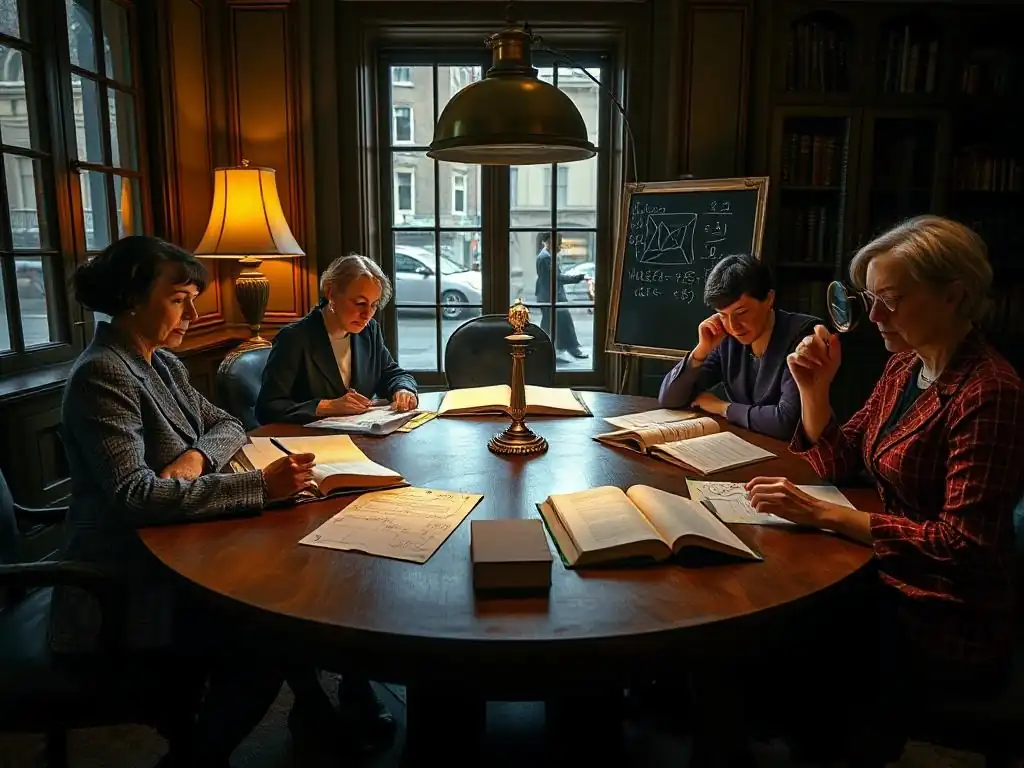
Welcome to WomenInScienceHistory.com!
Dive into the fascinating world of women’s contributions to mathematics history and uncover the untold stories of brilliant minds who shaped our understanding of the universe. Explore how these remarkable individuals defied societal norms and pushed the boundaries of knowledge, leaving an indelible mark on the quantitative frontiers we know today. Are you ready to discover the hidden figures who revolutionized mathematics?
- Introduction: Highlighting Women's Contributions to Mathematics in Industrial Engineering
- Early Pioneers: Laying the Foundation for Mathematical Applications in IE
- Mid-20th Century: Expanding the Scope of Mathematical Methods in IE
- Late 20th Century and Beyond: Modern Women Shaping IE with Advanced Mathematical Techniques
- Challenges Faced by Women in Mathematics within Industrial Engineering
- Celebrating the Achievements: Recognizing the Impact of Women's Mathematical Contributions
- The Future of Women in Mathematics and Industrial Engineering
- Conclusion: A Lasting Legacy of Women's Contributions to Mathematics in Industrial Engineering
-
Frequently Asked Questions
- What is the primary goal of WomenInScienceHistory.com?
- Why is it important to highlight women's contributions to mathematics history?
- What kind of information can I find on WomenInScienceHistory.com regarding women in mathematics?
- What challenges did women in mathematics history typically face?
- How does WomenInScienceHistory.com aim to inspire future generations?
- Final Reflection: Celebrating Enduring Mathematical Legacies
- Ignite Your Own IE Journey: Embrace the Power of Quantitative Thinking!
Introduction: Highlighting Women's Contributions to Mathematics in Industrial Engineering
Industrial Engineering (IE) stands at the nexus of people, processes, and technology, striving for efficiency and optimization across diverse sectors. At its core, IE is a highly quantitative discipline, deeply reliant on mathematical principles ranging from statistics and operations research to optimization and simulation. While the historical narrative often emphasizes male figures, women's contributions to mathematics history have been indispensable, shaping the very foundations and advancements of industrial engineering.
From the conceptualization of algorithms to the practical application of statistical control, female mathematicians have consistently pushed the boundaries of what is possible, often against significant societal obstacles. This article delves into the remarkable journeys of these pioneering women, illuminating their profound impact on IE's quantitative frontiers.
Early Pioneers: Laying the Foundation for Mathematical Applications in IE
Ada Lovelace: A Visionary's Influence on Computational Thinking
Ada Lovelace, born Augusta Ada Byron, is widely recognized as the first computer programmer, a visionary whose mathematical insights far predated the advent of modern computers. Her collaboration with Charles Babbage on his Analytical Engine in the mid-19th century led to her groundbreaking "Notes," which described an algorithm for the machine to compute Bernoulli numbers. This detailed explanation was not merely a description of the machine's capabilities but a conceptual leap, outlining how a machine could go beyond simple calculations to perform complex sequences of operations, essentially defining what we now understand as a computer program.
Lovelace's understanding that the Analytical Engine could process symbols beyond mere numbers laid the intellectual groundwork for computational thinking, a cornerstone of modern industrial engineering. Her work anticipated the use of algorithms for complex problem-solving, a methodology now crucial for optimizing intricate systems in IE, such as supply chain logistics, production scheduling, and resource allocation. Her foresight demonstrated an early, profound women's contribution to mathematics history that directly influences the quantitative methodologies employed in today's industrial systems.
Lillian Moller Gilbreth: Applying Psychology and Efficiency Principles with a Quantitative Base
Lillian Moller Gilbreth, often hailed as the "First Lady of Engineering," was a pivotal figure in the development of industrial engineering, uniquely blending psychological insights with rigorous quantitative analysis. Holding a Ph.D. in psychology from Brown University (1915), she applied scientific management principles to improve efficiency in industry and the home. Alongside her husband, Frank Gilbreth, she pioneered motion study and time study, techniques that systematically analyzed work processes to identify and eliminate wasted movements, thereby enhancing productivity.
Gilbreth's approach was deeply quantitative, involving precise measurements of time and motion, and developing innovative tools like the cyclograph and chronocyclegraph to capture and analyze worker movements. Her work on fatigue studies, ergonomics, and the human element in industrial processes was revolutionary, demonstrating how careful observation and statistical analysis could lead to significant improvements in worker well-being and output. Her legacy underscores a critical aspect of women's contributions to mathematics history within IE: the application of quantitative methods to understand and optimize human-centric systems, ensuring that efficiency gains were achieved with consideration for the individuals involved.
Mid-20th Century: Expanding the Scope of Mathematical Methods in IE
Operations Research Emergence: Women Applying Mathematical Models to Solve Complex Problems
The mid-20th century witnessed the emergence of Operations Research (OR) as a distinct discipline, born out of wartime efforts to optimize military strategies. This period saw numerous women mathematicians applying their quantitative skills to solve complex logistical and operational challenges, laying the groundwork for OR's integration into industrial engineering. These unsung heroes often worked behind the scenes, developing mathematical models that would later become standard tools in commercial and industrial applications.
For instance, women mathematicians contributed to the development and application of linear programming, queuing theory, and simulation models, crucial for optimizing resource allocation, managing waiting lines, and predicting system behavior. While specific individual names from this early period applying OR directly to industrial problems are often less publicized than their male counterparts, their collective expertise in areas like statistical analysis, matrix algebra, and differential equations was vital. Their work ensured that the nascent field of OR had a robust mathematical foundation, showcasing an often-overlooked aspect of women's contributions to mathematics history in shaping post-war industrial efficiency.
Grace Hopper: Her Contributions to Computer Programming and Simulation
Grace Hopper, a Rear Admiral in the U.S. Navy and a brilliant mathematician, played a monumental role in the development of computer programming, profoundly impacting the quantitative capabilities of industrial engineering. Beginning her career during World War II, she worked on the Harvard Mark I computer, where she developed the first compiler – a program that translates human-readable code into machine code. This innovation was a pivotal step towards making computers accessible to a broader range of users, moving beyond the highly specialized realm of machine language.
Hopper's vision led to the creation of FLOW-MATIC, one of the first data-processing programming languages, which significantly influenced the design of COBOL (Common Business-Oriented Language). Her work directly enabled the development of sophisticated simulation models, a cornerstone of modern IE. Industrial engineers today use simulation to test scenarios for production lines, supply chains, and service systems without disrupting actual operations, a capability made possible by the accessible programming languages and computing architectures that Hopper championed. Her enduring legacy is a testament to the transformative women's contributions to mathematics history in making complex computational tools practical for industrial application.
Statistical Analysis Advances: Female Mathematicians Improving Quality Control and Process Optimization
The post-World War II era also saw significant advancements in statistical analysis, with numerous female mathematicians making crucial contributions to quality control and process optimization within industrial settings. As industries shifted towards mass production and global competition, the need for robust methods to ensure product quality and process efficiency became paramount. Women with strong mathematical backgrounds were instrumental in developing and applying these statistical techniques.
For example, many female statisticians worked on the refinement of statistical process control (SPC) charts, hypothesis testing, and experimental design methodologies. These tools allowed industrial engineers to monitor processes, identify deviations from desired standards, and systematically improve product quality and reduce waste. Their efforts contributed to the widespread adoption of quality management systems, which are foundational to modern manufacturing and service industries. These women's contributions to mathematics history were critical in transforming quality control from an inspection-based approach to a preventative, data-driven methodology, ensuring greater reliability and efficiency across diverse industrial operations.
Late 20th Century and Beyond: Modern Women Shaping IE with Advanced Mathematical Techniques
The Rise of Computer Science: Women Leading the Development of Simulation and Optimization Algorithms
As computer science burgeoned in the latter half of the 20th century, women continued to be at the forefront of developing sophisticated simulation and optimization algorithms—tools that became indispensable to industrial engineering. The increasing complexity of global supply chains, manufacturing processes, and service systems demanded more powerful computational methods to manage and improve efficiency. Female mathematicians and computer scientists rose to this challenge, designing the underlying algorithms that power today's advanced IE software.
These women contributed to areas such as discrete-event simulation, which models the behavior of complex systems over time, allowing engineers to experiment with different scenarios virtually. They also advanced optimization algorithms, including linear programming solvers, integer programming, and heuristic approaches, which find the best possible solutions for resource allocation, scheduling, and logistics problems. Their work on computational efficiency and algorithmic robustness ensured that these mathematical tools could tackle real-world, large-scale industrial challenges, further cementing women's contributions to mathematics history in the digital age of industrial engineering.
Margaret H. Wright: Her Contributions to Optimization Algorithms
Margaret H. Wright stands out as a prominent figure in the field of numerical optimization, a discipline central to modern industrial engineering. Her extensive research and development in optimization algorithms, particularly for large-scale problems, have had a profound impact on how industries solve complex decision-making challenges. After earning her Ph.D. in computer science from Stanford University, Wright spent significant time at Bell Laboratories, a hub of innovation, where she conducted pioneering work on algorithms for unconstrained and constrained optimization.
Her contributions include the development of robust and efficient algorithms for solving nonlinear optimization problems, which are prevalent in industrial applications such as facility location, production planning, and network design. Wright's emphasis on the practical implementation and numerical stability of these algorithms ensured their real-world applicability. Her work has enabled industrial engineers to tackle problems with millions of variables and constraints, leading to more precise and impactful solutions for resource allocation, scheduling, and system design. Wright's legacy exemplifies the critical women's contributions to mathematics history in refining the quantitative tools that drive efficiency and innovation in contemporary industrial engineering.
Data Analytics and Machine Learning: Women Leveraging Mathematical Expertise for Predictive Modeling in IE
In the 21st century, the explosion of data has propelled data analytics and machine learning (ML) to the forefront of industrial engineering, and women are increasingly leveraging their mathematical expertise to drive innovation in predictive modeling. IE professionals now routinely use vast datasets to optimize processes, predict failures, and enhance decision-making, and female mathematicians are instrumental in developing and applying these advanced techniques.
Women are contributing to the development of sophisticated algorithms for predictive maintenance, where ML models analyze sensor data from machinery to forecast potential breakdowns, thereby reducing downtime and maintenance costs. They are also applying their skills to demand forecasting in supply chains, using time series analysis and machine learning to predict customer needs with greater accuracy, leading to optimized inventory levels and reduced waste.
Furthermore, in areas like personalized manufacturing and smart factories, female data scientists and industrial engineers are designing models that adapt to real-time conditions, continuously improving efficiency and product quality. These ongoing women's contributions to mathematics history are transforming industrial engineering into a more data-driven, predictive, and responsive discipline.
Challenges Faced by Women in Mathematics within Industrial Engineering

Overcoming Gender Bias: Stories of Resilience and Perseverance
Throughout history, women pursuing careers in mathematics and industrial engineering have frequently encountered significant gender bias, requiring immense resilience and perseverance to succeed. From subtle prejudices to overt discrimination, these biases often manifested as doubts about their capabilities, exclusion from informal networks, or being overlooked for promotions. Many pioneering women faced skepticism regarding their mathematical prowess, despite demonstrating exceptional talent and groundbreaking achievements.
For example, some female mathematicians in the mid-20th century were relegated to "computer" roles, performing complex calculations by hand, while their male counterparts were given leadership positions or credit for collective work. Stories abound of women having to work twice as hard to prove their competence or having their ideas initially dismissed, only to be later accepted when proposed by a male colleague. These challenges underscore the systemic barriers that hindered women's contributions to mathematics history in engineering fields, making the achievements of those who broke through even more remarkable and inspiring.
Limited Opportunities: Fighting for Recognition and Advancement
Beyond direct bias, women in mathematics and industrial engineering often faced systemic limitations in educational and professional opportunities. Historically, access to advanced mathematical training and engineering programs was restricted or discouraged for women, leading to a smaller pipeline of female talent entering these fields. Even for those who managed to gain an education, professional advancement was often stymied by a lack of recognition and limited avenues for career progression.
Many talented female mathematicians found themselves in supportive roles rather than leading research or engineering teams, and their publications or discoveries were sometimes marginalized or attributed to male collaborators. Access to funding, prestigious academic positions, or leadership roles in industry remained disproportionately low for women for decades. This persistent struggle for equitable opportunities highlights the profound impact these societal constraints had on the visibility and acknowledgment of women's contributions to mathematics history within industrial engineering, despite their significant intellectual capabilities.
Balancing Family and Career: The Unique Struggles of Female Mathematicians in IE
The societal expectation that women primarily bear the responsibility for family and home life has presented unique and formidable challenges for female mathematicians and industrial engineers striving for career success. Balancing demanding professional careers, especially in fields requiring intensive intellectual focus and long hours, with family responsibilities often led to difficult choices and sacrifices.
Historically, the lack of institutional support, such as flexible work arrangements, affordable childcare, or adequate maternity leave, forced many talented women to scale back their careers, pause their research, or leave the profession entirely. The "motherhood penalty" – the phenomenon where women's careers suffer after childbirth – was particularly acute in STEM fields, where continuous engagement with rapidly evolving knowledge is crucial. These struggles underscore a significant yet often unacknowledged barrier to women's contributions to mathematics history in industrial engineering, demonstrating how societal structures, not just individual bias, impacted their professional trajectories.
Celebrating the Achievements: Recognizing the Impact of Women's Mathematical Contributions
Awards and Recognition: Highlighting Notable Achievements in IE
While historical recognition has often lagged, contemporary efforts are increasingly highlighting the notable achievements of women in industrial engineering and related mathematical fields through prestigious awards and honors. These acknowledgments serve to correct historical oversights and inspire future generations. For instance, the Institute for Operations Research and the Management Sciences (INFORMS), a leading professional society for OR and IE, has made strides in recognizing female excellence.
Awards like the Franz Edelman Award for Achievement in Operations Research and the Management Sciences, while not exclusively for women, have seen increasing female representation in recent decades, acknowledging their impactful applications of mathematical models in industry. Furthermore, specific awards such as the WORMS (Women in OR/MS) Award for the Advancement of Women in OR/MS celebrate individuals who have significantly contributed to fostering opportunities for women in the field. These recognitions are crucial in bringing to light the profound women's contributions to mathematics history within industrial engineering, ensuring their intellectual legacy is appropriately celebrated and documented.
Mentorship and Advocacy: Supporting Future Generations of Female Mathematicians in IE
The sustained growth and success of women in mathematics within industrial engineering are significantly bolstered by robust mentorship programs and dedicated advocacy efforts. Recognizing the historical barriers, many organizations and individuals are now actively working to create supportive environments and pathways for aspiring female mathematicians and engineers. Mentorship provides invaluable guidance, helping young women navigate academic challenges, career decisions, and professional development.
Professional societies like the Society of Women Engineers (SWE) and INFORMS' WORMS forum actively promote mentorship initiatives, connecting students and early-career professionals with experienced female leaders in the field. These networks offer a platform for sharing experiences, offering advice, and building a sense of community. Advocacy groups, meanwhile, work to address systemic issues, promoting diversity and inclusion policies in academia and industry. These concerted efforts are vital in ensuring that future women's contributions to mathematics history in industrial engineering are not only possible but actively encouraged and celebrated from the outset of their careers.
The Future of Women in Mathematics and Industrial Engineering
Encouraging STEM Education: Empowering Young Women to Pursue Mathematical Careers
The future of women in mathematics and industrial engineering hinges significantly on encouraging robust STEM education from an early age, thereby empowering young women to confidently pursue mathematical careers. Initiatives focused on sparking interest in science, technology, engineering, and mathematics among girls are crucial for building a diverse talent pipeline. Programs like "Girls Who Code," "EngineerGirl," and various STEM summer camps aim to demystify these fields and showcase their creative and problem-solving potential.
By providing hands-on experiences, relatable role models, and supportive learning environments, these programs counter prevailing stereotypes and build confidence in mathematical abilities. Increased representation of female teachers and professors in STEM also plays a vital role in inspiring the next generation. The aim is to ensure that every young woman who demonstrates an aptitude for mathematics sees a clear and welcoming path towards a career in industrial engineering, thereby securing continued and expanding women's contributions to mathematics history in the field.
Promoting Diversity and Inclusion: Creating a More Equitable Field
Creating a truly equitable field for women in mathematics and industrial engineering requires a sustained commitment to promoting diversity and inclusion within academic institutions and corporate environments. Beyond simply increasing representation, genuine inclusion involves fostering cultures where all voices are heard, valued, and respected, and where opportunities are truly merit-based. This entails addressing unconscious biases, implementing fair hiring and promotion practices, and establishing supportive workplace policies.
Many universities and companies are now implementing diversity and inclusion initiatives, including unconscious bias training, mentorship programs, and flexible work arrangements designed to support diverse needs. Leadership roles are increasingly being filled by women, providing visible examples of success and influencing organizational culture. These efforts are essential to dismantle systemic barriers and ensure that the industrial engineering profession benefits from the full breadth of talent available, guaranteeing that future women's contributions to mathematics history are recognized and integrated without prejudice.
Opportunities in Emerging Technologies: Women Leading the Way in Supply Chain Optimization
As industrial engineering continues to evolve with emerging technologies such as artificial intelligence, blockchain, and advanced data analytics, women are increasingly leading the way in applying these innovations, particularly in areas like supply chain optimization. The inherent complexity of global supply chains, exacerbated by recent disruptions, demands sophisticated mathematical modeling and computational solutions, creating new frontiers where female expertise is invaluable.
Women are at the forefront of designing algorithms for resilient supply chains, leveraging AI for predictive demand forecasting, and implementing blockchain for enhanced transparency and traceability. Their analytical rigor and problem-solving skills are critical in developing innovative solutions for logistics, inventory management, and network design in an increasingly interconnected world. These new technological landscapes offer unparalleled opportunities for women to make significant and highly visible women's contributions to mathematics history within industrial engineering, shaping the efficiency and sustainability of global commerce for decades to come.
Conclusion: A Lasting Legacy of Women's Contributions to Mathematics in Industrial Engineering
The journey of women in mathematics within industrial engineering is a testament to their unwavering intellect, perseverance, and profound impact on a discipline that underpins modern efficiency and progress. From Ada Lovelace's foundational insights into computational thinking to Lillian Moller Gilbreth's pioneering work in human factors and efficiency, and Grace Hopper's revolutionary contributions to computer programming, women have consistently laid the quantitative groundwork for IE's evolution.
In the mid-20th century, female mathematicians were instrumental in the emergence of operations research and the advancement of statistical quality control, subtly yet powerfully shaping industrial processes. As the field embraced computer science and data analytics, women like Margaret H. Wright continued to push the boundaries of optimization algorithms and predictive modeling.
Despite facing significant gender bias, limited opportunities, and the unique challenges of balancing career and family, these trailblazers forged paths that continue to inspire. Their achievements, now increasingly recognized through awards and dedicated advocacy, underscore the enduring women's contributions to mathematics history within industrial engineering. Looking forward, encouraging STEM education, promoting diversity, and embracing emerging technologies present unprecedented opportunities for women to lead and innovate, ensuring that their mathematical minds continue to advance IE's quantitative frontiers, leaving an indelible and expanding legacy for generations to come.
Frequently Asked Questions
What is the primary goal of WomenInScienceHistory.com?
The website aims to celebrate the contributions of women to various scientific fields throughout history, highlighting their groundbreaking work and the challenges they faced in male-dominated arenas. It seeks to inspire future generations by sharing these often-overlooked narratives.
Why is it important to highlight women's contributions to mathematics history?
Highlighting these contributions corrects historical inaccuracies by showcasing the significant impact women have had on mathematics. It also serves as a source of inspiration and empowerment for girls and women pursuing careers in STEM fields.
What kind of information can I find on WomenInScienceHistory.com regarding women in mathematics?
You can find biographies of pioneering female mathematicians, discussions of their groundbreaking mathematical work, and insights into the obstacles they overcame in their careers. The focus is on recognizing and celebrating their achievements.
What challenges did women in mathematics history typically face?
Women often faced gender bias and discrimination in education and employment, limited access to resources, and a lack of recognition for their accomplishments. They had to overcome societal expectations and prejudice to pursue their mathematical passions.
How does WomenInScienceHistory.com aim to inspire future generations?
By sharing the stories of successful female mathematicians, the website aims to demonstrate that women can excel in STEM fields. These stories provide role models and encouragement, fostering a belief in one's ability to succeed despite obstacles.
Final Reflection: Celebrating Enduring Mathematical Legacies
The stories we've explored highlight the often-overlooked, yet profoundly impactful, contributions of women to the quantitative foundations of Industrial Engineering. Their pioneering work, often achieved against significant societal barriers, continues to shape the algorithms, models, and optimization techniques that drive modern industries. Recognizing and celebrating these legacies is not merely an act of historical correction, but a vital step towards fostering a more inclusive and innovative future for STEM fields.
This journey through the lives and achievements of these mathematical minds underscores the enduring power of perseverance and the importance of recognizing diverse perspectives in shaping our world. The impact of their work resonates even today, influencing everything from supply chain management to financial modeling. Mathematics knows no races or geographic boundaries; for mathematics, the cultural world is one country.
- David Hilbert. This quote perfectly encapsulates the universality of mathematics and the potential for brilliance to emerge from any background, a potential we must actively nurture and support.
Let us not simply admire these women from afar, but rather, be inspired by their resilience and dedication. Consider how you can actively champion inclusivity and equity within your own spheres of influence, whether it's through mentorship, advocacy, or simply by amplifying the voices of underrepresented individuals in STEM. The future of innovation depends on our collective commitment to creating a world where every mathematical mind has the opportunity to flourish.
Ignite Your Own IE Journey: Embrace the Power of Quantitative Thinking!
Thank you for exploring the stories of these inspiring women who shaped the world of Industrial Engineering with their mathematical prowess. Now, it's your turn to contribute to this vibrant field!
- **Dive deeper into a specific IE area that piqued your interest – research, implement, and track your results. **
- Share this article with friends, family, or colleagues who appreciate stories of resilience and groundbreaking contributions.
- Start a conversation: Discuss the impact of quantitative methods in modern IE with your peers or online communities.
What small, quantitative step will you take today to make a big difference in your chosen field?