
Blueprints of Courage: Untold Stories of Resilience from 19th Century Women in Engineering

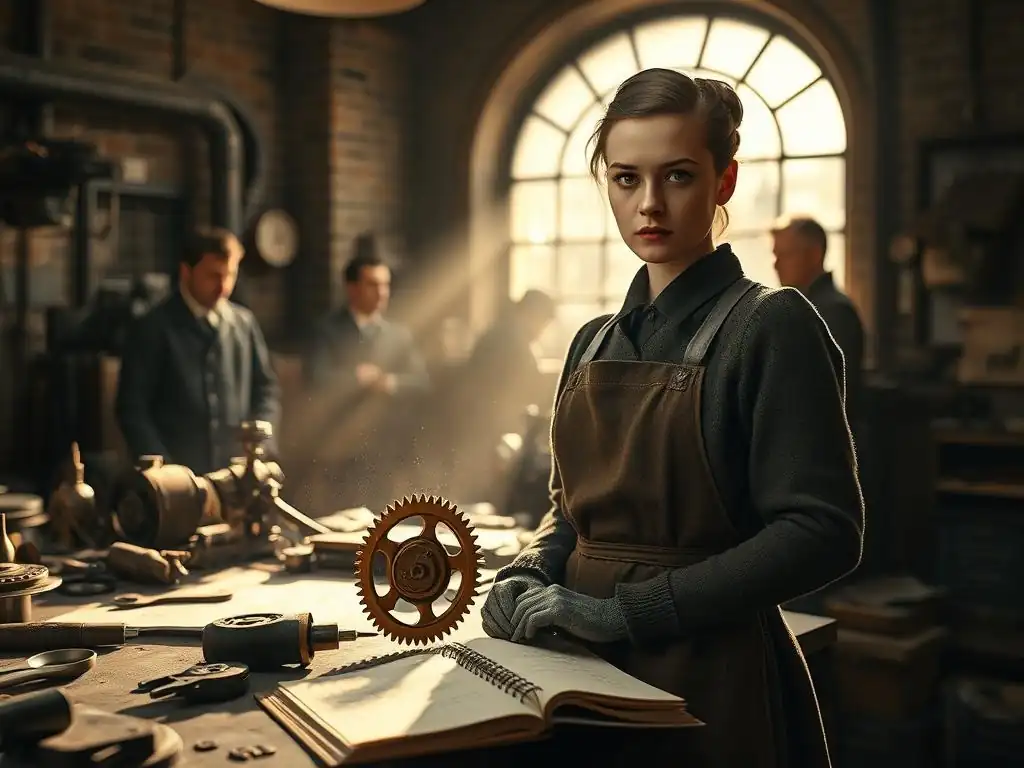
Welcome to WomenInScienceHistory.com, where we unearth the remarkable stories of women who shaped the scientific landscape. Delve into a world where brilliance defied convention and determination overcame obstacles. Are you ready to explore the untold narratives of resilience? Our featured article shines a light on the 19th century women engineers who fearlessly pioneered in a male-dominated field. Discover their groundbreaking contributions, the challenges they faced, and the enduring legacy they left behind. What innovations did they champion, and how did they pave the way for future generations? Prepare to be inspired.
- Introduction: Unveiling the Legacy of 19th Century Women Engineers
- Pioneers in a Patriarchal World: Profiles of Remarkable 19th Century Women Engineers
- The Impact of 19th Century Female Engineers on Industrial Progress
- The Challenges and Triumphs of Women in Engineering During the 1800s
- Beyond the Blueprints: Exploring the Personal Lives of 19th Century Women Engineers
- Resources and Further Reading on 19th Century Women in STEM
-
Frequently Asked Questions
- What were some of the biggest obstacles faced by 19th century women engineers?
- Can you name a 19th century woman engineer whose contributions are particularly noteworthy?
- How did 19th century women engineers contribute to society despite facing such challenges?
- What resources are available to learn more about 19th century women engineers and their work?
- Why is it important to highlight the stories of 19th century women engineers today?
- Final Reflection: Echoes of Ingenuity
- Unveil Your Inner Pioneer: Embrace Engineering Today!
Introduction: Unveiling the Legacy of 19th Century Women Engineers
The Forgotten Contributions of Women in 19th Century Engineering
The narrative of 19th century engineering often spotlights towering male figures, neglecting the crucial, albeit often uncredited, contributions of women. In a period marked by rapid industrialization and monumental infrastructure projects, societal norms largely relegated women to domestic spheres, severely limiting their access to formal education and professional recognition in fields like engineering. This historical oversight has led to a significant gap in our understanding of how these early female engineers navigated and influenced the technological landscape of their time.
Despite these formidable barriers, many women possessed remarkable ingenuity and determination, applying engineering principles in both overt and subtle ways. From assisting male relatives on grand projects to pioneering their own inventions, these 19th century women engineers left an indelible mark, even if their "blueprints of courage" remained largely unacknowledged in official records or public discourse. Their stories challenge the traditional view of engineering as an exclusively male domain.
Why These Stories of Female Engineers Matter Today
Unearthing the stories of these pioneering 19th century women engineers is not merely an academic exercise; it is a vital endeavor for contemporary society. Their struggles against pervasive gender bias and their triumphs in the face of adversity offer powerful lessons in resilience, perseverance, and innovation. By highlighting these often-untold narratives, we can inspire a new generation of women and girls to pursue careers in STEM, demonstrating that intellectual capacity and engineering prowess are not bound by gender.
Furthermore, recognizing the contributions of these early female engineers enriches our collective history of scientific and technological progress. It provides a more accurate and inclusive account of how our modern world was shaped, acknowledging the diverse talents that contributed to its development. Understanding the challenges faced by these 19th century women engineers also informs ongoing efforts to promote diversity, equity, and inclusion within today's engineering professions, fostering environments where all innovators can thrive.
Pioneers in a Patriarchal World: Profiles of Remarkable 19th Century Women Engineers
Emily Warren Roebling: Overcoming Obstacles in Civil Engineering
Early Life and Education Challenges
Emily Warren Roebling, born in 1843, did not receive formal engineering training, a common challenge for 19th century women. Her education was primarily through private tutoring and finishing schools, which, while providing a strong foundation in subjects like mathematics and science, did not equate to the specialized engineering degrees available to men. Her entry into the world of civil engineering was entirely unconventional, beginning through her marriage to Washington Roebling, the chief engineer of the Brooklyn Bridge.
When her husband became severely ill with caisson disease in 1872, Emily stepped into an unprecedented role. She essentially undertook a self-directed, intensive "apprenticeship," learning advanced mathematics, stress analysis, cable construction, and material strength directly from her incapacitated husband. This practical, hands-on acquisition of knowledge, coupled with her innate intelligence, transformed her into a de facto engineer, navigating complex technical drawings and calculations that were far beyond the scope of typical female education of the era.
Key Engineering Achievements and Innovations
Emily Warren Roebling became the primary liaison between her bedridden husband and the Brooklyn Bridge construction site, effectively managing one of the most ambitious civil engineering projects of the 19th century. She performed daily inspections, communicated with workers, politicians, and contractors, and oversaw the intricate details of the bridge's construction. Her responsibilities included drafting progress reports, negotiating with suppliers for steel and other materials, and even handling the bridge's complex financial accounts.
Her detailed understanding of engineering principles allowed her to confidently address technical queries and resolve disputes, ensuring the project stayed on track. She was instrumental in the final phases of cable spinning and the meticulous placement of the bridge's massive components. Her unwavering dedication and technical acumen were critical in bringing the Brooklyn Bridge to completion in 1883, a monumental achievement that stands as a testament to the capabilities of 19th century women engineers.
Societal Barriers Faced and How She Overcame Them
Emily Warren Roebling faced considerable skepticism and resistance from a male-dominated engineering establishment and a public unaccustomed to seeing a woman in such a prominent technical role. Initially, some questioned her authority and competence, viewing her as merely a messenger. The idea of a woman directing such a complex engineering feat was almost unthinkable in the 19th century.
However, her consistent demonstration of technical proficiency, her ability to articulate complex engineering concepts, and her unwavering control over the project gradually earned her respect. She strategically used her position to communicate her husband's directives while simultaneously proving her own mastery of the project's intricacies. By the time the Brooklyn Bridge was completed, her indispensable role was widely acknowledged, with many recognizing her as the true driving force behind its success, thus breaking significant societal barriers for 19th century women.
Sarah Guppy: A Trailblazer in Civil Engineering and Invention
Breaking Gender Norms in Engineering and Design
Sarah Guppy, born in 1770 in Bristol, England, was an extraordinary figure who defied the rigid gender expectations of the early 19th century by actively engaging in invention and civil engineering. At a time when women were largely excluded from public intellectual life and professional fields, Guppy pursued her scientific and technical interests with remarkable tenacity. She was not a formally trained engineer, but her inventive spirit and practical mind led her to conceptualize solutions to real-world problems.
Her involvement in the engineering world was particularly notable through her association with prominent engineers of her time, including Isambard Kingdom Brunel, who was a family friend. Despite the prevailing norms, Guppy was not confined to domestic life; she actively participated in discussions about new technologies and industrial advancements, demonstrating a keen understanding of mechanical and structural principles that were unusual for a woman of her era.
Significant Contributions to Bridge Design and Other Inventions
Sarah Guppy is most renowned for her 1811 patent for "constructing and erecting bridges and railways without centering." This innovative design focused on improving the foundations of bridges, particularly for suspension bridges, by creating a more stable and cost-effective method of construction. While her specific design was not directly implemented in major projects like the Clifton Suspension Bridge, her conceptual contribution to bridge engineering was significant, influencing later designs and demonstrating an early understanding of suspension bridge mechanics.
Beyond bridge design, Guppy's inventive mind explored various other fields. In 1807, she patented a method for improving the efficiency of ships by removing barnacles, an early form of anti-fouling technology. She also designed and patented a "bed-frame with means for exercising" in 1828, showcasing her versatility and practical approach to everyday challenges. Her patents highlight her broad interest in applied science and her unique position as one of the few 19th century women to formally claim intellectual property in engineering and design.
Legacy and Impact on Future Generations
Sarah Guppy's legacy lies not just in her specific inventions but in her very existence as a patented female inventor and conceptual engineer in the early 19th century. Her ability to secure patents and engage with leading engineers demonstrated that women were capable of sophisticated technical thought and innovation, challenging the prevailing notion of female intellectual inferiority. She served as a subtle but powerful example that 19th century women could contribute significantly to industrial progress.
Although her direct impact on major engineering projects might have been indirect, her pioneering spirit helped to slowly erode the barriers faced by women in scientific and technical fields. Her story is a testament to the individual courage required to pursue unconventional paths and lays a foundation for acknowledging the broader, often unrecorded, contributions of other 19th century women who worked behind the scenes in engineering and industry.
Ada Lovelace: Redefining Roles in Analytical Engine Programming
Navigating a Male-Dominated Intellectual Landscape
Ada Lovelace, born Augusta Ada Byron in 1815, was the daughter of the poet Lord Byron, but her mother, Anne Isabella Milbanke, insisted on a rigorous education focused on mathematics and science, a stark contrast to the typical female education of the 19th century. This unique upbringing provided Lovelace with an intellectual foundation that enabled her to engage with complex scientific and mathematical concepts, placing her in a rare position among 19th century women.
Her intellectual journey led her to a pivotal collaboration with Charles Babbage, the inventor of the Analytical Engine, a precursor to the modern computer. While Babbage conceived the mechanical aspects of the machine, Lovelace's genius lay in her profound understanding of its theoretical potential. She moved within a small, elite circle of male scientists and mathematicians, holding her own in discussions and demonstrating an intellectual prowess that challenged the prevailing gendered assumptions about scientific thought.
Innovative Programming Concepts and Visionary Ideas
Ada Lovelace's most significant contribution came in 1843, when she translated and annotated an article by Italian mathematician Luigi Menabrea about Babbage's Analytical Engine. Her "Notes" were three times longer than the original article and contained what is widely recognized as the world's first computer program – an algorithm designed to calculate Bernoulli numbers, intended to be carried out by the Analytical Engine. This was a groundbreaking feat for any individual, let alone a 19th century woman.
Beyond the specific algorithm, Lovelace's notes revealed her visionary understanding of the Analytical Engine's capabilities. She foresaw that the machine could do more than just perform arithmetic calculations; it could manipulate symbols, process music, and generate graphics, essentially predicting the broad capabilities of modern computing. She conceptualized the idea of a machine being able to execute a sequence of operations, moving beyond a simple calculator to a general-purpose processor, a truly revolutionary insight.
Recognition (or Lack Thereof) During Her Lifetime
Despite the profound implications of her work, Ada Lovelace's contributions were largely unrecognized during her lifetime. The Analytical Engine itself was never fully built, meaning her theoretical programs could not be executed or demonstrated. Furthermore, her notes were published under the initials "A.A.L." to obscure her gender, a common practice for 19th century women seeking intellectual credibility in male-dominated fields.
It was not until the mid-20th century, with the advent of electronic computers, that the true significance of Lovelace's work was understood and celebrated. She was posthumously recognized as the "first computer programmer," and her ideas on general-purpose computing proved remarkably prescient. This belated recognition highlights the systemic challenges faced by 19th century women, whose intellectual brilliance often went unacknowledged or was attributed to male counterparts, only to be rediscovered much later.
The Impact of 19th Century Female Engineers on Industrial Progress
How Women Shaped the Landscape of 19th Century Technological Advancements
While often operating outside formal institutions, 19th century women played a more significant role in technological advancements than commonly acknowledged. Many contributed through family businesses, particularly in textiles, where women were often involved in the design, operation, and even improvement of machinery. Their intimate knowledge of production processes led to practical innovations that enhanced efficiency and product quality, even if these improvements were not formally patented under their names.
Beyond direct invention, women also shaped technological landscapes through their roles as consumers, driving demand for new domestic technologies and influencing the design of household appliances. Their practical insights into daily life often sparked innovations in areas like food preservation, heating, and sanitation, contributing to the overall progress of industrial society. The ingenuity of these 19th century women, whether in factories or homes, was an integral part of the era's technological evolution.
Specific Examples: Women's Roles in Infrastructure Development and Technological Innovation
Emily Warren Roebling's management of the Brooklyn Bridge construction is a prime example of a 19th century woman directly impacting massive infrastructure development. Her technical oversight ensured the timely and successful completion of one of the era's most iconic engineering marvels. Her work demonstrates that women could, and did, manage complex, large-scale projects traditionally reserved for men.
In the realm of invention, Sarah Guppy's patents for bridge foundations and ship improvements illustrate women's direct contributions to civil engineering and maritime technology. While not always leading to widespread adoption, these patents represent a tangible record of 19th century women's innovative thinking. Furthermore, many unrecorded innovations by women in agricultural machinery, domestic tools, and textile production further underscore their widespread, if often invisible, influence on the practical application of engineering principles.
The Influence of Early Female Engineers on Modern Engineering Practices
The pioneering efforts of 19th century women engineers, though often unheralded, laid crucial groundwork for future generations. Their very existence and accomplishments, however difficult to achieve, served as proof that women possessed the intellectual capacity and practical skills necessary for engineering. This quiet revolution challenged entrenched beliefs, even if the shift was slow.
The legacy of these early female engineers can be seen in the ongoing efforts to diversify the engineering profession today. Their stories provide historical context for the fight for gender equality in STEM fields, demonstrating that the barriers faced by women are historical and societal, not based on inherent ability. Understanding how 19th century women navigated and influenced engineering provides valuable lessons for modern initiatives aimed at fostering inclusive and equitable engineering environments, ensuring that talent from all backgrounds is recognized and utilized.
The Challenges and Triumphs of Women in Engineering During the 1800s
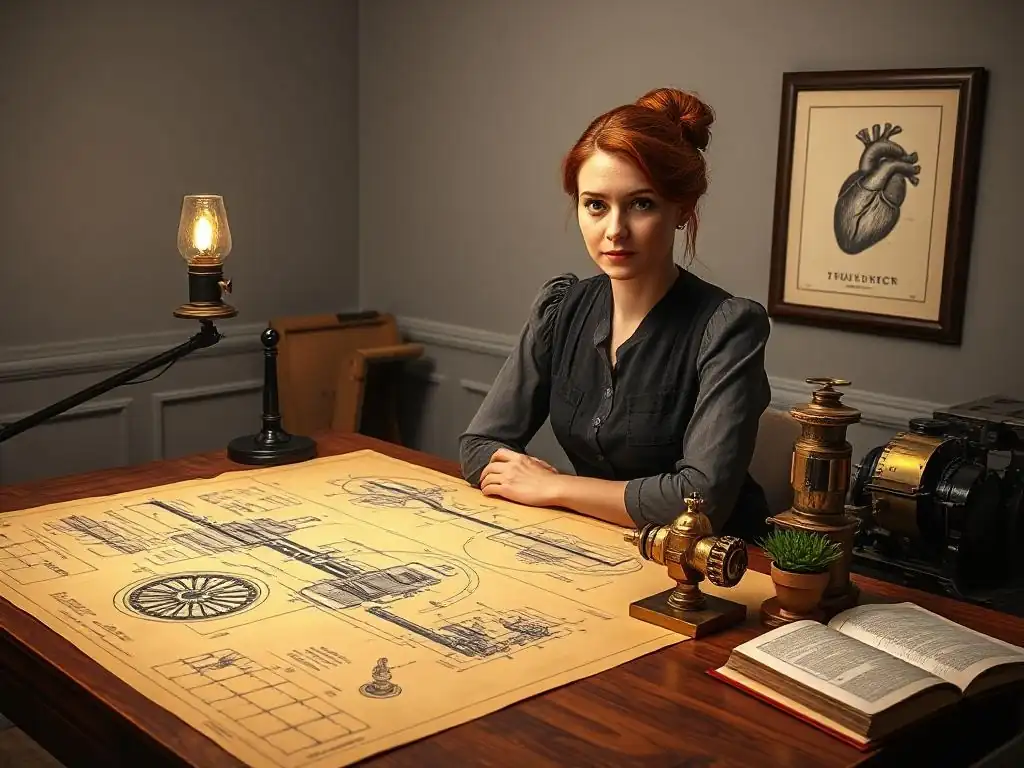
Gender Bias and Discrimination in 19th Century Engineering Professions
The 19th century was characterized by deeply ingrained societal beliefs that women were intellectually and physically unsuited for demanding professions like engineering. This pervasive gender bias manifested as explicit exclusion from professional societies, such as the Institution of Civil Engineers, which did not admit women until well into the 20th century. Public perception often viewed women's involvement in technical work as scandalous or unseemly.
This discrimination created immense obstacles for any woman aspiring to be an engineer. They were denied apprenticeships, formal employment opportunities, and often, public credit for their work. Emily Warren Roebling, for instance, faced initial skepticism from engineers and the press who questioned her technical competence. The prevailing attitude was that engineering was a male domain, and any woman who ventured into it was defying natural order, making the path for 19th century women engineers exceptionally challenging.
Access to Education and Training: The Limited Opportunities for Women
A primary barrier for 19th century women interested in engineering was the near-total lack of access to formal engineering education. Universities and technical schools were almost exclusively open to men. Women's education, if available, typically focused on domestic skills, arts, or basic sciences, not specialized technical training. This educational deficit made it incredibly difficult for women to acquire the theoretical knowledge and practical skills required for engineering.
Consequently, aspiring female engineers had to seek unconventional paths. Many, like Emily Warren Roebling, learned through informal apprenticeships within their families, often from a husband or father. Others, like Ada Lovelace, benefited from private tutors and self-study, leveraging personal resources to gain advanced mathematical and scientific knowledge. These limited and often self-directed educational routes highlight the extraordinary determination required for 19th century women to gain any foothold in engineering.
Stories of Perseverance: Overcoming Adversity to Achieve Engineering Success
Despite the overwhelming societal and institutional barriers, numerous 19th century women demonstrated remarkable perseverance to achieve engineering success. Emily Warren Roebling's unwavering dedication to the Brooklyn Bridge project, despite her husband's illness and public skepticism, stands as a powerful testament to her resilience. Her ability to master complex engineering details and manage a massive construction project under immense pressure is a triumph over adversity.
Similarly, Ada Lovelace's intellectual pursuit of computing theory, culminating in the first computer program, showcases her determination to push the boundaries of knowledge in a field largely ignored or misunderstood in her time. Her visionary ideas, developed in isolation and without the support of a formal scientific community, reflect a profound personal commitment. These stories of 19th century women engineers are not just about technical achievement, but about sheer courage in the face of a world that actively sought to exclude them.
Beyond the Blueprints: Exploring the Personal Lives of 19th Century Women Engineers
Balancing Professional Ambitions with Societal Expectations
For 19th century women engineers, pursuing professional ambitions meant navigating a complex web of societal expectations that primarily confined women to domestic roles. Many faced the daunting task of balancing their intellectual and professional aspirations with the demands of family life, household management, and child-rearing. This dual burden often required immense personal sacrifice and ingenuity to maintain a semblance of normalcy while engaging in groundbreaking work.
The pressure to conform was immense, and those who defied it often did so at great personal cost, facing social ostracization or criticism. Emily Warren Roebling, for example, maintained a public facade of merely assisting her husband, even as she performed the duties of chief engineer. This delicate balance between visible compliance and private defiance was a common strategy for 19th century women seeking to make their mark in male-dominated fields.
Support Networks and Mentorship: Who Helped These Women Succeed?
Crucially, many 19th century women engineers benefited from the support, however limited, of key individuals, often male relatives. Ada Lovelace's mother ensured she received a rigorous education in mathematics and science, and Charles Babbage, while challenging, provided the intellectual partnership that allowed her programming theories to flourish. Similarly, Emily Warren Roebling's husband, Washington Roebling, trusted her implicitly with the Brooklyn Bridge project, providing her with the unique opportunity and knowledge transfer.
These informal mentorships and familial support systems were often the only pathways for women to gain access to the knowledge, resources, and opportunities necessary to pursue engineering. While formal mentorship programs for 19th century women were non-existent, these personal connections, built on trust and mutual respect, were vital in overcoming the systemic barriers and enabling their remarkable achievements.
The Lasting Impact of Their Personal Sacrifices
The personal sacrifices made by 19th century women engineers were profound. They often gave up public recognition, traditional social standing, and sometimes even their health in pursuit of their intellectual passions. Their innovative work was frequently uncredited, attributed to male counterparts, or simply forgotten by history for decades. This lack of contemporary acknowledgment was a significant personal cost.
However, these sacrifices paved a crucial path for future generations. By demonstrating their capabilities and pushing against the boundaries of what was considered acceptable for women, they slowly, incrementally, opened doors. Their "blueprints of courage" were not just technical plans but personal narratives of resilience that ultimately contributed to a more inclusive future for women in STEM. Their legacy is not only in the structures they helped build or the ideas they conceived but in the silent battles they fought to prove women's intellectual worth.
Resources and Further Reading on 19th Century Women in STEM
Books and Articles Highlighting Female Engineers of the 1800s
- Biographies focused on individual pioneering women who contributed to engineering and science during the 19th century.
- Academic studies and scholarly articles exploring the historical context of women's roles in industrial development and technological innovation.
- Collections of essays and edited volumes that specifically address the overlooked narratives of female scientists, inventors, and engineers from the 1800s.
- Texts that analyze the societal barriers and gender biases faced by women pursuing technical fields in the Victorian era.
Archives and Historical Societies Dedicated to Women's Contributions in Science and Technology
- University archives that may hold collections related to early female students who pursued scientific or technical subjects, even if not formally recognized as engineers.
- National and local historical societies preserving industrial heritage, which might contain records or personal papers of women involved in engineering-related family businesses or inventions.
- Specialized women's history collections and research centers that focus on the intellectual and professional lives of women across various disciplines, including early STEM fields.
- Museums of science and technology that curate exhibits or maintain databases on historical figures, including those who may have been uncredited 19th century women engineers.
Online Resources for Researching 19th Century Women in Engineering
- Digital libraries and online repositories of historical documents, including digitized patents, letters, and scientific publications from the 19th century that may feature women's contributions.
- Databases of historical patent records, allowing for searches by inventor names or categories, which can reveal female patentees from the era.
- Academic journals with digital archives focusing on the history of science, technology, and engineering, often containing research articles on forgotten figures, including 19th century women.
- Educational websites and encyclopedias dedicated to women's history or the history of STEM, providing summaries and further research avenues on pioneering female engineers.
Frequently Asked Questions
What were some of the biggest obstacles faced by 19th century women engineers?
The biggest obstacles included social prejudice and lack of educational opportunities. They also faced difficulty in gaining professional recognition in a male-dominated field.
Can you name a 19th century woman engineer whose contributions are particularly noteworthy?
While formally recognized engineers were rare, many women contributed to engineering innovations. Consider Ada Lovelace, often considered the first computer programmer, though her work was theoretical, it significantly influenced the field and highlights early contributions.
How did 19th century women engineers contribute to society despite facing such challenges?
They contributed by pushing boundaries, challenging societal norms, and pioneering new approaches in design and innovation. Many worked in unrecognized roles, yet their contributions were essential.
What resources are available to learn more about 19th century women engineers and their work?
Websites like WomenInScienceHistory.com provide information and biographies. Researching historical engineering societies and university archives can also yield valuable information.
Why is it important to highlight the stories of 19th century women engineers today?
Highlighting these stories helps correct historical biases and inspires future generations of women in STEM. It also demonstrates the value of diverse perspectives in engineering and innovation.
Final Reflection: Echoes of Ingenuity
The stories we've unearthed, the blueprints of courage etched by 19th-century women engineers, resonate powerfully today. Their struggles against societal constraints, their unwavering dedication to innovation, and their often-unrecognized contributions to the world of engineering are not just historical footnotes; they are vital reminders of the persistent need for inclusivity and the boundless potential that is unlocked when barriers are dismantled. These women, despite facing unimaginable obstacles, laid the foundation for future generations of female engineers, and their legacy continues to inspire.
The impact of these pioneering women extends far beyond the technical realm. Their lives serve as a potent symbol of resilience and determination, challenging preconceived notions about gender roles and demonstrating the transformative power of individual agency. Their stories, once relegated to the margins of history, are now rightfully taking center stage, prompting a re-evaluation of our understanding of the past and a renewed commitment to equity in the present. The most common way people give up their power is by thinking they don't have any.
- Alice Walker. This quote perfectly encapsulates the spirit of these women who refused to relinquish their power, even when the world told them they had none.
Let us carry forward the torch of these unsung heroes. Consider the obstacles you face, the biases you encounter, and the dreams you hold dear. Embrace the spirit of these 19th-century women engineers: their unwavering courage, their relentless pursuit of knowledge, and their unwavering belief in their own abilities. Their blueprints of resilience are a testament to the power of the human spirit, a reminder that even in the face of adversity, we can build a better future, brick by brick, innovation by innovation.
Unveil Your Inner Pioneer: Embrace Engineering Today!
Thank you for delving into the inspiring stories of these remarkable women! Their resilience and ingenuity serve as a powerful reminder of the potential within us all. Now, let’s translate that inspiration into action.
- Explore a free online course on introductory engineering principles to ignite your passion.
- Share this article with three friends or colleagues who need a dose of historical inspiration.
- Contribute to our research fund and help us unearth even more hidden stories of pioneering women in science and engineering.
What small step will you take today to honor their legacy and forge your own path in the world of STEM?