
Navigating the Workshop: Women's Bold Entry into 19th Century Industrial Spaces

Welcome to WomenInScienceHistory.com!
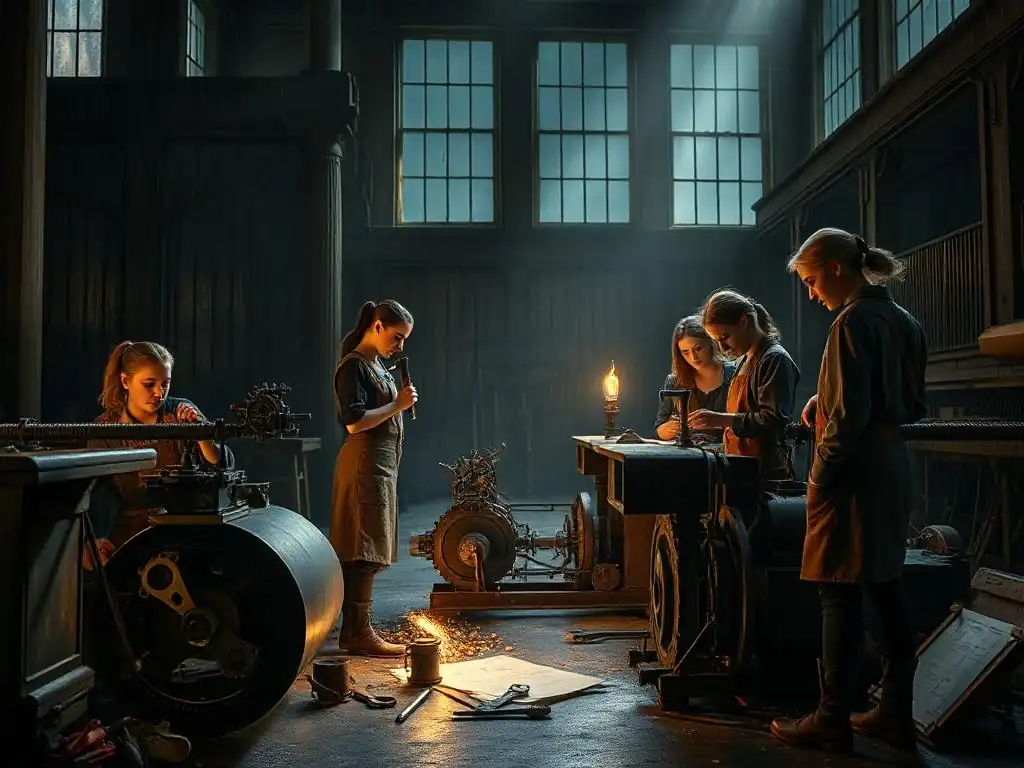
Dive into the fascinating world of female ingenuity with us. Ever wondered how women defied expectations and carved their place in the booming industrial landscapes of the 19th century? Our featured article, " Navigating the Workshop: Women's Bold Entry into 19th Century Industrial Spaces," explores the incredible resilience and innovation of women who tackled women’s industrial workshop challenges head-on. Discover their stories and the lasting impact they made on Engineering & Technology – and prepare to be inspired. What obstacles did they overcome, and how did their presence reshape the industrial narrative? Let's explore!
- Women’s Industrial Workshop Challenges in the 19th Century: A New Frontier
- The Rise of Industrial Workshops and the Emergence of Women Workers
- Breaking Barriers: Women's Contributions to 19th Century Industrial Workshops
- Societal Obstacles Faced by Women in 19th Century Industrial Settings
- Overcoming Adversity: Strategies for Success in Male-Dominated Workshops
- Case Studies: Pioneering Women in 19th Century Industry
- The Legacy of 19th Century Women in Industrial Workshops
- Conclusion: Celebrating Women's Bold Entry into 19th Century Industrial Spaces
-
Frequently Asked Questions
- What were some of the main challenges faced by women entering industrial workshops in the 19th century?
- How did the social perception of women's roles impact their access to and treatment within 19th-century industrial workshops?
- In what ways did women contribute to the growth and innovation within industrial workshops during the 19th century, despite the challenges they faced?
- How did the lack of formal education and training opportunities affect women's ability to participate and advance in 19th-century industrial workshops?
- Were there any specific industries where women were more prominently employed in 19th-century industrial workshops, and what factors contributed to this?
- Final Reflection: Forging a Future from the Past
- Embrace Innovation: Forge Your Path in Science!
Women’s Industrial Workshop Challenges in the 19th Century: A New Frontier
Introduction: Women Entering 19th Century Industrial Spaces
The 19th century heralded an era of unprecedented transformation, as the Industrial Revolution reshaped economies and societies across the globe. This period saw a dramatic shift from agrarian and cottage industries to mechanized factory production, fundamentally altering the landscape of labor. Amidst this rapid industrialization, a remarkable phenomenon began to unfold: women, traditionally confined to domestic roles or limited cottage-based work, started entering the burgeoning industrial spaces, including factories, mills, and workshops. This entry was not merely a demographic shift but a profound social and economic reorientation.
However, this bold step into the industrial realm was fraught with significant hurdles. These pioneering women navigated a world designed primarily for men, confronting deeply entrenched societal norms and facing a myriad of women’s industrial workshop challenges 19th century. Their presence in these often harsh environments challenged existing gender roles, demanding resilience, ingenuity, and collective action to overcome the systemic biases and perilous conditions that defined their working lives.
The Rise of Industrial Workshops and the Emergence of Women Workers
The Industrial Revolution's Impact on Women's Labor
The Industrial Revolution, beginning in the late 18th century and accelerating throughout the 19th, fundamentally altered the nature of work. The advent of steam power and new machinery led to the consolidation of production into large factories and specialized workshops, particularly in textile manufacturing, but also in industries like shoemaking, garment production, and even early electronics.
This shift created an immense demand for a new kind of labor force, one that could operate machines and perform repetitive tasks on a large scale. Women, often seen as a source of cheap labor and possessing the dexterity for intricate work, became an integral part of this emerging workforce.
Economic necessity was a primary driver for women entering these industrial settings. As traditional agricultural livelihoods diminished and cottage industries struggled to compete with factory output, families increasingly relied on multiple incomes. For many working-class women, entering a factory or workshop offered the only viable means of financial survival or contribution to household income. For instance, by the mid-19th century in the United States, women constituted a significant portion of the textile mill workforce, notably the "Lowell Mill Girls" in Massachusetts, who made up over 80% of the employees in some mills during the 1830s.
New Opportunities, New Challenges: Women's Roles in Emerging Industries
While the industrial workshop offered new avenues for employment and, for some, a degree of economic independence previously unattainable, these opportunities came hand-in-hand with formidable obstacles. Women found themselves in roles that were physically demanding, monotonous, and often dangerous. They operated complex machinery, frequently working 12 to 14 hours a day, six days a week, with little to no breaks. The novel environment of the factory, with its noise, dust, and strict discipline, was a stark contrast to the rhythms of domestic life or agricultural work.
Moreover, the types of roles available to women were often segregated and undervalued. They were typically assigned tasks requiring manual dexterity but little perceived skill, such as spinning, weaving, or assembling small components. Managerial or highly skilled mechanical positions were almost exclusively reserved for men, reinforcing a hierarchy that limited women's advancement. Navigating these women’s industrial workshop challenges 19th century required not only physical endurance but also immense mental fortitude to contend with the social stigma associated with factory work for women, which was often viewed as undignified or morally compromising.
Breaking Barriers: Women's Contributions to 19th Century Industrial Workshops
Skill and Ingenuity: Examples of Women's Work in Textile Mills
Despite the formidable obstacles, women proved to be highly skilled and indispensable to the success of 19th-century industrial workshops, particularly in the booming textile industry. In mills across Britain, the United States, and other industrializing nations, women operated power looms, spinning frames, and carding machines with remarkable efficiency and precision. Their dexterity was crucial for tasks like piecing broken threads, tying knots, and maintaining the intricate machinery. For example, a skilled female weaver in a Lowell mill could oversee two to four looms simultaneously, producing thousands of yards of cloth weekly, a testament to their technical proficiency and concentration.
The work required not only manual dexterity but also an understanding of the mechanical processes and quick problem-solving abilities. When a thread broke or a machine malfunctioned, it was often the female operative who had to swiftly address the issue to prevent production stoppages. Their consistent output and meticulous attention to detail were foundational to the profitability of these mills. The sheer volume of textiles produced by these women workers fueled global trade and clothed burgeoning populations, demonstrating their significant, albeit often unacknowledged, contributions to industrial output.
Beyond Domestic Roles: Women Innovators in Watchmaking
While textiles often dominate the narrative of 19th-century female industrial labor, women also made significant contributions in other precision-based industries, challenging the prevailing notion that their skills were limited to domestic arts. The burgeoning watchmaking industry, for instance, required extreme precision and patience, qualities that many women workers exhibited. In factories like the Waltham Watch Company in Massachusetts, established in 1850, women were employed extensively for the intricate assembly, finishing, and inspection of watch components.
These tasks involved working with tiny gears, springs, and jewels, demanding exceptional hand-eye coordination and meticulous attention to detail. Women were often responsible for polishing, decorating, and even adjusting the delicate mechanisms, ensuring the accuracy and aesthetic appeal of the final product. Their involvement in such a high-precision, technical field showcased their capacity for complex industrial work, proving that their talents extended far beyond traditional domestic or low-skill labor. This participation in fields like watchmaking highlighted their adaptability and intellectual capacity, directly confronting the women’s industrial workshop challenges 19th century that sought to pigeonhole their capabilities.
Societal Obstacles Faced by Women in 19th Century Industrial Settings
Gender Bias and Discrimination in the Workplace
One of the most pervasive women’s industrial workshop challenges 19th century was the entrenched gender bias and discrimination prevalent in the workplace. Women were consistently viewed as secondary workers, their labor often considered supplemental to a man's wage, even when they were the primary breadwinners. This perception led to their exclusion from higher-paying, skilled trades and supervisory roles, which were almost exclusively reserved for men. For instance, while women operated looms, men were typically the master weavers or mechanics responsible for machine repair and oversight.
This bias manifested in various ways: women were rarely offered apprenticeships for skilled crafts, limiting their upward mobility and trapping them in repetitive, low-wage positions. They faced resistance and often hostility from male co-workers and foremen who believed women did not belong in the factory or that their presence drove down wages. Such discrimination created a hostile environment, making it difficult for women to gain respect for their industrial contributions or to advocate effectively for their rights within these male-dominated spaces.
Wage Disparity: The Economic Struggles of Female Industrial Workers
Perhaps the most tangible women’s industrial workshop challenge 19th century was the severe wage disparity. Women were consistently paid significantly less than men for performing comparable, or even identical, work. On average, female factory workers earned between 30% and 50% of a man's wage for the same hours and output. For example, in New England textile mills in the 1830s, a male weaver might earn $0.80 to $1.00 per day, while a female weaver doing similar work would earn $0.50 to $0.75 per day.
This substantial pay gap was justified by employers and society through the belief that women's earnings were merely "pin money" or supplementary income, despite the reality that many women supported themselves or their entire families. The low wages trapped many women in cycles of poverty, forcing them to endure exploitative conditions simply to survive. This economic struggle was a constant burden, limiting their ability to save, improve their living conditions, or escape the grueling factory environment.
Health and Safety Concerns: The Dangers Women Faced in Factories
The physical environment of 19th-century industrial workshops posed severe health and safety risks, disproportionately affecting women who often worked in the most hazardous departments. Factories were typically poorly ventilated, filled with dust, lint, and chemical fumes, leading to widespread respiratory illnesses like "brown lung" disease (byssinosis) among textile workers. The constant deafening noise of machinery often resulted in permanent hearing loss.
Furthermore, safety measures were virtually non-existent. Dangerous, unguarded machinery frequently caused horrific injuries, including crushed limbs, severed fingers, and even fatalities. Women, often working long hours (up to 14 hours a day, six days a week) in cramped spaces, were particularly vulnerable to fatigue-related accidents. For example, workers in match factories, many of whom were women, suffered from "phossy jaw," a disfiguring and often fatal necrosis of the jawbone caused by exposure to white phosphorus. These perilous conditions, coupled with inadequate sanitation and nutrition, significantly shortened the lifespans and diminished the quality of life for countless female industrial workers.
Overcoming Adversity: Strategies for Success in Male-Dominated Workshops
Female Networks and Support Systems: The Importance of Collaboration
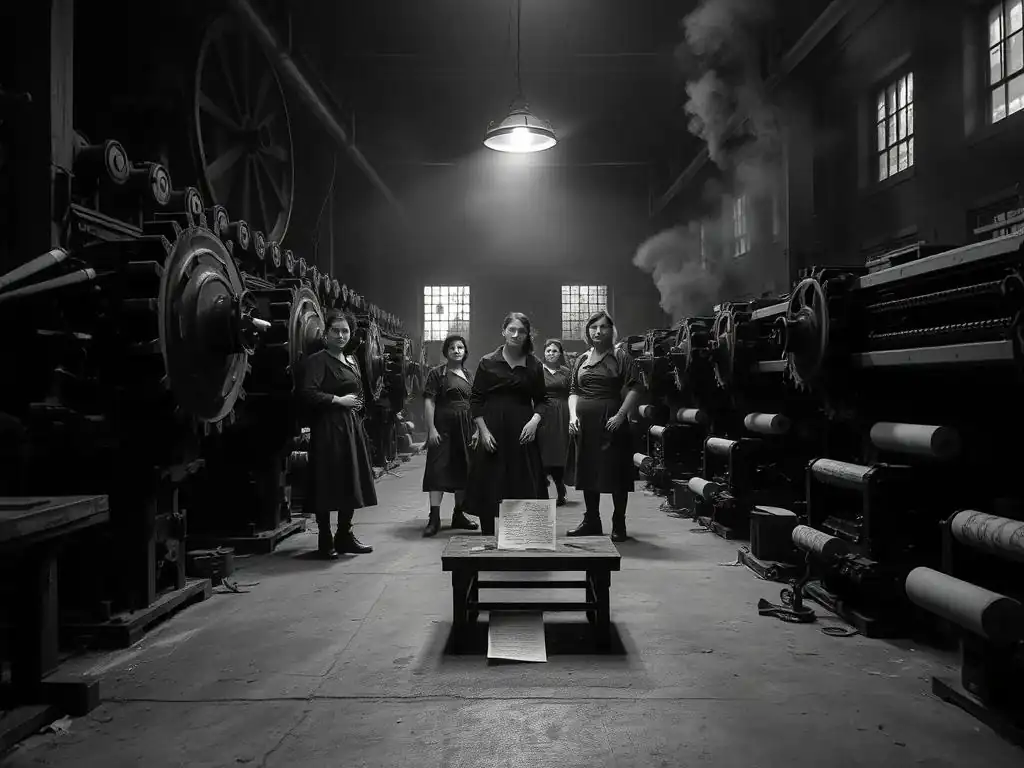
In the face of immense women’s industrial workshop challenges 19th century, female workers often forged strong informal networks and support systems. Living in boarding houses provided by mills, or sharing crowded tenements, women developed deep bonds of camaraderie. These networks offered crucial emotional support, a sense of community, and practical assistance. For instance, older, more experienced workers would often mentor newcomers, teaching them about machine operation, navigating factory politics, and coping with the demanding conditions.
These female networks extended beyond emotional support; they facilitated mutual aid and collective action. Women would pool resources, care for sick colleagues, and share information about better-paying jobs or more tolerable working conditions. In some instances, these informal bonds evolved into more organized efforts, laying the groundwork for early labor movements. The solidarity fostered within these networks was vital for women to endure the daily grind and to find collective strength in advocating for their rights.
Education and Training: Empowering Women Through Knowledge
While formal education opportunities were limited for working-class women in the 19th century, many recognized the empowering potential of knowledge. Some sought out evening classes or self-education to improve their literacy and numeracy skills. In places like Lowell, Massachusetts, "improvement circles" and literary groups flourished among the mill girls, who would read, write, and discuss current events and literature after their grueling shifts. This pursuit of intellectual growth was a direct challenge to the dehumanizing nature of factory work and a means of personal advancement.
Access to even basic education could significantly empower women. Literacy allowed them to read newspapers, understand their employment contracts, and participate in broader social and political discourse. For some, improved skills offered a pathway out of the factory into slightly better-paying clerical or teaching positions. This commitment to education, often self-driven and pursued against considerable odds, was a powerful strategy in overcoming the women’s industrial workshop challenges 19th century and asserting their intellectual capabilities.
Advocacy and Reform: Fighting for Better Working Conditions
As women's presence in industrial workshops grew, so did their determination to fight for better working conditions and fair treatment. They became active participants, and often leaders, in the nascent labor movement of the 19th century. Early strikes and protests, such as those by the Lowell Mill Girls in 1834 and 1836, were largely organized and led by women demanding higher wages and shorter hours. These actions, though often unsuccessful in the short term, brought public attention to their plight and demonstrated their collective power.
Women also formed labor organizations, like the Lowell Female Labor Reform Association founded by Sarah Bagley in 1845, which tirelessly advocated for a ten-hour workday and improved factory legislation. They petitioned state legislatures, published their experiences in newspapers, and built alliances with male labor reformers. These advocacy efforts were crucial in pushing for legislative changes that eventually led to some improvements in working hours and conditions, slowly chipping away at the systemic women’s industrial workshop challenges 19th century.
Case Studies: Pioneering Women in 19th Century Industry
Sarah Bagley: A Trailblazer in Labor Reform
Sarah Bagley stands as an iconic figure in the history of 19th-century labor reform, particularly for her pivotal role in advocating for the rights of female factory workers. Born in 1806, Bagley began working in the textile mills of Lowell, Massachusetts, in 1836. Initially attracted by the promise of independence and cultural opportunities, she quickly became disillusioned by the deteriorating working conditions, including wage cuts and extended hours, which intensified the women’s industrial workshop challenges 19th century.
In 1845, Bagley founded the Lowell Female Labor Reform Association (LFLRA), one of the earliest and most influential women's labor organizations in the United States. As its president, she actively campaigned for the ten-hour workday, delivering speeches, organizing petitions, and testifying before the Massachusetts legislature—a groundbreaking act for a working woman of her time. Through her powerful writing in the "Voice of Industry" newspaper, Bagley articulated the grievances of mill workers and tirelessly fought for legislative changes, leaving an indelible mark on the struggle for workers' rights.
Ellen Swallow Richards: Challenging Gender Norms in Industrial Chemistry
While many women faced women’s industrial workshop challenges 19th century on the factory floor, Ellen Swallow Richards (1842–1911) navigated a different, yet equally formidable, set of barriers in the scientific and industrial spheres. She was the first woman admitted to the Massachusetts Institute of Technology (MIT) in 1871, where she pursued studies in chemistry. Her entry into such a prestigious, male-dominated scientific institution was revolutionary, opening doors for future generations of women in STEM.
Richards applied her scientific expertise to practical, industrial problems, effectively bridging the gap between scientific research and public welfare. She is considered a pioneer in sanitary engineering and environmental chemistry, conducting extensive research on water quality, air pollution, and food adulteration. Her work directly impacted industrial practices, pushing for cleaner manufacturing processes and safer products. Through her relentless dedication, she not only carved out a professional space for women in industrial chemistry but also demonstrated how scientific principles could be applied to address pressing societal and industrial health concerns, significantly challenging the gender norms of her era.
The Legacy of 19th Century Women in Industrial Workshops
Paving the Way for Future Generations of Female Professionals
The experiences of women in 19th-century industrial workshops, marked by immense women’s industrial workshop challenges 19th century, forged a crucial path for future generations of female professionals. Their entry into factories, mills, and other industrial settings normalized the idea of women working outside the home, fundamentally altering societal perceptions of women's roles. Despite the hardships, their consistent presence and vital contributions demonstrated women's capacity for diligence, skill, and endurance in demanding professional environments.
Their struggles for better wages, shorter hours, and safer conditions laid the groundwork for the broader labor movement and women's rights advocacy. The collective actions of women like the Lowell Mill Girls and the persistent lobbying efforts of organizations like the LFLRA created a precedent for demanding fair labor practices. This historical precedent was instrumental in shaping early labor laws and contributed to the eventual push for women's suffrage, recognizing that economic independence and workplace rights were intrinsically linked to political agency.
Recognizing the Enduring Impact of Women's Labor in Industry
The enduring impact of 19th-century women's labor in industry is profound, yet often underestimated. Their contributions were not merely supplementary but fundamental to the economic growth of industrializing nations. They powered the textile mills that clothed the world, assembled the intricate components of new technologies, and performed the countless repetitive tasks that kept production lines moving. Without their labor, the scale and speed of the Industrial Revolution would have been significantly hampered.
Beyond the economic sphere, their experiences highlighted critical social issues, including gender inequality, worker exploitation, and public health concerns in industrial settings. The historical narrative of women’s industrial workshop challenges 19th century serves as a powerful reminder of the resilience and courage of these pioneering women. Recognizing their often-overlooked history is essential to understanding the evolution of labor rights, the ongoing fight for gender equality in the workplace, and the continuous need to celebrate the diverse contributions of women to science, engineering, and industry throughout history.
Conclusion: Celebrating Women's Bold Entry into 19th Century Industrial Spaces
The Ongoing Relevance of Women's Industrial History
The narrative of women's entry into 19th-century industrial spaces is a testament to their remarkable resilience, adaptability, and unwavering determination in the face of profound adversity. Despite confronting immense women’s industrial workshop challenges 19th century—ranging from pervasive gender bias and egregious wage disparity to hazardous working conditions and societal disapproval—these women not only survived but often thrived.
They were the unsung architects of the Industrial Revolution, their hands and minds contributing immeasurably to the technological and economic advancements of their era. Their stories of skill, ingenuity, and collective action in textile mills, watchmaking factories, and other burgeoning industries illuminate a vital, yet frequently marginalized, chapter in history.
The ongoing relevance of women's industrial history extends far beyond academic interest. It serves as a powerful reminder of the persistent struggles for gender equality and fair labor practices that continue into the present day.
By studying the courageous strides and significant contributions of these 19th-century pioneers, we gain a deeper appreciation for the complex interplay between societal norms, economic pressures, and individual fortitude. Their legacy inspires us to continue challenging barriers, advocating for equitable workplaces, and ensuring that the pivotal roles of women in shaping our industrial and technological landscape are fully recognized and celebrated for generations to come.
Frequently Asked Questions
What were some of the main challenges faced by women entering industrial workshops in the 19th century?
Women encountered significant social prejudice and discrimination, often being denied opportunities or relegated to lower-paying, less skilled positions. They also faced dangerous working conditions and a lack of adequate safety measures.
Prevailing societal norms often confined women to the domestic sphere, leading to skepticism about their capabilities and suitability for industrial work. This resulted in lower wages and limited advancement opportunities.
In what ways did women contribute to the growth and innovation within industrial workshops during the 19th century, despite the challenges they faced?
Despite facing adversity, women made significant contributions through skilled labor, innovative problem-solving, and dedication to their work. Their presence diversified the workforce and brought fresh perspectives.
How did the lack of formal education and training opportunities affect women's ability to participate and advance in 19th-century industrial workshops?
Limited access to education and training often restricted women to entry-level positions and prevented them from acquiring the skills needed for specialized or management roles. This perpetuated inequality within the workforce.
Were there any specific industries where women were more prominently employed in 19th-century industrial workshops, and what factors contributed to this?
Women were often concentrated in industries like textiles and garment manufacturing due to the perception that these jobs required "nimble fingers" and were suitable for their perceived "domestic skills."
Final Reflection: Forging a Future from the Past
The narratives unearthed within this article highlight the unyielding spirit of women who dared to infiltrate the male-dominated industrial workshops of the 19th century. These stories are not simply relics of a bygone era; they resonate profoundly today, reminding us of the ongoing struggle for gender equality in all fields, particularly those traditionally considered "masculine." The challenges faced by these pioneering women serve as a potent reminder of the systemic barriers that persist, demanding continued vigilance and action.
The impact of these women extends far beyond the factory floor. Their presence, however fraught with difficulty, chipped away at societal norms and laid the groundwork for future generations of women to pursue their ambitions without limitation. Their courage inspires us to challenge our own preconceived notions and to actively dismantle the barriers that prevent others from reaching their full potential. Well-behaved women seldom make history.
– Laurel Thatcher Ulrich. This quote encapsulates the spirit of these women who, by refusing to conform, carved out a space for themselves and paved the way for progress.
Let us remember the lessons learned from these intrepid women. Consider how their struggles mirror the challenges faced by marginalized groups today. What can you do, in your own sphere of influence, to create a more equitable and inclusive environment? Let their resilience fuel your own commitment to building a future where opportunity is not dictated by gender, but by talent and determination. The forge of progress is still hot; let us continue to shape it together.
Embrace Innovation: Forge Your Path in Science!
Thank you for delving into the inspiring journey of women in 19th-century industrial spaces. We hope you found their resilience and ingenuity as captivating as we do. Now, it's your turn to contribute to the legacy.
- Translate your inspiration into action: Research a contemporary woman in STEM and share her story on social media using #WomenInScienceHistory.:*
- Explore local historical societies for records of women inventors and innovators in your area.
- Participate in or organize a workshop focusing on science for girls, fostering the next generation of female scientists.
What small step will you take today to support women's ongoing journey in science?