
Engineering Against All Odds: The Tenacity of Women in 19th Century Industry


Welcome to WomenInScienceHistory.com!
Delve into a world where ingenuity meets adversity. This is a space dedicated to celebrating the remarkable women who shaped the scientific landscape. Here, we uncover the stories often left untold, the breakthroughs achieved against all odds, and the persistent spirit that defines female pioneers. Are you ready to discover how women engineers in 19th century industry defied societal expectations and left an indelible mark? Prepare to be inspired as we explore their tenacity and groundbreaking contributions.
- Introduction: Unveiling the Untold Stories of 19th Century Women Engineers
- Barriers and Breakthroughs: Challenges Faced by Women in 19th Century Engineering
- Pioneering Figures: Profiles of Notable 19th Century Women Engineers
- Fields of Influence: Where 19th Century Women Engineers Made Their Mark
- The Impact and Legacy of Women in 19th Century Industrial Engineering
- Resources and Further Reading on 19th Century Women in Engineering
-
Frequently Asked Questions
- What were some of the major challenges faced by women engineers in the 19th century?
- What types of engineering roles did women hold in 19th century industry, despite the obstacles?
- How did the societal expectations of women impact their ability to pursue engineering careers?
- Where can I find reliable information about specific women engineers who worked in the 19th century?
- Why is it important to highlight the contributions of women engineers from the 19th century?
- Final Reflection: Echoes of Ingenuity
- Empower Change: Step into History!
Introduction: Unveiling the Untold Stories of 19th Century Women Engineers
The Overlooked Contributions of Female Engineers in the 1800s
The 19th century, a period marked by the roaring engines of the Industrial Revolution, is often depicted as a predominantly male arena, particularly in the burgeoning fields of engineering and industry. While men certainly dominated the public face of innovation, countless women quietly, and often against immense societal pressure, made significant contributions to the technological advancements of the era. These "women engineers 19th century industry" were not typically found in university lecture halls or holding official engineering titles, yet their ingenuity, resilience, and practical skills were indispensable to the progress witnessed across manufacturing, infrastructure, and even nascent computing.
Their stories, often relegated to footnotes or entirely omitted from historical records, reveal a hidden landscape of female technical prowess. From managing complex textile mills to contributing to monumental civil engineering projects, these pioneering women found ways to apply their intellect and problem-solving abilities. Their work, though sometimes behind the scenes or attributed to male relatives, forms an integral part of the narrative of "19th century engineering," demonstrating that innovation knew no gender, even when recognition did.
Resources for Learning About Women in STEM
Understanding the full scope of contributions by women in 19th-century STEM fields requires delving into a growing body of dedicated research and historical resources. While direct archival evidence can be sparse for many individual women, historians and scholars are actively uncovering and documenting their impactful roles. This ongoing effort involves sifting through patents, personal letters, company records, and local histories to piece together a more comprehensive picture.
Platforms like WomenInScienceHistory.com serve as vital hubs for compiling and disseminating these once-forgotten narratives. By aggregating biographies, analyses of their work, and discussions of the societal context, these resources make the stories of "women in 19th century engineering" accessible to a wider audience. They provide invaluable insights into the challenges these women faced and the remarkable ingenuity they displayed, inspiring future generations and enriching our understanding of scientific and technological progress.
Barriers and Breakthroughs: Challenges Faced by Women in 19th Century Engineering
Societal Expectations and Gender Roles Limiting Women's Access to Engineering
During the 19th century, deeply entrenched societal expectations and rigid gender roles severely curtailed women's professional aspirations, particularly in fields as demanding and public as engineering. The prevailing Victorian ideal confined women primarily to the domestic sphere, viewing their roles as homemakers, wives, and mothers. Occupations requiring intellectual rigor, manual labor, or public leadership were almost exclusively reserved for men, creating an immense psychological and social barrier for any woman aspiring to be a "19th century engineer."
This cultural climate meant that women who displayed an aptitude for mechanics, mathematics, or design were often discouraged, if not actively prevented, from pursuing formal training or professional careers. Their intellectual capabilities were frequently underestimated or dismissed, and the idea of a woman in an industrial setting was considered unseemly or even scandalous. Such pervasive attitudes forced many "women engineers 19th century industry" to work anonymously, through male proxies, or within the confines of family businesses, making their direct contributions harder to trace but no less significant.
Educational Obstacles: Limited Opportunities for Women to Study Engineering
A primary and formidable barrier for women in the 19th century seeking to enter engineering was the almost complete absence of formal educational opportunities. Universities and technical institutes, which were slowly establishing engineering curricula, were exclusively male institutions for the vast majority of the century. Women were denied admission to these foundational programs, effectively cutting off the traditional pathway to professional engineering qualifications.
Consequently, aspiring "women in 19th century engineering" had to forge their own paths to knowledge. This often involved intense self-study, poring over textbooks and technical manuals in private libraries. Some gained practical experience through informal apprenticeships within family businesses, learning directly from fathers, brothers, or husbands who were engineers, inventors, or industrialists. This self-driven, often clandestine, acquisition of skills underscores the extraordinary dedication and tenacity required for women to develop engineering expertise during this period.
Discrimination and Exclusion in the Workplace: Overcoming Prejudice in Male-Dominated Industries
Even if a woman managed to acquire engineering knowledge, the workplace of the 19th century presented a formidable array of discrimination and exclusion. Male-dominated industries were largely unwelcoming, often denying women employment outright or relegating them to menial, uncredited roles regardless of their actual capabilities. When women did find work, they faced skepticism, prejudice, and often significant pay disparities compared to their male counterparts for equivalent work.
Overcoming this pervasive bias required extraordinary resilience and ingenuity. Many "women engineers 19th century industry" had to prove their competence repeatedly through undeniable results, compelling grudging acceptance. Some published their work under male pseudonyms or anonymously to ensure their ideas were judged on merit rather than gender. Others, like Emily Warren Roebling, effectively managed monumental projects from behind the scenes, demonstrating their technical mastery and leadership despite the overt societal and professional resistance to a woman in such a prominent role.
Pioneering Figures: Profiles of Notable 19th Century Women Engineers
Emily Warren Roebling: A Civil Engineer Instrumental in the Brooklyn Bridge Project
Emily Warren Roebling stands as a monumental figure among "women engineers 19th century industry," renowned for her indispensable role in the construction of the Brooklyn Bridge. Her story exemplifies the challenges and triumphs of women operating in highly technical and public spheres during an era that largely excluded them. Without her perseverance and profound understanding of civil engineering, it is widely believed that the iconic bridge might never have been completed.
Early Life and Education of Emily Warren Roebling
Born in Cold Spring, New York, in 1843, Emily Warren Roebling was a woman of intellect and determination. Her formal education, while comprehensive for a woman of her time, did not include engineering. However, her life took an extraordinary turn after her marriage to Washington Roebling, the son of the original designer of the Brooklyn Bridge, John A. Roebling.
When John A. Roebling tragically died and Washington subsequently developed caisson disease—a debilitating illness caused by working in pressurized underwater environments—Emily stepped into an unprecedented role. She took on the arduous task of relaying messages, instructions, and calculations between her bedridden husband and the on-site engineering team. Through this process, she meticulously educated herself in higher mathematics, strength of materials, cable construction, stress analysis, and other critical civil engineering principles, effectively becoming her husband's chief assistant and proxy.
Her self-taught "education" was rigorous and hands-on, driven by the immense responsibility placed upon her. She immersed herself in the technical drawings, complex calculations, and daily operational challenges of one of the most ambitious engineering projects of the 19th century. This profound practical learning, combined with her innate intelligence, transformed her into a highly competent and knowledgeable "19th century engineer" in her own right, capable of overseeing and managing the project with remarkable precision and foresight.
Key Engineering Achievements and Innovations by Emily Warren Roebling on the Brooklyn Bridge
Emily Warren Roebling's contributions to the Brooklyn Bridge were far more than administrative; they were intrinsically engineering-focused and crucial to the project's success. For over a decade, from the mid-1870s until the bridge's completion in 1883, she effectively served as the chief engineer, managing the daily operations, inspections, and communications. She translated her husband's instructions, often conveyed through whispers or notes, into actionable plans for the construction crew and managed critical correspondence with suppliers, politicians, and the public.
Her expertise extended to understanding complex calculations for the bridge's massive steel cables, ensuring the structural integrity of the caissons, and overseeing the intricate process of cable spinning. She frequently inspected the construction site, resolved disputes, and represented the project in public forums, defending its progress and integrity against critics and skeptics. Her direct involvement in quality control, problem-solving, and project management was instrumental, ensuring that the design specifications were met and that the monumental undertaking progressed efficiently and safely. Her efforts were a testament to the capabilities of "women in 19th century engineering."
Overcoming Adversity: Emily Warren Roebling's Struggle for Recognition
Despite her undeniable and pervasive influence on the Brooklyn Bridge project, Emily Warren Roebling faced considerable adversity and skepticism simply because of her gender. In an era when engineering was seen as an exclusively male domain, many questioned a woman's capacity to handle such a complex and physically demanding undertaking. She had to constantly prove her competence and intellect to contractors, engineers, and public officials who doubted her authority and knowledge.
However, her unwavering dedication and evident mastery of the engineering details eventually earned her respect, albeit slowly. At the Brooklyn Bridge's grand opening ceremony in 1883, Abram Hewitt, a prominent politician and orator, publicly acknowledged her pivotal role, stating that the bridge was "an everlasting monument to the sacrificing devotion of a woman and of her capacity for higher education and for her remarkable executive ability." This rare public recognition, though not a formal engineering title, underscored her unparalleled contribution and cemented her legacy as one of the most significant "women engineers 19th century industry."
Sarah Guppy: Innovating in Marine Engineering and Beyond
Sarah Guppy, an English inventor and designer, represents another fascinating example of "women engineers 19th century industry" who made significant, though often unsung, contributions to the technological landscape. Born in 1770, her inventive spirit led her to secure multiple patents in the early 19th century, demonstrating a remarkable understanding of engineering principles long before women had any formal access to such education.
Sarah Guppy's Contributions to Bridge Design and Ship Construction
Sarah Guppy's most notable contribution came in 1811 when she patented a method for constructing "piles" (foundations) for bridges and for improving the construction of ships. Her patent, titled "New Mode of Constructing and Erecting Bridges and Railways," was groundbreaking.
It included a design for a suspension bridge that utilized a system of foundations designed to prevent soil erosion and improve stability. While her direct influence on specific structures like Isambard Kingdom Brunel's Clifton Suspension Bridge is a subject of historical debate, her patent clearly shows an advanced conceptual understanding of suspension bridge mechanics at a very early stage of their development.
Beyond bridges, Guppy's patent also covered innovations in marine engineering. She devised a method for improving the design of ships by increasing their buoyancy and reducing drag, which aimed to make vessels faster and more stable in the water. Her foresight in both civil and marine engineering fields, expressed through formal patenting, positions her as a true pioneer among "women in 19th century engineering," demonstrating an early engagement with industrial design and innovation.
The Legacy of Sarah Guppy's Work
The legacy of Sarah Guppy's work, though not always translated into widely recognized structures, lies in her proactive engagement with the patent system and her clear demonstration of inventive talent. As one of the earliest women to hold multiple patents for engineering designs in Britain, she challenged the prevailing norms that confined women to domestic roles. Her patented innovations, whether directly implemented or serving as conceptual predecessors, highlighted the intellectual capabilities of women in a period when such abilities were largely ignored or suppressed.
Her willingness to put her ideas forward, even if she later gifted the use of her bridge patent to Brunel for free (as per some accounts), underscores a commitment to advancing technology. Guppy's story reminds us that "19th century women engineers" were actively contributing to the era's industrial progress, not merely as assistants or observers, but as genuine innovators whose designs and concepts helped shape the future of construction and transportation.
Ada Lovelace: A Pioneer in Computer Programming
Ada Lovelace, born Augusta Ada Byron in 1815, is widely celebrated as the world's first computer programmer, making her a foundational figure in theoretical "19th century engineering" and computing. Her work with Charles Babbage on the Analytical Engine showcased a visionary understanding of computing far ahead of her time, laying crucial groundwork for the digital age.
Ada Lovelace's Impact on Early Computing Concepts
Ada Lovelace's profound impact stems from her collaboration with mathematician Charles Babbage, who conceived of the Analytical Engine, a general-purpose mechanical computer. While translating an article about the Analytical Engine by Italian mathematician Luigi Menabrea, Lovelace added extensive notes of her own, which ultimately exceeded the original text in length. In her "Note G," she described an algorithm for the Analytical Engine to calculate Bernoulli numbers, detailing a step-by-step sequence of operations that is now recognized as the world's first computer program.
Crucially, Lovelace's vision extended far beyond mere calculation. She recognized that the Analytical Engine could do more than just crunch numbers; she foresaw its potential for manipulating symbols, composing music, and creating graphics, envisioning a future where machines could process information beyond arithmetic. Her insightful conceptualization of a machine capable of carrying out a sequence of instructions (what we now call a program) established a theoretical framework for modern computing, positioning her as a brilliant "19th century engineer" of ideas.
Recognition and Legacy of Ada Lovelace
Despite the revolutionary nature of her insights, Ada Lovelace's contributions were largely overlooked during her lifetime and for many decades after her premature death in 1852. It was not until the mid-20th century, with the dawn of electronic computers, that the full significance of her work began to be appreciated. Her notes were rediscovered, and her visionary understanding of computing's potential was finally recognized for its foundational importance.
Today, Ada Lovelace is celebrated globally as a pioneer. The programming language Ada, developed by the U.S. Department of Defense in the 1970s, was named in her honor, a testament to her enduring legacy. Annually, Ada Lovelace Day aims to raise the profile of women in STEM, recognizing her as a powerful symbol of intellectual prowess and innovation. Her story is a compelling reminder of the often-unacknowledged brilliance of "women engineers 19th century industry" and their lasting impact on technological progress.
Fields of Influence: Where 19th Century Women Engineers Made Their Mark
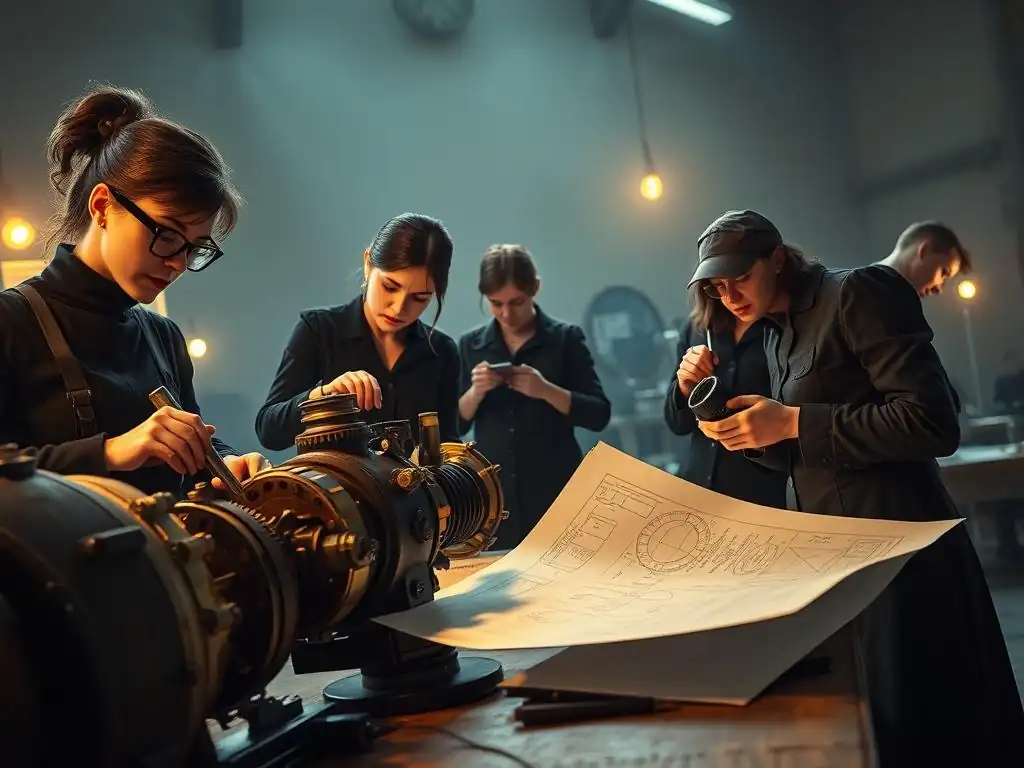
Civil Engineering: Women Designing Bridges and Infrastructure
While formal titles were rare, "women engineers 19th century industry" made significant contributions to civil engineering, often through informal channels. Emily Warren Roebling's direct, hands-on management of the Brooklyn Bridge project is the most prominent example, showcasing a woman effectively serving as chief engineer for a monumental piece of infrastructure. Beyond such high-profile cases, women frequently assisted in family-run construction or surveying businesses. They might have been involved in drafting, calculating material quantities, managing logistics, or even overseeing smaller construction projects.
These contributions, though often uncredited in official records, were vital. Women's practical knowledge, attention to detail, and organizational skills often ensured the smooth operation of projects. They acquired their expertise through direct observation, self-study, and practical application, learning the intricacies of bridge design, road construction, or water infrastructure. Their presence in these roles, however informal, indicates a broader female engagement in the development of the built environment during the 19th century.
Mechanical Engineering: The Role of Women in Industrial Machinery
The 19th century was the age of mechanical innovation, particularly with the rise of factories and new machinery. While men were predominantly the inventors and factory owners, "women in 19th century engineering" also played a crucial, albeit often unheralded, role in mechanical advancements. Many women worked directly with machinery in textile mills, garment factories, and other industrial settings. Their intimate daily interaction with these machines often led to practical insights for improvements.
Some women even secured patents for mechanical inventions. For instance, women patented improvements for sewing machines, washing machines, and various industrial tools, demonstrating a keen understanding of mechanical principles and a drive for efficiency. Though not always labeled "mechanical engineers," their practical ingenuity and ability to identify and solve mechanical problems directly contributed to the refinement and evolution of industrial machinery, making manufacturing processes more efficient and productive.
Textile Industry: Female Engineers Shaping the Future of Manufacturing
The textile industry was arguably the most significant arena where "women in 19th century industry" exerted substantial engineering influence. Women constituted a vast proportion of the workforce in textile mills, from cotton factories to garment production houses. Their deep understanding of the entire manufacturing process, from raw fiber to finished cloth, often led to practical innovations in machinery operation, process optimization, and quality control.
Beyond the factory floor, some women rose to supervisory roles or even owned and managed textile mills. In these positions, they were responsible for the efficient layout of machinery, the flow of materials, and the technical training of workers—all functions that require engineering foresight. Their contributions were integral to the advancements in mass production and the industrialization of the textile sector, showcasing how female expertise directly shaped the future of manufacturing.
Mathematics and Theoretical Engineering: Women's Contributions to Foundational Concepts
The intellectual underpinnings of "19th century engineering" were heavily reliant on advances in mathematics and theoretical science, fields where women also made significant, if often uncredited, contributions. Ada Lovelace's work on the Analytical Engine, envisioning the very concept of a computer program, is the most prominent example of a woman shaping foundational theoretical engineering. Her insights into algorithms and the potential of machines to process more than just numbers were revolutionary.
Beyond Lovelace, other women, often from privileged backgrounds, pursued advanced studies in mathematics and physics, teaching privately or conducting independent research. While their work might not have directly involved building bridges or machines, their contributions to statistical methods, scientific principles, and mathematical frameworks provided the essential intellectual tools for practical engineering applications. These "women engineers 19th century industry" broadened the theoretical landscape upon which the industrial age was built.
The Impact and Legacy of Women in 19th Century Industrial Engineering
Breaking Down Gender Stereotypes: Inspiring Future Generations of Women in STEM
The very existence and accomplishments of "women engineers 19th century industry," despite immense societal and professional barriers, served as powerful, albeit often unacknowledged, challenges to prevailing gender stereotypes. Their work demonstrated unequivocally that women possessed the intellectual capacity, technical skill, and tenacity required for complex engineering and scientific pursuits, directly contradicting the widespread belief that such fields were exclusively for men.
While their individual triumphs might not have immediately overturned deeply ingrained societal norms, their stories, when unearthed and shared, provide invaluable historical precedents. For contemporary women entering STEM fields, these narratives offer compelling proof that female ingenuity has always been present and active in engineering. They serve as a powerful source of inspiration, validating the capabilities of women in historically male-dominated domains and encouraging future generations to pursue their passions without limitation.
Paving the Way for Greater Inclusion in Engineering
Though the 19th century saw only nascent signs of formal inclusion for women in engineering, the efforts of these pioneering figures laid crucial groundwork for future progress. By demonstrating their competence and making tangible contributions, these "women in 19th century engineering" subtly chipped away at the formidable barriers to entry. Their individual successes, however hard-won, created small cracks in the edifice of male exclusivity.
Their persistence, whether through self-education, informal apprenticeships, or behind-the-scenes management, set precedents that later generations could build upon. While the path to widespread acceptance and formal recognition would be slow and arduous, the courage and achievements of these early women engineers provided a historical basis for advocating for greater access to education and professional opportunities for women in the 20th century and beyond.
The Enduring Relevance of Their Contributions to Modern Engineering Practices
The innovations and methodologies developed or influenced by "women engineers 19th century industry" were not merely historical curiosities; many had lasting effects that continue to resonate in modern engineering practices. From improved bridge construction techniques (as seen with Emily Warren Roebling) to foundational concepts in computing (pioneered by Ada Lovelace), their work often represented genuine advancements that contributed to the overall progress of technology.
Recognizing these contributions provides a more complete and accurate history of engineering, revealing a richer tapestry of innovation that includes diverse perspectives and talents. It underscores that ingenuity is not limited by gender and that understanding the full scope of historical contributions enriches our appreciation for the complex evolution of modern engineering. The legacy of these tenacious women continues to inform and inspire, reminding us of the enduring power of human intellect and perseverance.
Resources and Further Reading on 19th Century Women in Engineering
Books and Articles Highlighting Female Engineers
The field of women's history, particularly in STEM, has seen a welcome increase in academic and popular literature dedicated to uncovering and celebrating the lives and works of "women engineers 19th century industry." These resources provide in-depth analyses of specific individuals, discuss the societal context that shaped their experiences, and explore the broader impact of their contributions. Historians are actively researching primary sources to bring these often-overlooked narratives to light, offering new perspectives on the industrial age.
Readers interested in delving deeper can find numerous biographies, scholarly articles, and edited collections that compile the stories of these pioneering women. These publications often highlight the unique challenges they faced, the ingenious methods they employed to circumvent barriers, and the lasting significance of their work. Engaging with this literature provides essential context and celebrates the extraordinary achievements of women in a period that largely denied them formal recognition.
Archives and Collections Documenting Women's Work in Industry
To truly understand the contributions of "women in 19th century engineering," it is invaluable to explore the primary sources that document their lives and work. University archives, historical societies, and specialized collections are increasingly preserving and digitizing materials related to women's roles in industry and engineering. These resources can include personal letters, diaries, patents, company records, newspaper clippings, and family histories, which collectively paint a more nuanced picture of their involvement.
Accessing these historical records allows for a deeper appreciation of the challenges and triumphs faced by these women. Researchers and enthusiasts can uncover specific details about their projects, their struggles for recognition, and their innovative solutions. Such archives are crucial for continuing the work of illuminating the hidden histories of "women engineers 19th century industry" and ensuring their rightful place in the narrative of technological progress.
Frequently Asked Questions
What were some of the major challenges faced by women engineers in the 19th century?
Women engineers faced significant social barriers and lack of educational opportunities. They were often excluded from professional networks and faced discrimination in the workplace.
What types of engineering roles did women hold in 19th century industry, despite the obstacles?
While limited, women found roles in areas like drafting, technical illustration, and sometimes design and supervision, often working behind the scenes or in family businesses.
How did the societal expectations of women impact their ability to pursue engineering careers?
The prevailing view was that women's roles were primarily domestic, leading to limited access to education and the perception that engineering was unsuitable for women.
Where can I find reliable information about specific women engineers who worked in the 19th century?
Websites like WomenInScienceHistory.com and academic journals are good resources. Look for biographies of pioneering female scientists and scholarly articles on the history of women in STEM.
Why is it important to highlight the contributions of women engineers from the 19th century?
Highlighting these stories helps to correct historical biases, inspire future generations of women in engineering, and demonstrate the long-standing presence of women in the field, despite adversity.
Final Reflection: Echoes of Ingenuity
The stories of these pioneering women engineers in the 19th century, often obscured by the prevailing societal norms of their time, are not merely historical anecdotes; they are powerful reminders of the enduring human spirit and the transformative potential of challenging the status quo. Their struggles and triumphs resonate profoundly today, as we continue to strive for greater equity and representation in STEM fields.
The impact of these women extends far beyond the blueprints they drafted and the machines they improved. Their unwavering determination laid the groundwork for future generations of women in engineering, proving that brilliance knows no gender. The most common way people give up their power is by thinking they don't have any.
- Alice Walker. This quote encapsulates the spirit of these women who, despite facing immense obstacles, refused to relinquish their power to innovate and contribute.
Let us carry forward the torch of their tenacity. As you navigate your own path, remember the women who dared to defy expectations and shape the world with their ingenuity. May their stories inspire you to challenge limitations, embrace your potential, and contribute to a future where innovation knows no bounds.
Empower Change: Step into History!
Thank you for exploring the remarkable resilience of women in 19th-century engineering. Your newfound understanding of their struggles and triumphs offers a powerful perspective. Now, let's put that knowledge into action:
- Dig Deeper: Uncover the untold stories of women engineers in your local area – visit historical societies or archives, and share your findings online.
- Support organizations dedicated to empowering women in STEM.
- Start a conversation: Share this article with your network and ask: What modern challenges mirror those faced by these pioneering women?