Women Scientists in Military and Defense: Pioneers of Protection and Progress
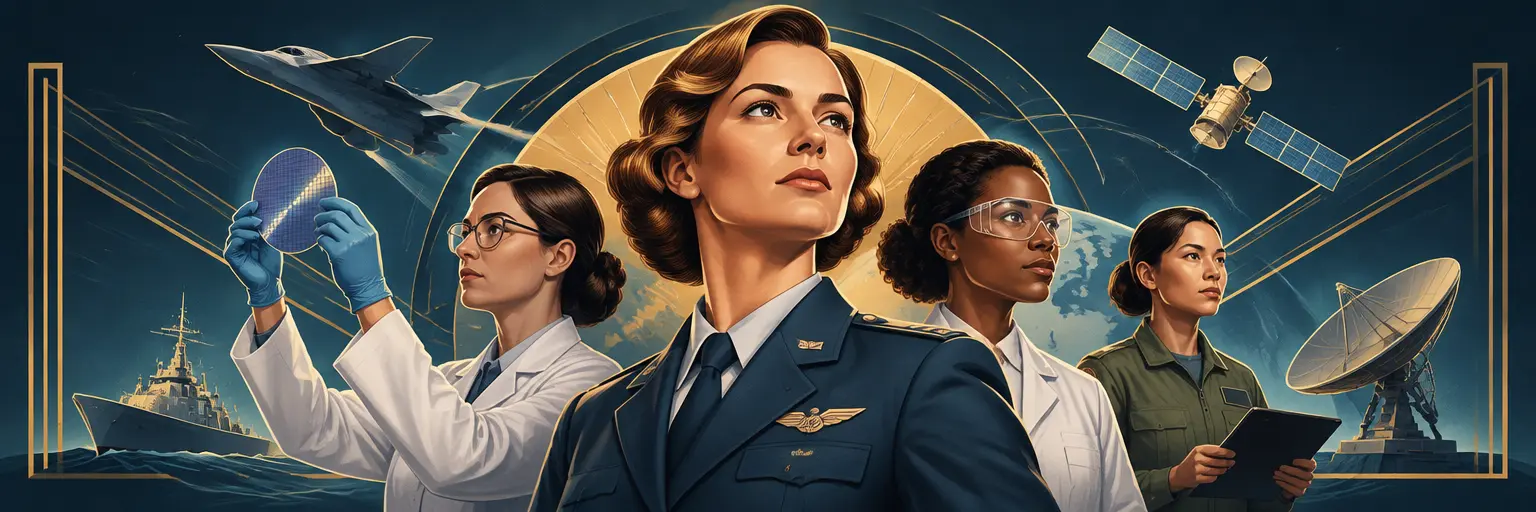
Step into the riveting world where scientific brilliance meets national security. The "Women Scientists & Military/Defense" subcategory on WomenInScienceHistory.com explores the remarkable lives of female innovators who transformed warfare, intelligence, and defense technologies. From coding the first electronic computers to developing life-saving battlefield medicine and pioneering radar countermeasures, these women broke through barriers while serving their nations. Here, you’ll uncover hidden narratives of courage, curiosity, and contribution that dramatically shaped modern defense systems and strategic operations. Discover how these trailblazers overcame gender bias and military bureaucracy to leave an indelible mark on history and inspire future generations of women in STEM.
🛡️ Breaking Barriers in Military Research Laboratories
During World War II and the Cold War, military research facilities became unexpected arenas for female scientific achievement. Women like Kathleen Lonsdale, a crystallographer who worked on explosives research, and Mary Sherman Morgan, a rocket fuel scientist, overcame institutional sexism to make critical breakthroughs. These laboratories often offered rare opportunities for women to lead projects, though they frequently received little acknowledgment for their contributions. Expect to read about their perseverance, the compromises they made, and how their work on ballistics, materials science, and chemical warfare laid the groundwork for modern defense engineering.
Their stories highlight how necessity forced militaries to open doors, even if reluctantly. In Britain, female scientists at Porton Down worked on chemical defense, while American women at the Naval Research Laboratory investigated sonar and radar technologies. These roles demanded exceptional mathematical and analytical skills, which women possessed in abundance despite being barred from traditional university positions. This section showcases how these pioneers used their intellect as a weapon, proving that scientific capability knows no gender, and their contributions directly influenced the outcomes of major conflicts and technological races.
💻 Codebreakers and Computer Pioneers in Military Intelligence
Few know that the digital age owes much to women who toiled in secret intelligence units. At Bletchley Park, brilliant minds like Joan Clarke, a mathematician and cryptanalyst, worked alongside Alan Turing to crack the Enigma code. In the United States, the ENIAC programmers—six remarkable women—developed the first electronic computer’s software for ballistic calculations. These women mastered complex logic and programming without any manuals or formal instruction, becoming the unsung heroes of modern computing. Expect detailed biographies that reveal their intellectual rigor, the challenges of secret work, and the long-overdue recognition they finally received decades later.
Beyond codebreaking, women contributed to military intelligence through aerial reconnaissance analysis and signals intelligence. For instance, Edith Clarke, an electrical engineer, pioneered computation techniques for power systems used in military applications. The CIA and NSA also employed female scientists to develop cryptography algorithms and data analysis methods. This subcategory illuminates how these women navigated classified environments, often juggling espionage duties with societal expectations of femininity. Their legacy is evident in today’s cybersecurity and artificial intelligence sectors, which trace their roots to these groundbreaking women who turned ciphertext into strategic advantage.
⚙️ Engineers of Armaments and Defense Systems
Military history is replete with female engineers who designed everything from naval vessels to missile guidance systems. Hedy Lamarr, the famous actress, co-invented frequency-hopping spread spectrum technology, which became essential for secure military communications and later for Wi-Fi and Bluetooth. Meanwhile, Grace Hopper, a rear admiral in the U.S. Navy, developed the first compiler for computer languages, revolutionizing software development for defense applications. These engineering marvels often emerged from creative problem-solving under extreme pressure, and this section dives deep into their design processes, patents, and the tactical advantages their inventions provided on the battlefield.
Women also played crucial roles in ordnance research, including propellant chemistry and ballistics testing. For example, Yvonne Brill, a rocket scientist, invented the hydrazine resistojet propulsion system used in military satellites. Their engineering work extended to logistics, logistics modeling, and supply chain optimization for armed forces. This narrative challenges the stereotype that women only served in supportive roles; instead, it reveals them as chief innovators who increased military effectiveness and saved thousands of lives through protective gear, safer munitions, and advanced navigation systems. Their contributions continue to influence modern defense contractors and academic engineering programs.
🏥 Medical and Psychological Warfare Innovations
Women scientists in the military have significantly advanced battlefield medicine and psychological operations. Dr. Virginia Apgar, although known for the Apgar score, also worked on military health issues and prevention of birth defects in military families. Others researched trauma care, infectious disease control, and the psychological resilience of soldiers. Notable figures like Dr. Frances Oldham Kelsey, who refused to approve thalidomide, prevented catastrophic health crises in military and civilian populations. This section explores how these women transformed military healthcare systems, improved survival rates, and addressed the unseen scars of war through psychiatric research.
Furthermore, women contributed to chemical defense and biological warfare preparedness, developing vaccines and antidotes that protected troops. For instance, Dr. Alice Hamilton, a pioneer in occupational health, influenced military factory safety standards. Their understanding of toxicology and physiology directly improved the well-being of service members, from ration nutrition to stress management. The psychological aspect included developing interrogation-resistant techniques and morale-boosting programs. Expect to learn about their clinical trials, field hospital innovations, and the ethical dilemmas they faced. Their work laid the foundation for modern veterans’ health programs and humanitarian military missions.
🌌 Space and Missile Defense: The Final Frontier
The Cold War space race opened unprecedented opportunities for women scientists in military applications. Katherine Johnson, a NASA mathematician, calculated flight trajectories for the Mercury and Apollo missions, while Mary Jackson, an engineer, broke barriers in aerodynamic testing. On the defense side, women contributed to intercontinental ballistic missile guidance systems and early warning radar networks. This subcategory showcases how their mathematical precision ensured national security, from satellite reconnaissance to anti-missile defense programs. Their calculations were so trusted that astronauts relied on them for safe re-entry, and military strategists used their data for threat assessment.
Women also excelled in astrophysics and space weather prediction, crucial for satellite operations and communication during conflicts. For example, Dr. Sally Ride’s work on remote sensing systems had dual applications for civilian and military intelligence. The section highlights their pioneering roles in agencies like NASA, DARPA, and the Air Force Research Laboratory. It also addresses the gender discrimination they faced despite their high security clearances, requiring extraordinary resilience. Their stories inspire today’s female aerospace engineers and cybersecurity experts, demonstrating that the stars are not a limit but an invitation for women to lead in the most advanced defense technologies.
Frequently Asked Questions
Who was the first woman to work on military codebreaking?
Joan Clarke is widely recognized as one of the first prominent women to work on military codebreaking, specifically at Bletchley Park in Britain during World War II. She assisted in breaking the Enigma cipher, though her role was initially downgraded due to gender restrictions. Her mathematical brilliance and dedication were crucial to the success of the operation.
How did Hedy Lamarr’s invention impact military defense?
Hedy Lamarr co-invented frequency-hopping spread spectrum technology, originally designed to prevent torpedo jamming during World War II. Although not used immediately, it later became foundational for secure military communications, satellite encryption, and modern wireless technologies like Wi-Fi and Bluetooth. Her patent demonstrates how creative thinking in entertainment could solve serious defense challenges.
Are there female scientists currently leading defense research?
Yes, many women lead defense research today, including at agencies like DARPA, the U.S. Naval Research Laboratory, and private contractors like Lockheed Martin. They work on artificial intelligence, cyber defense, hypersonics, and biodefense. Their leadership reflects a growing recognition of diverse perspectives in solving complex security threats, building on the legacy of earlier pioneers.
What challenges did women face in military science historically?
Women faced systemic barriers, including limited educational opportunities, exclusion from classified projects, lower pay, and lack of formal recognition. Many had to work as “computers” or assistants despite equal or superior skills. Sexual harassment and discrimination were common, yet they persevered, often hiding their contributions or waiting decades for acknowledgment of their work.
How can I learn more about these women scientists?
Start with biographies like “Hidden Figures” by Margot Lee Shetterly or “The Codebreakers of Bletchley Park” by Sinclair McKay. WomenInScienceHistory.com offers detailed profiles and primary source links, while archives like the National Archives and Library of Congress have declassified documents. Academic journals on military history also publish dedicated research on this topic.