
The Data Divas: Women Statisticians Optimizing Military Logistics and Operations

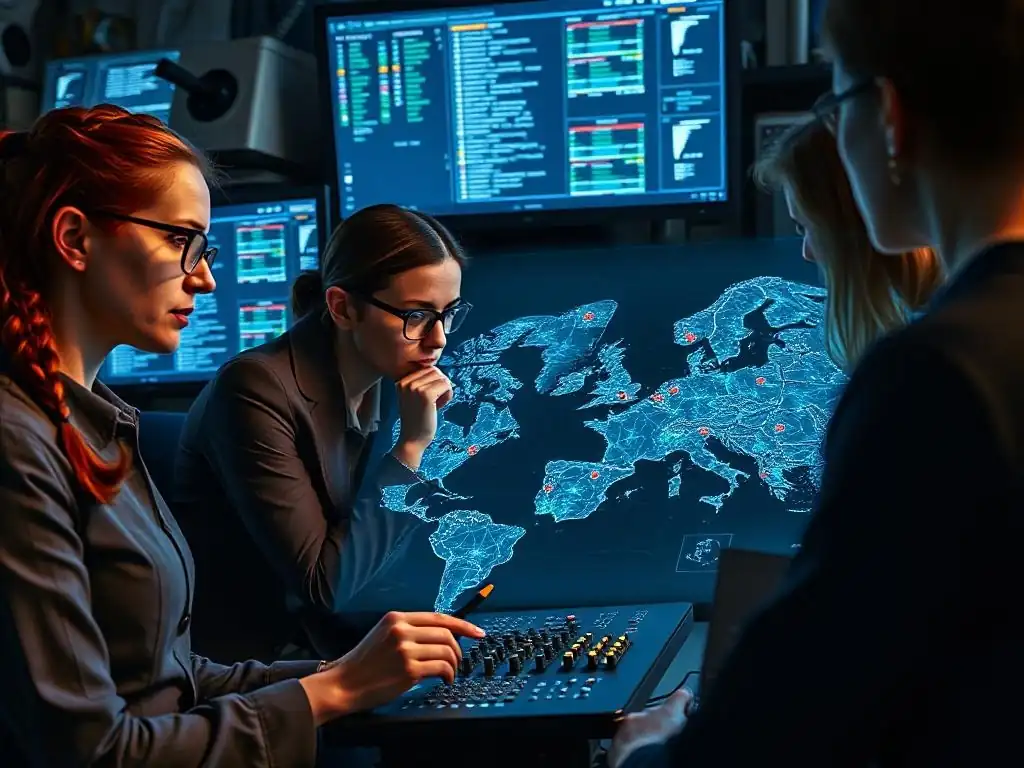
Welcome to WomenInScienceHistory.com!
Ever wondered how data shaped victory? Dive into our latest article exploring the captivating, and often untold, stories of Women Statisticians who revolutionized military logistics during pivotal moments in history. Discover how these brilliant minds, working behind the scenes, used the power of numbers to optimize operations and contribute significantly to outcomes. Prepare to be intrigued by their ingenuity and the impact they had, leaving you eager to learn more about their groundbreaking contributions.
- Introduction: Recognizing the Unsung Heroines of Military Statistics
- The Rise of Women in Statistics: A Historical Overview
- Women Statisticians and Military Logistics: Optimizing Operations
- Case Studies: Women Statisticians Making a Difference in Military Operations
- Overcoming Obstacles: Challenges Faced by Women Statisticians in the Military
- Legacy and Impact: Inspiring Future Generations of Women in STEM
- Conclusion: Recognizing the Vital Role of Women in Shaping Military History Through Statistics
-
Frequently Asked Questions
- What is the historical significance of women statisticians in military logistics?
- What types of logistical problems did women statisticians help solve for the military?
- What challenges did women statisticians face in the male-dominated field of military logistics?
- Can you name a prominent woman statistician who significantly impacted military logistics?
- Why is it important to highlight the contributions of women statisticians in military logistics today?
- Final Reflection: Honoring the Legacy of Precision
- Ignite Your Inner Statistician: Conquer Your Own Data Challenges!
Introduction: Recognizing the Unsung Heroines of Military Statistics
Highlighting the Crucial Role of Women in Military Logistics History
Throughout history, the success of military operations has hinged not only on battlefield prowess but also on meticulous planning, efficient resource allocation, and strategic foresight. Behind many crucial advancements in these areas, particularly in the realm of logistics and operational efficiency, were brilliant women statisticians whose analytical skills were indispensable. These unsung heroines applied rigorous statistical methods to complex military challenges, from optimizing supply chains to predicting strategic outcomes, often working in environments that were not only male-dominated but also resistant to acknowledging their intellectual contributions.
Their work, though frequently overlooked in conventional military narratives, was foundational. They transformed raw data into actionable intelligence, enabling commanders to make informed decisions that directly impacted the effectiveness of forces, the safety of personnel, and the overall outcome of campaigns. The contributions of these women statisticians military logistics were pivotal in turning the tide in various conflicts, demonstrating the profound impact of data-driven approaches on national defense.
Acknowledging the Underrepresentation of Women Statisticians in Military Narratives
Despite their significant impact, the stories of women statisticians in military history have largely remained in the shadows. Historical accounts often prioritize combat roles or male leadership, inadvertently omitting the crucial intellectual labor performed by women in support functions. This underrepresentation means that a vital part of military history, rich with innovation and intellectual bravery, remains largely untold, depriving future generations of inspiring role models.
This article aims to rectify this historical oversight, shedding light on the contributions of these remarkable women statisticians military logistics. By exploring their specific achievements, the challenges they faced, and the enduring legacy of their work, we seek to provide a more complete and accurate picture of military innovation. Their narratives are not just about numbers and algorithms; they are about resilience, pioneering intellect, and the unwavering dedication of women who significantly shaped the course of military history through their mastery of data.
The Rise of Women in Statistics: A Historical Overview
Early Pioneers: Florence Nightingale and her Contributions to Sanitary Statistics
One of the earliest and most influential figures to demonstrate the power of statistics in military contexts was Florence Nightingale, often celebrated as the founder of modern nursing. However, her groundbreaking work extended far beyond the bedside; she was a formidable statistician and social reformer. During the Crimean War (1853-1856), Nightingale meticulously collected and analyzed data on soldier mortality, revealing a shocking truth that transformed military healthcare.
Her famous "coxcomb" or polar-area diagrams graphically illustrated that the vast majority of British soldiers were dying not from battle wounds, but from preventable diseases like cholera and typhus due to unsanitary conditions. For instance, her data showed that of the approximately 18,000 British soldiers who died during the war, around 16,000 succumbed to disease. This powerful visual and statistical evidence convinced the British government to implement widespread sanitary reforms in military hospitals, drastically reducing mortality rates and demonstrating the life-saving potential of women statisticians military logistics.
World War II and the Increased Demand for Statistical Expertise
The outbreak of World War II dramatically escalated the demand for statistical expertise across all sectors, including the military. With millions of men deployed to the front lines, women stepped into roles previously dominated by men, filling critical positions in research, manufacturing, and intelligence. The sheer scale and complexity of global warfare necessitated sophisticated data analysis for everything from predicting enemy movements to ensuring the efficient production of war materials.
Women became integral to various statistical operations, working as "computers" (human calculators), analysts, and cryptographers within military branches like the Women's Army Corps (WAC) and Women Accepted for Volunteer Emergency Service (WAVES). They performed complex calculations for ballistics, managed vast logistical databases, and deciphered enemy codes, often under immense pressure. Their collective efforts underpinned many strategic decisions, showcasing the invaluable role of women statisticians military logistics in a time of global conflict.
Breaking Barriers: Women Entering Statistical Roles in the Military
The wartime necessity shattered many pre-existing gender barriers, allowing women to enter scientific and statistical roles that were previously inaccessible. Universities and government agencies actively recruited women with mathematical aptitude, training them in statistical methods and their application to wartime problems. These roles were not merely clerical; they involved intricate analytical work, often requiring advanced mathematical understanding.
For example, women were employed in facilities like the Aberdeen Proving Ground, where they computed firing tables for artillery, a highly complex task that involved solving differential equations and accounting for numerous variables like wind, temperature, and projectile weight. Their precision and dedication ensured the accuracy of weaponry, directly contributing to military effectiveness. These pioneering women statisticians military logistics laid crucial groundwork, proving their capabilities and paving the way for future generations of women in STEM fields within and outside the military.
Women Statisticians and Military Logistics: Optimizing Operations
Applying Statistical Methods to Improve Military Efficiency
Women statisticians played a pivotal role in revolutionizing military efficiency by rigorously applying statistical methods to solve complex operational problems. Prior to their systematic approach, many decisions were based on intuition or limited empirical observation. The introduction of statistical rigor transformed this, allowing for data-driven insights into areas like resource allocation, troop deployment, and equipment performance.
For instance, statistical sampling techniques were used to assess the quality of munitions and supplies, ensuring that defective items did not reach the battlefield. Probability theory was employed to calculate the optimal size for convoys crossing the Atlantic, aiming to minimize losses to U-boat attacks while maximizing delivery efficiency. These applications of statistical analysis directly led to improved operational effectiveness, reduced waste, and, most importantly, saved lives, highlighting the critical contributions of women statisticians military logistics.
Optimizing Supply Chains and Resource Allocation with Data
The logistical challenges of modern warfare are immense, involving the movement and distribution of vast quantities of personnel, equipment, food, and fuel across continents. Women statisticians were instrumental in optimizing these intricate supply chains and ensuring efficient resource allocation. Their work went beyond simple inventory management; it involved complex forecasting and modeling.
They developed statistical models to predict demand for various supplies, identify bottlenecks in distribution networks, and determine the most efficient transportation routes. For example, by analyzing historical consumption data and projected operational needs, they could recommend precise quantities of fuel or ammunition required at forward operating bases, minimizing both shortages and wasteful overstocking. This sophisticated application of data analysis was fundamental to maintaining troop readiness and sustaining military operations, showcasing the indispensable role of women statisticians military logistics.
The Impact of Statistical Analysis on War Strategy and Planning
Beyond day-to-day logistics, the statistical analysis performed by women significantly influenced high-level war strategy and planning. By analyzing large datasets related to enemy movements, weapon effectiveness, and casualty rates, they provided commanders with crucial intelligence that shaped strategic decisions. Their insights transformed anecdotal observations into quantifiable intelligence.
For example, statistical assessments of bombing campaign effectiveness could inform whether resources should be redirected to different targets or if tactical approaches needed adjustment. Similarly, analysis of battle outcomes could reveal patterns in enemy behavior or the efficacy of new combat techniques. These data-driven insights provided military leaders with a clearer, more objective understanding of the battlefield, enabling more informed strategic choices that could directly impact the course of battles and entire campaigns, proving the profound impact of women statisticians military logistics.
Case Studies: Women Statisticians Making a Difference in Military Operations

Case Study 1: Mina Rees and her Work on Ballistics Trajectory Calculations
Mina Rees was a groundbreaking American mathematician who played a pivotal role in the development of computational mathematics for military applications, particularly following World War II. As the head of the Applied Mathematics Group at the Office of Naval Research (ONR) from 1946 to 1952, she oversaw and directed significant research efforts that applied mathematical and statistical methods to pressing military problems, including the refinement of ballistics trajectories.
Her leadership was instrumental in bridging the gap between theoretical mathematics and practical military needs, fostering an environment where complex statistical challenges could be tackled with nascent computational tools. Rees was not just an administrator; she was a visionary who understood the strategic importance of precise mathematical and statistical data for modern warfare, solidifying the role of women statisticians military logistics.
The Statistical Challenges Faced
Calculating accurate ballistics trajectories for artillery and naval gunnery presented immense statistical and mathematical challenges. The flight path of a projectile is influenced by a multitude of variables, including initial velocity, projectile weight and shape, air resistance, wind speed and direction, atmospheric pressure, temperature, and even the Coriolis effect due to Earth's rotation. Each of these variables introduces complexity and uncertainty, making precise prediction a formidable task.
Prior to modern computing, these calculations were labor-intensive and prone to human error, often requiring teams of "computers" (human calculators) to process vast numerical tables. The challenge was to develop methods that could quickly and accurately account for these dynamic variables to ensure shells landed precisely where intended, a vital task for women statisticians military logistics.
The Methodological Approach
Under Mina Rees's direction, the Applied Mathematics Group at ONR became a central hub for pioneering research in numerical analysis and early computer science. They utilized and developed algorithms for the nascent electronic digital computers, such as the ENIAC, to perform the millions of calculations required for comprehensive firing tables. This represented a fundamental shift from manual computation to automated, high-speed processing.
The methodological approach involved developing sophisticated statistical models and numerical integration techniques to solve the complex differential equations governing projectile motion. These models incorporated empirical data on environmental conditions and projectile characteristics to create highly accurate and reliable firing solutions, demonstrating a sophisticated application of women statisticians military logistics.
The Impact on Military Success
The impact of Mina Rees's work on ballistics trajectory calculations was profound and far-reaching. By providing highly accurate firing tables and computational methods, her team significantly improved the precision of artillery and naval bombardments. This enhanced accuracy meant fewer missed targets, reduced collateral damage, and more effective use of ordnance.
The ability to predict projectile trajectories with greater certainty was critical for both offensive operations, allowing for precise targeting of enemy positions, and defensive measures. Her contributions laid foundational groundwork for modern computational science in the military, proving that rigorous mathematical and statistical analysis, often driven by women statisticians military logistics, was indispensable for technological advancement and operational superiority.
Case Study 2: Grace Hopper and her Contribution to Computer Programming for Military Applications
Grace Hopper, a U.S. Navy Rear Admiral and pioneering computer scientist, made indelible contributions to military operations through her revolutionary work in computer programming. While often celebrated for her role in developing programming languages like COBOL, her entire career was deeply rooted in applying systematic, logical (and inherently statistical) thinking to solve complex data management and logistical problems for the Navy, starting with her work on the Harvard Mark I computer during World War II.
Hopper's vision was to make computers more accessible and their vast processing power applicable to a wider array of military challenges, moving beyond pure number crunching to managing and interpreting large datasets for strategic advantage. Her efforts directly impacted how the military handled information, an essential aspect of women statisticians military logistics.
Analyzing Data to Improve Resource Distribution
During her early tenure with the Navy, Grace Hopper was assigned to the Bureau of Ships' Computation Project at Harvard University, working on the Mark I computer. Her tasks included calculating missile trajectories and developing complex mathematical tables. However, her work quickly expanded to analyzing vast quantities of logistical data. She recognized that the true power of these early machines lay not just in calculation but in their ability to process and organize information.
Hopper's programming efforts enabled the Navy to more effectively track and manage critical resources, including personnel, equipment, and supplies across its expansive global operations. By systematically analyzing this data, the Navy could gain real-time insights into resource availability and deployment needs, leading to more informed decisions about where to send what, and when, crucial for women statisticians military logistics.
Minimizing Waste and Maximizing Efficiency
Grace Hopper's focus on developing user-friendly programming languages was driven by a desire to make data processing more efficient and less prone to error. Her work on compilers, which translated human-readable code into machine code, dramatically streamlined the process of programming. This had a direct impact on military logistics by enabling faster and more accurate data analysis.
By automating and optimizing data handling for inventory management, equipment maintenance schedules, and personnel assignments, Hopper's innovations helped the Navy minimize waste and maximize efficiency. For example, better data tracking reduced overstocking of certain items while preventing critical shortages elsewhere, saving significant financial resources and ensuring that military assets were utilized optimally. This demonstrated the immense practical value of statistical thinking and computational rigor in military contexts, a hallmark of women statisticians military logistics.
Demonstrating the Value of Statistical Thinking in Military Contexts
Grace Hopper's entire career served as a powerful testament to the value of systematic, data-driven thinking—the core of statistical methodology—in military operations. She championed the idea that data, when properly collected, processed, and analyzed, could provide unparalleled insights into complex problems, leading to better decision-making and operational improvements.
Her pioneering work in computer programming, which enabled the efficient manipulation and interpretation of vast datasets, fundamentally changed how the military approached logistics, intelligence, and strategic planning. Hopper's legacy extends far beyond specific algorithms; it lies in proving that rigorous analysis and computational tools are indispensable for modern military success, inspiring countless future generations of women statisticians military logistics and technologists.
Overcoming Obstacles: Challenges Faced by Women Statisticians in the Military
Gender Bias and Discrimination in a Male-Dominated Field
Despite their undeniable contributions, women statisticians in the military often faced pervasive gender bias and discrimination. They were frequently relegated to "computer" or "clerical" roles, even when their work involved advanced mathematical analysis and problem-solving. Their intellectual capabilities were often underestimated, and their expertise was not always taken as seriously as that of their male counterparts.
Women were routinely denied opportunities for promotion, leadership positions, or public recognition for their groundbreaking work, solely due to their gender. Instances of their contributions being attributed to male supervisors or simply going unacknowledged were common, creating a challenging environment where professional growth and deserved recognition were hard-won. This systemic bias meant that many brilliant women statisticians military logistics worked in relative obscurity, their impact often recognized only in retrospect.
Limited Access to Opportunities and Recognition
Even when women excelled in their statistical roles, institutional barriers often limited their access to further opportunities and public recognition. High-profile projects, advanced training programs, or fieldwork assignments that could lead to career advancement were frequently reserved for men. This perpetuated a cycle where women's talents were underutilized, and their potential for greater impact was constrained.
Furthermore, the lack of formal acknowledgment in official records or public ceremonies meant that their achievements were often lost to history. Unlike their male colleagues, who might receive medals or public commendations, the women statisticians military logistics often served silently, their critical analytical work vital to success but rarely celebrated. This historical omission highlights the need for ongoing efforts to uncover and celebrate their stories.
Balancing Family Responsibilities with Demanding Military Careers
A significant challenge for women statisticians, particularly during wartime and the post-war era, was balancing demanding military or government careers with societal expectations regarding family responsibilities. Many women were expected to manage primary childcare and domestic duties in addition to their rigorous professional commitments. This dual burden placed immense pressure on them, often leading to difficult choices regarding their careers.
The military and governmental institutions of the time offered little in the way of institutional support, such as childcare facilities or flexible work arrangements, which are now recognized as essential for supporting women in demanding fields. This lack of support made it exceptionally difficult for women statisticians military logistics to sustain long-term careers, contributing to the historical underrepresentation of women in leadership and highly visible roles within the scientific and defense communities.
Legacy and Impact: Inspiring Future Generations of Women in STEM
The Enduring Contributions of Women Statisticians to Military Science
The foundational work performed by women statisticians in military contexts continues to resonate deeply within modern military science, logistics, and data analytics. Their pioneering methodologies for data collection, analysis, and interpretation, often developed under immense pressure and with limited resources, laid critical groundwork for today's sophisticated operational research and data-driven defense strategies.
Their efforts demonstrated the indispensable value of statistical rigor in complex, high-stakes environments, proving that quantitative analysis is as crucial to military success as strategic planning or combat readiness. The principles they established for optimizing supply chains, predicting outcomes, and improving efficiency remain highly relevant in contemporary military operations, cementing the enduring legacy of women statisticians military logistics.
Promoting STEM Education and Encouraging Women to Pursue Statistical Careers
Highlighting the historical contributions of these "Data Divas" is crucial for inspiring future generations of women to pursue careers in STEM, particularly in statistics, data science, and related fields. Their stories serve as powerful examples of intellectual prowess, resilience, and the profound impact women can have in traditionally male-dominated arenas. By showcasing these role models, we can dismantle stereotypes and encourage young women to explore their potential in quantitative disciplines.
It is imperative that educational institutions, government bodies, and industry leaders actively promote STEM education for girls and women, addressing historical barriers and fostering inclusive environments. Providing mentorship opportunities, scholarships, and accessible pathways into statistical careers ensures that the pipeline of talent remains robust, allowing more women statisticians military logistics to emerge and contribute significantly.
Celebrating the Achievements of Women in Military Statistics and Logistics
The continued recognition and celebration of the achievements of women in military statistics and logistics are not merely acts of historical rectification; they are essential for creating a more complete and accurate historical narrative. Their stories provide invaluable insights into the evolution of military science and the broader societal changes that allowed women to contribute in unprecedented ways.
By documenting and sharing these narratives, we ensure that their pioneering spirit and intellectual contributions are not forgotten. Celebrating these women statisticians military logistics empowers current and future generations, demonstrating that brilliance and impact know no gender boundaries and that diverse perspectives are vital for innovation and progress in all fields, especially those as critical as national defense.
Conclusion: Recognizing the Vital Role of Women in Shaping Military History Through Statistics
Emphasizing the Importance of Diversity and Inclusion in STEM Fields
The historical contributions of women statisticians to military logistics and operations unequivocally demonstrate that diversity, including gender diversity, is not just an ethical imperative but a strategic necessity. Diverse teams bring a wider array of perspectives, problem-solving approaches, and innovative ideas, leading to more robust and effective solutions, particularly in complex and critical fields like national defense.
The analytical prowess of these women, often working against significant odds, proves that excluding or underrepresenting any demographic group diminishes an organization's collective intellectual capacity and its ability to adapt and excel. Embracing diversity in STEM, therefore, strengthens military capabilities and fosters a more equitable and capable scientific community, ensuring that all talents are harnessed for the greater good.
A Call to Action: Continuing to Support and Celebrate Women in Science and Military Operations
To honor the legacy of these extraordinary women, we must commit to continuing to support and celebrate women in science and military operations. This involves actively seeking out and documenting their stories, ensuring they are integrated into educational curricula and historical accounts. It also means fostering inclusive environments where women can thrive, receive equitable opportunities, and be recognized for their contributions without bias.
Let the stories of these "Data Divas"—the women statisticians military logistics who quietly revolutionized military operations through their mastery of numbers and data—serve as a powerful inspiration. Their legacy reminds us that intellectual courage, analytical rigor, and unwavering dedication can shape history, and that by celebrating their achievements, we pave the way for a future where talent and impact are universally recognized, regardless of gender.
Frequently Asked Questions
What is the historical significance of women statisticians in military logistics?
Women statisticians played a vital role during wartime, applying their skills to optimize resource allocation and improve operational efficiency. Their contributions were often overlooked or undervalued at the time.
What types of logistical problems did women statisticians help solve for the military?
They addressed problems like predicting supply needs, optimizing transportation routes, and analyzing the effectiveness of different strategies. This helped ensure resources were available where and when needed.
What challenges did women statisticians face in the male-dominated field of military logistics?
They often faced gender discrimination, limited access to resources and opportunities, and lack of recognition for their work. Overcoming these barriers was a constant struggle.
Can you name a prominent woman statistician who significantly impacted military logistics?
While many names remain obscure, women like Florence Nightingale and Olive Benson pioneered the use of statistics in military healthcare and operations research, laying the foundation for future generations.
Why is it important to highlight the contributions of women statisticians in military logistics today?
Recognizing their contributions helps rewrite history to be more inclusive and inspire future generations of women to pursue careers in STEM fields. It also acknowledges the critical role women played in shaping military strategy.
Final Reflection: Honoring the Legacy of Precision
The stories of the "Data Divas," the women statisticians who revolutionized military logistics and operations, are not just historical anecdotes; they are a testament to the enduring power of analytical thinking and the critical role women play in STEM fields, especially when applied to complex, real-world challenges. Their contributions, often overlooked, laid the groundwork for the data-driven decision-making that defines modern military strategy and beyond.
The impact of these pioneering women extends far beyond the battlefield. Their dedication to precision and efficiency continues to inspire a new generation of statisticians and logisticians, proving that innovation thrives when diverse perspectives are embraced. The best angle from which to approach any problem is the try-angle.
This quote encapsulates the spirit of these women, who fearlessly tackled complex problems with ingenuity and determination, leaving an indelible mark on the landscape of military logistics and operations.
As we reflect on the legacy of these remarkable women, let us remember that their contributions were not just about numbers and algorithms; they were about saving lives, optimizing resources, and shaping a more secure world. Let us strive to emulate their commitment to excellence, their unwavering dedication to problem-solving, and their pioneering spirit, ensuring that their story continues to inspire future generations to harness the power of data for the greater good.
Ignite Your Inner Statistician: Conquer Your Own Data Challenges!
Thank you for delving into the inspiring stories of these incredible women in statistics! Now, it's your turn to harness the power of data in your own life. Ready to take the next step?
- Embrace data-driven decisions: Identify one area in your life (work, finances, or personal goals) where you can start using data to inform your choices. Track, analyze, and optimize!
- Explore the world of free online statistics courses: Sharpen your skills and unlock new possibilities.
- Share this article to inspire others: Spread the word about these amazing women and encourage the next generation of data scientists!
What's one small data analysis project you'll tackle this week to improve your life?