Exploring Ethics & Women in Science: A Vital Cross-Disciplinary Lens
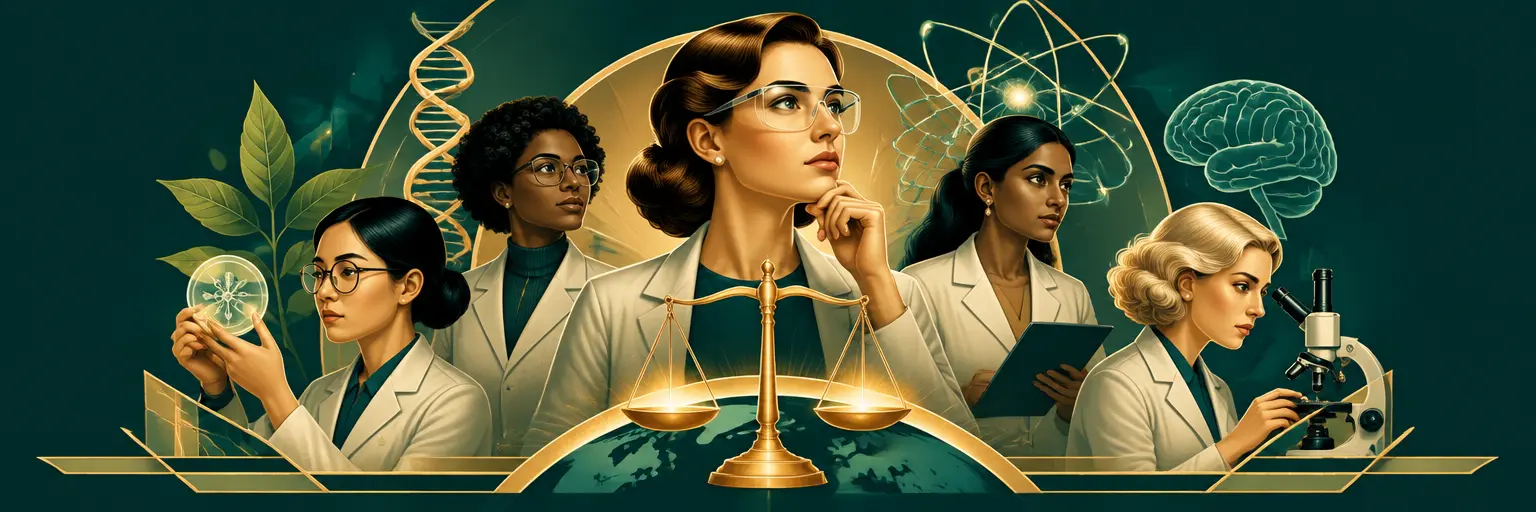
Welcome to the Ethics & Women in Science subcategory, a dedicated space within our Cross-Disciplinary Themes section. Here, we delve into the complex moral landscapes that female scientists have navigated—from research integrity and attribution ethics to the broader societal responsibilities of scientific discovery. This page illuminates how ethical frameworks have shaped, and been shaped by, women’s contributions, offering a richer, more nuanced history than traditional narratives provide.
🔬 Historical Injustices & Ethical Attribution
This section uncovers the pervasive ethical breaches of credit misattribution and outright plagiarism that many pioneering women endured. You’ll learn about figures like Rosalind Franklin, whose pivotal DNA research was used without proper acknowledgment, and Lise Meitner, whose role in nuclear fission was systematically erased by male colleagues. We analyze the moral culpability of institutions that allowed these erasures, framing them not as isolated oversights but as systemic ethical failures embedded in scientific culture.
By examining primary documents, lab notebooks, and contemporary correspondence, we reconstruct the painful decisions women made when confronting these injustices—some chose silence for career survival, others fought publicly. This exploration isn’t just historical; it directly informs modern debates on authorship policies and the ethical obligations of senior researchers to credit junior collaborators, particularly women and underrepresented groups, fairly.
🧪 Research Ethics in Female-Led Laboratories
Dive into how female scientists approached research methodology and human subjects ethics, often pioneering stricter protocols. For instance, biochemist Gertrude Elion’s drug development process emphasized rigorous patient consent and safety standards, setting precedents that later became regulatory norms. We highlight how women in toxicology and epidemiology, like Rachel Carson, championed precautionary principles against industrial interests, challenging unethical practices that prioritized profit over public health.
This section also explores the ethical dilemmas of military-funded research. Many women scientists, including some during the Manhattan Project, navigated complex moral terrains. Their documented reflections reveal a persistent tension between patriotic duty and the ethical implications of their work. These stories offer powerful case studies for contemporary scientists facing similar pressures, demonstrating how ethical rigor can coexist with cutting-edge innovation without compromising integrity.
👩🔬 Mentorship, Gatekeeping & Ethical Collaboration
Here, we examine the ethical responsibilities of established scientists in fostering inclusive environments. Historical male-dominated labs often erected invisible barriers—denying lab space, access to equipment, or co-authorship—that constitute ethical misconduct. We showcase exceptions: male mentors who actively championed women, like Enrico Fermi supporting Leona Woods, and the sisterhood networks women built, such as the “Copenhagen School” of female physicists sharing data and credit equitably.
This theme extends to modern mentoring ethics, tackling issues of power dynamics, sexual harassment, and the moral duty of institutions to protect early-career researchers. By analyzing historical patterns of exclusion and collaboration, we provide actionable lessons for contemporary labs. You’ll discover how ethical collaboration—transparent data sharing, mutual respect, and equitable authorship—not only corrects past wrongs but also accelerates scientific progress by unlocking diverse intellectual capital.
🌍 Ethics of Scientific Communication & Advocacy
Women have frequently been at the forefront of ethical science communication, translating complex discoveries into public action. This section covers how figures like Jane Goodall and Dian Fossey navigated the ethics of public advocacy versus detached observation, often facing criticism from male peers for “emotional” engagement. We analyze the ethical imperative to correct misinformation, especially when female scientists countered corporate or governmental denial, as in the case of environmental health.
Additionally, we explore the gendered ethical dilemma of visibility versus vulnerability. When women scientists spoke out on controversial topics—from birth control (e.g., Katharine McCormick) to nuclear disarmament—they faced professional retaliation. This discussion reveals how ethical communication requires not just factual accuracy but also strategic courage. These narratives provide a blueprint for today’s scientists engaging with social media and public policy, emphasizing the ethical duty to remain truthful while navigating hostile environments.
🏛️ Institutional Ethics & the Future of Inclusion
Our final thematic pillar dissects the systemic ethical failures of institutions—funding agencies, universities, and journals—in perpetuating gender bias. We examine historical quotas, salary inequities, and the denial of tenure tracks, framing them as structural ethical violations. This section profiles reformers like Alice Hamilton, who lobbied for industrial safety standards, and modern advocates pushing for transparent hiring metrics and anonymous peer review to reduce bias.
Looking forward, we synthesize these historical lessons into a forward-looking ethical framework for STEM. Key topics include the ethics of algorithmic bias in research tools, the moral imperative for inclusive clinical trials, and the responsibility of academic institutions to create restorative justice programs. By learning from past ethical failures, we propose actionable policy reforms—such as blind evaluation for grants and mandatory climate surveys—that can repurpose the scientific enterprise toward genuine equity and integrity for all.
Frequently Asked Questions
Why are ethics particularly important when studying women in science history?
Ethics are crucial because many historical exclusions of women stemmed from unethical practices—misattribution, denied access, and hostile environments. Examining these through an ethical lens reveals systemic injustices rather than individual failings. It also highlights how women often advocated for more rigorous ethical standards, making their stories central to understanding moral progress in research and collaboration.
Who are some notable women known for ethical scientific conduct?
Gertrude Elion revolutionized drug ethics with her patient-centered protocols. Rachel Carson embodied environmental ethics by challenging industry misinformation. Henrietta Lacks, though not a scientist, ethically transformed research via informed consent debates. More recently, microbiologist Rita Colwell championed open data ethics. These women modeled integrity, transparency, and social responsibility in their groundbreaking work.
What ethical issues do female scientists still face today?
Contemporary issues include inequitable authorship credit, subtle bias in peer review, and underrepresentation in senior leadership which distorts ethical decision-making. Harassment remains both an ethical and professional barrier. Additionally, female scientists often face ethical pressure to conform to male-centric research priorities, limiting funding for topics disproportionately affecting women, such as autoimmune diseases.
How does this subcategory help modern scientists ethically?
By studying historical ethical failures and victories, modern scientists learn concrete practices: transparent data sharing, equitable collaboration, and proactive mentorship. These historical case studies provide frameworks for navigating dilemmas like military funding or public-facing research. They also empower scientists to recognize and challenge institutional biases, fostering a culture where ethical rigor and inclusive excellence are inseparable.
Where can I find primary sources on this topic?
Our site’s resource library links to archival collections, like the Schlesinger Library at Radcliffe, and digitized lab notebooks from institutions such as MIT and Stanford. We also curate oral histories from the American Institute of Physics. For ethics-specific documents, explore the National Archives’ records on equal opportunity cases and journal correspondence from pioneering women in your area of interest.