Explore the Intersection of Women in Science & Art
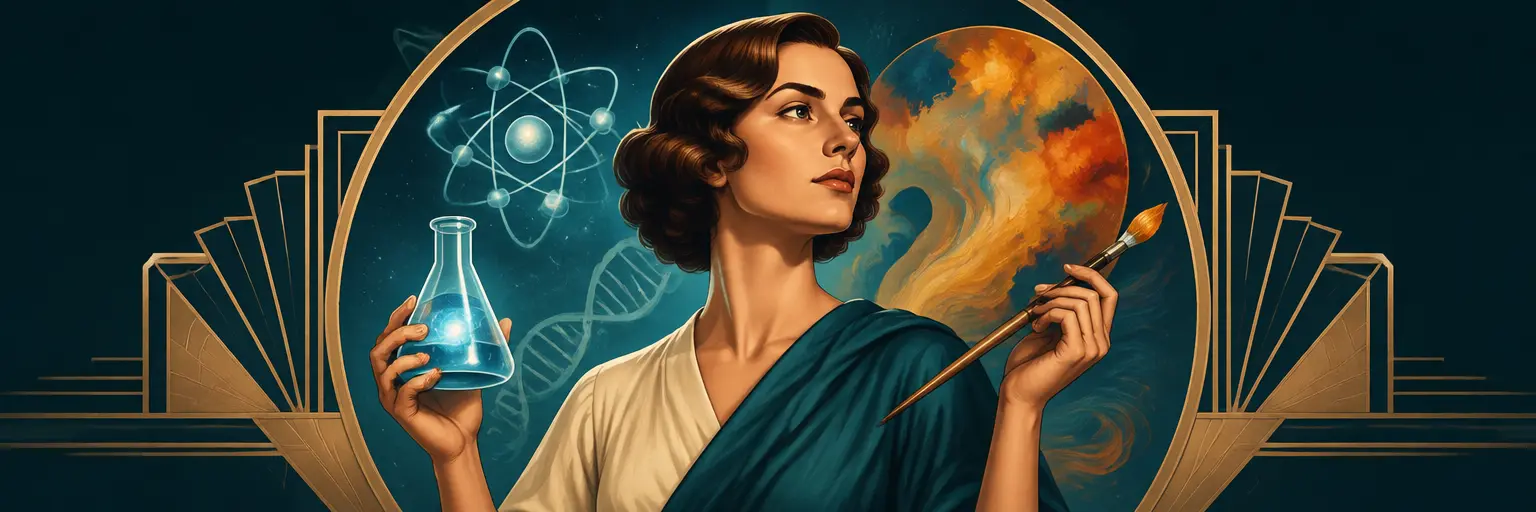
Welcome to our Women in Science & Art subcategory, a unique space within Cross-Disciplinary Themes on WomenInScienceHistory.com. Here, we delve into the fascinating convergence where empirical inquiry meets creative expression, showcasing how visionary women have blurred the boundaries between laboratory and studio. From anatomical illustrators to data-driven sculptors and bio-art pioneers, this collection uncovers the dual legacy of women who used art to advance science, and science to inspire art. Expect rich narratives, visual insights, and critical context designed to illuminate these hybrid careers for researchers, educators, and curious minds alike.
🔬 Pioneers of Scientific Illustration and Botanical Art
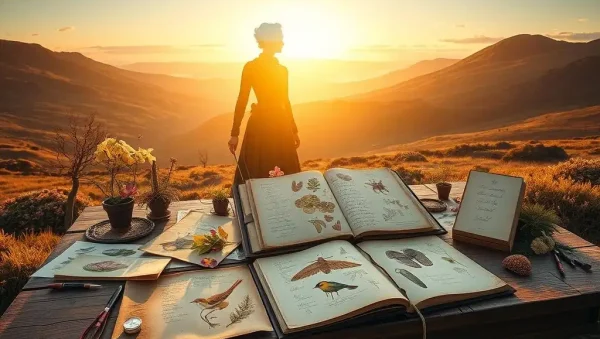
This section highlights women who turned meticulous observation into stunning visual records, such as Maria Sibylla Merian and Marianne North. Their detailed plates of insects, plants, and ecosystems were not merely aesthetic objects but vital scientific documents that shaped taxonomy and ecology. Explore how their artistic precision enabled discoveries that male contemporaries often overlooked, from metamorphosis to global plant distribution.
Readers will discover how these illustrators combined technical accuracy with aesthetic grace, often working without formal scientific accreditation yet earning respect through their publications. We analyze the challenges they faced in accessing fieldwork and specimen collections, and how their cross-disciplinary approach laid groundwork for modern visual science communication. Expect examples of their work, plus analysis of how their style influenced both natural history and fine art movements.
🎨 The Artistic Side of Medical and Anatomical Discovery
Many pioneering female physicians and anatomists—like Anna Morandi Manzolini and Mary Somerville—used wax modeling, drawing, and diagramming to communicate complex bodily structures. This segment explores how women leveraged artistic skills to overcome exclusion from traditional academic channels, creating teaching aids and atlases that revolutionized medical education. Their tactile, three-dimensional models were often more intuitive than text-based descriptions.
Here, you will find case studies of “hidden” female collaborators who produced illustrations for famous male scientists, sometimes without credit. We trace the evolution of medical illustration as a professional field and highlight how these women’s dual talents improved surgical precision and patient understanding. This content also touches on modern parallels, where digital artists and 3D printers continue this legacy in clinical visualization.
🌿 Eco-Art and Environmental Science Pioneers
This theme spotlights women who merged ecological research with visual activism, such as Rachel Carson (whose writing was deeply artistic) and contemporary artists like Daisy Ginsberg. We examine how their work communicates climate data, biodiversity loss, and sustainability through installations, photography, and bio-art. Their creative methods make complex environmental science accessible and emotionally resonant.
Expect deep dives into how these women used art as a tool for public engagement, translating research into compelling narratives that influence policy and behavior. We also explore the challenges of interdisciplinary credibility and funding for such hybrid projects. This section is perfect for understanding how aesthetic approaches can drive scientific literacy and environmental stewardship in the 21st century.
🔭 Data Visualization and Astronomy Illustration
Astronomy has a rich history of women who turned raw data into beautiful, comprehensible charts and paintings—think of Cecilia Payne-Gaposchkin and her hand-drawn spectra diagrams, or Annie Jump Cannon’s classification charts. Here, we analyze how their visual thinking enabled breakthroughs in stellar classification and galactic mapping, often creating standard notations still used today.
Readers will learn about the intersection of mathematical precision and artistic layout, and how these women balanced “feminine” decorative skills with “masculine” scientific rigor. We also cover modern infographic designers and astrophotographers who continue this fusion. This section offers practical insights into how visualization can reveal patterns that numbers alone might hide, making it valuable for data scientists and artists alike.
🖌️ Contemporary Bio-Art and Feminist Critique
Finally, we look at living artists and scientists who use laboratory techniques—like tissue culture, genetic modification, and synthetic biology—as their medium. Figures such as Oron Catts (collaborator) and Marta de Menezes challenge the gendered history of science by interrogating the body, genetics, and bioethics. Their work forces viewers to reconsider what counts as “science” and “art,” and who gets to define these categories.
This segment provides critical analysis of eco-feminist and posthumanist perspectives, showing how these women disrupt traditional hierarchies. You’ll discover collaborative projects where artists and biologists co-create living sculptures, eliciting new ethical dialogues. For students and practitioners, this is a must-read on how cross-disciplinary practice can be both innovative and subversive, and how it carves space for female voices in male-dominated tech fields.
Frequently Asked Questions
What qualifies as “Science & Art” in this subcategory?
It includes any work where women used artistic techniques—illustration, sculpture, photography, digital media, or performance—to advance scientific understanding or communicate research. This ranges from 18th-century botanical plates to contemporary bio-art installations. The key is that both disciplines are essential to the final output.
Are these women primarily scientists or artists?
Most were hybrids, though some identified more with one label. For example, Merian was primarily an artist-scientist, while Carson was a scientist-writer. This subcategory celebrates that fluidity, recognizing that rigid categories often excluded women historically. We showcase their full careers, not just one aspect.
How can I use this content for educational purposes?
Each H3 section provides historical context, visual examples, and discussion points. Teachers can use these stories for STEM-art integration lessons, Women’s History Month projects, or to illustrate interdisciplinary careers. We also link to primary sources and museum collections for deeper research.
Why is this cross-disciplinary theme important for women’s history?
Because women often found entry into science through art-related gateways (like illustration or teaching), where gender bias was less rigid. Highlighting these paths reveals creative resistance and shows that women always contributed to knowledge production, even when excluded from formal institutions.
Do you include contemporary living artists in this category?
Yes, we feature contemporary bio-artists, data designers, and eco-activists who continue this legacy. This ensures the subcategory remains relevant for current students and professionals, and demonstrates that the intersection of science and art is an active, evolving field with many unfinished narratives.