Understanding the Challenges & Barriers for Women in Science
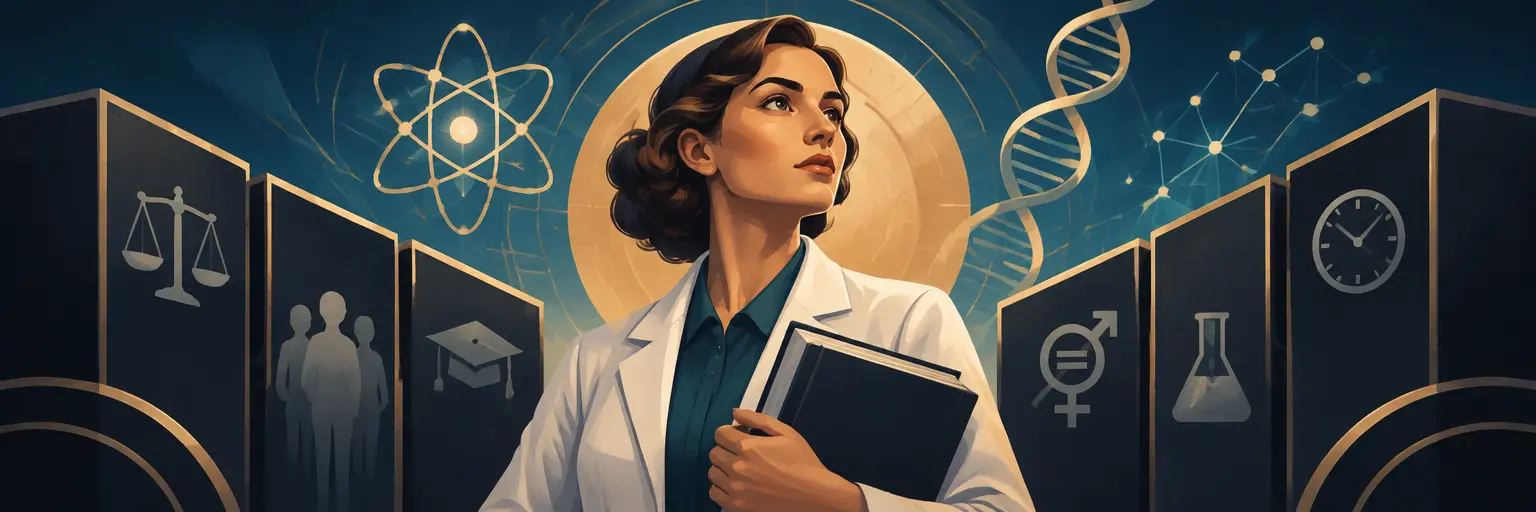
This subcategory delves into the systemic, cultural, and institutional obstacles that have historically—and presently—hindered women's participation and advancement in STEM fields. From implicit bias and pay gaps to a lack of mentorship and hostile work environments, we explore the multifaceted barriers that persist. By examining these challenges, we provide context for the triumphs celebrated elsewhere on WomenInScienceHistory.com, empowering readers to recognize and dismantle these hurdles in modern science.
🔬 Historical Underrepresentation and Institutional Exclusion
For centuries, formal scientific institutions like universities, academies, and laboratories actively barred women from membership, degrees, and research positions. Even when permitted to attend lectures, women were often denied laboratory access or expected to work as unpaid assistants. This institutional exclusion created a persistent pipeline problem, limiting the number of women who could achieve advanced credentials and professional recognition.
Understanding this history is crucial because it explains why so many female scientists, like Caroline Herschel or Mary Somerville, worked in isolation or under male relatives' shadows. These barriers forced women to develop alternative scientific networks, often in domestic spaces or through correspondence. By recognizing these historical exclusions, we can better appreciate the extraordinary persistence required to overcome them and see how modern equity initiatives build upon that legacy.
🧪 Implicit Bias, Stereotypes, and the "Leaky Pipeline"
Beyond overt exclusion, subtle biases continually undermine women in science. Stereotypes about innate abilities, such as the false belief that men are naturally better at math or abstract reasoning, shape hiring decisions, promotion reviews, and grant funding allocations. This implicit bias manifests in fewer citations, lower salaries, and less research funding awarded to female scientists compared to male peers with identical credentials.
This bias fuels the "leaky pipeline," where women disproportionately drop out of STEM careers at every stage—from undergraduate study to mid-career professorship. Factors like hostile working climates, microaggressions, and the perception of limited advancement opportunities compound the effect. By exploring these invisible barriers, readers can understand why talent alone often fails to secure scientific success for women and why structural changes are essential for true equity.
🚫 Work-Life Integration and the Motherhood Penalty
Scientific careers demand long hours, constant publication, and frequent relocation—structures that assume an unencumbered worker. For women, who still shoulder a disproportionate share of caregiving and domestic responsibilities, this creates a steep penalty. The "motherhood penalty" in science is well-documented: mothers face lower hiring ratings, fewer leadership opportunities, and slower career advancement compared to fathers or childless women.
This section examines real-life accounts of female scientists who postponed having children, faced discrimination after maternity leave, or left academia for more flexible industry roles. It also highlights institutional solutions like family-friendly tenure clocks, on-site childcare, and grant extensions that can help close this gap. Understanding these barriers is key to advocating for policies that retain talented women in research and teaching roles.
🛡️ Harassment, Hostile Climates, and Marginalization
Sexual harassment, bullying, and exclusionary social cultures remain pervasive issues in scientific workplaces, from fieldwork to laboratory meetings. Women often report being overtalked, having their ideas credited to male colleagues, or facing retaliation when they speak up. For women from underrepresented racial backgrounds, these challenges are compounded by intersections of gender and race bias, making them even more vulnerable to isolation and mistreatment.
This section explores not only the prevalence of these issues but also their devastating impacts on mental health, career persistence, and scientific contribution. It also profiles women who bravely broke the silence, triggering institutional reforms and the creation of safer reporting mechanisms. Readers will gain insight into why a supportive, respectful culture is not a luxury but a foundation for successful scientific research.
🌍 Global Disparities and Transnational Perspectives
Barriers for women in science are not uniform across the globe—they vary with cultural norms, economic resources, and national policies. In some regions, girls are denied secondary education altogether; in others, legal restrictions prevent married women from working in laboratories. Meanwhile, women in lower-income countries often lack basic infrastructure like reliable electricity or internet, let alone research equipment and peer networks.
This section highlights comparative case studies, such as the role of women scientists in India, the rise of female-led research in Latin America, and the specific hurdles faced by female researchers in conflict zones. It also showcases successful national interventions, like gender quotas in Switzerland or targeted fellowships in Sub-Saharan Africa, that offer replicable models. Recognizing this diversity helps build a more inclusive global scientific community.
Frequently Asked Questions
Why are there still so few women in physics and engineering?
Physics and engineering have historically entrenched cultures that favor male behavior, including aggressive competition, long unstructured hours, and social exclusion. Persistent math anxiety stereotypes and lack of visible female role models also discourage girls from pursuing these fields. However, recent changes in curriculum design, mentoring programs, and inclusive teaching are slowly improving representation.
What is the most effective way to reduce bias against women in science?
Proven strategies include blind evaluation of research papers and grant proposals, structured hiring criteria with diverse shortlists, and institutional sponsorship programs that actively advocate for women. Additionally, mandatory unconscious bias training for all scientific staff, combined with transparency around salary and promotion metrics, has been shown to produce measurable improvements in retention.
How can teachers support young girls interested in science?
Teachers should encourage curiosity without gendered assumptions, expose girls to female scientist role models, and address stereotypes directly. Providing hands-on project-based learning, celebrating girls' achievements publicly, and connecting with local female STEM professionals can significantly boost girls' confidence and long-term interest in scientific careers.
Does the gender gap in science close once women are hired?
No. Even after hiring, women face lower starting salaries, fewer lab resources, and less mentorship. Both men and women with identical productivity are rated differently—women must work harder to be seen as competent. Therefore, achieving diversity requires not just hiring but ongoing structural change in promotion criteria, leadership opportunities, and workplace culture.
Are there any successful countries at promoting women in science?
Countries like Iceland, Spain, and Malaysia have shown significant progress through national gender equality laws, quotas for research leadership, and generous parental leave policies. For example, Iceland requires all research institutes to submit gender action plans. These examples prove that with strong legislative will, the scientific workforce can become more balanced and productive.