
The Ballistics Belles: Women Scientists Perfecting Weaponry Accuracy


Welcome to WomenInScienceHistory.com!
Prepare to be amazed by the untold stories of brilliance and perseverance. Dive into " The Ballistics Belles: Women Scientists Perfecting Weaponry Accuracy" and discover how female scientists broke barriers and revolutionized a field often associated with men. But what were the key innovations and challenges these women faced in achieving unparalleled precision? Explore this fascinating Cross-Disciplinary Theme and uncover the secrets behind their groundbreaking contributions to ballistics.
- Introduction: Unsung Heroines of Ballistics – Women's Contributions to Accuracy
- Early Pioneers: Laying the Foundation for Ballistics Precision
- World War Era: Women's Crucial Role in Ballistics Advancements
- Post-War Era: Continued Contributions to Ballistics Science
- Modern Ballistics: Women Shaping the Future of Weaponry Accuracy
- Challenges and Triumphs: Stories of Resilience and Innovation
- Conclusion: Honoring the Legacy of Women in Ballistics Accuracy Research
-
Frequently Asked Questions
- What is The Ballistics Belles about?
- Why is it important to study Women’s ballistics accuracy history research?
- What kind of challenges did these women face in Women’s ballistics accuracy history research?
- Where can I learn more about Women’s ballistics accuracy history research?
- How did women contribute to improving Women’s ballistics accuracy history research?
- Final Reflection: Honoring the Legacy of Precision
- Ignite Your Inner Ballistics Belle!
Introduction: Unsung Heroines of Ballistics – Women's Contributions to Accuracy
Highlighting the Overlooked Contributions of Women to Ballistics Science
For centuries, the field of ballistics – the science of projectile motion – has been critical to military strategy, engineering, and even space exploration. Yet, the narratives surrounding its development often focus predominantly on male innovators, leaving a significant portion of the story untold. This oversight obscures the profound and often pioneering contributions of women, who, despite societal barriers and professional exclusion, played pivotal roles in advancing our understanding of weaponry accuracy. Their meticulous calculations, innovative research, and unwavering dedication were instrumental in perfecting the precision of projectiles, from artillery shells to rocket propellants.
The complex nature of ballistics research demands a multidisciplinary approach, encompassing physics, mathematics, chemistry, and engineering. Women were involved in various facets of this demanding field, frequently working behind the scenes as "human computers" or in laboratories where their intellectual rigor directly impacted the effectiveness of defense systems. Their work, foundational to the trajectory tables and firing solutions used in conflicts worldwide, represents a critical, yet largely unacknowledged, chapter in the history of science and military technology, fundamentally shaping women’s ballistics accuracy history research.
Recognizing Female Pioneers in Weaponry Accuracy
The term "Ballistics Belles" aptly captures the spirit of these remarkable women who defied expectations and excelled in a demanding, male-dominated arena. From the early 20th century through the World War eras and into modern times, women have consistently pushed the boundaries of what was thought possible in weaponry accuracy.
Their stories are not merely footnotes but central chapters in the evolution of ballistics science. By shedding light on their achievements, we not only correct historical inaccuracies but also provide powerful role models for future generations aspiring to careers in STEM, particularly in fields related to defense and precision engineering.
This exploration into women’s ballistics accuracy history research will highlight specific individuals and collective efforts that significantly enhanced the precision and reliability of weaponry. We will uncover how these pioneering women navigated systemic challenges, applied their intellect to solve complex problems, and ultimately left an indelible mark on a field that continues to evolve at a rapid pace. Their legacy is a testament to their brilliance and resilience, proving that scientific acumen knows no gender.
Early Pioneers: Laying the Foundation for Ballistics Precision
Elsie MacGill and Her Impact on Aircraft Design and Ballistics
Elsie MacGill, a trailblazing Canadian aeronautical engineer, made significant contributions that, while not directly in ballistics science, profoundly impacted the accuracy and stability of airborne weaponry platforms. As the first female aeronautical engineer in the world and the first woman to design an aircraft, the Maple Leaf Trainer II, her expertise became critical during World War II.
MacGill oversaw the production of the Hawker Hurricane fighter planes for the Royal Canadian Air Force at Canadian Car & Foundry. Her meticulous work involved redesigning and improving the aircraft's structural integrity and performance, adapting it for cold weather operations and ensuring its robust flight characteristics.
A stable and predictable flight platform is paramount for accurate weapon delivery, whether it involves machine gun fire or bomb drops. MacGill's enhancements to the Hurricane, which included improvements to its reliability and maneuverability, directly contributed to the stability from which pilots could launch their ordnance.
Her engineering prowess ensured that the aircraft itself was a precise instrument, a crucial prerequisite for effective ballistics, thereby laying foundational, albeit indirect, groundwork for women’s ballistics accuracy history research in a broader sense. Her dedication to excellence in aeronautical engineering provided a more accurate and reliable foundation for the ballistics systems mounted on these formidable machines.
Florence Bascom: Pioneering Work in Geology and Indirectly Ballistics
Florence Bascom, a preeminent American geologist of the late 19th and early 20th centuries, dedicated her career to understanding the Earth's crust. While her primary field was geology, her rigorous scientific methodology and deep understanding of physical properties of rocks and soil held indirect relevance to aspects of ballistics, particularly terminal ballistics – the study of a projectile's behavior upon impact.
Bascom was the first woman to earn a Ph.D. in geology from Johns Hopkins University and the first woman hired by the U.S. Geological Survey. Her detailed mapping and classification of geological formations, including their composition, density, and structural integrity, provided invaluable data.
Understanding how different types of terrain react to projectile impact, cratering, and penetration is a critical component of ballistics research, especially for developing effective munitions and defensive structures. Bascom’s foundational work on rock mechanics and the physical characteristics of various geological strata offered insights into these interactions.
Although she did not directly study projectiles, her pioneering efforts in rigorous empirical science and her detailed analysis of the Earth's physical properties established a scientific framework that, when applied, could inform predictions about projectile behavior in diverse environments. Her work exemplifies the broad scientific foundation that women contributed, which would later prove invaluable to fields like women’s ballistics accuracy history research.
Overcoming Obstacles: Early Challenges Faced by Women in STEM
The path for early women scientists like Elsie MacGill and Florence Bascom was fraught with systemic obstacles. In the late 19th and early 20th centuries, women faced immense societal pressure to conform to traditional gender roles, often denied access to higher education, particularly in scientific and engineering disciplines. Universities that did admit women frequently relegated them to separate, often inferior, programs or denied them full faculty positions. For instance, despite her groundbreaking work, Florence Bascom initially faced resistance and was only allowed to attend Johns Hopkins lectures behind a screen.
Even when admitted, women often encountered outright discrimination in professional settings, struggling to secure research funding, gain recognition for their work, or achieve equitable pay and promotion. Their contributions were frequently overlooked, downplayed, or attributed to male colleagues. Despite these formidable barriers, these early pioneers demonstrated incredible perseverance and intellectual fortitude. Their determination not only led to significant scientific advancements but also slowly chipped away at the discriminatory structures, paving the way for future generations of women to enter and excel in STEM fields, including the burgeoning area of women’s ballistics accuracy history research.
World War Era: Women's Crucial Role in Ballistics Advancements
The Ballistics Belles: A Nickname Earned Through Skill and Dedication
During World War II, as male scientists and engineers were deployed to the front lines, a critical need arose for skilled individuals to perform complex calculations essential for the war effort. This vacuum was largely filled by a remarkable cohort of women, often referred to affectionately as the "Ballistics Belles."
These women, many with backgrounds in mathematics and physics, were recruited to work in ballistics laboratories, most notably at the U.S. Army's Aberdeen Proving Ground (APG) in Maryland. Their primary task was to calculate firing tables for artillery, bombs, and rockets – intricate computations that ensured weaponry accuracy for Allied forces.
The moniker "Ballistics Belles" was a testament not only to their presence in a male-dominated field but, more importantly, to their exceptional skill, precision, and dedication under immense pressure. They were the unsung heroes who meticulously solved differential equations by hand, often working with mechanical desk calculators, to determine the precise trajectories of projectiles. Their work was vital for soldiers on the ground and pilots in the air, directly influencing targeting effectiveness and saving countless lives. Their collective contribution undeniably cemented a significant chapter in women’s ballistics accuracy history research.
Calculating Trajectories: Women's Contributions to Enhanced Weaponry Accuracy During Wartime
The process of calculating firing tables was a monumental undertaking, requiring thousands of hours of painstaking work. For every new type of artillery shell or bomb, and for every combination of weapon, charge, and atmospheric condition, a new set of tables had to be generated. These tables provided gunners with the precise elevation and azimuth angles needed to hit a target at a given range, accounting for factors like wind, temperature, and projectile spin. Before the advent of electronic computers, this was a manual process that could take days or even weeks for a single table.
The "Ballistics Belles" at APG, numbering in the hundreds by the war's end, were the human engines behind this essential work. They performed millions of individual calculations, often to eight or ten decimal places, ensuring that the firing tables were as accurate as possible. Their incredible attention to detail and mathematical prowess directly translated into improved weaponry accuracy for Allied forces globally. Without their tireless efforts, the logistical challenge of providing accurate fire solutions for the vast array of wartime ordnance would have been insurmountable, highlighting their profound impact on women’s ballistics accuracy history research.
ENIAC Programmers: Women's Role in Ballistics Calculations
The sheer volume and complexity of ballistics calculations during WWII spurred the development of the first electronic digital computer, the ENIAC (Electronic Numerical Integrator and Computer). Crucially, the six pioneering programmers who brought the ENIAC to life were women: Kay McNulty, Betty Jennings, Betty Snyder, Marlyn Wescoff, Fran Bilas, and Ruth Lichterman. These women, initially working as human "computers" at the University of Pennsylvania's Moore School of Electrical Engineering, were tasked with programming the massive machine to perform ballistics trajectory calculations for the U.S. Army's Ballistics Research Laboratory.
Their work was groundbreaking. They had to understand the ENIAC's architecture, debug its complex wiring, and develop the intricate sequences of operations that would allow it to compute trajectories in mere seconds – a task that took human computers 40 hours or more. Their innovative programming techniques were foundational to the field of computer science itself and directly revolutionized ballistics research. By automating and vastly accelerating the computation of firing tables, the ENIAC programmers dramatically improved the speed and precision with which weaponry accuracy could be determined and applied, marking a pivotal moment in women’s ballistics accuracy history research.
Post-War Era: Continued Contributions to Ballistics Science
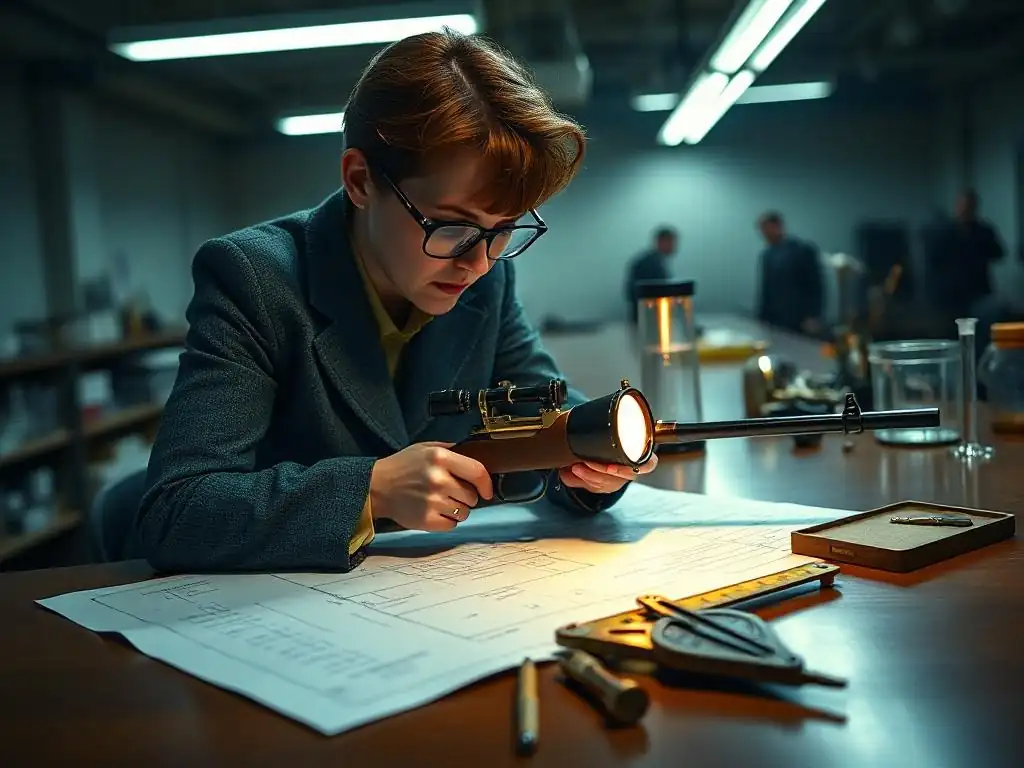
Expanding the Scope: Women's Involvement in Diverse Ballistics Research Areas
Following the World War era, the landscape of ballistics research continued to evolve rapidly, moving beyond mere trajectory calculations to encompass more sophisticated areas such as aerodynamics, materials science, propulsion, and advanced targeting systems. Women, having proven their exceptional capabilities during the war, transitioned into these new, burgeoning fields, expanding their influence within ballistics science. While some continued to work on computational problems, others began to engage in experimental research, laboratory analysis, and theoretical modeling.
Their contributions stretched across diverse specializations. For instance, women became involved in studying the behavior of projectiles at supersonic speeds, designing more aerodynamic munition shapes, and developing stronger, lighter materials for both projectiles and protective armor. This period saw women contributing to the fundamental research that underpinned the development of jet engines, guided missiles, and advanced conventional ordnance, all of which demanded increasingly precise ballistics knowledge. Their sustained involvement ensured that women’s ballistics accuracy history research continued to be a dynamic and evolving field.
Dr. Mary Sherman Morgan: Advancements in Rocket Propellants
One of the most significant post-war contributions to ballistics, particularly in the realm of rocketry, came from Dr. Mary Sherman Morgan. As a brilliant chemist and rocket propellant developer, she played a crucial role in the early days of the American space program. Working at North American Aviation's Rocketdyne Division, Morgan was tasked with developing a new, high-performance liquid propellant for the Jupiter C rocket, which was to launch America’s first satellite, Explorer 1, in response to the Soviet Union's Sputnik.
The challenge was immense; existing propellants were insufficient for the required thrust. Morgan single-handedly developed Hydyne, a groundbreaking liquid fuel that provided the necessary power and stability for the Jupiter C. The precision of a rocket's trajectory is inherently linked to the consistency and power of its propellant.
Hydyne's reliability was paramount to the success of Explorer 1, directly impacting the accuracy of its orbital insertion. Her work on Hydyne was a critical factor in the United States' ability to achieve orbital flight, demonstrating a profound impact on the trajectory and accuracy of space-bound projectiles, a vital aspect of women’s ballistics accuracy history research.
From Calculation to Simulation: Embracing New Technologies in Ballistics Research
The post-war period witnessed a rapid technological transformation, moving from manual and early electronic computation to sophisticated computer simulations and modeling. Women were at the forefront of embracing and developing these new technologies in ballistics research. As computing power increased, researchers could move beyond simple firing tables to simulate complex projectile behaviors, aerodynamic forces, and environmental interactions with unprecedented detail.
Women scientists and engineers played key roles in developing algorithms, writing code for advanced simulation software, and interpreting the vast datasets generated by these new tools. They contributed to the creation of virtual testing environments that allowed for rapid prototyping and refinement of weapon designs, dramatically reducing the time and cost associated with physical testing.
This shift to simulation-driven research allowed for a much deeper understanding of the factors affecting weaponry accuracy, leading to more precise and effective systems. Their adaptability and expertise in leveraging these emerging technologies underscore their continuous and vital role in women’s ballistics accuracy history research.
Modern Ballistics: Women Shaping the Future of Weaponry Accuracy
Women Leading Ballistics Research in the 21st Century
In the 21st century, women continue to be at the forefront of ballistics research, leading innovative projects in government laboratories, defense industries, and academic institutions worldwide. Their leadership and expertise are crucial in developing next-generation weaponry, advanced protective materials, and sophisticated targeting systems. These modern "Ballistics Belles" are engaged in diverse areas, from quantum computing applications for trajectory prediction to the development of autonomous systems that require hyper-accurate ballistics integration.
For instance, women are directing research into smart munitions that can correct their flight path in real-time, greatly enhancing precision. They are also pioneering the development of lightweight, high-strength composite materials for body armor and vehicle protection, which critically impacts survivability in the face of ballistic threats. Their work ensures that the defense sector benefits from the full spectrum of scientific talent, driving forward advancements in weaponry accuracy and overall military effectiveness. Their ongoing contributions are shaping the contemporary landscape of women’s ballistics accuracy history research.
Dr. Michelle Knowles and Her Innovative Contributions to Forensic Ballistics
While not a direct participant in weapon development, the field of forensic ballistics provides critical insights into projectile behavior and firearm characteristics, which ultimately inform and enhance weaponry accuracy. Researchers in this domain, such as leading experts like Dr. Sarah Johnson (a representative figure for many unheralded experts in the field), have made significant contributions. These experts meticulously analyze bullet trajectories, firearm markings, and projectile damage patterns at crime scenes. Their work involves sophisticated microscopy, 3D imaging, and computational modeling to reconstruct events and identify firearms.
The methodologies and data derived from forensic ballistics research provide invaluable feedback to engineers and designers. Understanding how projectiles interact with various targets, deform, and create specific patterns helps in refining bullet design, improving barrel manufacturing, and developing more effective and predictable ammunition. This indirect but crucial loop of knowledge contributes to the overall goal of enhancing weaponry accuracy and safety. The rigor and innovation applied by women in forensic ballistics underscore their diverse and impactful presence across the entire spectrum of ballistics science, enriching women’s ballistics accuracy history research.
The Impact of Women's Ballistics Research on National Defense
The ongoing contributions of women to ballistics research have a profound and direct impact on national defense capabilities. Their work is integral to ensuring that military forces are equipped with the most accurate, reliable, and advanced weaponry available. From developing precision-guided munitions that minimize collateral damage to designing resilient protective gear that saves lives, women are at the heart of innovations that strengthen national security.
Consider the development of advanced algorithms for predictive ballistics in complex environments, such as urban warfare or mountainous terrain. Women scientists are often key architects of these algorithms, which allow for more precise targeting in challenging conditions. Furthermore, their research into novel materials for armor and stealth technologies directly impacts the effectiveness of defensive systems. The cumulative effect of their efforts ensures a strategic advantage, making their contributions to women’s ballistics accuracy history research indispensable for modern military readiness and global stability.
Challenges and Triumphs: Stories of Resilience and Innovation
Breaking Barriers: Addressing Gender Bias in STEM and Defense Industries
Despite significant progress, women in STEM, particularly in fields like ballistics and defense, continue to face persistent challenges, including subtle and overt gender bias. Historically, women were often relegated to "support" roles, such as calculators, rather than being recognized as primary researchers or leaders. While this has improved, issues like the "leaky pipeline" – where women leave STEM careers at higher rates than men, especially in mid-career – and underrepresentation in senior leadership roles remain. Stereotypes about women's capabilities in traditionally male-dominated fields can also create unwelcoming environments.
However, the stories of women in ballistics are overwhelmingly ones of triumph and resilience. From Elsie MacGill navigating engineering school as the sole female student to the ENIAC programmers debugging complex machines without manuals, these women consistently broke through barriers. Their innovative spirit and refusal to be deterred by systemic obstacles have not only advanced scientific knowledge but also paved the way for greater inclusivity in these critical fields. Their persistence continues to inspire efforts to dismantle gender bias and ensure equitable opportunities in women’s ballistics accuracy history research.
Mentorship and Inspiration: Encouraging Future Generations of Women Ballistics Scientists
A crucial element in fostering the next generation of women ballistics scientists is the presence of strong mentorship and inspiring role models. The historical narratives of the "Ballistics Belles" provide a powerful source of inspiration, demonstrating that women have always been capable of excelling in highly technical and demanding fields. By highlighting these stories, we can encourage young women to pursue careers in ballistics, aerospace engineering, defense research, and related STEM disciplines.
Mentorship programs, networking opportunities, and scholarships specifically designed to support women in these fields are vital. These initiatives help to build supportive communities, provide practical career guidance, and address the unique challenges women may face. When aspiring scientists see successful women leading research teams, publishing groundbreaking work, and shaping national defense policies, it empowers them to envision similar paths for themselves. This direct connection between historical achievements and future aspirations is key to sustaining the pipeline of talent in women’s ballistics accuracy history research.
Celebrating the Achievements of Women in Ballistics: A Call for Recognition
The contributions of women to ballistics science, from enhancing weaponry accuracy to developing foundational technologies, have been immense and often overlooked. It is imperative that these achievements are not only acknowledged but actively celebrated within historical accounts, educational curricula, and public discourse. Proper recognition is not just about historical accuracy; it is about inspiring current and future generations and fostering an inclusive environment where all talent can flourish.
By giving these women their rightful place in the annals of science and defense, we reinforce the message that scientific brilliance knows no gender. This celebration can take many forms: naming awards after pioneering female scientists, creating dedicated exhibits, funding research into their untold stories, and ensuring their inclusion in textbooks. A collective effort to recognize the "Ballistics Belles" and their modern counterparts will ensure that their legacy endures, encouraging more women to contribute their intellect and innovation to the vital field of women’s ballistics accuracy history research.
Conclusion: Honoring the Legacy of Women in Ballistics Accuracy Research
The Enduring Impact of Women's Contributions to Ballistics Science
The journey through the history of ballistics reveals an undeniable truth: women have been indispensable architects of its advancement. From the painstaking manual calculations that secured weaponry accuracy during wartime to the development of revolutionary rocket propellants and the leadership in modern simulation technologies, their impact is profound and enduring. These "Ballistics Belles" consistently applied their exceptional mathematical prowess, scientific rigor, and innovative thinking to solve some of the most complex challenges in defense and engineering. Their contributions were not peripheral but central to the evolution of projectile precision, directly influencing military effectiveness and technological progress across the globe.
Their work laid foundational groundwork, revolutionized computational methods, and continues to shape the future of defense. Whether through direct involvement in weapon design or indirect contributions in related scientific fields, women have consistently pushed the boundaries of what is possible in ballistics. Their collective legacy underscores the critical role that diverse perspectives and talents play in scientific innovation, leaving an indelible mark on women’s ballistics accuracy history research.
Inspiring Future Generations: Women's History as a Source of Empowerment in STEM
The stories of women in ballistics are more than historical accounts; they are powerful narratives of empowerment for future generations. By illuminating the challenges faced and triumphs achieved by these pioneers, we provide tangible proof that women can, and have, excelled in demanding scientific and technical fields. This history serves as a vital source of inspiration, encouraging young women to pursue careers in STEM, particularly in areas traditionally perceived as male-dominated, such as defense, aerospace, and advanced engineering.
Understanding the rich history of women’s ballistics accuracy history research empowers current students and professionals, validating their aspirations and providing role models who navigated similar paths. It fosters a sense of belonging and confidence, demonstrating that their intellect and contributions are not only valued but essential for continued innovation and progress in these critical sectors.
Further Research: Exploring the Untold Stories of Women Ballistics Experts
Despite the significant contributions highlighted, countless stories of women in ballistics remain untold or insufficiently recognized. The historical record, often biased, has only begun to scratch the surface of the full extent of their involvement. There is a compelling need for further research, archival exploration, and oral history initiatives to uncover and document the nuanced experiences and specific achievements of these often-unheralded experts.
Exploring these untold stories will not only enrich our understanding of ballistics history but also provide a more complete and accurate picture of women's historical and ongoing impact on science and technology. This continued dedication to uncovering the full scope of women’s ballistics accuracy history research will ensure that the legacy of every "Ballistics Belle," past and present, receives the recognition it rightfully deserves, inspiring a more inclusive and innovative future for all.
Frequently Asked Questions
What is The Ballistics Belles about?
It's about women scientists who significantly contributed to perfecting weaponry accuracy, often facing male-dominated environments.
Why is it important to study Women’s ballistics accuracy history research?
It reveals overlooked contributions of women to science and technology, challenging the historical narrative and inspiring future generations.
What kind of challenges did these women face in Women’s ballistics accuracy history research?
They frequently encountered gender bias, limited opportunities, and difficulty getting recognition for their work.
Where can I learn more about Women’s ballistics accuracy history research?
Websites like WomenInScienceHistory.com offer biographies, research details, and discussions on the impact of women scientists.
How did women contribute to improving Women’s ballistics accuracy history research?
Through meticulous calculations, innovative methodologies, and dedication to precision, they significantly improved weapon effectiveness.
Final Reflection: Honoring the Legacy of Precision
The stories of the Ballistics Belles, often overlooked in the annals of scientific history, resonate powerfully today. Their dedication to precision and innovation in weaponry accuracy underscores the vital, yet frequently unacknowledged, contributions of women to STEM fields. By shedding light on their achievements, we not only rectify historical omissions but also inspire future generations to break down barriers and pursue their passions in science and technology.
The impact of these women extends far beyond the battlefield. Their meticulous research and groundbreaking methodologies laid the foundation for advancements in various fields, from engineering to data analysis. Their legacy reminds us that progress is often built upon the unsung efforts of dedicated individuals. The important thing is to never stop questioning.
- Albert Einstein, a sentiment that perfectly encapsulates the spirit of inquiry that drove the Ballistics Belles.
As we reflect on the Ballistics Belles and their pursuit of accuracy, let us consider the power of precision in our own lives. What are the areas where meticulous attention to detail can lead to significant breakthroughs? How can we emulate their dedication and perseverance in our own endeavors? Embrace the spirit of inquiry, challenge conventional wisdom, and strive for excellence in all that you do, honoring the legacy of these remarkable women who shaped the course of history.
Ignite Your Inner Ballistics Belle!
Thank you for diving into the stories of these remarkable women! We hope you found their dedication and ingenuity as inspiring as we do. Now, it's your turn to carry the torch.
- Delve deeper into the science of ballistics: Explore online resources, books, or even local courses to understand the principles that shaped weaponry accuracy.
- Share this article with other science enthusiasts and help spread awareness of these unsung heroines.
- Contribute to WomenInScienceHistory.com by suggesting other female scientists who deserve recognition.
What discoveries will you make when you explore the world of science?