Admiral Grace Hopper: The Compiler Visionary Who Taught Computers to Speak
🌟 Celebrate Grace Hopper's groundbreaking role in the history of computer programming, as a trailblazing woman who revolutionized how computers understand and…
Read article
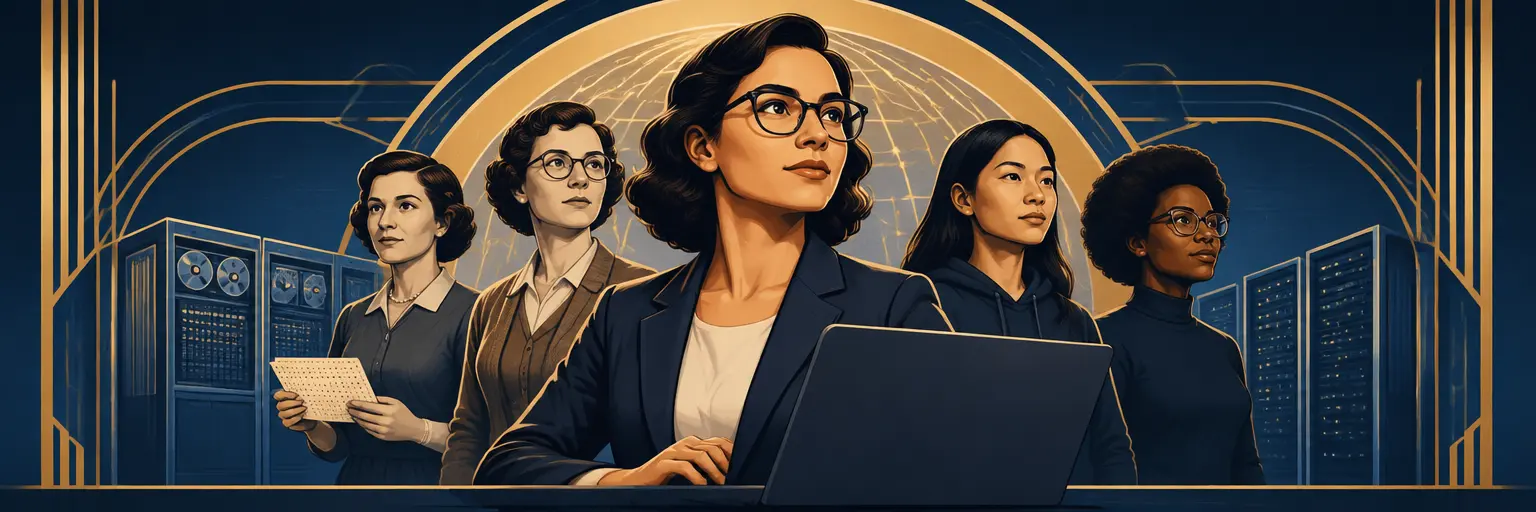
Breaking barriers in code and creativity, women in software engineering have shaped the digital world—from the earliest programming pioneers to today’s AI innovators. This space uncovers the untold stories of female engineers who defied gender norms to build operating systems, develop critical algorithms, and lead tech revolutions. Discover how their resilience overcame systemic exclusion, and how their groundbreaking contributions—from compiler design to open-source movements—continue to influence every app and platform you use. Learn about the trailblazers who transformed computer science and the modern advocates pushing for diversity in tech. Their journey is not just about writing code; it’s about redefining what’s possible in STEM. Explore our curated biographies, historical analyses, and thought-provoking discussions to see how these women turned obstacles into opportunities, and how their legacy inspires a new generation of problem-solvers. Don’t miss the chance to celebrate the invisible architects of our digital age.
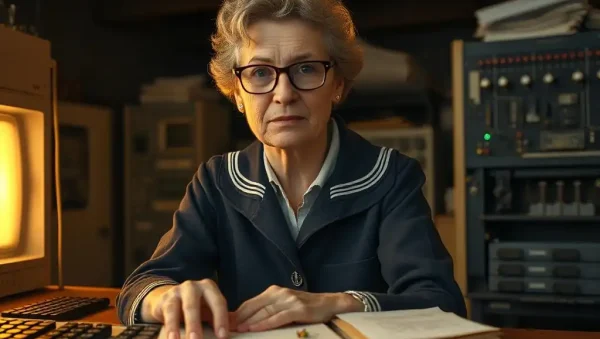
🌟 Celebrate Grace Hopper's groundbreaking role in the history of computer programming, as a trailblazing woman who revolutionized how computers understand and…
Read article
🌟 Meet the women transforming software innovation in the 21st century—pioneers breaking barriers, redefining technology, and inspiring future generations. Discover their inspiring…
Read article
🌟 Discover the overlooked legacy of Forgotten Women in Software History, whose pioneering contributions laid the groundwork for modern computing. This article…
Read article
🚀 Explore the inspiring journey of women in software engineering history, highlighting their groundbreaking contributions, overcoming challenges in male-dominated fields, and paving…
Read article
🌟 Exploring the evolution of Women in coding history, this article highlights how perceptions shifted from "Computer Girls" to skilled engineers, overcoming…
Read articleWelcome to the Women in Software Engineering subcategory on WomenInScienceHistory.com. Here, we celebrate the brilliant minds who coded, designed, and advanced the software that powers our modern era. From the earliest machine-language pioneers to modern-day cloud architects, these women overcame systemic barriers to build foundational algorithms, operating systems, and programming languages. This space dives deep into their biographies, technical contributions, and the historical contexts that shaped their careers. Whether you're a student, a professional in tech, or simply curious about hidden histories, this page offers rich, SEO-optimized content that connects the past to present-day challenges in gender diversity.
The origins of software engineering are deeply intertwined with women like Ada Lovelace, who wrote the first algorithm intended for Charles Babbage’s Analytical Engine in the 1840s. Over a century later, Grace Hopper developed the first compiler and popularized the idea of machine-independent programming languages, leading to COBOL. These pioneers didn't just follow instructions—they invented the very concept of software. Their work laid the groundwork for every app, website, and operating system you use today. Understanding their stories reveals how women were once integral to computing’s early culture, a fact often erased in mainstream narratives.
Beyond the famous names, unsung heroes like Kathleen Booth, who created the first assembly language, and Mary Kenneth Keller, one of the first women to earn a PhD in computer science, expanded the field’s horizons. This section includes detailed biographies, primary source excerpts, and timelines of their innovations. You'll learn how their technical choices in memory management, code reusability, and debugging shaped modern engineering practices. By examining their environments, we also expose the societal pressures that forced many women into supporting roles, despite their genius.
During the 1940s and 1950s, programming was often considered a clerical task, and women were the primary workforce. The ENIAC six—Kay McNulty, Betty Jennings, Betty Snyder, Marlyn Wescoff, Fran Bilas, and Ruth Lichterman—hand-wired and debugged the first general-purpose electronic computer, yet their contributions were largely uncredited for decades. This erasure wasn't accidental; it reflected a deliberate devaluation of "soft" work tied to femininity. In this section, we explore how these women mastered plugboard logic and made split-second calculations that enabled ballistic trajectory computations. Their problem-solving skills were legendary, but they were often paid less than half of male engineers.
As the industry grew, companies like IBM hired hundreds of women as "human computers" and then as mainframe operators. The transition from hardware-centric roles to pure software logic created a unique window where women’s meticulousness was prized. We break down the training manuals, workplace norms, and labor politics of that era. You’ll discover how the rise of high-level languages like FORTRAN and ALGOL ironically reduced opportunities for women, as the social status of programming rose. This historical analysis helps explain current gender gaps, while celebrating the resilience of those who stayed.
Jumping to the late 20th and early 21st centuries, women have continued to make monumental contributions. Radia Perlman invented the Spanning Tree Protocol, which is fundamental to network reliability, earning her the title "Mother of the Internet." Barbara Liskov developed the Liskov substitution principle and led the design of the CLU programming language, influencing modern object-oriented design. More recently, Margaret Hamilton’s work on Apollo’s flight software was so robust that it prevented an in-flight abort. These figures prove that software engineering’s toughest challenges—distributed systems, language design, and fault tolerance—have been conquered by women.
In the open-source world, women like Linus Torvalds’ early collaborator, Patricia Anchondo, and kernel contributor Sasha Levin have maintained crucial infrastructure. We profile lesser-known but pivotal figures in cybersecurity, cloud computing, and artificial intelligence. Their stories include details on specific code contributions, conference talks, and mentoring pipelines they built. This section also examines modern barriers like algorithmic bias, hostile workplace cultures, and attrition rates, offering a balanced view of both triumph and ongoing struggle. You'll walk away with a clear picture of what it takes to succeed as a woman in today’s tech ecosystem.
Women haven’t just used languages—they’ve created them. Grace Hopper’s vision for English-like commands directly led to COBOL, still used in banking systems. Jean Ichbiah, though male, was heavily influenced by Ada Byron’s work when naming Ada, the military-grade languages. More recently, Stephanie "Steve" Shirley founded Freelance Programmers and developed software using her own "Micro" language to run coding on early financial systems. This section analyzes the syntax, paradigms, and design philosophies women have championed, from functional programming to test-driven development.
We also cover women who built pioneering frameworks and tools, such as Rebecca Parsons in polyglot programming and Irene Greif, who created the first object-oriented language with concurrency support. Detailed code examples, architectural diagrams, and historical RFCs are included to give you a technical, hands-on perspective. Understanding these contributions not only corrects the record but also provides modern engineers with alternative design patterns that prioritize collaboration and maintainability. If you’re a developer curious about the "why" behind your tools, this is your goldmine.
The story isn’t limited to the United States. Dr. Olayinka Akinkugbe pioneered computing education in Nigeria, while Dr. Regina Honu founded Ghana's first coding school for girls. Across Europe, Özlem Özbey brought software methods to Turkish finance, and in Asia, Dr. Xia Peisu built China’s first electronic computer from scratch. This global lens shows that the challenges and achievements of women in software engineering are not monolithic. We compare educational systems, government policies, and corporate practices that either helped or hindered progress in different regions.
Furthermore, we highlight advocacy organizations like AnitaB.org, Black Girls Code, and Women Who Code, which have formalized the fight for inclusion. Their strategies—from hackathons to mentorship programs—are documented with concrete benchmarks. Articles here delve into the economic impact of gender-diverse teams, citing recent studies that link inclusivity to higher profitability and lower bug rates. Whether you’re a policymaker, educator, or engineer, this content provides actionable insights to support women in software, ensuring the next generation never has to remain invisible.
Ada Lovelace is widely credited as the first programmer because, in 1843, she wrote an algorithm for Charles Babbage’s Analytical Engine to compute Bernoulli numbers. However, since her work was never executed on a physical machine, some historians argue that Grace Hopper is the first true software engineer, as she created the first compiler at Harvard in 1952. Both women, despite living a century apart, formalized concepts that became the foundation of all modern software.
Initially, programming was viewed as low-status clerical work, akin to filing or typing. Men were hired as hardware engineers, while women—seen as meticulous and detail-oriented—were assigned to wire circuits and write instructions. This pattern changed in the 1960s as software became more valuable and complex, drawing male attention and leading to deliberate exclusion of women. The shift was driven by social biases, not skill differences.
As of 2023, women hold roughly 25% of computing roles in the United States, with even lower percentages in leadership positions like technical co-founder or CTO. The gap is narrower in countries like India, where women make up about 35% of the IT workforce. Key barriers include hostile workplace cultures, lack of sponsorship, and algorithmic bias, but many companies are now implementing inclusive hiring and retention policies to correct the imbalance.
Start by reading biographies like "The Innovators" by Walter Isaacson and "Broad Band" by Claire L. Evans. Explore archives such as the ACM Women in Computing oral history project and the Computer History Museum’s collections. Our own website offers curated timelines, primary documents, and video interviews. For a personalized approach, follow hashtags like #WomenInTech on social media and attend conferences like Grace Hopper Celebration to meet living pioneers.
Key milestones include Grace Hopper's first compiler (1952), Margaret Hamilton's Apollo flight software (1969), Radia Perlman's Spanning Tree Protocol (1985), Barbara Liskov's contribution to CLU and data abstraction (1970s), and Marissa Mayer's leadership on early Google Search UI (2000s). More recently, Joy Buolamwini’s Algorithmic Justice League has highlighted bias in facial recognition, shaping modern AI ethics. Each milestone advanced both technical capability and social justice.