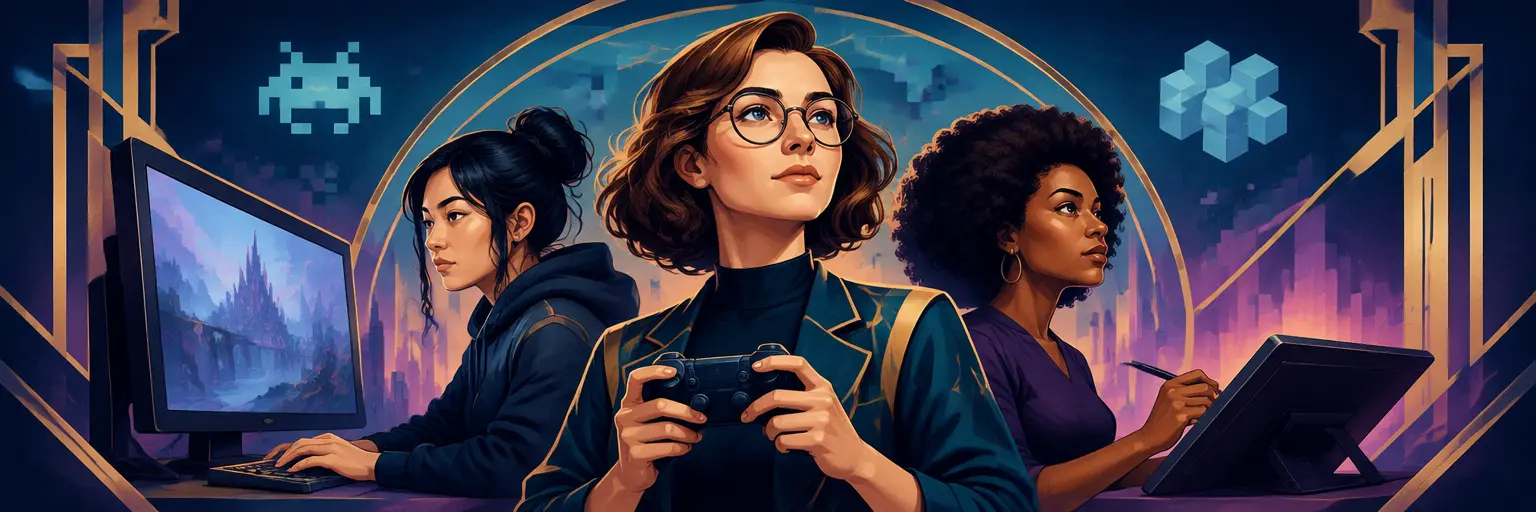
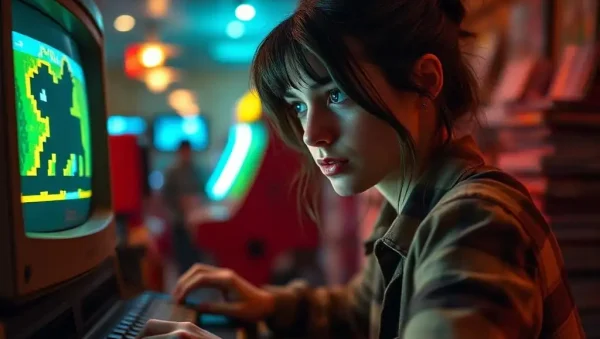
Women in Game Development & Digital Arts: Pioneers of Interactive Worlds
Welcome to a vibrant corner of WomenInScienceHistory.com dedicated to the trailblazing women who transformed video games, computer graphics, and digital storytelling. Here, we uncover the hidden narratives of female programmers, artists, and designers who shaped the interactive entertainment industry from its earliest days. From coding iconic arcade classics to pioneering 3D animation techniques, these women overcame systemic barriers to influence everything from game mechanics to visual aesthetics. Explore their biographies, technical innovations, and cultural impact, while learning how their legacy continues to inspire a new generation of creators in STEM and digital arts.
🎮 Early Pioneers: The Women Who Built Gaming's Foundation
The history of game development is incomplete without recognizing women like Carol Shaw, who programmed the classic River Raid in 1982, and Roberta Williams, co-founder of Sierra On-Line, who invented the graphic adventure genre. These pioneers worked in an era when female coders were rare, often facing skepticism from male colleagues. Their work laid the groundwork for narrative-driven gaming and technical excellence. Discover how their persistence, creative problem-solving, and willingness to challenge norms created a blueprint for future generations.
In this section, you'll find detailed profiles of early female developers, including their educational backgrounds and the specific obstacles they overcame—from being mistaken for secretaries to fighting for equal credit on projects. We also highlight their signature games, technical breakthroughs, and how their contributions influenced the gaming industry's evolution. Learn how these women turned limited computing resources into revolutionary experiences, proving that innovation thrives when diverse voices are included.
🎨 Digital Artists & Animators: Shaping Visual Worlds
Digital arts in gaming owe much to women like Amy Hennig, creative director behind Uncharted, who merged cinematic storytelling with gameplay. However, behind the scenes, female texture artists, 3D modelers, and animators have been equally vital, transforming wireframes into living, breathing characters. Their meticulous attention to detail, from facial expressions to environmental storytelling, has defined visual identities for entire franchises. Explore how these artists blended traditional art training with emerging computer graphics technology.
Expect to learn about the rigging, modeling, and shader techniques that female digital artists pioneered, alongside their collaborative processes with programmers and designers. We profile women who worked on iconic titles like Final Fantasy, The Sims, and World of Warcraft, breaking down how their artistic choices influenced player immersion. Additionally, we discuss the cultural significance of their work in normalizing female representation within game art, both as creators and as subjects of digital creation.
🕹️ Codebreakers: Women in Game Programming & Engineering
Brenda Romero, a legendary game designer and programmer, and Dona Bailey, co-creator of Centipede, represent the technical prowess women brought to game code. These engineers optimized limited memory, wrote complex algorithms for AI, and debugged impossible glitches in assembly language. Their work required not only mathematical precision but also creative experimentation. This section dives deep into the specific coding challenges they solved, from collision detection to procedural generation, and how their solutions became industry standards.
Through interviews, archived documentation, and technical analysis, we provide a granular look at their programming environments—from 8-bit consoles to modern engines like Unity. You’ll also read about the collaborative dynamics in their teams, where women often served as glue connecting art, design, and engineering. Their stories challenge the stereotype that programming is a male-dominated field, highlighting how inclusive teams produce more innovative and technically robust games.
🌐 Game Design & Narrative: Storytellers Who Changed Play
Women like Elizabeth Wasilenko (known for The Longest Journey) and Rhianna Pratchett (writer for Tomb Raider) elevated game narratives to literary heights. Their designs emphasized character development, moral choices, and emotionally resonant plots—elements once considered secondary to gameplay. This section explores their design philosophies, from player agency to non-linear storytelling, and how they integrated female protagonists without falling into clichés. Their work influenced a broader acceptance of games as a storytelling medium.
We analyze specific game design documents, narrative structures, and user feedback that shaped their iconic titles. Additionally, we cover the evolution of inclusive game design, where women advocated for mechanics that accommodate diverse playstyles and accessibility needs. You'll find case studies on how their narrative choices impacted player communities and industry awards. Discover how these designers balanced commercial success with artistic integrity, proving that compelling stories can sell millions of copies.
🔧 Community Builders: Advocates, Educators, and Industry Leaders
Beyond individual projects, women like Jane McGonigal (author of Reality Is Broken) and Bonnie Ross (Corporate VP of 343 Industries) shaped the industry's culture and workforce. They founded organizations like Women in Games International and Girls Who Code, mentoring thousands of aspiring developers. Their advocacy for pay equity, harassment-free workplaces, and representation has changed corporate policies. This section profiles their career trajectories and the systemic changes they championed, from university curricula to industry conferences.
Expect resources on their educational initiatives, including workshop guides, scholarship programs, and networking opportunities we’ve curated for readers. We also feature interviews where they discuss challenges like imposter syndrome, leadership stereotypes, and balancing career with caregiving. Their stories illustrate how community building is a form of technical leadership, creating pipelines for underrepresented talent. Learn how their work has accelerated the inclusion of women in game jams, indie studios, and AAA companies.
Frequently Asked Questions
Who was the first female video game developer?
Carol Shaw is often credited as the first female video game developer. She earned a degree in electrical engineering and computer science from UC Berkeley, then joined Atari in 1978 and later Activision. Her 1982 game River Raid became a bestselling title, showcasing her skill in assembly language programming. She retired in the early 1990s but remains an iconic figure.
What challenges did early women in game development face?
Early female developers faced skepticism about their technical abilities, exclusion from informal networks, and frequent misidentification as artists or support staff. They also dealt with workplace harassment and lack of maternity leave policies. Despite these barriers, many used mentorship and female-only collectives for support, slowly normalizing women's presence in coding and design roles.
How have women influenced modern digital art in games?
Women have significantly advanced photogrammetry, character rigging, and real-time rendering techniques. They pioneered the use of non-photorealistic styles for emotional impact and led accessibility in UI/UX design. Their contributions have expanded visual diversity, from body-type customization to realistic facial animations, making games more visually expressive and inclusive.
Are there notable female pioneers in open-world game design?
Yes, Elizabeth Wasilenko articulated the concept of "emotional realism" in open worlds. Additionally, Jade Raymond championed the parkour and city design for Assassin's Creed, while Amy Hennig shaped narrative progression in Uncharted. Their innovations in player-driven exploration and systemic storytelling have become benchmarks for the genre.
What resources exist for women entering game development today?
Organizations like Women in Games International, Black Girl Gamers, and Girls Make Games offer scholarships, mentorship, and networking. University programs such as USC's Interactive Media and NYU's Game Center prioritize inclusive curricula. Online communities like Global Game Jam's women-centric tracks and the Women in Games conference provide safe spaces for skill-building and portfolio development.