
From Calculation to Creation: The Intellectual Journey of Women in Software Engineering

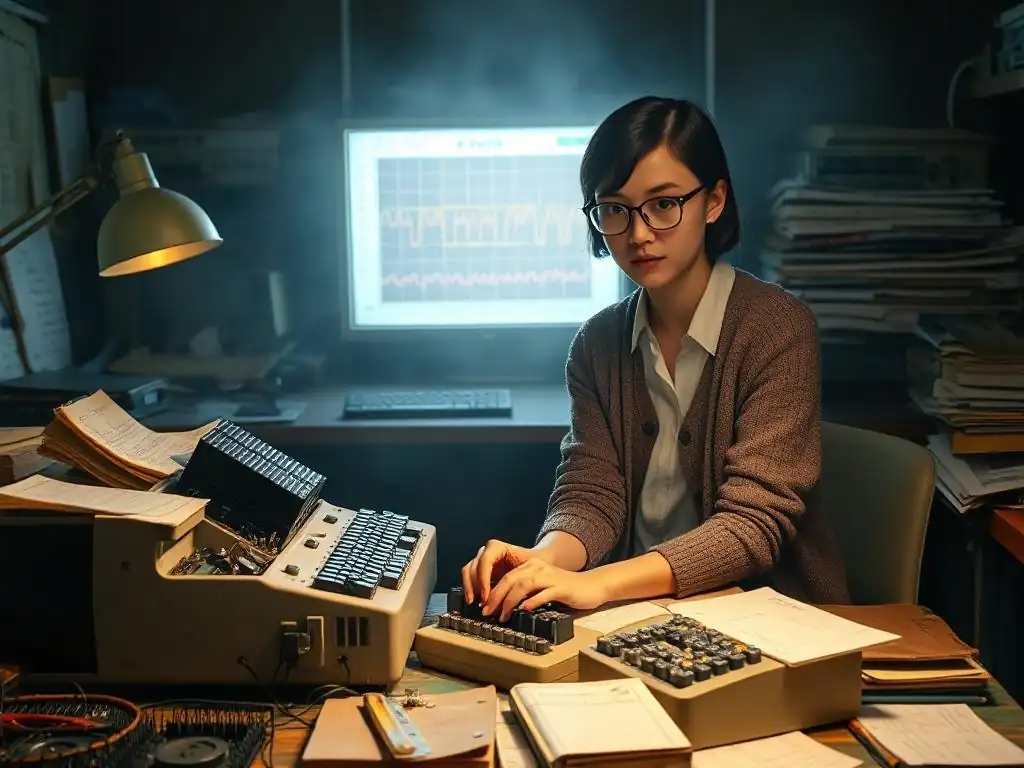
Welcome to WomenInScienceHistory.com!
Delve into the fascinating world where intellect met innovation, and discover the untold stories of remarkable women who shaped the digital landscape. This site celebrates the groundbreaking contributions of women to science throughout history, and today, we shine a spotlight on a critical field: computer science. Prepare to be captivated by the intellectual journey of women in software engineering history, exploring their pivotal roles and enduring legacies. What challenges did they overcome, and how did their ingenuity pave the way for the technology we use today? Let's uncover the answers together...
- Introduction: Celebrating Women's Contributions to Software Engineering History
- Breaking Barriers: Women Navigating a Male-Dominated Field
- Mid-Century Innovators: Shaping the Software Landscape
- The Rise of Personal Computing and Women in Software
- Modern Trailblazers: Women Leading in Contemporary Software Engineering
- The Future of Women in Software Engineering: Inspiring the Next Generation
- Conclusion: Honoring the Legacy of Women in Software Engineering History and Inspiring Future Innovation
-
Frequently Asked Questions
- What were some of the significant obstacles women faced in the early days of software engineering?
- Can you name a few pioneering women who made substantial contributions to software engineering history?
- How did World War II impact the role of women in the field of software engineering?
- Why is it important to highlight the contributions of women in software engineering history?
- Where can I find more information about women who have made significant contributions to software engineering?
- Final Reflection: Embracing the Legacy, Shaping the Future
- Ignite Your Code: Unleash Your Inner Software Pioneer!
Introduction: Celebrating Women's Contributions to Software Engineering History
Ada Lovelace: The First Programmer and Her Visionary Ideas
Ada Lovelace, born Augusta Ada Byron, stands as a monumental figure in the nascent history of computing. Her profound insights into Charles Babbage's Analytical Engine, particularly her "Notes" published in 1843, reveal a visionary understanding of computing far beyond mere calculation.
Lovelace foresaw that a machine could process more than just numbers, envisioning its potential for manipulating symbols and creating music or art, a concept that underpins modern software. Her detailed algorithm for calculating Bernoulli numbers using the Analytical Engine is widely regarded as the world's first computer program, making her a foundational figure in women in software engineering history.
Her work laid the conceptual groundwork for what we now understand as software. Lovelace grasped the abstract nature of the Analytical Engine, seeing it not merely as a mechanical calculator but as a general-purpose machine capable of executing sequences of operations—a program. This forward-thinking perspective, articulated almost a century before the advent of electronic computers, highlights her unparalleled contribution to the theoretical underpinnings of software development and firmly establishes her place among the earliest and most influential women in computing.
Grace Hopper: A Rear Admiral and a Pioneer in Compiler Development
Rear Admiral Grace Murray Hopper was a trailblazing force whose contributions profoundly shaped the landscape of modern programming. A brilliant mathematician, she joined the U.S. Navy Reserve during World War II and became one of the first programmers of the Harvard Mark I computer. Her most significant innovation was the development of the first compiler, A-0 System, in 1952, which translated symbolic machine code into instructions that computers could understand, revolutionizing how programmers interacted with machines. This breakthrough paved the way for higher-level programming languages, making computing more accessible and efficient.
Hopper's dedication to simplifying programming led to her pivotal role in the development of COBOL (Common Business-Oriented Language) in the late 1950s. She advocated for programming languages that used English-like commands, believing that code should be understandable to a wider audience, not just mathematicians. Her relentless pursuit of user-friendly programming tools transformed software development from a niche, highly specialized field into a more broadly applicable discipline, cementing her legacy as a giant among women in software engineering history.
ENIAC Programmers: The Women Behind the First Electronic General-Purpose Computer
The ENIAC (Electronic Numerical Integrator and Computer), unveiled in 1946, was the world's first electronic general-purpose computer, and its initial operation was made possible by a team of six brilliant women programmers: Betty Holberton, Jean Bartik, Kay Mauchly Antonelli, Marlyn Wescoff Meltzer, Ruth Lichterman Teitelbaum, and Frances Spence. Initially hired as "computers" to manually calculate ballistic trajectories for the U.S. Army, they were later tasked with setting up and operating the massive ENIAC. Their work involved meticulously wiring programs by manipulating thousands of switches and cables, a complex and precise form of early software development.
Despite their critical role in the ENIAC's functionality, these pioneering women were largely unrecognized for decades, their contributions often overshadowed by the male engineers who designed the hardware. Their expertise in debugging and optimizing the ENIAC's operations was instrumental in its success, allowing it to perform complex calculations at unprecedented speeds. The story of the ENIAC programmers is a powerful testament to the overlooked contributions of women in software engineering history, highlighting their foundational role in the very first electronic computers.
Overcoming Gender Bias in Early Computer Science Education
In the early days of computing, the field was often seen as clerical work, leading to a significant presence of women. However, as computing evolved into "computer science" and programming gained prestige, a shift occurred, and gender bias began to permeate educational institutions.
Many universities and technical schools either discouraged women from enrolling in computer science programs or created environments that were unwelcoming. This bias often manifested in subtle ways, such as a lack of female role models among faculty or the perception that programming was an inherently "masculine" pursuit, demanding a logical rigor assumed to be more prevalent in men.
This systemic bias meant that even highly capable women faced uphill battles to gain formal education and recognition in the emerging field. Despite these hurdles, determined women persevered, often excelling in their studies and proving their intellectual prowess. Their success stories, like those of the women who went on to lead major software projects, underscore the resilience required to navigate educational pathways that were not designed with them in mind, marking a crucial chapter in the narrative of women in software engineering history.
The Impact of World War II on Women's Roles in Technology
World War II dramatically altered societal norms and created unprecedented opportunities for women to enter technical fields, including early computing. With men deployed to combat, women stepped into crucial roles in factories, laboratories, and computational centers. They became "human computers," performing complex mathematical calculations for ballistic tables, codebreaking, and aerodynamic research. This period saw a significant influx of women into roles that directly led to modern software development, as they were often tasked with setting up and operating the first electronic computers.
The urgency of wartime demands meant that traditional gender barriers were temporarily lowered, allowing women to demonstrate their exceptional aptitude for logical thinking, problem-solving, and intricate technical work. While many women were pushed back into traditional roles after the war, their wartime contributions were undeniable, laying critical groundwork for the future of computer science and solidifying their place in the early chapters of women in software engineering history. Their collective efforts during this era proved that women were not only capable but indispensable in the advancement of technology.
Challenges and Triumphs: Stories of Resilience and Innovation
The journey of women in software engineering history is replete with stories of profound challenges alongside remarkable triumphs. Beyond educational biases, women in the workplace often faced skepticism regarding their technical abilities, limited opportunities for advancement, and a pervasive "bro culture" that made professional integration difficult. Many encountered situations where their ideas were dismissed until a male colleague re-presented them, or they were assigned administrative tasks instead of challenging technical projects. The lack of visibility for their contributions was a recurring issue, leading to many groundbreaking achievements being attributed to male colleagues or overlooked entirely.
Despite these systemic obstacles, women demonstrated incredible resilience and an unwavering commitment to innovation. Pioneers like Mary Kenneth Keller, the first woman to earn a Ph.D. in computer science in the U.S., went on to establish a groundbreaking computer science department. Their triumphs were not just about personal achievement but also about pushing the boundaries of technology itself. By persistently contributing to programming languages, operating systems, and groundbreaking applications, these women not only shaped the software landscape but also slowly chipped away at the barriers for future generations of female software engineers.
Mid-Century Innovators: Shaping the Software Landscape
Margaret Hamilton: Contributions to Apollo Guidance Computer Software
Margaret Hamilton's contributions to the Apollo space program were nothing short of monumental, fundamentally shaping the field of software engineering. As the director of the Software Engineering Division at the MIT Instrumentation Laboratory, she led the team that developed the on-board flight software for the Apollo command and lunar modules.
This critical software was responsible for guiding the spacecraft to the Moon and back, performing complex navigation and control functions under immense pressure and with extremely limited computing resources. Her team's innovative approach included asynchronous processing, priority scheduling, and error detection and recovery, all crucial for the success of missions like Apollo 11.
Hamilton is also credited with coining the term "software engineering" itself in the mid-1960s, advocating for software development to be treated as a rigorous engineering discipline, rather than an art or a craft. Her insistence on formal methodologies, thorough testing, and robust design principles elevated the entire field. The reliability and foresight built into the Apollo software famously averted an abort during the Apollo 11 lunar landing when the computer became overloaded, demonstrating the critical importance of her team's work and securing her legacy as a titan among women in software engineering history.
Frances Allen: Advancements in Compiler Optimization
Frances Allen was a visionary computer scientist whose pioneering work in compiler optimization dramatically improved the efficiency and performance of computer programs. Joining IBM in 1957, she spent her career pushing the boundaries of compiler technology, a critical component that translates high-level programming languages into machine-executable code. Her research focused on fundamental concepts like program analysis and optimization, including control flow analysis, data flow analysis, and interprocedural analysis, which are standard components of modern compilers.
Allen's innovations were instrumental in developing compilers for advanced supercomputers and parallel processing systems, enabling faster and more complex computations across various scientific and commercial applications. Her work on the experimental P-Code compiler and the parallelizing FORTRAN compiler laid the groundwork for significant performance gains in computing. In 2006, Frances Allen became the first woman to be awarded the A.M. Turing Award, often referred to as the "Nobel Prize of computing," a testament to her profound and lasting impact on women in software engineering history and the entire field of computer science.
Barbara Liskov: Pioneering Work in Data Abstraction and Programming Methodology
Barbara Liskov is a distinguished computer scientist renowned for her groundbreaking contributions to programming languages and system design, particularly in the areas of data abstraction and fault tolerance. As a professor at MIT, she led the design and implementation of the CLU programming language in the 1970s, which introduced crucial concepts such as abstract data types, iterators, and clustered objects. These ideas were foundational to the development of modern object-oriented programming, allowing programmers to manage complexity by defining clear interfaces and hiding implementation details.
Liskov's work on data abstraction led to the formulation of the Liskov Substitution Principle (LSP) in 1987, a fundamental principle of object-oriented design that states that objects of a superclass should be replaceable with objects of its subclasses without affecting the correctness of the program. This principle is vital for ensuring the robustness and maintainability of large software systems. Her enduring influence on programming methodology and distributed systems earned her the A.M. Turing Award in 2008, solidifying her status as a leading figure in women in software engineering history.
The Rise of Personal Computing and Women in Software

Women's Impact on the Early Internet and Networking
As personal computing began to flourish, so did the nascent stages of the internet and networking, areas where women also made significant, though often unsung, contributions. While the public face of early networking often highlighted male engineers, countless women were involved in the development of protocols, network administration, and the creation of early online communities. They worked on the underlying software that allowed computers to communicate, from contributing to TCP/IP implementations to developing early email systems and bulletin board services.
Their efforts were crucial in transforming the internet from a military and academic research tool into a public utility. Women were instrumental in designing user-friendly interfaces for early network access, making it more approachable for the general public. These foundational contributions, often behind the scenes, were essential for the proliferation of networked computing and represent a vital, though less documented, chapter in the narrative of women in software engineering history.
Contributions to the Development of User-Friendly Interfaces
The transition from command-line interfaces to graphical user interfaces (GUIs) was a pivotal moment in personal computing, and women played a significant role in making computers accessible to a broader audience. As software moved from specialized tools for experts to everyday appliances for homes and businesses, the need for intuitive, user-friendly interfaces became paramount. Women designers and programmers contributed to the visual and interactive elements that defined early operating systems and applications.
Their work often focused on human-computer interaction, ensuring that software was not only functional but also understandable and enjoyable to use. This included designing icons, menus, and interaction flows that made complex tasks simpler for non-technical users. While specific names might be less publicized than hardware innovators, the collective impact of these women in shaping the user experience was immense, significantly influencing how millions of people interacted with computers and contributing profoundly to the accessible face of software.
Carol Shaw's Role in Developing Atari Video Games
Carol Shaw is a celebrated pioneer in the world of video game development and a prominent figure among women in software engineering history. Joining Atari in 1978, she became one of the industry's first female video game programmers. In an era when most games were developed by small teams or even individuals, Shaw was responsible for designing and coding several popular Atari 2600 titles. Her work required a deep understanding of the console's limited hardware capabilities and creative problem-solving to deliver engaging gameplay within severe memory constraints.
Her most famous creation is the 1982 hit River Raid, a scrolling shooter that received critical acclaim for its fluid gameplay, innovative level design, and impressive graphics for its time. Shaw also developed other notable games such as 3-D Tic-Tac-Toe and Video Checkers. Her success in a nascent and male-dominated industry demonstrated the creative and technical prowess of women in software development, paving the way for future generations of female game designers and programmers.
Modern Trailblazers: Women Leading in Contemporary Software Engineering
Women in Open Source Development: Breaking New Ground
In the modern era of software engineering, women are increasingly making their mark in the open-source community, a collaborative environment built on shared code and collective innovation. Despite persistent gender imbalances in overall participation rates—with some reports indicating that women comprise less than 10% of active open-source contributors—their impact is growing and significant. Women are leading critical projects, contributing to core infrastructure, and fostering more inclusive communities within open source. For instance, women contribute to major projects like Linux, Python, and various web frameworks, often bringing diverse perspectives that lead to more robust and user-friendly software.
Their involvement extends beyond coding to roles in project management, documentation, and community building, which are vital for the health and sustainability of open-source initiatives. Organizations like the GNOME Foundation and Outreachy actively work to increase the participation of underrepresented groups, including women, in open source. These efforts are crucial for ensuring that the future of software, much of which is built on open-source foundations, is shaped by a broader range of voices and experiences, continuing the legacy of women in software engineering history.
Women Entrepreneurs in the Tech Industry: Founding and Leading Software Companies
The landscape of software entrepreneurship has seen a significant rise in women founders and leaders, who are not only developing innovative software solutions but also challenging traditional venture capital and startup cultures. While still underrepresented in top leadership roles—with women-led startups historically receiving a small percentage of venture capital funding, often around 2-3% annually—their numbers and impact are growing. These women are launching companies across diverse sectors, from AI and fintech to healthcare and educational technology, creating jobs and driving economic growth.
Examples include Reshma Saujani, founder of Girls Who Code, a non-profit dedicated to closing the gender gap in tech, which has reached over 500,000 girls globally. Another notable figure is Anne Wojcicki, co-founder and CEO of 23andMe, a personal genomics and biotechnology company that leverages massive datasets and sophisticated software for genetic insights. These women are not just building successful businesses; they are also serving as powerful role models, demonstrating that women can lead at the highest levels of the tech industry and inspiring a new generation of women in software engineering history.
Addressing the Gender Gap: Initiatives Promoting Women in Software Engineering Today
Recognizing the persistent gender gap in software engineering, numerous initiatives and organizations are actively working to promote diversity and inclusion in the field. These efforts range from early education programs designed to spark interest in computing among young girls to professional development and networking opportunities for women already in the industry. Organizations like Girls Who Code, Code.org, and Black Girls Code introduce millions of young women to programming concepts through engaging curricula and hands-on experiences, aiming to build a pipeline of future female software engineers.
At the professional level, groups such as AnitaB.org, through their Grace Hopper Celebration, provide platforms for networking, mentorship, and highlighting the achievements of women in technology. Companies are also implementing diversity and inclusion programs, setting targets for hiring and retaining women, and fostering inclusive work environments. While progress is ongoing, these concerted efforts are vital for addressing systemic barriers, providing support systems, and ensuring that more women can thrive and contribute to the ever-evolving field of software engineering, enriching its future with diverse perspectives and talents.
The Future of Women in Software Engineering: Inspiring the Next Generation
The Importance of Mentorship and Role Models
Mentorship and visible role models are paramount for inspiring and retaining women in software engineering. For young girls considering a career in tech, seeing successful women in prominent engineering roles can demystify the field and make it feel more attainable. Mentors provide invaluable guidance, sharing insights into career paths, technical challenges, and navigating workplace dynamics. A study by the National Center for Women & Information Technology (NCWIT) consistently highlights that access to role models and mentors significantly increases retention rates for women in computing majors and careers.
These relationships offer practical advice on skill development, networking, and leadership, helping women to overcome obstacles and advance their careers. By connecting experienced female software engineers with aspiring ones, mentorship programs create supportive networks that combat feelings of isolation and foster a sense of belonging. This continuous cycle of support is essential for nurturing talent and ensuring that the legacy of women in software engineering history continues to grow and flourish.
Creating Inclusive and Equitable Workplaces for Women in Tech
Beyond individual mentorship, creating inclusive and equitable workplaces is fundamental to attracting and retaining women in software engineering. This involves implementing policies and practices that foster a sense of belonging, ensure fair opportunities, and address biases. Key elements include transparent hiring and promotion processes, pay equity analyses to eliminate gender-based wage gaps, and flexible work arrangements that support work-life balance. Companies that prioritize diversity often report higher innovation rates and better financial performance, demonstrating the tangible benefits of an inclusive environment.
Furthermore, fostering a culture where women feel safe to voice their ideas, receive constructive feedback, and are recognized for their contributions is crucial. This can involve unconscious bias training for all employees, establishing clear anti-harassment policies, and promoting diverse leadership teams. By actively dismantling systemic barriers and cultivating environments where all employees, regardless of gender, can thrive, organizations contribute significantly to closing the gender gap and ensuring a more equitable future for women in software engineering.
Empowering Girls and Women to Pursue Careers in Computer Science
Empowering girls and women to pursue and excel in computer science careers requires a multi-faceted approach that begins early in education and extends through professional development. This involves challenging stereotypes about who belongs in tech, exposing girls to computational thinking from a young age, and showcasing the diverse applications of computer science beyond traditional coding. Initiatives that provide hands-on coding experience, robotics clubs, and hackathons specifically for girls can ignite passion and build confidence.
Moreover, highlighting the societal impact of software engineering—from developing life-saving medical applications to creating tools for social connection—can resonate more deeply with young women seeking purpose-driven careers. Supporting educational pathways, providing scholarships, and celebrating the achievements of women in the field are all vital components. By actively promoting and supporting girls and women at every stage of their educational and professional journeys, we can ensure a robust and diverse talent pipeline that continues to advance the rich history of women in software engineering.
Conclusion: Honoring the Legacy of Women in Software Engineering History and Inspiring Future Innovation
Frequently Asked Questions
What were some of the significant obstacles women faced in the early days of software engineering?
Women encountered gender bias and limited opportunities in a field largely dominated by men. They often had to overcome societal expectations and prove their capabilities continually.
Can you name a few pioneering women who made substantial contributions to software engineering history?
Figures like Ada Lovelace, who is often considered the first computer programmer, and the women who programmed the ENIAC, are key examples. Many others made crucial advancements that are only now being fully recognized.
How did World War II impact the role of women in the field of software engineering?
The war created a labor shortage, opening doors for women to take on roles traditionally held by men, including mathematical computation and early programming. This provided a critical entry point for many.
Why is it important to highlight the contributions of women in software engineering history?
Recognizing their contributions helps to correct historical inaccuracies, inspire future generations of female engineers, and promotes diversity and inclusion in STEM fields.
Where can I find more information about women who have made significant contributions to software engineering?
Websites like WomenInScienceHistory.com offer biographies, discussions of their work, and resources about the challenges and triumphs of women in the field. Further research can also be done through academic journals and books.
Final Reflection: Embracing the Legacy, Shaping the Future
The journey of women in software engineering, as we've explored, is a testament to resilience, innovation, and the unwavering pursuit of intellectual fulfillment. This history is not just a chronicle of the past; it's a vital foundation for the present and a blueprint for a more inclusive future. Understanding the challenges and triumphs of these pioneers empowers us to dismantle existing barriers and cultivate an environment where all voices are heard and valued in the tech world.
The impact of these women extends far beyond lines of code; it has reshaped the cultural landscape of technology, challenging preconceived notions and paving the way for future generations. Their stories are a constant reminder that diversity is not just a buzzword, but a crucial ingredient for innovation and progress. As Grace Hopper so eloquently stated: The most damaging phrase in the language is: 'It's always been done that way.'
This quote encapsulates the spirit of these women, who dared to challenge the status quo and redefine what was possible.
Now, as you reflect on the stories shared and the insights gained, consider your own role in shaping the future of software engineering. How can you champion inclusivity, mentor aspiring female engineers, and actively contribute to a more equitable and diverse tech community? Let the legacy of these remarkable women inspire you to break down barriers, amplify marginalized voices, and build a future where everyone has the opportunity to thrive and contribute their unique talents to the world of technology.
Ignite Your Code: Unleash Your Inner Software Pioneer!
Thank you for exploring the fascinating journey of women in software engineering. We hope you found inspiration in their stories and a renewed appreciation for their contributions. Now, it's time to turn knowledge into action!
Here are a few ways you can engage further:
- Commit to writing one small program or contributing to an open-source project this week to honor their legacy.
- Share this article with a friend or colleague to spread awareness about the remarkable women who shaped software engineering.
- Research a pioneering woman in software engineering not mentioned in this article and share her story in the comments below – let's expand our collective knowledge!
What small step will you take today to champion women in tech?