Decoding the Future: 21st Century Women Leading AI Breakthroughs
🌟 Celebrating trailblazing women in AI, "Decoding the Future" highlights Women AI research breakthroughs that are shaping tomorrow’s world, inspiring future generations…
Read article
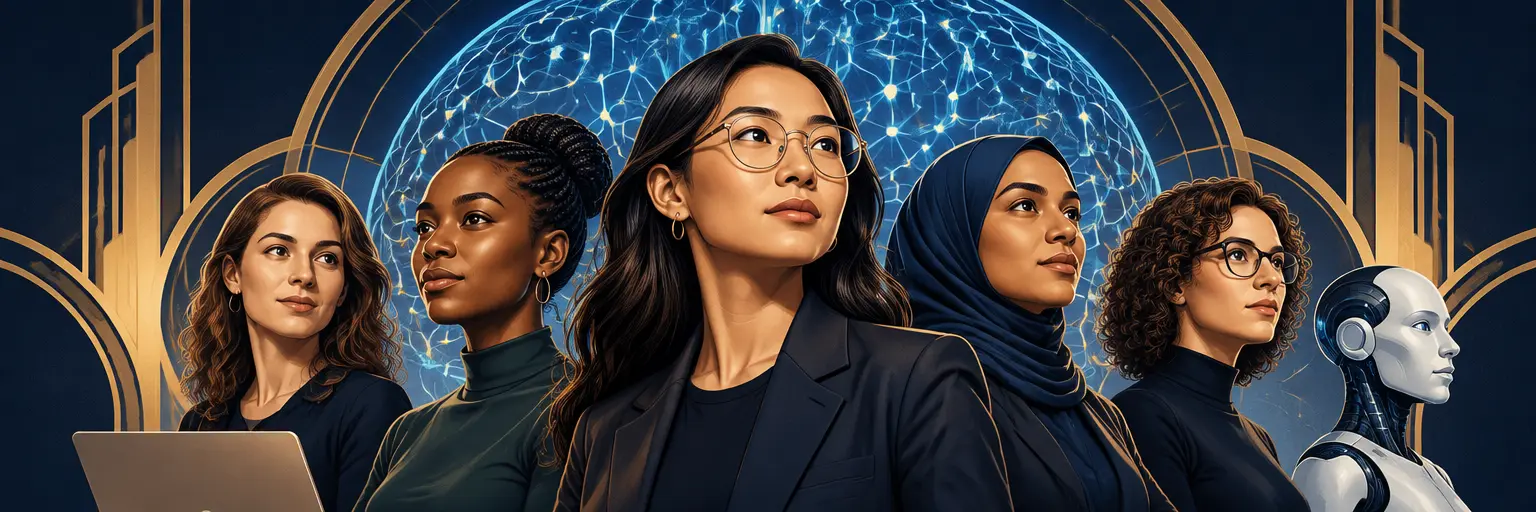
Unstoppable Innovators: 21st Century Women in Computer Science & AI From algorithm fairness to human-centered AI, today’s women are not just participating in tech—they’re redefining its future. Pioneers like Fei-Fei Li, Timnit Gebru, and Joy Buolamwini are leading the charge in ethical AI, while engineers and researchers at top labs are building the next generation of machine learning systems. These women tackle complex challenges—from bias detection and data privacy to autonomous systems and natural language processing—with creativity and resilience. 🚀 They navigate breakneck innovation while championing diversity in STEM, mentoring young coders, and shattering glass ceilings in academia and industry. Their stories highlight persistence, brilliance, and vision, proving that the tech world is richer when women lead. Explore how these 21st century changemakers are turning algorithms into tools for social good, inspiring us all to think bigger and code smarter. 💡
🌟 Celebrating trailblazing women in AI, "Decoding the Future" highlights Women AI research breakthroughs that are shaping tomorrow’s world, inspiring future generations…
Read article
🌟 Women AI ethics pioneers are redefining technological morality, shaping the future of responsible innovation. Their groundbreaking work challenges gender stereotypes and…
Read article
🌟 Celebrating women coding software history, this article highlights 21st-century female pioneers shaping our digital world. Their innovative work in a male-dominated…
Read article
🌟 Legacy Builders spotlight how diverse women in computer science and AI are shaping a more inclusive future, overcoming historical barriers, and…
Read article
🌟 Celebrating women pioneers in AI, "The Sentient Spark" highlights their vital contributions to Women AI research history, inspiring future generations and…
Read article
🌟 Discover how women in AI are pioneering finance innovations, shaping future trends in fintech, and breaking barriers in a male-dominated industry.…
Read article
🌟 Recognizing women’s vital role in AI ethics development is essential for responsible innovation. Their diverse perspectives ensure AI systems serve all…
Read articleWelcome to our deep dive into the dynamic world of 21st-century women who are redefining computer science and artificial intelligence. From machine learning architects to ethical AI advocates, these brilliant minds are not just participating in the tech revolution—they are leading it. This subcategory explores their groundbreaking research, innovative startups, and the systemic changes they champion for a more inclusive tech landscape. Discover how these modern pioneers are tackling bias, advancing neural networks, and building the algorithms that will power our tomorrow.
Here, we spotlight female scientists who are pushing the theoretical and practical boundaries of AI. You’ll learn about their work on transformer models, reinforcement learning, and computer vision, often published in top conferences like NeurIPS and ICML. These women are not only decoding complex data but also creating open-source tools that democratize AI for global communities.
Expect profiles of figures like Fei-Fei Li, whose ImageNet dataset revolutionized visual recognition, and Daniela Rus, who merges robotics with algorithmic intelligence. We also cover rising stars like Timnit Gebru, whose research on algorithmic bias has sparked critical industry conversations. Each biography includes career milestones, notable publications, and the societal impact of their work, giving you a comprehensive view of how these researchers shape every autonomous vehicle, recommendation engine, and medical diagnostic tool you use today.
As AI systems increasingly influence hiring, policing, and healthcare, ethical oversight is paramount. This section focuses on women who champion responsible AI design, algorithmic transparency, and fairness audits. You’ll explore their frameworks for detecting bias, their advocacy for regulatory policies, and their efforts to include marginalized voices in tech development.
Learn about leaders like Joy Buolamwini, founder of the Algorithmic Justice League, whose research exposed racial and gender bias in facial recognition. We also highlight Rumman Chowdhury, who pioneered algorithmic impact assessments at Accenture. Through detailed case studies, you’ll see how these experts collaborate with policymakers, engineers, and activists to ensure that AI serves humanity equitably, not just efficiently. This subcategory is essential reading for anyone concerned about the social consequences of emerging technology.
Beyond classical computing, a new generation of women is exploring quantum bits (qubits), neuromorphic chips, and post-Moore’s law architectures. This exhilarating field promises exponential leaps in processing power, and female scientists are at the vanguard. Here, we demystify their research on error correction, quantum entanglement, and hybrid classical-quantum systems.
Profiles include Krysta Svore, who leads quantum development at Microsoft, and Umesh Vazirani’s collaborators in quantum complexity theory. We also feature researchers like Sabrina Maniscalco, who applies quantum algorithms to biological systems. Each entry explains complex concepts in plain language, illustrates their potential applications from drug discovery to cryptography, and celebrates the mentorship networks these women build for aspiring quantum physicists. This section is a gateway to understanding the next technological leap.
Entrepreneurship is a powerful avenue for women to shape AI from the ground up. This segment profiles founders and CTOs who have launched successful ventures in natural language processing, predictive analytics, and edge AI. You’ll discover their funding journeys, product development strategies, and how they embed diversity into their company cultures from day one.
Read about Rana el Kaliouby, co-founder of Affectiva, which pioneered emotion recognition AI, and Daphne Koller, co-founder of Coursera and insitro, who applies machine learning to drug discovery. We also feature younger entrepreneurs like Karen Hao, who bridges journalism and AI startups. Through interviews and business breakdowns, this section illustrates how these women navigate venture capital bias, build resilient teams, and create technologies that solve real-world problems while prioritizing ethical design. Their stories are blueprints for the next generation of female tech founders.
Finally, we honor women who are reshaping how computer science and AI are taught, from K-12 classrooms to university PhD programs. These educators develop inclusive curricula, run boot camps for underprivileged girls, and create open educational resources that lower barriers to entry. Their advocacy extends to policy, pushing for computer literacy requirements and anti-harassment protocols in STEM education.
Key figures include Jane Margolis, who studies gender gaps in computing education, and Kathi Fisler, who revamps introductory programming courses using data-driven pedagogy. We also highlight grassroots organizers like Reshma Saujani, founder of Girls Who Code, which has reached hundreds of thousands of students. Beyond biographies, this section offers actionable insights for educators—lesson plans, mentoring frameworks, and assessment tools—that you can implement today. By investing in education, these women ensure that the future of AI is as diverse as the world it serves.
Some of the most influential include Fei-Fei Li, Joy Buolamwini, Timnit Gebru, Rana el Kaliouby, and Daphne Koller. Their work spans computer vision, algorithmic fairness, emotion AI, and biomedical applications. They are recognized for both technical contributions and advocacy for responsible AI, making them role models across academia, industry, and policy.
Use Google Scholar or DBLP, and search by author names from our profiles. Many maintain personal websites or GitHub repositories with preprints. Follow them on Twitter or LinkedIn, where they often share new publications. Additionally, databases like the Women in Machine Learning (WiML) workspace compile annual paper lists and mentorship opportunities.
Common challenges include gender bias in hiring and peer review, work-life integration pressures, unconscious bias in algorithmic datasets, and exclusion from informal networks. Many also face impostor syndrome and lack of mentorship. However, growing support networks, diversity initiatives, and legal protections are progressively addressing these issues.
You can support by advocating for transparency policies, engaging in public consultations on AI regulations, and funding or voting for initiatives that require fairness audits. Educate yourself on AI’s social impacts and share ethical concerns with policymakers. Amplify the work of women researchers by sharing their articles, attending their talks, and citing them.
Excellent resources include Girls Who Code, Black Girls Code, AI4ALL, and Women in Machine Learning (WiML) workshops. Online platforms like Coursera and Khan Academy offer free introductory courses. Many universities host summer camps and mentoring programs targeted at girls. Local libraries often have coding clubs, and platforms like Scratch or Code.org provide age-appropriate entry points.