19th Century Women in Biology & Medicine: Pioneers Who Defied the Odds
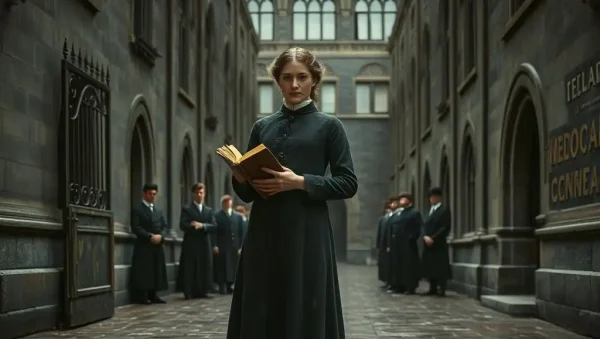
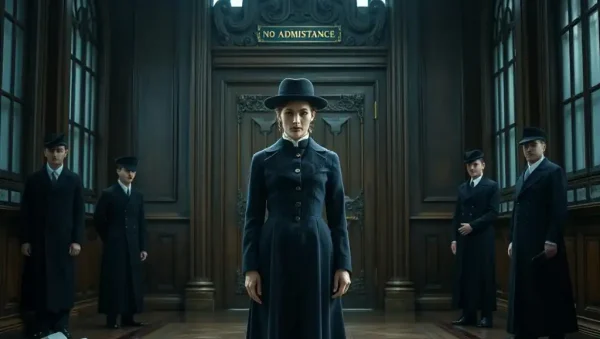
Step back into the 19th century, a transformative era when women began to break through the formidable barriers of biology and medicine. Despite being barred from most universities, denied licenses, and often ridiculed by male peers, these trailblazers not only advanced scientific understanding but also revolutionized patient care. At WomenInScienceHistory.com, this subcategory dives deep into their resilient journeys, from battlefield surgeries to groundbreaking botanical research, offering a rich tapestry of stories that highlight both scientific brilliance and unyielding courage in an age of profound social constraint.
🩺 The Rise of Female Physicians & Medical Degrees
In a time when women were often deemed too "delicate" for medical practice, figures like Elizabeth Blackwell shattered expectations by earning the first medical degree in the U.S. in 1849. This section explores how institutions like the Women's Medical College of Pennsylvania and the London School of Medicine for Women emerged as sanctuaries of learning, nurturing a new generation of female doctors. You'll discover the legal and social battles these women waged—from petitioning legislatures to founding their own clinics—and how their persistence slowly redefined the medical profession’s boundaries.
Expect to uncover personal anecdotes of rejection letters, clandestine study, and eventual triumph. We also examine the pioneering work of women like Ann Preston, who fought for coeducational clinical instruction, and the global ripple effect as women in Russia, France, and India began following suit. Through detailed biographies and contextual history, you'll gain a vivid picture of how these physicians not only treated patients but also advocated for public health, hygiene, and the professionalization of nursing—laying a foundation that would carry into the 20th century.
🔬 Botanical & Evolutionary Contributions by Women Naturalists
While medicine often grabbed headlines, women naturalists in the 19th century were quietly amassing invaluable data in biology. This section highlights figures like Mary Anning, whose fossil discoveries reshaped paleontology, and Anna Atkins, whose cyanotype photograms became the first photographically illustrated botanical book. These women often worked from home, cataloging specimens and corresponding with leading scientists, yet their intellectual contributions were frequently absorbed into male colleagues’ publications without credit.
We delve into the world of Beatrix Potter, better known for Peter Rabbit, who actually conducted mycological research on lichens and fungi, presenting a paper to the Linnean Society in 1897—where women were barred from attending. Similarly, Elizabeth Gertrude Britton used her botanical expertise to advocate for wildflower conservation, eventually founding the Wild Flower Preservation Society. Expect rich narratives that showcase how these women leveraged unconventional spaces—gardens, home laboratories, and amateur networks—to produce rigorous, long-lasting biological knowledge that questioned prevailing theories on evolution and plant reproduction.
⚕️ Nursing’s Transformation & Public Health Advocacy
The 19th century witnessed nursing evolve from an untrained, often stigmatized occupation into a respected profession, largely thanks to women like Florence Nightingale and Mary Seacole. This section traces Nightingale’s pioneering use of statistical analysis to improve sanitary conditions in Crimea and her establishment of the Nightingale Training School, which standardized nursing curricula worldwide. Simultaneously, we honor Seacole, the Jamaican-Scottish nurse who funded her own trip to the frontlines and provided care using traditional remedies, often outperforming her male counterparts in accessibility and empathy.
Beyond military theaters, women like Dorothea Dix championed mental health reform, lobbying for humane treatment of the insane, and Clara Barton, who founded the American Red Cross, bridging battlefield medicine with disaster relief. Here, you’ll find an exploration of how these leaders systematically collected health data, campaigned for clean water and vaccination, and transformed nursing from a "calling" into an evidence-based profession. Their legacy is not just in practice but in the public policies they influenced, making healthcare more accessible and accountable.
🧪 Overcoming Institutional Barriers & Alternative "Lady" Science
Denied formal degrees, many women in biology and medicine carved out alternative scientific identities, often as illustrators, writers, or practitioners of homeopathy. This section profiles Ellen Swallow Richards, who created the field of sanitary engineering (later ecology and home economics) after being refused a doctorate at MIT, and Graceanna Lewis, an ornithologist whose illustrations and taxonomic work aided evolutionary debates. These women used science communication as a gateway—writing textbooks, popular articles, and children’s natural histories—to influence public understanding and mentor younger females.
We also highlight the "lady botanists" who participated in colonial expeditions, sending specimens back to royal societies while maintaining domestic roles, and the role of women’s clubs as fertile grounds for scientific salons. Expect discussions on how exclusion from labs pushed women toward fieldwork and systematic cataloging, inadvertently creating unique interdisciplinary approaches. Their work often emphasized ecological interdependencies, sustainability, and communal health—perspectives that male-dominated institutions frequently undervalued but that modern science now recognizes as visionary.
🌍 Global Pioneers & Cross-Cultural Medical Exchange
While most histories center on the Anglosphere, 19th-century women in biology and medicine were active globally. This section brings you stories like Anandibai Joshee, the first Indian woman to earn a medical degree in the U.S. (1886), who then returned to practice in colonial India, and Semsettin Taner, a Turkish woman who published groundbreaking work on immunology. We also explore the efforts of women missionaries who introduced Western medicine to Africa and Asia while simultaneously learning and documenting indigenous healing practices—a complex legacy of both exploitation and collaboration.
Discover how these women navigated colonial frameworks, often using their outsider status to access female patients whom male Western doctors could not reach, thus gathering unique clinical data. They translated medical texts into local languages, trained native female health workers, and created hybrid care models. Through these narratives, we challenge the notion that scientific progress was solely a Western enterprise, instead revealing a richly interconnected web of knowledge exchange facilitated by determined women who crossed borders—both geographic and ideological—to advance health and biological understanding across cultures.
Frequently Asked Questions
Who was the first woman to receive a medical degree in the 19th century?
Elizabeth Blackwell earned her MD from Geneva Medical College in New York in 1849, making history as the first woman in the U.S. to graduate from medical school. She later co-founded the New York Infirmary for Women and Children and promoted medical education for women globally, inspiring many others to follow her path.
Why were women excluded from 19th-century scientific institutions?
Victorian-era gender norms deemed women intellectually inferior and emotionally unstable for rigorous scientific work, reinforcing patriarchal control over education and professional bodies. Many universities outright banned female enrollment, and those admitted faced harassment, lack of research access, and were often barred from professional societies, forcing women to be creative in their pursuit of knowledge.
What were common alternative science roles for women at that time?
Women often became scientific illustrators, museum curators, natural history writers, or home-based researchers. They also engaged in amateur taxonomy, botanical collecting, and medical writing, and many used pseudonyms or male sponsors to publish. Botanical gardens, private libraries, and women's clubs served as informal research hubs where they could collaborate and disseminate findings.
How did women contribute to evolutionary biology in the 19th century?
Women like Beatrix Potter studied plant germination and fungal reproduction, while others like Mary Anning’s fossil finds supported evolutionary transitions. They compiled extensive specimen collections, illustrated species in exquisite detail, and corresponded with figures like Charles Darwin—though their work was often attributed to male relatives or simply omitted from official records, yet it materially enriched evolutionary theory.
Are there 19th-century women in non-Western medicine who are recognized here?
Yes, we highlight pioneers like Anandibai Joshee and other Asian, African, and Middle Eastern women who bridged traditional and Western medical systems. They often faced colonial racism alongside gender discrimination, yet they established clinics, translated medical texts, and preserved indigenous botanical knowledge, making vital, distinct contributions that broaden the global history of medicine.