Women in Medical Specialties: Pioneers Who Reshaped Healthcare
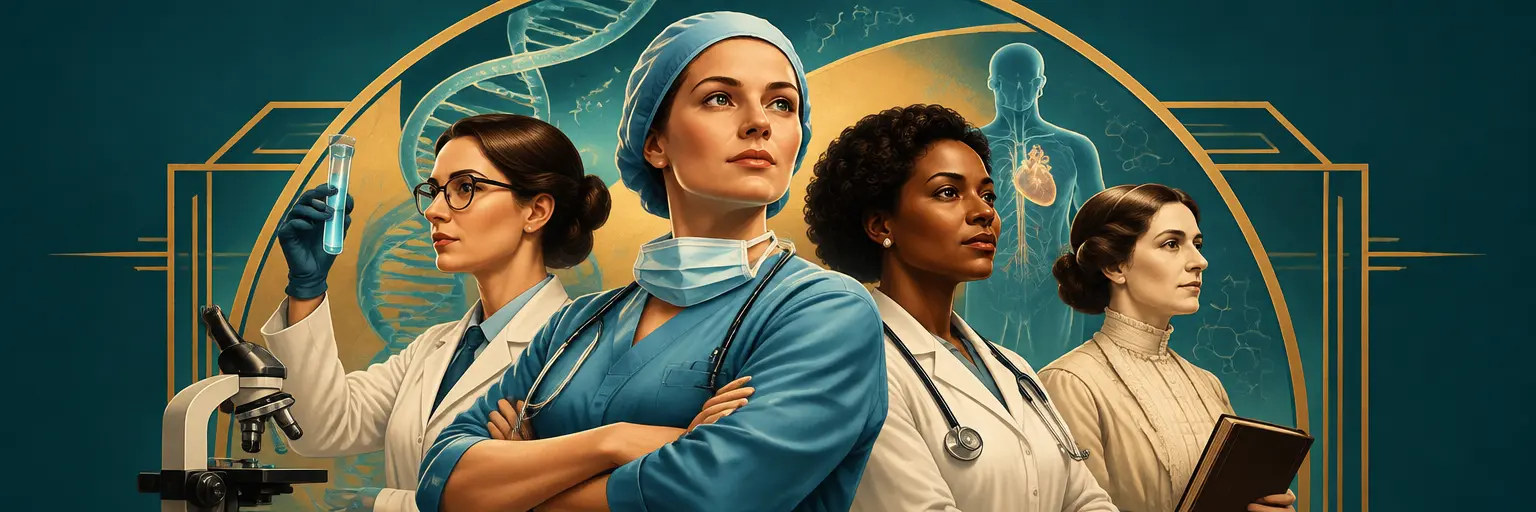
From the first female physicians who fought for the right to practice medicine to the modern specialists who lead groundbreaking surgical and research teams, women have continually transformed every branch of healthcare. On WomenInScienceHistory.com, this subcategory explores the remarkable journeys, achievements, and enduring legacies of women across diverse medical fields—from anesthesiology to oncology, pediatrics to psychiatry. Delve into their stories to understand how resilience, intellect, and compassion broke barriers and redefined patient care. These narratives not only honor their contributions but also serve as powerful inspiration for aspiring medical professionals worldwide.
🩺 Breaking Barriers: The First Female Physicians and Surgeons
Discover the courageous trailblazers like Elizabeth Blackwell, the first woman in the U.S. to earn a medical degree, and Mary Edwards Walker, a pioneering surgeon and Civil War hero. This section highlights their battles against institutional sexism, their innovative clinical approaches, and the networks they built to support other women. Learn how their persistence opened doors for future generations, transforming medicine from a male-only profession into a diverse and inclusive field.
Beyond their initial achievements, these pioneers also founded hospitals, medical schools, and professional associations specifically for women. Their work established essential standards in sanitation, preventive care, and surgical technique. By documenting their struggles and victories, we provide a foundational understanding of how women’s participation in medicine evolved, offering key insights into the systemic changes that continue to shape healthcare equity today.
🔬 Innovators in Research and Diagnostics
Women have made monumental contributions to medical research, from identifying the structure of DNA—like Rosalind Franklin’s crucial X-ray diffraction work—to developing life-saving vaccines. This facet covers female scientists who advanced diagnostic tools, such as Helen Taussig in pediatric cardiology and Gertrude Elion in pharmacology, whose pioneering drug development won a Nobel Prize. Explore how their meticulous research revolutionized treatment protocols across cardiology, virology, and immunology.
Their work extended beyond the lab bench into public health policy, epidemiology, and clinical trials design. For instance, Elion’s rational drug design method changed how medications are developed, making treatments more targeted and less toxic. This section underscores the importance of female perspectives in research, highlighting how their unique questions and approaches have accelerated medical innovation and improved global health outcomes.
👩⚕️ Leaders in Anesthesiology and Emergency Medicine
This area focuses on women who excelled in high-pressure, fast-paced specialties. Virginia Apgar, creator of the Apgar Score for newborns, revolutionized neonatal assessment and anesthesiology. In emergency medicine, figures like Dr. Angela Madden shaped trauma care protocols. We examine how these specialists managed critical care, developed rapid response systems, and mentored countless residents, bringing a blend of precision, empathy, and decisive action to the most urgent medical situations.
These women not only mastered technical skills but also advocated for systematic improvements in patient safety and team communication. Their leadership in hospital departments and national boards influenced standards for triage, pain management, and resuscitation. By analyzing their careers, we see how female leadership in acute specialties has enhanced multidisciplinary collaboration, reducing errors and saving lives in critical moments where every second counts.
🌍 Advocates in Pediatrics, Obstetrics, and Women’s Health
Explore the profound impact of women physicians like Rebecca Lee Crumpler, the first Black woman to earn a medical degree in the U.S., and Cicely Williams, who discovered kwashiorkor and championed maternal nutrition. This section delves into their contributions to gynecology, obstetrics, and pediatric care, emphasizing their holistic approach that used cultural understanding, education, and community outreach. Their work addressed not only disease but also social determinants of health, improving outcomes for vulnerable populations.
Their advocacy transformed prenatal care, breastfeeding practices, and child immunization programs globally. Figures such as Dr. Virginia Apgar again appear in this context, her scoring system reducing infant mortality worldwide. We also highlight modern specialists who fight for reproductive rights and accessible healthcare. This facet demonstrates how women in these specialties have consistently placed patient dignity and long-term wellbeing at the core of clinical practice, influencing policy and public health initiatives.
🧠 Mentors in Psychiatry, Neurology, and Integrative Medicine
This section honors women who shaped mental health and neuroscience, from pioneers like Margaret Mahler in psychoanalysis to contemporary researchers in neuroplasticity like Dr. Dana Small. Their work bridged biological and psychological approaches, integrating therapies that treat the whole person. Examine how they overcame gender bias to lead research in depression, addiction, and neurodevelopmental disorders, while also establishing training programs that nurture future female leaders in these fields.
Beyond clinical achievement, these women pioneered compassionate care models that destigmatized mental illness. They integrated complementary therapies, mindfulness, and lifestyle medicine into traditional practice, often challenging reductionist frameworks. Their mentorship of young professionals has fostered a more representative workforce in neurology and psychiatry, enabling culturally competent treatment for diverse patients. Learn how their holistic vision continues to reshape medical education, research priorities, and patient advocacy in these evolving specialties.
Frequently Asked Questions
Who was the first woman to become a doctor in the United States?
Elizabeth Blackwell earned her medical degree from Geneva Medical College in 1849, becoming the first woman to receive an MD in the U.S. She faced multiple rejections before gaining admission, and later founded the New York Infirmary for Women and Children and the Woman’s Medical College of Pennsylvania.
What is the Apgar Score and who invented it?
Dr. Virginia Apgar developed the Apgar Score in 1952 as a rapid method to assess newborn health based on Appearance, Pulse, Grimace, Activity, and Respiration. It remains a standard global tool in neonatal care, dramatically reducing infant mortality by enabling quick interventions.
How did Rosalind Franklin contribute to medical research?
Franklin’s X-ray diffraction image, famously known as Photo 51, revealed the double helix structure of DNA, which was crucial for Watson and Crick’s model. Although overlooked for the Nobel Prize, her work underpins modern genetics, diagnostics, and cancer research.
What is the significance of a woman-led medical research today?
Female researchers increasingly lead clinical trials and translational studies, bringing diverse perspectives that address sex-specific differences in drug response and disease progression. This improves treatment efficacy and safety for both men and women, ensuring more personalized and equitable healthcare outcomes.
Are there still barriers for women seeking medical specialties?
Yes, women still face underrepresentation in surgical and procedural specialties, pay gaps, and unconscious bias. However, advocacy networks, mentorship programs, and policy changes are gradually improving parity, inspiring more women to pursue and lead in fields like cardiothoracic surgery and interventional radiology.