Women & Medical Breakthroughs: Pioneers Who Transformed Healthcare
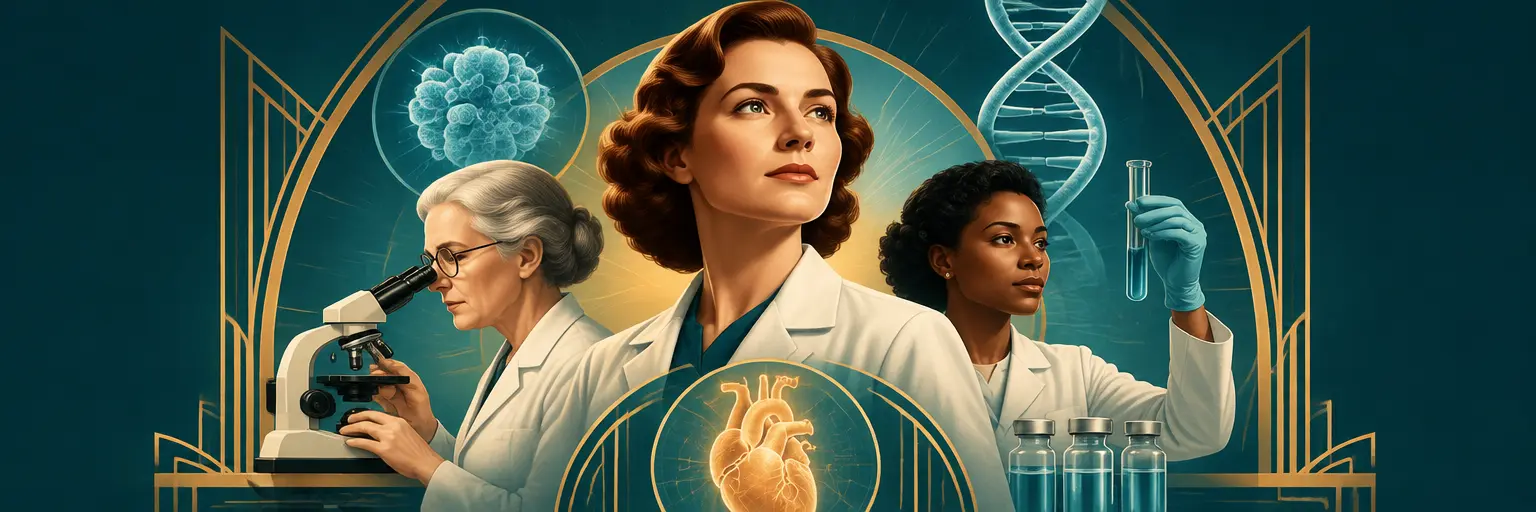
Welcome to the Women & Medical Breakthroughs subcategory, part of our Biology & Medicine hub at WomenInScienceHistory.com. Here, we spotlight the extraordinary women whose discoveries reshaped diagnostics, treatments, and public health—often under immense societal constraints. From vaccine pioneers to surgical innovators, these narratives reveal how female scientists overcame exclusion, skepticism, and resource scarcity to save millions of lives. Explore their legacies, the scientific context of their eras, and how their work continues to influence modern medicine, all while inspiring the next generation of women in STEM.
💉 Vaccine Innovators: Women Who Defeated Deadly Diseases
Vaccination history is incomplete without women like Gladys Hobby, who helped mass-produce penicillin, or Pearl Kendrick, who co-developed the first effective pertussis vaccine in the 1930s. Their work demanded not only lab brilliance but also political savvy to secure funding and clinical trials in male-dominated institutions. Kendrick’s field trials in Michigan, for instance, set the global standard for vaccine efficacy testing.
Readers will discover how these pioneers navigated skeptical medical boards and wartime shortages to deliver life-saving inoculations. We also cover contemporary figures like Katalin Karikó, whose mRNA research underpinned COVID-19 vaccines—a breakthrough achieved despite decades of grant rejections. Expect detailed timelines, archival images, and explainers on how their methodologies evolved into today’s immunization protocols.
🔬 Surgical Trailblazers: Breaking the Glass Ceiling in Operating Rooms
Surgery was long deemed “too physically demanding” for women, yet figures like Mary Edwards Walker—the only female Medal of Honor recipient—performed battlefield amputations, while Virginia Apgar revolutionized neonatal care with her Apgar Score in 1952. These women faced active hostility, including barred hospital privileges and sabotage of their instruments. Their persistence changed surgical education and patient safety standards.
This section profiles their techniques, such as Apgar’s rapid newborn assessment system, which cut infant mortality dramatically. You’ll also learn about Helen Taussig, who co-created the Blue Baby Operation, a milestone in cardiac surgery. We link each breakthrough to its modern descendants—like pulse oximetry and minimally invasive procedures—so you can trace a direct line from their courage to today’s operating rooms.
🧬 Genetic & Molecular Discoveries: Unlocking the Body’s Blueprint
Women have been central to deciphering DNA and cellular mechanisms, yet many were sidelined in Nobel narratives. Rosalind Franklin’s X-ray diffraction images were critical for Watson and Crick’s DNA model, while Barbara McClintock discovered transposons (“jumping genes”)—a breakthrough ignored for decades before winning the Nobel Prize in 1983. Their stories highlight how bias can delay scientific recognition.
Here, we dissect their experimental methods, including Franklin’s Photo 51 and McClintock’s maize chromosome studies. We also feature Jennifer Doudna (CRISPR) and Mary-Claire King (breast cancer gene BRCA1), showing how modern women continue to pioneer genetic editing and precision medicine. Expect accessible analogies, visual guides, and career path timelines for aspiring geneticists.
💊 Pharmacology & Drug Discovery: From Lab Benches to Lifesaving Cures
Many life-saving drugs owe their existence to women who mixed chemistry with compassion. Gertrude Elion, a Nobel laureate, developed drugs for leukemia, malaria, and organ transplantation—despite funding her own early research. Meanwhile, Alice Augusta Ball created the first effective leprosy treatment (chaulmoogra oil injection) at only 23, though credit was stolen until decades after her death.
This subcategory offers a deep dive into their synthesis processes, clinical trial designs, and the ethical standards they fought to uphold. We also explore Frances Oldham Kelsey, whose refusal to approve thalidomide prevented a birth-defect crisis in the U.S. Readers will gain insights into drug regulation history, patent fights, and how to navigate today’s pharmaceutical research landscape.
🩺 Public Health & Epidemiology: Women Who Saved Communities
Epidemiology’s modern practice owes much to women who traced outbreaks and championed sanitation. Florence Nightingale not only advanced nursing but also used statistical diagrams to prove hygiene’s impact during the Crimean War. Later, Alice Hamilton pioneered occupational health, exposing industrial toxins that poisoned factory workers—her work directly led to labor laws protecting millions.
Here, we examine their data collection methods, advocacy strategies, and the social reforms they ignited. You’ll also meet Sarah Josephine Baker, who reduced New York City’s infant mortality through public milk stations and health education. We include primary source excerpts, outbreak maps, and practical lessons for modern public health careers, emphasizing how community trust remains as vital as laboratory science.
Frequently Asked Questions
Who is considered the most influential woman in medical breakthroughs?
While subjective, Gertrude Elion stands out—her six major drug discoveries, including for leukemia and herpes, earned her a Nobel Prize. She also mentored countless female scientists and set standards for ethical clinical trials.
Why were women’s medical discoveries often credited to men?
Systemic sexism in publishing, academic politics, and lab hierarchies led to erasure. Examples include Rosalind Franklin’s DNA work and Alice Ball’s leprosy treatment. Only recent historical audits have restored their authorship.
How can I learn about modern female medical pioneers?
Follow journals like *The Lancet* and organizations like Women in Global Health (WGH). Also, check our “Contemporary Trailblazers” section for profiles of CRISPR researchers and vaccine developers.
Are there specific awards for women in medical research?
Yes—the L'Oréal-UNESCO For Women in Science Awards honor outstanding female researchers globally. Additionally, the Mildred S. Dresselhaus Award recognizes women in physical and biomedical sciences.
What challenges remain for women in medicine today?
Funding disparities, publication bias, and workplace harassment persist. Only 30% of principal investigators are women, and maternal mortality research remains underfunded. Our site provides advocacy resources and mentorship networks.