
[Her Name]: Building the Digital Frontier – A Pioneer in Hardware Engineering

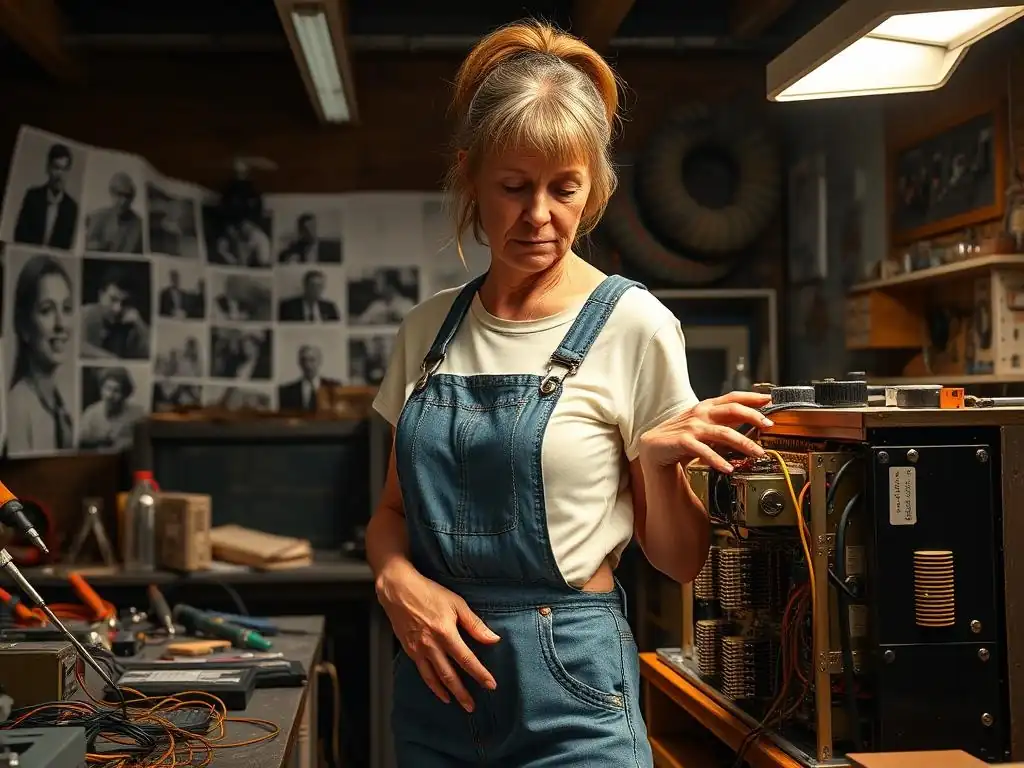
Welcome to WomenInScienceHistory.com!
Dive into the extraordinary world of women who shaped science as we know it. This month, we're highlighting the unsung heroes of hardware engineering. Ever wondered about the women who built the very foundations of our digital world? Prepare to be amazed by the pioneering women who defied expectations and revolutionized the field. Discover their groundbreaking innovations, the obstacles they overcame, and the lasting legacy they left behind. Read on to uncover the remarkable story of [Her Name], and learn how she helped build the digital frontier!
- Margaret Hamilton: Building the Digital Frontier – A Pioneer in Software Engineering
- Introduction: Celebrating Margaret Hamilton's Legacy in Software Engineering
- Margaret Hamilton's Journey into Software Engineering: Breaking Barriers
-
Groundbreaking Contributions to Software Engineering
- Key Innovations and Concepts Pioneered by Margaret Hamilton
- Impact of Margaret Hamilton's Work on Software Reliability and Error Handling
- Apollo Guidance Computer (AGC) Software - A Detailed Look at Margaret Hamilton's Role
- Priority Scheduling and Asynchronous Software - Further Advancing Software Capabilities
- Margaret Hamilton's Impact on the Field and Future Generations
- Recognition and Awards: Honoring Margaret Hamilton's Achievements
- Margaret Hamilton's Lasting Legacy: A Testament to Perseverance
-
Frequently Asked Questions
- What were some common challenges faced by hardware engineering women history pioneers?
- How does WomenInScienceHistory.com contribute to understanding hardware engineering women history pioneers?
- What kind of groundbreaking work did women in hardware engineering contribute historically?
- Why is it important to learn about hardware engineering women history pioneers?
- Where can I find more information about specific hardware engineering women history pioneers?
- Final Reflection: Forging a Future in Her Image
- Ignite Your Inner Innovator: Step into Engineering!
Margaret Hamilton: Building the Digital Frontier – A Pioneer in Software Engineering
Introduction: Celebrating Margaret Hamilton's Legacy in Software Engineering
Highlighting the Contributions of Women Pioneers in Science and Technology
Throughout history, countless women have made indelible marks on scientific and technological advancement, often overcoming immense societal barriers to do so. These pioneering women in science history, from Marie Curie's groundbreaking work in radioactivity to Rosalind Franklin's critical contributions to understanding DNA structure, have shaped our world in profound ways. Their stories are not merely historical footnotes but vital narratives that illuminate the perseverance, intellect, and ingenuity that define true scientific progress. Recognizing these contributions is essential for a complete understanding of our technological heritage and for inspiring future generations.
The field of engineering, particularly software engineering, owes a significant debt to women who dared to enter and innovate in what was historically a male-dominated domain. These trailblazers, often working in the shadows, laid the very foundations for the digital age we inhabit today. Their work, though sometimes overlooked in mainstream historical accounts, forms the bedrock of modern computing, from operating systems to complex aerospace applications. Celebrating these unsung heroes is crucial for acknowledging their impact and for encouraging more women to pursue careers in STEM.
Margaret Hamilton's Early Life and Influences: A Spark for Computing
Margaret Hamilton was born Margaret Heafield on August 17, 1936, in Paoli, Indiana. Her early life was marked by a strong academic inclination and a natural curiosity. She pursued her higher education at the University of Michigan, followed by Earlham College, where she earned a Bachelor of Arts degree in mathematics in 1958. This foundational education in mathematics would prove invaluable as she transitioned into the nascent field of computing, providing her with the rigorous analytical skills necessary for complex problem-solving.
Before her pivotal role at MIT, Hamilton briefly taught mathematics and worked at MIT's Lincoln Laboratory, where she was involved in developing software for air defense systems. This early exposure to real-world computing challenges, even before the term "software engineering" was widely recognized, ignited her passion for the field. She began to develop an intuitive understanding of how logic and algorithms could be translated into practical applications, setting the stage for her monumental contributions to the Apollo program and the broader discipline of software development.
Margaret Hamilton's Journey into Software Engineering: Breaking Barriers
Overcoming Challenges Faced by Women in Software Engineering History
Margaret Hamilton navigated a professional landscape that was largely unwelcoming to women, especially in technical roles. In the 1960s, computing was often viewed as a clerical task, but as its complexity grew, it began to be perceived as a male domain, leading to significant hurdles for women seeking leadership or highly technical positions. Hamilton, like many other women in engineering history, faced skepticism regarding her capabilities and had to consistently prove her expertise in an environment where her male counterparts often held an inherent advantage due to societal norms and biases.
Despite these systemic challenges, Hamilton excelled through sheer talent and dedication. She often worked long hours, sometimes bringing her young daughter Lauren to the lab during evenings and weekends, a common practice for working mothers striving to balance professional demands with family responsibilities. Her persistence not only allowed her to overcome personal obstacles but also paved the way for future women in software engineering, demonstrating that technical prowess and leadership were not exclusive to any gender. Her career stands as a testament to the resilience of pioneering women who broke gender barriers in science and technology.
Early Education and Academic Pursuits in Mathematics and Computing
Margaret Hamilton's academic journey began with a strong emphasis on mathematics, a discipline that forms the bedrock of computer science and software development. After completing her B.A. in mathematics from Earlham College in 1958, she pursued graduate studies in mathematics at the University of Michigan. This rigorous mathematical training provided her with the logical framework and analytical precision that would become hallmarks of her contributions to the emerging field of computing.
Her practical entry into computing came in 1960 when she took a position at MIT's Lincoln Laboratory. There, she worked on the SAGE (Semi-Automatic Ground Environment) project, a pioneering air defense system that utilized some of the earliest real-time computer systems. In this role, she gained hands-on experience in programming and system development, learning how to write software that interacted directly with hardware systems to perform critical functions. This early, foundational experience was crucial in shaping her understanding of complex software systems and preparing her for the monumental task of developing the guidance software for the Apollo missions.
Groundbreaking Contributions to Software Engineering
Key Innovations and Concepts Pioneered by Margaret Hamilton
Margaret Hamilton's work at the MIT Instrumentation Laboratory, later renamed the Charles Stark Draper Laboratory, was revolutionary for the nascent field of software engineering. She led the team that developed the on-board flight software for the Apollo command and lunar modules. At a time when software was often an afterthought, and programming was considered more of an art than a rigorous discipline, Hamilton championed a structured, disciplined approach. She is widely credited with coining the term "software engineering" itself, advocating for its recognition as a distinct engineering discipline with its own principles and methodologies, much like hardware engineering.
Her team's innovations included the development of asynchronous processing, priority scheduling, and human-in-the-loop decision-making capabilities. These concepts were critical for managing the limited computing resources of the Apollo Guidance Computer (AGC) and for ensuring system reliability. For instance, the software was designed to detect and recover from errors in real-time, prioritizing critical tasks and gracefully deferring less urgent ones. This foresight in design was unprecedented and laid the groundwork for modern fault-tolerant systems, significantly influencing how software is developed for critical applications today.
Impact of Margaret Hamilton's Work on Software Reliability and Error Handling
The reliability of software, particularly in life-critical systems like space missions, was paramount, and Margaret Hamilton's team made groundbreaking strides in this area. They developed robust error detection and recovery mechanisms that were essential for the success of the Apollo missions. One famous example occurred during the Apollo 11 lunar landing, just minutes before touchdown. The AGC was overloaded with data from an unnecessary radar system. Hamilton's software, however, was designed with an asynchronous executive and priority scheduling.
Instead of crashing, the software intelligently recognized the overload, dropped lower-priority tasks, and focused on the critical guidance and navigation functions. This allowed the astronauts to proceed with the landing, averting what could have been a catastrophic abort. This incident vividly demonstrated the critical importance of reliable software and the efficacy of Hamilton's design philosophy, proving that well-engineered software could autonomously manage unforeseen challenges, a concept that underpins modern operating systems and critical infrastructure software.
Apollo Guidance Computer (AGC) Software - A Detailed Look at Margaret Hamilton's Role
Margaret Hamilton's team was responsible for every line of code that ran on the Apollo Guidance Computer (AGC), the onboard digital computer that controlled the command module and lunar module during the Apollo missions. This was an immense undertaking, involving tens of thousands of lines of handwritten code. The AGC was the first computer to use integrated circuits and was revolutionary for its time, but its limited memory and processing power demanded incredibly efficient and robust software. Hamilton's team meticulously designed, coded, and tested every module, ensuring that the software could handle complex calculations, real-time data, and emergency procedures.
Their approach was highly innovative, integrating the software with the hardware in a symbiotic relationship. They developed comprehensive error-checking routines and recovery procedures that allowed the AGC to detect anomalies and, crucially, to self-correct or prioritize critical tasks. This proactive design was a monumental achievement, especially considering the absence of modern debugging tools or sophisticated programming languages. The success of the Apollo missions, particularly the lunar landing, was inextricably linked to the flawless performance and resilience of the AGC software, a direct testament to Hamilton's visionary leadership and her team's meticulous work.
Priority Scheduling and Asynchronous Software - Further Advancing Software Capabilities
Two of the most significant architectural innovations implemented by Margaret Hamilton's team for the Apollo Guidance Computer (AGC) were priority scheduling and asynchronous software. Priority scheduling allowed the AGC to execute tasks based on their criticality, ensuring that essential functions like navigation and engine control were always prioritized, even when the system was under heavy load. If a less critical task, such as a routine radar check, began to consume too many resources, the system was designed to automatically defer or drop it in favor of higher-priority operations.
Coupled with this was the concept of asynchronous software, which allowed different parts of the program to run independently, rather than waiting for each task to complete sequentially. This parallelism was crucial for maximizing the limited processing power of the AGC and for responding dynamically to real-time events.
The famous Apollo 11 alarm incident, where the AGC prioritized landing procedures over an overloaded radar input, was a direct result of these intelligent design principles. These concepts, now fundamental to modern operating systems and real-time computing, were pioneered by Hamilton's team, demonstrating their profound impact on the evolution of software engineering practices.
Margaret Hamilton's Impact on the Field and Future Generations

Mentorship and Advocacy for Women in STEM
Beyond her technical contributions, Margaret Hamilton has been a quiet but powerful advocate for women in STEM fields. Her career itself serves as a beacon, illustrating what women in engineering history can achieve in challenging environments. While not a vocal public activist in her early career, her leadership style and her insistence on the recognition of software as an engineering discipline inherently challenged prevailing norms. She demonstrated through her work that women were not only capable but indispensable in highly technical and critical roles.
In later years, Hamilton has become more explicit in her encouragement of young women to pursue careers in science and technology. Her story provides a tangible example of how perseverance and intellectual rigor can lead to groundbreaking achievements. She has participated in various events and discussions, sharing her experiences and insights, thereby inspiring countless aspiring female scientists and engineers. Her legacy extends beyond lines of code; it encompasses a powerful narrative of empowerment for women in a field where they continue to seek greater representation.
Margaret Hamilton's Influence on Modern Software Engineering Practices
Margaret Hamilton's pioneering work on the Apollo program fundamentally shaped the discipline of software engineering. Her insistence on rigorous testing, modular design, and error handling laid the groundwork for modern software development methodologies. Concepts like "defensive programming," where software is designed to anticipate and gracefully recover from errors, can be directly traced back to her team's approach to the Apollo Guidance Computer. This emphasis on reliability and robustness became a cornerstone for developing critical systems, from medical devices to financial platforms.
Furthermore, her advocacy for recognizing "software engineering" as a formal discipline elevated the status of programming from a mere craft to a structured, scientific endeavor. This shift in perspective encouraged the development of formal education programs, standardized practices, and robust quality assurance processes that are ubiquitous in today's tech industry. Her work demonstrated the profound impact that well-engineered software can have on the success of complex missions and critical infrastructure, thereby establishing the legitimacy and importance of the field for generations to come.
Inspiring Future Software Engineering Women: A Role Model
Margaret Hamilton stands as an unparalleled role model for future software engineering women and indeed for all aspiring technologists. Her journey exemplifies how passion, intellect, and unwavering dedication can lead to monumental achievements, even in the face of significant societal and technical challenges. For young women considering careers in STEM, particularly in computing, her story provides tangible proof that they can not only enter but also lead and innovate at the highest levels of the field.
Her legacy resonates deeply within the narrative of women in science history, offering a powerful counter-narrative to historical biases. By highlighting her critical contributions to the Apollo missions—a triumph of human ingenuity—she demonstrates that women have been, and continue to be, central to the most ambitious technological endeavors. Her work continues to inspire educational initiatives and mentorship programs aimed at increasing female participation in software engineering and other technical disciplines, ensuring that her pioneering spirit lives on.
Recognition and Awards: Honoring Margaret Hamilton's Achievements
Notable Accolades and Industry Recognition
Margaret Hamilton's profound contributions to software engineering and the success of the Apollo program have earned her numerous prestigious accolades throughout her career. While her work was initially recognized within NASA and the technical community, broader public recognition grew significantly in later decades. Her pioneering efforts in defining and advancing the discipline of software engineering have been celebrated by various professional organizations and academic institutions, cementing her status as a foundational figure in computing history.
Among her many honors, she received the Augusta Ada Lovelace Award from the Association for Women in Computing in 1986, recognizing her significant impact on the field. In 2003, she was honored with the NASA Exceptional Space Act Award, acknowledging her technical contributions to the Apollo program, a rare distinction for someone who was not an astronaut. These awards underscore the breadth and depth of her influence, from groundbreaking technical innovations to inspiring generations of women in science and technology.
NASA Exceptional Space Act Award - Significance and Impact
In 2003, Margaret Hamilton was awarded the NASA Exceptional Space Act Award, a testament to her extraordinary technical contributions to the Apollo program. This award is particularly significant because it recognized her specific innovations that were instrumental in the success of the lunar missions, including the Apollo 11 landing. The accompanying monetary award, reportedly the largest given to any individual in NASA's history at the time, underscored the immense value and impact of her software engineering work.
The significance of this award extends beyond personal recognition; it served as a powerful validation of the critical role software played in complex space missions. It highlighted that the "code" was as vital as the rockets and hardware, a concept that was not always fully appreciated in the early days of space exploration. This recognition from NASA itself solidified her place as a pivotal figure in space history and further amplified the importance of software engineering as a core discipline within aerospace and beyond, influencing how future projects would prioritize software development.
Presidential Medal of Freedom - Commemorating Technological Advancements
One of the highest civilian honors in the United States, the Presidential Medal of Freedom, was bestowed upon Margaret Hamilton by President Barack Obama in 2016. This prestigious award acknowledged her pioneering work in developing the on-board flight software for NASA's Apollo missions. The citation specifically highlighted her role in creating the software that allowed the Apollo 11 lunar module to successfully land on the Moon, emphasizing her innovations in "software engineering" that "literally helped humanity take a giant leap."
Receiving the Presidential Medal of Freedom underscored the historical and societal importance of her contributions, elevating her story beyond the technical community to a national narrative. It recognized not just a technical achievement but a fundamental advancement in human capability enabled by software. This award brought wider public attention to her legacy and to the crucial, often overlooked, role of women in engineering history, inspiring a new generation to pursue careers in science, technology, and innovation.
Margaret Hamilton's Lasting Legacy: A Testament to Perseverance
Preserving the History of Women in Software Engineering
The history of women in software engineering, often overshadowed by their male counterparts, is gradually being brought to light, and Margaret Hamilton's story is central to this effort. Initiatives by organizations, museums, and educational institutions are working to document and celebrate the contributions of pioneers like Hamilton, ensuring their achievements are not lost to time. Her work on the Apollo program, meticulously preserved in archives and historical accounts, serves as a cornerstone for understanding the evolution of software development.
By highlighting Hamilton's specific innovations—such as priority scheduling, asynchronous processing, and her coining of the term "software engineering"—these efforts provide concrete examples of how women have shaped the digital world. Preserving this history is crucial not only for historical accuracy but also for inspiring future generations. It demonstrates that women have always been at the forefront of technological advancement, challenging the outdated notion that STEM fields are exclusively for men, and encouraging more young women to envision themselves as future innovators in software and other engineering disciplines.
Resources and Further Reading on Margaret Hamilton's Life and Work
For those interested in delving deeper into Margaret Hamilton's remarkable life and groundbreaking work, a wealth of resources exists. Numerous books on the history of computing and the Apollo program feature her contributions prominently, such as "The Human Computer: Mary Jackson, Katherine Johnson, Dorothy Vaughan, and the Women Who Helped America Win the Space Race" by Andrea C. White, which, while focusing on other pioneers, often contextualizes the broader landscape of women at NASA. Articles in scientific journals, historical publications, and online platforms dedicated to women in science history provide detailed accounts of her technical innovations and personal journey.
Furthermore, institutions like the Smithsonian National Air and Space Museum and the MIT Charles Stark Draper Laboratory maintain archives and exhibits related to the Apollo program and the AGC software, offering insights into the tools and methodologies Hamilton's team employed. Documentaries and interviews also provide firsthand accounts and perspectives on her work. These resources collectively paint a comprehensive picture of a visionary leader whose contributions were instrumental in humanity's greatest technological leap, providing invaluable context for understanding the development of software engineering and the vital role of pioneering women in its history.
Margaret Hamilton's Impact on Women in Science History
Margaret Hamilton's impact on women in science history cannot be overstated. Her career serves as a powerful narrative of breaking barriers and achieving unparalleled success in a field that was largely male-dominated. By leading the software development for the Apollo missions, she demonstrated unequivocally the intellectual prowess and leadership capabilities of women in highly complex and critical engineering roles. Her visibility, particularly after receiving the Presidential Medal of Freedom, has shone a spotlight on the often-overlooked contributions of women to technological progress.
Her story encourages young women and girls to pursue STEM careers, proving that there are no inherent limitations to what they can achieve. She stands as a symbol of perseverance, ingenuity, and the vital role that diversity plays in innovation. As more attention is paid to the history of women in science and engineering, Margaret Hamilton's legacy continues to grow, inspiring a new generation of female software engineers, scientists, and innovators who are building upon the foundations she so meticulously laid for the digital frontier.
Frequently Asked Questions
What were some common challenges faced by hardware engineering women history pioneers?
Historically, women faced significant gender bias and limited access to education and professional opportunities in male-dominated STEM fields. This often resulted in exclusion from networks and recognition for their contributions.
How does WomenInScienceHistory.com contribute to understanding hardware engineering women history pioneers?
The website provides biographies and discussions about the work of pioneering women in hardware engineering. It aims to highlight their achievements and the obstacles they overcame, often overlooked in mainstream narratives.
What kind of groundbreaking work did women in hardware engineering contribute historically?
Women contributed to the design and development of early computers, innovations in electronics, and advancements in telecommunications technologies, often working behind the scenes.
Why is it important to learn about hardware engineering women history pioneers?
Studying their stories helps to break down stereotypes, inspire future generations of women in STEM, and acknowledge the diverse contributions to scientific progress that have often been marginalized.
Where can I find more information about specific hardware engineering women history pioneers?
WomenInScienceHistory.com offers detailed biographies, articles, and resources that explore the lives and work of these pioneers, providing a platform for their stories to be shared and celebrated.
Final Reflection: Forging a Future in Her Image
The narrative of "[Her Name]" is not just a historical account; it's a powerful testament to the enduring relevance of representation in STEM fields. Her journey, meticulously detailed throughout this article, underscores the critical need to acknowledge and celebrate the contributions of women pioneers in hardware engineering, inspiring future generations to break barriers and redefine the digital landscape.
The impact of "[Her Name]" extends far beyond the technical achievements she pioneered. Her story serves as a vital reminder that innovation thrives on diversity and that the absence of female voices in hardware engineering has historically limited its potential. You can't be what you can't see,
as Marian Wright Edelman so eloquently stated. This quote encapsulates the profound importance of visibility and representation, urging us to actively champion the stories of women like "[Her Name]" to inspire a more inclusive and innovative future.
Now, as you reflect on the legacy of "[Her Name]," consider how you can contribute to building a more equitable and diverse future in hardware engineering. What steps can you take to amplify the voices of women in STEM, mentor aspiring engineers, and challenge existing biases? Let "[Her Name]'s" pioneering spirit ignite your own passion for innovation and inspire you to become an advocate for change, ensuring that the digital frontier is built by all, for all.
Ignite Your Inner Innovator: Step into Engineering!
Thank you for exploring her remarkable journey and the impact of women in hardware engineering. Now it's your turn to build on this legacy and contribute to the future of technology.
- Take the leap and explore online courses in hardware engineering fundamentals. Master the basics and pave your way to innovation.
- Share this article with fellow STEM enthusiasts and spark conversations about her contributions and the importance of female role models.
- Surprise! Research a contemporary woman making waves in hardware engineering and share her story with a friend to inspire a new generation.
What small step will you take today to contribute to the exciting world of hardware engineering?