
Katherine Johnson: The NASA Mathematician Whose Calculations Sent Men to the Moon


Welcome to WomenInScienceHistory.com!
Dive into the extraordinary world of female scientific pioneers. Today, we spotlight Katherine Johnson, a brilliant mind whose calculations were instrumental in NASA's success, even charting the course for lunar trajectories. But what challenges did she overcome to achieve such groundbreaking feats? Uncover her remarkable story and discover how this unsung heroine helped send men to the moon.
- Introduction: Honoring Katherine Johnson's Legacy in Space Exploration
- Early Life and Education: The Foundations of a Mathematical Genius
- Joining NASA: A Human Computer at Langley Research Center
- Calculating Lunar Trajectories: Johnson's Pivotal Role in the Space Race
- Beyond Lunar Trajectories: Contributions to Other NASA Missions
- Awards, Recognition, and Legacy: Honoring a Trailblazing Mathematician
- Overcoming Challenges: Johnson's Resilience in a Male-Dominated Field
- "Hidden Figures": Bringing Johnson's Story to the Forefront
- Conclusion: Katherine Johnson's Enduring Impact on Space Exploration and Beyond
-
Frequently Asked Questions
- What was Katherine Johnson's primary role at NASA?
- What specific type of calculations is Katherine Johnson most known for?
- What obstacles did Katherine Johnson face as a woman and a Black woman in the field of mathematics and science?
- How did Katherine Johnson's work contribute to the Apollo 11 mission, which successfully landed humans on the moon?
- Why is it important to remember and celebrate the contributions of women like Katherine Johnson in science history?
- Final Reflection: The Enduring Legacy of Precision
- Ignite Your Inner Space Explorer!
Introduction: Honoring Katherine Johnson's Legacy in Space Exploration
Celebrating the Life and Work of a Pioneering Female Mathematician
Katherine Johnson stands as a towering figure in the annals of space exploration, a groundbreaking mathematician whose precise calculations were instrumental in the success of America's earliest manned spaceflights. Her work as a "human computer" at NASA's Langley Research Center was not merely supportive; it was foundational, providing the critical numbers that guided astronauts safely to orbit and back. Johnson's story is a testament to intellectual brilliance, unwavering dedication, and the profound impact one individual can have on historical achievements.
Her contributions, once largely unrecognized outside of specialized circles, have rightfully gained prominence, illuminating a vital chapter in the history of science and engineering. For Women in Science History, Johnson's journey represents a powerful narrative of overcoming systemic barriers to achieve extraordinary feats, paving the way for future generations of female scientists and engineers. Her legacy is one of precision, perseverance, and pioneering spirit in the pursuit of the unknown.
Katherine Johnson: A Crucial Contributor to NASA's Success
Johnson's role was indispensable, particularly during the high-stakes era of the Space Race. She was a crucial contributor to Project Mercury, America's first human spaceflight program, where her trajectory analyses and launch window calculations were vital for the safety of astronauts like Alan Shepard and John Glenn. Her meticulous work ensured that the complex paths of spacecraft were accurately mapped, reducing risk in an era of nascent space technology.
Beyond Mercury, her expertise extended to the Apollo program, where she was instrumental in Katherine Johnson calculating lunar trajectories for the Moon missions, including the historic Apollo 11 flight. Her calculations often served as the final, trusted verification for nascent electronic computers, a testament to the unparalleled confidence placed in her accuracy. This critical oversight role underscored her irreplaceable value to NASA's ambitious endeavors, directly influencing the agency's ability to achieve its monumental goals in space.
Early Life and Education: The Foundations of a Mathematical Genius
A Prodigy Emerges: Katherine Johnson's Early Academic Achievements
Katherine Coleman Goble Johnson was born on August 26, 1918, in White Sulphur Springs, West Virginia. From a very young age, her exceptional aptitude for mathematics was evident. She displayed an innate curiosity and a remarkable ability to grasp complex numerical concepts far beyond her peers. This early brilliance allowed her to accelerate through her education, skipping several grades due to her advanced intellectual capabilities.
By the remarkably young age of 10, Johnson had completed the eighth grade, a feat that necessitated her family moving to Institute, West Virginia, where she could access a high school for African American students. She graduated from high school at 14 and immediately enrolled at West Virginia State College, a historically black college, at the age of 15. There, she pursued a degree in mathematics, excelling under the mentorship of professors who recognized her extraordinary talent, including Dr. William W. Schieffelin, who created advanced mathematics courses specifically for her.
Overcoming Segregation: Pursuing Education in a Challenging Era
Johnson's pursuit of higher education was marked by the pervasive racial segregation prevalent in the United States during the early 20th century. Despite her intellectual gifts, she faced systemic barriers that limited educational opportunities for African Americans. West Virginia's educational system, like many others, was segregated, meaning that access to certain schools and programs was restricted based on race.
However, her determination to learn propelled her forward. In 1939, after graduating from West Virginia State College with degrees in mathematics and French, she was selected to be one of three African American students, and the only woman, to desegregate West Virginia University's graduate school. This pioneering step allowed her to pursue a master's degree in mathematics, though she left after one session to start a family. Her courageous entry into a previously all-white institution underscored her resilience and commitment to academic excellence in the face of daunting societal constraints.
From Teaching to Calculating: The Path to Langley Research Center
Following her graduation from college, Katherine Johnson initially embarked on a career as a teacher. This was a common and respected profession for educated African American women during that era, offering a stable environment to apply their intellect and contribute to their communities. She taught mathematics, French, and music at a public school in Marion, Virginia, for several years, balancing her professional life with raising her young family.
However, her true calling lay in applied mathematics. In 1952, a relative mentioned job openings for African American women with mathematics degrees at the National Advisory Committee for Aeronautics (NACA), which would later become NASA. These positions were for "human computers" at the Langley Research Center in Hampton, Virginia. Intrigued by the prospect of applying her mathematical skills to cutting-edge research, Johnson applied. She was hired in 1953, initially for a two-week trial period, which quickly turned into a permanent role, marking the beginning of her illustrious career in aerospace.
Joining NASA: A Human Computer at Langley Research Center
The West Area Computing Unit: Breaking Barriers in a Segregated Workplace
Upon joining NACA in 1953, Katherine Johnson was assigned to the West Area Computing Unit at Langley Research Center. This unit was a segregated group of African American female mathematicians who performed complex calculations by hand for the agency's engineers. Despite the racial segregation that dictated their working conditions – including separate dining facilities and restrooms – these women were integral to the research efforts, acting as the "brains" behind many critical projects.
The West Area Computing Unit was a testament to both the systemic discrimination of the time and the remarkable talent that thrived within its confines. These "computers" tackled intricate mathematical problems related to aerodynamics, flight mechanics, and aircraft design, often working with slide rules, mechanical calculators, and their unparalleled mental acuity. Their contributions were vital, laying the groundwork for the agency's later expansion into space exploration, even as they faced the daily indignities of a segregated workplace.
Katherine Johnson's Role as a "Computer": Calculating Complex Equations
As a "computer" in the West Area, Johnson's primary responsibility was to perform the precise mathematical computations that engineers needed for their research. This involved solving differential equations, working with complex geometric principles, and analyzing vast amounts of data from wind tunnel tests and flight experiments. Her exceptional analytical skills and rapid problem-solving abilities quickly distinguished her within the unit.
Her meticulous approach and uncanny knack for numbers meant that she was soon assigned to more complex and specialized projects. Unlike many of her peers who remained in the general computing pool, Johnson was soon integrated directly into specific engineering teams. This direct collaboration allowed her to delve deeper into the physics of flight and contribute more intimately to the development of new aerospace technologies, showcasing her unique talent for practical application of theoretical mathematics.
Early Projects: Contributing to Flight Research and Aeronautics
In her early years at NACA, Johnson's work primarily focused on flight research and aeronautics. She contributed to studies on gust alleviation for aircraft, analyzing how air turbulence affected aircraft performance and stability. Her calculations helped engineers design more stable and safer airplanes, directly impacting the burgeoning aviation industry. This foundational work in aerodynamics was crucial for understanding the principles that would later apply to spacecraft.
One notable early project involved her work on the 1958 research report "Notes on Aircraft Gust-Alleviation Factors," which she co-authored. This was a significant achievement, as it was uncommon for women, especially African American women, to be credited as authors on NACA reports at that time. Her contributions to these early aeronautical projects demonstrated her capability to translate complex physical phenomena into accurate mathematical models, setting the stage for her pivotal role in the nation's space endeavors.
Calculating Lunar Trajectories: Johnson's Pivotal Role in the Space Race
Project Mercury: Ensuring the Safety of Alan Shepard's Flight
Katherine Johnson's pivotal contributions to the American space program began in earnest with Project Mercury, the nation's first human spaceflight initiative. Her expertise was particularly critical for the 1961 flight of Alan Shepard, who became the first American in space aboard the Freedom 7 capsule. For this mission, Johnson was tasked with performing intricate trajectory analyses, calculating the precise launch window, and determining the optimal path for Shepard's suborbital flight.
Her calculations were essential for ensuring that the capsule would launch correctly, follow its intended path, and safely splash down in a predetermined recovery zone in the Atlantic Ocean. The success of Shepard's mission, a crucial step in the Space Race, relied heavily on the accuracy of Johnson's mathematical work. Her ability to translate complex orbital mechanics into reliable flight plans instilled confidence in NASA engineers and astronauts alike.
Verifying Computer Calculations: Johnson's Critical Eye for Accuracy
Perhaps one of the most celebrated anecdotes illustrating Katherine Johnson's indispensable role involves astronaut John Glenn's orbital flight in 1962. As NASA transitioned from human computers to electronic ones, a certain level of apprehension existed regarding the reliability of the new machines. Before his historic mission aboard Friendship 7, Glenn famously requested that Johnson personally verify the IBM computer's calculations for his trajectory.
Glenn's insistence on Johnson's manual verification underscored the immense trust placed in her accuracy and judgment. He reportedly stated, "If she says they're good, then I'm ready to go." Johnson spent days meticulously re-calculating the orbital parameters, launch windows, and potential abort trajectories by hand, using her desk calculator and formidable mathematical skills. Her independent confirmation provided the final, critical assurance needed for Glenn's successful journey, solidifying her reputation as NASA's most trusted human computer.
The Apollo Program: Calculating Lunar Trajectories for Moon Missions
As NASA's ambitions grew, so did the complexity of the mathematical challenges. Johnson's expertise became even more critical during the Apollo program, which aimed to land humans on the Moon. Katherine Johnson calculating lunar trajectories was a monumental task, involving multi-body gravitational physics, precise timing, and navigation across vast cosmic distances. Her calculations were fundamental to every phase of these ambitious missions.
These calculations encompassed everything from the translunar injection burn, which propelled the spacecraft out of Earth's orbit towards the Moon, to the precise orbital paths around the Moon itself, and finally, the intricate return trajectory back to Earth. The success of the Apollo missions, culminating in humanity's first steps on another celestial body, rested significantly on the accuracy and foresight of Johnson's mathematical models and computations.
Calculating the Trajectory for Apollo 11: A Landmark Achievement
Katherine Johnson's contributions to the Apollo program reached their zenith with the Apollo 11 mission in July 1969, which famously landed Neil Armstrong and Buzz Aldrin on the Moon. She played a direct role in calculating the trajectory for Apollo 11, determining the precise path that the Command Module, Columbia, and the Lunar Module, Eagle, would follow from Earth to lunar orbit and back. This involved complex calculations accounting for the gravitational pulls of both Earth and the Moon, the timing of various engine burns, and the relative velocities required for successful rendezvous and docking.
Her work ensured that the spacecraft not only reached the Moon but did so with the accuracy required for a safe landing and a return journey that would bring the astronauts back to Earth within their designated recovery zone. The precision of her calculations, performed with incredible diligence, was a silent yet absolutely critical factor in one of humanity's greatest exploratory triumphs, allowing mission control to confidently guide the astronauts through the journey.
Johnson's Hand Calculations: A Backup System for Spaceflight Safety
Even as electronic computers became more prevalent and sophisticated, Katherine Johnson's hand calculations remained an indispensable backup system for ensuring spaceflight safety, particularly for high-stakes missions like Apollo. The early computers were prone to errors, and human verification offered an unparalleled layer of redundancy and confidence that was crucial for missions where lives were at stake and the margin for error was virtually nonexistent.
Her meticulous manual computations served as a final, independent check against any potential glitches or miscalculations from the machines. This dual-verification approach provided mission control with the highest level of assurance that the orbital and trajectory data were correct, allowing them to proceed with critical maneuvers with utmost confidence. Johnson's role as the ultimate arbiter of mathematical accuracy underscored her vital importance in the era of pioneering space exploration.
Beyond Lunar Trajectories: Contributions to Other NASA Missions
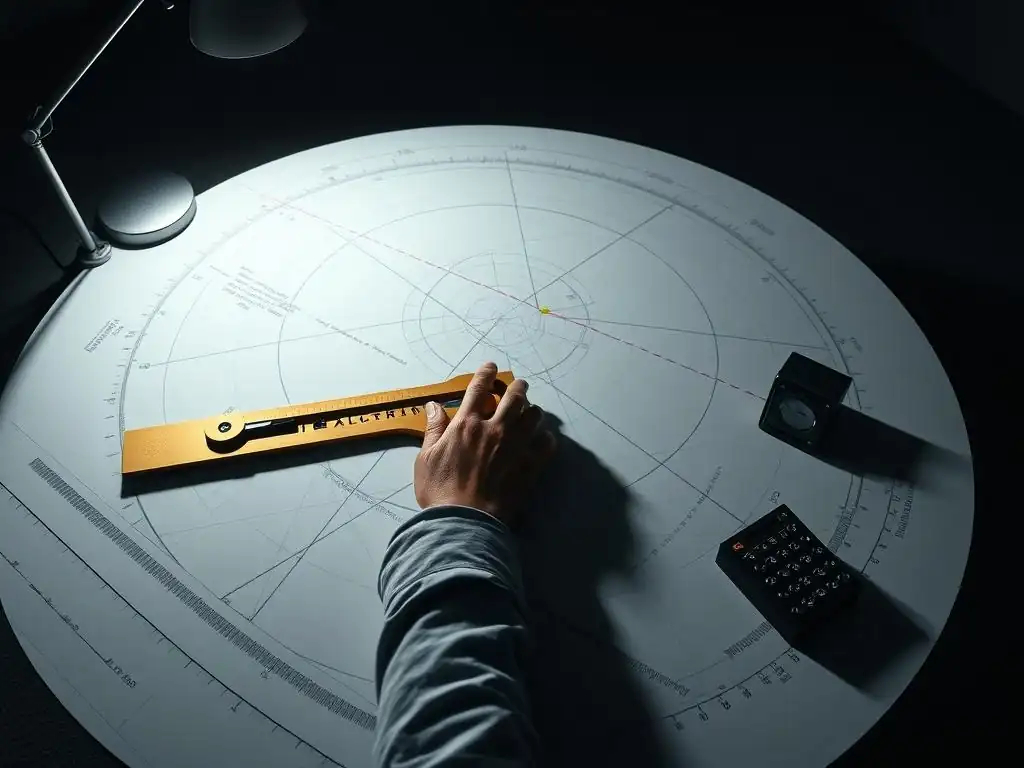
Contributions to the Space Shuttle Program
Following her monumental work on the Apollo missions, Katherine Johnson continued to contribute her mathematical prowess to subsequent NASA endeavors, including the groundbreaking Space Shuttle Program. She applied her vast experience in orbital mechanics and trajectory analysis to the early phases of the shuttle's development. This involved calculations for the shuttle's complex launch and re-entry profiles, which differed significantly from the single-use capsules of earlier programs due to the reusable nature of the orbiter.
Her insights helped engineers understand the intricate dynamics of launching a winged vehicle into orbit and guiding it back through the Earth's atmosphere for a runway landing. She contributed to studies on the shuttle's flight parameters, ensuring that the critical phases of its mission were accurately modeled and understood, thereby laying the groundwork for the successful operation of NASA's long-running reusable spacecraft fleet.
Calculating Orbital Mechanics for Earth Observation Satellites
Beyond human spaceflight, Katherine Johnson's mathematical expertise was also instrumental in the development and operation of unmanned missions, including Earth observation satellites. She contributed to the precise calculations required to place these satellites into stable and accurate orbits. These calculations were crucial for ensuring that the satellites could effectively collect data for various scientific purposes, ranging from meteorological forecasting to environmental monitoring and geological surveying.
Her work in this domain involved determining optimal orbital parameters, considering factors like altitude, inclination, and ground track, to maximize data collection efficiency and longevity of the missions. The accuracy of these orbital mechanics calculations directly impacted the quality and utility of the data gathered by these satellites, contributing significantly to advancements in our understanding of Earth's systems and climate.
Advancing Aerospace Research Through Mathematical Expertise
Throughout her distinguished career at NASA, spanning over three decades, Katherine Johnson consistently advanced aerospace research through her profound mathematical expertise. She co-authored numerous technical reports and papers, often working directly with engineers to translate complex physical phenomena into solvable mathematical equations. Her analytical approach was vital for developing new methodologies and refining existing ones for calculating flight paths, atmospheric re-entry, and orbital dynamics.
Her ability to visualize and solve intricate problems, often by hand, provided unique insights that complemented and sometimes surpassed the capabilities of early electronic computers. Johnson's contributions were not limited to specific missions; she helped establish fundamental mathematical principles and techniques that continue to underpin aerospace engineering. Her intellectual rigor and precision left an indelible mark on the scientific and technological capabilities of NASA.
Awards, Recognition, and Legacy: Honoring a Trailblazing Mathematician
Presidential Medal of Freedom: Acknowledging Johnson's National Significance
In 2015, Katherine Johnson received the nation's highest civilian honor, the Presidential Medal of Freedom, bestowed by President Barack Obama. This prestigious award recognized her extraordinary contributions to science, mathematics, and space exploration, acknowledging her pivotal role in America's space triumphs. The medal underscored her national significance, celebrating a career that had, for decades, operated largely behind the scenes.
The ceremony brought long-overdue public recognition to Johnson's remarkable achievements, placing her among a select group of individuals who have made profound impacts on American society. This acknowledgment served not only to honor her personal legacy but also to highlight the contributions of countless other unsung heroes who worked diligently to advance the nation's scientific and technological frontiers.
Honorary Doctorates and Awards: Celebrating a Lifetime of Achievement
Beyond the Presidential Medal of Freedom, Katherine Johnson received numerous other accolades throughout her lifetime, celebrating her unparalleled achievements in mathematics and aerospace. She was awarded multiple honorary doctorates from universities across the United States, including prestigious institutions like the University of West Virginia and Old Dominion University, recognizing her academic excellence and profound professional impact.
Her contributions were also celebrated within NASA itself, where she received several commendations, including the NASA Group Achievement Award for her work on the Lunar Orbiter and the Apollo 11 mission, and the Langley Research Center Special Achievement Award. These honors, both national and institutional, collectively paint a picture of a brilliant mind whose work was consistently recognized for its precision, ingenuity, and critical importance to the advancement of human knowledge and exploration.
Katherine Johnson's Influence on Future Generations of Scientists and Engineers
Katherine Johnson's inspiring life story and groundbreaking work have had a profound and lasting influence on future generations of scientists and engineers. Her journey, marked by intellectual brilliance and unwavering perseverance in the face of significant racial and gender barriers, serves as a powerful testament to what is possible. She has become a beacon for young women and minority groups, encouraging them to pursue careers in STEM fields, where diversity of thought is increasingly recognized as crucial for innovation.
Her legacy extends beyond her specific calculations, demonstrating that talent and dedication can overcome systemic obstacles. Johnson's life story is regularly featured in educational materials and curricula, inspiring countless students to embrace mathematics and science with enthusiasm. Through her example, she continues to foster a culture of excellence and inclusivity, ensuring that the next generation of innovators understands the incredible impact of individuals like Katherine Johnson calculating lunar trajectories and charting new frontiers.
Overcoming Challenges: Johnson's Resilience in a Male-Dominated Field
Facing Gender Bias and Discrimination in the Workplace
Throughout her career at NASA, Katherine Johnson, like her colleagues in the West Area Computing Unit, faced significant gender bias and racial discrimination. The very existence of the segregated unit was a stark reminder of the prevailing societal norms. While the "human computers" were integral to NASA's operations, they often worked under less visible conditions and faced subtle, yet persistent, forms of discrimination.
Initially, Johnson and other women were often excluded from critical meetings where the engineers discussed the projects they were calculating for. Their names were frequently omitted from official reports, despite their intellectual contributions being fundamental to the findings. These barriers created a challenging environment where their expertise was sometimes undervalued or simply taken for granted, forcing them to consistently prove their worth in a system designed to limit their visibility and influence.
Asserting Her Expertise: Gaining Respect and Recognition for Her Contributions
Despite the biases, Katherine Johnson displayed remarkable resilience and assertiveness in advocating for her inclusion and recognition. She famously challenged the norms by asking direct questions like, "Why can't I go to the briefings?" Her persistence and undeniable mathematical prowess eventually broke down these barriers. She insisted on attending meetings where her calculations were being discussed, demonstrating that her presence was not merely desirable but essential for the success of the missions.
Her consistent accuracy and her ability to articulate complex mathematical concepts earned her the respect and trust of her male colleagues and superiors. Engineers learned to rely on her judgment, often seeking her personal verification for critical calculations. This gradual but firm assertion of her expertise ultimately transcended the initial gender and racial divides, leading to her being recognized as an indispensable and highly valued member of the NASA team, whose contributions were crucial for every major space program.
Inspiring Women in STEM: A Role Model for Aspiring Scientists
Katherine Johnson's journey from a segregated "human computer" to a celebrated mathematical pioneer serves as a powerful source of inspiration for women aspiring to careers in STEM fields. Her story is a testament to the power of intellect, perseverance, and unwavering confidence in one's abilities, even when faced with significant societal and professional obstacles. She demonstrated that talent and dedication can indeed overcome systemic barriers to achieve extraordinary success.
Her life exemplifies the importance of challenging the status quo and asserting one's capabilities, thereby paving the way for greater inclusivity in scientific and engineering disciplines. Johnson's legacy encourages young women to pursue their passions in mathematics and science, assuring them that their contributions are invaluable and that they too can break new ground and shape the future, much like she did with her groundbreaking work on Katherine Johnson calculating lunar trajectories and beyond.
The Impact of the Book and Film on Public Awareness
The publication of Margot Lee Shetterly's non-fiction book "Hidden Figures: The American Dream and the Untold Story of the Black Women Who Helped Win the Space Race" in 2016, followed by the highly successful film adaptation, dramatically brought Katherine Johnson's story, along with those of Dorothy Vaughan and Mary Jackson, to global public awareness. Before these works, the contributions of these African American women to NASA's early space missions were largely unknown to the general public.
The book and film served as powerful vehicles for shedding light on a previously overlooked chapter of American history, revealing the critical roles played by these "human computers" at a time of intense racial segregation and gender bias. "Hidden Figures" sparked widespread interest and appreciation for their intellectual prowess and perseverance, prompting a national conversation about recognizing unsung heroes in science and history.
Johnson's Reaction to the Portrayal of Her Life and Work
Katherine Johnson herself lived to see her story reach millions through "Hidden Figures," and her reaction was often characterized by humility and a sense of simply having done her job. She frequently expressed that she was just doing what she loved – mathematics – and was pleased that her work, along with that of her colleagues, was finally being recognized. She often remarked on the accuracy of the film's portrayal of the challenges they faced and the dedication they brought to their work.
More importantly, Johnson expressed profound satisfaction that the film served to inspire countless young people, especially girls and minorities, to pursue their dreams in science and mathematics. She saw the narrative as a powerful tool for encouraging future generations to embrace STEM fields and understand that intelligence and hard work know no racial or gender boundaries.
The Importance of Recognizing Unsung Heroes in Science History
The widespread success of "Hidden Figures" highlighted the critical importance of recognizing unsung heroes in science history. For too long, the narratives of scientific progress have often been incomplete, overlooking the vital contributions of women and minorities due to systemic biases and historical neglect. Bringing stories like Katherine Johnson's to the forefront helps to correct these historical omissions and provides a more accurate and inclusive understanding of how scientific advancements truly occur.
Recognizing individuals who performed critical work, such as Katherine Johnson calculating lunar trajectories for humanity's greatest voyages, is essential not only for historical accuracy but also for inspiring a diverse pipeline of future talent. By celebrating these previously hidden figures, society sends a powerful message that intelligence, hard work, and innovation can come from anywhere, encouraging a broader range of individuals to contribute their unique perspectives and talents to scientific exploration.
Conclusion: Katherine Johnson's Enduring Impact on Space Exploration and Beyond
Remembering a Mathematical Pioneer Who Shaped Space History
Katherine Johnson stands as an indelible figure in the annals of space exploration, a mathematical pioneer whose precise calculations quite literally shaped the course of space history. From Project Mercury's first suborbital flights to the Apollo program's lunar landings and the Space Shuttle's reusability, her intellectual rigor and unwavering accuracy were foundational to America's success in space. She was the human brain behind the equations that launched astronauts into the cosmos and guided them safely home, a testament to the profound impact of individual brilliance.
Her work not only ensured the safety and success of critical missions but also pushed the boundaries of mathematical application in aerospace engineering. Johnson's ability to translate complex physics into workable numbers provided the bedrock upon which the nation's ambitious space endeavors were built, cementing her legacy as one of the most crucial, albeit once hidden, architects of the space age.
Katherine Johnson's Legacy: Inspiring Innovation and Breaking Barriers in STEM
Beyond her astounding mathematical contributions to spaceflight, Katherine Johnson's legacy is one of inspiring innovation and breaking barriers in STEM fields. Her life story is a powerful narrative of perseverance, demonstrating how intellect and determination can overcome the formidable challenges of racial segregation and gender bias. She opened doors and shattered ceilings, not just for herself but for countless women and minorities who followed in her footsteps.
Her enduring influence encourages greater diversity and inclusion in science, technology, engineering, and mathematics, reminding us that talent knows no boundaries. Johnson's life continues to motivate new generations to pursue their scientific passions, to ask questions, to demand inclusion, and to contribute their unique brilliance to the world. Her pioneering spirit, epitomized by her groundbreaking work like Katherine Johnson calculating lunar trajectories, ensures that her impact will resonate for centuries to come, inspiring continuous innovation and a more equitable future in scientific discovery.
Frequently Asked Questions
What was Katherine Johnson's primary role at NASA?
Katherine Johnson was a human computer, initially performing complex calculations by hand to verify the results of early electronic computers. Her work was crucial in verifying calculations and ensuring accuracy for critical missions.
What specific type of calculations is Katherine Johnson most known for?
Katherine Johnson is particularly renowned for her calculations of lunar trajectories and flight paths. These calculations were essential for the success of the Mercury and Apollo missions.
What obstacles did Katherine Johnson face as a woman and a Black woman in the field of mathematics and science?
She faced both gender and racial discrimination, working in segregated units and often not receiving the recognition she deserved initially. Despite these challenges, her mathematical prowess shone through.
How did Katherine Johnson's work contribute to the Apollo 11 mission, which successfully landed humans on the moon?
She performed vital calculations for the Apollo 11 lunar orbit rendezvous. Her work helped ensure the safe return of the astronauts to Earth.
Why is it important to remember and celebrate the contributions of women like Katherine Johnson in science history?
It's important to highlight their achievements because their contributions were often overlooked or minimized. Remembering them inspires future generations and provides a more complete and accurate understanding of science history.
Final Reflection: The Enduring Legacy of Precision
The story of Katherine Johnson, a brilliant mathematician whose calculations were pivotal to NASA's success in sending humans to the moon, remains profoundly relevant today. Her unwavering dedication to accuracy and her groundbreaking contributions serve as a powerful reminder that even the most ambitious dreams are built upon a foundation of meticulous detail and unwavering commitment to excellence. In a world increasingly reliant on technology and data, Johnson's legacy underscores the critical importance of human intellect and the power of precise calculation.
Katherine Johnson's influence extends far beyond the realm of space exploration. Her story continues to inspire generations, particularly women and minorities in STEM fields, demonstrating that talent and perseverance can overcome systemic barriers. Her impact is a testament to the power of representation and the importance of recognizing the contributions of those who have historically been marginalized. Sometimes I would be overlooked because I was a woman, but I didn't let that stop me.
This quote encapsulates her resilience and determination, qualities that continue to resonate deeply within our cultural narrative.
As we reflect on Katherine Johnson's extraordinary life and achievements, let us be inspired to embrace the pursuit of knowledge with the same passion and precision she exemplified. Let us strive to create a world where every individual, regardless of background, has the opportunity to contribute their unique talents to the advancement of humanity.
Consider how you can apply her dedication to accuracy and her unwavering commitment to excellence in your own life, and how you can champion the cause of inclusivity in your own sphere of influence. The legacy of Katherine Johnson is not just a story of the past; it is a call to action for the future.
Ignite Your Inner Space Explorer!
Thank you for diving into the inspiring story of Katherine Johnson. We hope you’ve discovered a newfound appreciation for the brilliant minds behind space exploration. Now, let's put that inspiration into action!
- Revisit Katherine Johnson’s incredible journey and share your favorite moment with a friend or family member.
- Explore online resources like NASA’s website to delve deeper into the history of women in STEM.
- Contribute to the Women in Science History project: suggest another underrepresented genius to the site!
What small step will you take today to honor Katherine Johnson's legacy and champion women in STEM?