
Battling for the Telescope: Women's Persistent Fight for Observatory Access in the 1800s

Welcome to WomenInScienceHistory.com!
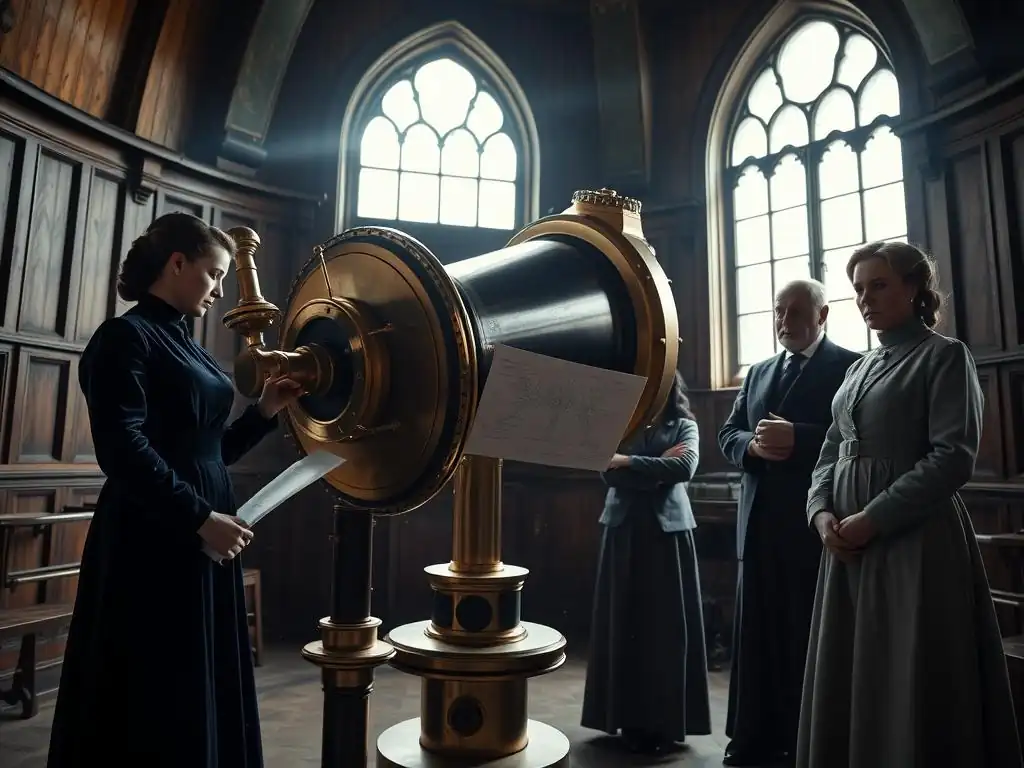
Delve into the untold stories of brilliant minds who shaped the scientific landscape. Are you ready to uncover the hidden battles fought by women striving for recognition in the 1800s? This month, we shine a light on their tenacious fight for women’s telescope access 1800s history. Discover the extraordinary challenges these pioneering astronomers faced and the remarkable strides they made against all odds. Prepare to be inspired by their unwavering dedication to the cosmos and their persistent pursuit of knowledge. Intrigued? Let's journey back in time and explore their captivating stories!
Introduction: The Limited World of 19th Century Women Astronomers
The 19th century presented a paradox for women interested in scientific pursuits, particularly in the demanding field of astronomy. While the spirit of scientific inquiry was expanding, societal norms rigidly confined women to domestic roles, making professional scientific careers largely inaccessible. For women passionate about the cosmos, the journey from amateur interest to recognized scientific contribution was fraught with immense challenges, not least among them the fundamental barrier of gaining physical access to the very instruments of observation: the telescopes housed in male-dominated observatories.
This era, marked by both burgeoning scientific discovery and entrenched gender inequality, saw a few remarkable women defy expectations to make invaluable contributions to astronomy. Their stories are not merely tales of individual genius but narratives of persistent struggle against institutional exclusion and societal prejudice. Understanding "Women’s telescope access 1800s history" illuminates the systemic hurdles that required extraordinary resilience, ingenuity, and often the support of male relatives to overcome, paving the way for future generations of female scientists.
- ### Why was it difficult for women to access telescopes in the 1800s?
- ### What impact did limited telescope access have on women's contributions to astronomy?
- ### Can you name a specific challenge women faced when trying to use telescopes?
- ### Were there any notable women who successfully gained access to telescopes despite the challenges?
- ### How did women eventually overcome these barriers to telescope access?
The Barriers to Astronomical Observation for Women in the 1800s
Societal Expectations and Gender Roles Limiting Scientific Pursuits
During the 1800s, prevailing societal expectations dictated that a woman's primary domain was the home. Her role was largely confined to managing the household, raising children, and cultivating domestic virtues. Pursuits deemed intellectual or professional, especially those requiring long hours away from home or engagement with complex machinery and abstract thought, were largely considered inappropriate or even detrimental to a woman's delicate constitution and moral character. This pervasive ideology created a formidable invisible barrier, discouraging women from even aspiring to careers in fields like astronomy.
The idea that women were inherently less capable of rigorous scientific reasoning or that their minds were not suited for subjects like mathematics and physics was a deeply ingrained prejudice. This belief system was often reinforced by medical and educational authorities of the time, who argued that intense intellectual activity could harm a woman's reproductive health or lead to mental instability.
Such deeply held convictions meant that even if a woman possessed the aptitude and passion for astronomy, the social stigma associated with pursuing such a career was immense, effectively limiting "Women’s telescope access 1800s history" to a select few who dared to challenge the norm.
Institutional Obstacles: Exclusion from Observatories and Scientific Societies
Beyond societal expectations, tangible institutional barriers actively prevented women from participating in professional astronomy. Observatories, the bastions of astronomical research, were almost exclusively male preserves. Women were typically not admitted as students, researchers, or even visitors in a professional capacity. This exclusion meant they were denied direct access to the powerful telescopes, laboratories, and intellectual communities that were vital for conducting serious astronomical work.
Furthermore, prestigious scientific societies, which provided platforms for presenting research, networking, and gaining professional recognition, maintained strict male-only memberships. For example, the Royal Astronomical Society in Britain, founded in 1820, did not admit its first female Fellows until 1915, nearly a century later. This exclusion from formal scientific bodies not only denied women a voice and a platform but also deprived them of essential resources, mentorship, and the collegial validation necessary to establish a legitimate scientific career, severely impacting "Women’s telescope access 1800s history".
Lack of Formal Education in Mathematics and Physics for Women
A significant impediment to women's entry into astronomy was the pervasive lack of formal educational opportunities in advanced mathematics and physics. While some private tutors or finishing schools might offer rudimentary science instruction, rigorous training in calculus, optics, celestial mechanics, and observational techniques—all essential for astronomical research—was largely unavailable to women. Universities and colleges were either closed to women entirely or offered highly circumscribed curricula that excluded these "masculine" subjects.
Even for women who managed to gain access to some form of higher education, the depth of scientific instruction often paled in comparison to what was available to their male counterparts. This educational deficit meant that women often had to be self-taught or rely on informal instruction from male relatives, requiring an extraordinary level of dedication and self-discipline to acquire the necessary foundational knowledge. Without a strong grounding in these critical fields, the path to understanding and utilizing complex astronomical instruments, and therefore gaining "Women’s telescope access 1800s history", became an almost insurmountable hurdle.
Pioneering Women Astronomers Forging Their Own Paths
Caroline Herschel: A Precedent of Female Astronomical Excellence
Caroline Herschel stands as a towering figure in the narrative of "Women’s telescope access 1800s history", establishing a groundbreaking precedent for female astronomical excellence. Born in Hanover, Germany, in 1750, she moved to England to assist her brother, William Herschel, who was a renowned astronomer and telescope maker. Initially serving as his assistant, meticulously recording observations and performing laborious calculations, Caroline soon developed her own observational skills and passion for the stars.
Her independent contributions were profound. Using a small Newtonian sweeper telescope designed by her brother, she systematically searched the night sky, leading to the discovery of eight comets between 1786 and 1797, a feat unmatched by any other astronomer of her time.
She also discovered fourteen new nebulae and compiled a comprehensive index to Flamsteed's star catalogue, correcting numerous errors. Her exceptional work was formally recognized when King George III granted her an annual salary of £50 in 1787, making her the first woman in Britain to be paid for scientific work, a monumental step for "Women’s telescope access 1800s history" and female recognition in science.
Maria Mitchell: Paving the Way for Women in American Astronomy
In the United States, Maria Mitchell emerged as another pivotal figure, demonstrating that women could achieve significant astronomical breakthroughs. Born in 1818 on Nantucket Island, Massachusetts, into a Quaker family that valued education for both sexes, Mitchell was fortunate to receive early instruction in astronomy from her father, William Mitchell, a keen amateur astronomer. She spent countless hours in the Nantucket Atheneum library, devouring scientific texts and honing her mathematical skills.
Mitchell's fame was cemented on October 1, 1847, when she independently discovered a new comet, which became known as "Miss Mitchell's Comet." This discovery earned her international acclaim and a gold medal from the King of Denmark. Her achievement made her the first American woman to be recognized for a significant astronomical discovery.
Later, in 1865, she was appointed the first professor of astronomy at the newly established Vassar College, a pioneering institution for women's higher education. Mitchell's position at Vassar not only provided her with direct access to a well-equipped observatory but also allowed her to mentor and inspire a generation of female students, solidifying her legacy in "Women’s telescope access 1800s history" and women's education.
Strategies for Gaining Telescope Access: A Fight for Recognition
Utilizing Personal Connections: Leveraging Influence for Observation Time
Given the institutional barriers, many women astronomers in the 1800s relied heavily on personal connections to gain access to telescopes and the scientific world. Often, their entry point was through a male relative—a father, brother, or husband—who was already an established astronomer or possessed significant influence within scientific circles. Caroline Herschel's initial access to astronomical instruments and knowledge, for instance, was entirely facilitated by her brother William. She leveraged his position and resources, initially acting as his assistant, before gradually establishing her own observational routine and independent discoveries.
This reliance on familial ties, while a pragmatic necessity, also highlighted the precarious nature of "Women’s telescope access 1800s history" during this period. Such access was often informal, dependent on the goodwill and patronage of the male relative, and could be withdrawn. It rarely came with official recognition or the same professional standing afforded to male astronomers. Nevertheless, for many aspiring women, these personal connections were the only viable pathway into a field that was otherwise systematically closed to them.
Establishing Private Observatories: Creating Independent Research Spaces
For women of independent means or those whose families were supportive and affluent, establishing private observatories presented another strategy to circumvent institutional exclusion. By funding their own facilities, these women could gain unrestricted "Women’s telescope access 1800s history" and control over their research environment, free from the biases and restrictions of public or university observatories. This was a costly endeavor, requiring significant investment in land, construction, and the purchase of high-quality telescopes and ancillary equipment.
While less common due to the financial requirements, private observatories allowed women to conduct sustained, independent research. An example, though slightly later or more broadly illustrative, is the work of many wealthy amateur astronomers, some of whom were women, who contributed valuable observations from their private setups. This approach underscored the economic disparity in access; only those with considerable personal wealth could afford to bypass the systemic barriers entirely, creating their own spaces for scientific inquiry and observation.
Contributing to Data Collection: Proving Value Through Laborious Tasks
Another common strategy for women to gain a foothold in astronomical research, even without direct telescope access, was by contributing to the laborious and meticulous task of data collection and computation. Many observatories, particularly in the latter half of the 19th century, began hiring women as "computers" or "calculators." These roles involved processing vast amounts of observational data, performing complex mathematical calculations, classifying stars, and analyzing photographic plates. While often low-paid and offering little recognition, this work provided an invaluable entry point into the scientific process.
The "Harvard Computers" at the Harvard College Observatory, including figures like Williamina Fleming, Annie Jump Cannon, and Henrietta Swan Leavitt, are prime examples of this strategy. These women, despite often being denied direct access to the main telescopes, demonstrated extraordinary precision, dedication, and intellectual capacity through their data analysis. Their meticulous work not only proved their scientific value but also led to groundbreaking discoveries in stellar classification and variable star studies, indirectly challenging prevailing notions about "Women’s telescope access 1800s history" and scientific capability.
Key Observatories and Their Policies on Women's Access
Harvard College Observatory: A Shifting Landscape of Opportunity
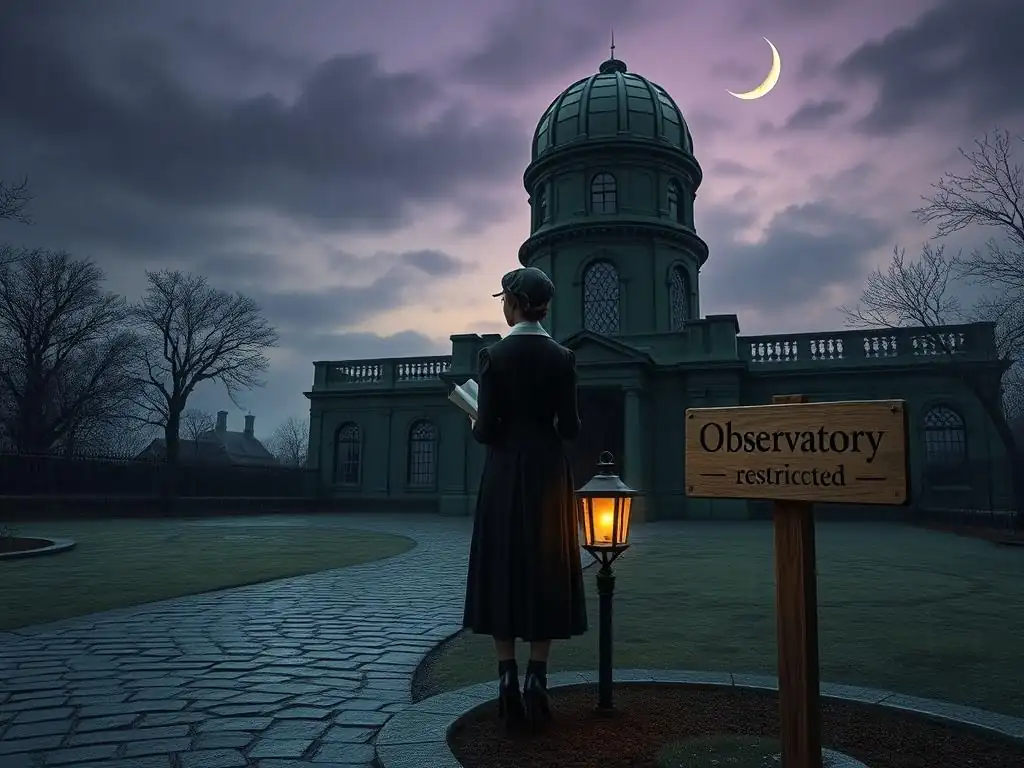
The Harvard College Observatory (HCO) stands as a unique and pivotal institution in the history of "Women’s telescope access 1800s history". Under the directorship of Edward Charles Pickering from 1877 to 1919, HCO became an unexpected hub for female astronomers. Pickering famously hired a large number of women, often graduates of women's colleges, to process the vast amounts of photographic plates being generated by the observatory's telescopes. These women, initially paid significantly less than their male counterparts (sometimes as little as 25 to 50 cents an hour), were derogatorily known as "Pickering's Harem" or "human computers."
Despite the initial lack of recognition and low pay, this systematic employment created an unprecedented opportunity for women to engage directly with astronomical data. Women like Williamina Fleming, who discovered over 10 novae and 59 gaseous nebulae, and Annie Jump Cannon, who classified over 350,000 stars, revolutionized stellar spectroscopy.
Henrietta Swan Leavitt's discovery of the period-luminosity relationship of Cepheid variables, crucial for measuring cosmic distances, also emerged from this environment. While direct, independent "Women’s telescope access 1800s history" for observation was still limited for these women, their profound contributions demonstrated their intellectual prowess and slowly shifted the landscape of opportunity within this particular institution.
Greenwich Observatory: The Struggle for Inclusion in British Astronomy
In contrast to Harvard's unique, albeit imperfect, embrace of female "computers," the Royal Observatory, Greenwich, a cornerstone of British astronomy, maintained a far more traditional and resistant stance towards "Women’s telescope access 1800s history" throughout much of the 19th century. While women might have occasionally been employed in clerical or administrative support roles, direct engagement with the primary astronomical instruments or professional research positions remained almost entirely out of reach.
The culture at Greenwich, reflective of the broader British scientific establishment, was deeply conservative and male-dominated. Professional astronomy was seen as an exclusively male pursuit, and there was little institutional impetus to integrate women into observational or research capacities. Even Caroline Herschel, despite her monumental contributions, was primarily recognized for her work with her brother, and her direct access to the larger, more powerful telescopes was largely through William's patronage rather than institutional policy. The struggle for female inclusion at Greenwich and similar European observatories was protracted, with significant breakthroughs only occurring much later in the 20th century.
Pulkovo Observatory: Resistance and Limited Opportunities for Women
The Pulkovo Observatory, near St. Petersburg, Russia, established in 1839, was considered one of the world's leading astronomical institutions in the 19th century, renowned for its precision astrometry. However, like many prominent European observatories, it largely reflected the prevailing societal norms regarding women's roles in science, offering very limited opportunities for "Women’s telescope access 1800s history". Russia, at this time, was generally more conservative than some Western European nations regarding women's higher education and professional careers.
While records might indicate a few women employed in subordinate clerical or computational roles, direct access to the observatory's state-of-the-art instruments for independent observation or research was virtually non-existent for women. The institutional structure and cultural environment at Pulkovo reinforced the notion that astronomy was a male domain, particularly at the professional, observational level. The challenges faced by women seeking to contribute to astronomy in Russia were arguably even more pronounced than in Western Europe or the United States, highlighting the varied global landscape of "Women’s telescope access 1800s history" and scientific opportunity.
The Impact of Women's Astronomical Observations in the 19th Century
Discoveries and Contributions to Celestial Mapping
Despite the significant barriers to "Women’s telescope access 1800s history", the discoveries and contributions made by women astronomers during this period were foundational to the advancement of celestial mapping. Caroline Herschel's systematic sweeping of the night sky, for instance, led to her discovery of eight comets, including the periodic comet 35P/Herschel-Rigollet, and fourteen new nebulae, significantly expanding the known celestial inventory. Her work on indexing and correcting Flamsteed's star catalogue was crucial for accurate astronomical navigation and further research.
Similarly, the meticulous work of the "Harvard Computers" profoundly impacted celestial mapping and classification. Annie Jump Cannon's development and application of the Harvard spectral classification system (OBAFGKM) provided a standardized method for classifying hundreds of thousands of stars based on their spectra. This monumental undertaking, which involved processing countless photographic plates, created an indispensable database for understanding stellar evolution and distribution, demonstrating that even indirect "Women’s telescope access 1800s history" could yield revolutionary results.
Advancements in Understanding Variable Stars and Nebulae
The 19th-century contributions of women were particularly impactful in the study of variable stars and nebulae, areas that required painstaking observation, data analysis, and pattern recognition. Henrietta Swan Leavitt's work at Harvard College Observatory on Cepheid variable stars was perhaps the most profound. By studying photographic plates, she discovered a direct relationship between the luminosity of Cepheid variables and their pulsation period. This "period-luminosity relation," published in 1912, became a crucial tool for measuring cosmic distances, fundamentally changing our understanding of the scale of the universe.
Other women also made significant strides in understanding nebulae. Caroline Herschel's discoveries of new nebulae added to the growing catalog of these mysterious cloudy objects. Later, women like Williamina Fleming, also at Harvard, were instrumental in identifying and classifying many gaseous nebulae and peculiar stars through their systematic analysis of photographic spectra. Their detailed observational work, often done without direct "Women’s telescope access 1800s history" to the telescope itself, provided critical empirical data that advanced the understanding of these complex celestial phenomena.
Challenging Prevailing Theories Through Empirical Evidence
The meticulous data collection and analysis performed by women astronomers in the 19th century often provided the empirical evidence necessary to challenge, refine, or confirm prevailing astronomical theories. Their precise observations and calculations, though sometimes overlooked or attributed to male colleagues, contributed to a more accurate understanding of the cosmos. For instance, the systematic cataloging of stars and their spectral properties, pioneered by women like Annie Jump Cannon, provided the raw data that enabled astronomers to formulate and test theories about stellar evolution and the composition of the universe.
Maria Mitchell's precise measurements of stars near the sun and her work on solar eclipses contributed to refining astronomical constants and understanding celestial mechanics. The sheer volume and accuracy of the data processed by the "human computers" at Harvard, derived from photographic plates, allowed for statistical analyses that were previously impossible. This rigorous empirical work, even when conducted from behind the scenes due to limited "Women’s telescope access 1800s history", served as a powerful testament to their scientific acumen and played a vital role in the evolution of astronomical thought.
Overcoming Skepticism: Proving Competence in a Male-Dominated Field
Publishing Research and Gaining Scientific Recognition
One of the greatest challenges for women in 19th-century astronomy was not just gaining "Women’s telescope access 1800s history" or making discoveries, but achieving recognition for their work within a male-dominated scientific establishment. While some women, like Caroline Herschel, managed to publish under their own names—she published a catalogue of 2,500 nebulae and clusters in 1798 and was later awarded the Gold Medal of the Royal Astronomical Society in 1828 (shared with her brother, but still a significant individual recognition)—many others found their contributions uncredited or attributed to male colleagues.
For the Harvard Computers, their names often appeared in the acknowledgements of reports or were associated with specific "volumes" of data, rather than as primary authors of groundbreaking research, despite their direct intellectual contributions. Henrietta Swan Leavitt's period-luminosity relation, for example, was initially published under Pickering's name, with Leavitt listed as the author of the tables. Over time, however, the undeniable significance of their findings and the persistence of advocates led to increasing, though still incomplete, recognition for these pioneering women, slowly chipping away at the systemic barriers to their scientific acclaim.
Documented Instances of Gender Bias and Demonstrated Competence
Throughout the 19th century, women astronomers frequently encountered overt and subtle gender bias. Skepticism about their intellectual capacity, their physical stamina for night observations, and their suitability for scientific rigor was widespread. For example, when Maria Mitchell discovered her comet, some male astronomers initially questioned her accuracy, with one suggesting it might have been a "mistake" rather than a genuine discovery by a woman. Such instances highlight the ingrained prejudice they faced.
However, these women consistently disproved such biases through their undeniable competence and the tangible results of their work. Maria Mitchell's meticulous observations and calculations, verified by others, quickly silenced her critics. Similarly, the sheer volume and accuracy of the data processed by the "Harvard Computers" provided irrefutable proof of their scientific capability. Their ability to make profound discoveries—from Caroline Herschel's comets to Henrietta Swan Leavitt's cosmic distance ladder—demonstrated that intellectual prowess was not confined by gender, even in the face of limited "Women’s telescope access 1800s history" and pervasive skepticism.
The Legacy of the 19th Century Women Astronomers' Struggle
Inspiring Future Generations of Women in STEM
The tenacious struggle of 19th-century women astronomers, particularly their fight for "Women’s telescope access 1800s history" and recognition, has left an indelible legacy that continues to inspire future generations of women in STEM. Their stories serve as powerful testaments to perseverance, intellectual courage, and the unwavering pursuit of knowledge despite formidable obstacles. Figures like Caroline Herschel and Maria Mitchell became beacons, demonstrating that it was possible for women to not only participate in science but to excel and make groundbreaking discoveries.
By breaking through societal and institutional barriers, these pioneers laid crucial groundwork for subsequent generations. Their achievements provided tangible proof that women possessed the intellectual capacity and dedication required for scientific careers, challenging the prevailing stereotypes. This historical precedent fueled the aspirations of countless young women, encouraging them to pursue scientific education and careers, even as the fight for full equality in STEM fields continued into the 20th and 21st centuries.
Changing Attitudes Towards Women in Science
The visible contributions of 19th-century women astronomers played a significant role in slowly changing societal and institutional attitudes towards women in science. While progress was gradual and often met with resistance, the undeniable scientific merit of their work could not be perpetually ignored. The systematic employment of women at observatories like Harvard, even in support roles, began to normalize the presence of women in scientific environments and demonstrated their invaluable contributions to research.
The sheer volume of discoveries and the precision of the data produced by these women helped to dismantle the prejudiced notion that women were intellectually inferior or unsuited for rigorous scientific work. Their successes contributed to broader movements for women's rights, including the push for greater educational opportunities and professional equality. The fight for "Women’s telescope access 1800s history" thus became a microcosm of the larger battle for women's full participation in public and professional life.
The Ongoing Fight for Equality in Astronomy and Space Science
While the direct struggle for "Women’s telescope access 1800s history" is largely a historical artifact, the legacy of these 19th-century pioneers underscores the ongoing fight for full equality in astronomy and space science today. Modern female astronomers no longer face institutional bans from using telescopes, but they continue to confront challenges such as gender bias, underrepresentation in leadership positions, the "leaky pipeline" phenomenon, and disparities in recognition and pay.
The stories of Caroline Herschel, Maria Mitchell, and the Harvard Computers remind us that progress, though significant, is often incremental and requires continuous advocacy. Their resilience in the face of systemic barriers serves as a powerful reminder that vigilance is still needed to ensure that all individuals, regardless of gender, have equitable access to opportunities, resources, and recognition in the pursuit of scientific knowledge. Their historical struggle continues to inform and inspire efforts to achieve true gender parity in the scientific community.
Conclusion: Celebrating the Resilience of Women Seeking Telescope Access in the 1800s
The 19th century was a period of profound challenge and remarkable achievement for women seeking to contribute to astronomy. Despite pervasive societal expectations, institutional exclusion, and limited educational opportunities, a determined cadre of women astronomers defied the odds. Their persistent fight for "Women’s telescope access 1800s history," whether through familial patronage, private observatories, or meticulous data computation, was a testament to their unwavering passion for the cosmos.
From Caroline Herschel's independent comet discoveries to Maria Mitchell's pioneering professorship and the Harvard Computers' revolutionary insights into stellar classification and cosmic distances, these women left an indelible mark on astronomical science. Their contributions were not merely additions to existing knowledge but foundational advancements that reshaped our understanding of the universe. The legacy of their resilience continues to inspire and underscores the enduring importance of ensuring equitable access and recognition for all who aspire to explore the wonders of the night sky.
Frequently Asked Questions
### Why was it difficult for women to access telescopes in the 1800s?
Access was restricted due to prevailing social norms and gender biases of the era, which often excluded women from scientific institutions and activities. These biases reinforced the idea that science was a male domain.
### What impact did limited telescope access have on women's contributions to astronomy?
Limited access severely hampered women's ability to conduct independent research and make significant discoveries, restricting their opportunities for advancement and recognition in the field. This resulted in their work often being uncredited.
### Can you name a specific challenge women faced when trying to use telescopes?
Women frequently faced explicit denial of access to observatories, were relegated to menial tasks like data collection, and were subjected to constant scrutiny and skepticism about their abilities.
### Were there any notable women who successfully gained access to telescopes despite the challenges?
Yes, figures like Caroline Herschel and Maria Mitchell made significant contributions. Mitchell became the first female professor of astronomy in the US and successfully utilized telescopes for astronomical research.
### How did women eventually overcome these barriers to telescope access?
Through persistent advocacy, demonstrated competence, and the slow but steady shift in societal attitudes, women gradually gained more access. The establishment of women's colleges also provided independent research opportunities.
Final Reflection: Gazing Beyond Barriers
The stories recounted here, detailing the tenacious struggle of women for telescope access in the 1800s, resonate powerfully today. They remind us that the pursuit of knowledge, particularly in fields historically dominated by men, often requires unwavering determination and a willingness to challenge established norms. These women weren't just seeking access to instruments; they were fighting for their right to participate in the scientific conversation and contribute to our understanding of the universe.
The impact of these early pioneers extends far beyond the astronomical observatories of the 19th century. Their perseverance paved the way for future generations of women in STEM, demonstrating that intellectual curiosity knows no gender. Their fight continues to inspire us to dismantle systemic barriers and create a more equitable and inclusive scientific community. We are not merely passive observers; we are active participants in the unfolding drama of the cosmos.
This sentiment, though unspoken by many at the time, embodies the spirit of these women who refused to be confined by societal expectations.
As we reflect on their legacy, let us be inspired to champion inclusivity in all fields. Consider how you can actively support and uplift marginalized voices in your own community, ensuring that everyone has the opportunity to pursue their passions and contribute their unique talents to the world. The fight for equal access to knowledge is far from over, but by remembering the courage of these women, we can continue to build a future where everyone has the chance to gaze at the stars and unlock the secrets of the universe.
Ignite Your Inner Astronomer!
Thank you for exploring the untold stories of women who dared to reach for the stars. Now, let's channel their unwavering spirit and continue their legacy of discovery:
- Embrace the night sky: Venture out and observe the stars with your naked eye, a telescope, or binoculars. Reflect on the determination of those who came before us and their dedication to scientific exploration.:
- Share this article to inspire others with stories of women who defied expectations and broadened access to astronomy.
- Delve deeper into astronomical history: Research a female astronomer from the 1800s, and share your findings with a local school or community group.
What celestial mystery will you explore tonight?