
Maria Goeppert Mayer: Her 1963 Nobel for Cracking the Nuclear Shell Code

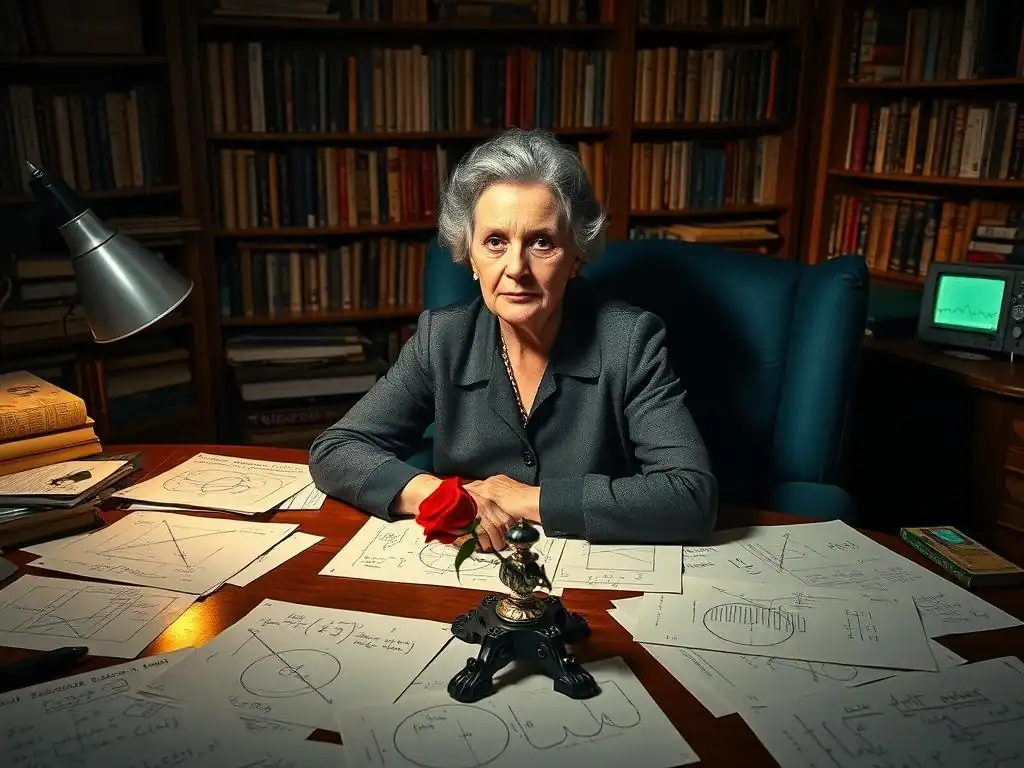
Welcome to WomenInScienceHistory.com, where we illuminate the remarkable stories of women who shaped the scientific world. Delve into the fascinating life and groundbreaking work of Maria Goeppert Mayer, a brilliant physicist whose relentless pursuit of knowledge led to the coveted Nobel Prize in 1963. But how did she crack the nuclear shell code and overcome the barriers of her time? Prepare to uncover the inspiring journey of a true scientific pioneer and discover the enduring impact of her discoveries.
- Maria Goeppert Mayer: Her 1963 Nobel Prize for Unraveling Nuclear Structure
- Introduction: Celebrating Maria Goeppert Mayer's Nobel Achievement
- Early Life and Education of Maria Goeppert Mayer
- Goeppert Mayer's Groundbreaking Research on Nuclear Structure
- The 1963 Nobel Prize in Physics: Recognizing Goeppert Mayer's Work
- Challenges Faced by Maria Goeppert Mayer in a Male-Dominated Field
- Goeppert Mayer's Impact on Physics and Women in Science
- Later Life and Legacy of Maria Goeppert Mayer
- Maria Goeppert Mayer: A Summary of Her Achievements
- Further Reading on Maria Goeppert Mayer and the Nuclear Shell Model
-
Frequently Asked Questions
- How did Maria Goeppert Mayer contribute to the field of physics?
- What was the significance of Maria Goeppert Mayer's Nobel Prize in Physics?
- What challenges did Maria Goeppert Mayer face as a woman in science?
- What impact did Maria Goeppert Mayer's work have on future generations of scientists?
- Where can I find more information about Maria Goeppert Mayer and other women in science?
- Final Reflection: Illuminating the Unseen
- Unlock Your Inner Pioneer: Step into the World of Women in Science!
Maria Goeppert Mayer: Her 1963 Nobel Prize for Unraveling Nuclear Structure
Introduction: Celebrating Maria Goeppert Mayer's Nobel Achievement
Women in Science History: Recognizing Maria Goeppert Mayer's Legacy
Maria Goeppert Mayer stands as a towering figure in the annals of science, her contributions to nuclear physics profoundly impacting our understanding of the atomic world. Her life story, marked by intellectual brilliance and unwavering perseverance, is a testament to the often-overlooked narratives of women in scientific endeavors. As a pioneering theoretical physicist, Goeppert Mayer not only pushed the boundaries of knowledge but also navigated a professional landscape frequently unwelcoming to women, making her legacy all the more significant.
Her journey illuminates the challenges and triumphs faced by women striving for recognition in male-dominated fields throughout the 20th century. By highlighting her groundbreaking work and the circumstances under which it was achieved, WomenInScienceHistory.com aims to ensure that her extraordinary achievements, particularly her Maria Goeppert Mayer Nobel Prize, inspire current and future generations to pursue scientific excellence without gender-based limitations.
Goeppert Mayer's Nobel Prize: A Milestone for Women in Physics
The year 1963 marked a monumental achievement for Maria Goeppert Mayer when she was awarded the Nobel Prize in Physics. This prestigious honor recognized her discovery of the nuclear shell model, a fundamental theory that explained the structure of atomic nuclei. What made this award particularly significant was that Goeppert Mayer became only the second woman in history, after Marie Curie in 1903, to receive the Nobel Prize in Physics, underscoring the rarity of such recognition for women in the field at the time.
The Maria Goeppert Mayer Nobel Prize was a powerful affirmation of her intellectual prowess and relentless dedication, validating decades of often unacknowledged research. Her work provided crucial insights into the "magic numbers" that denote exceptionally stable atomic nuclei, revolutionizing nuclear physics and laying groundwork for subsequent discoveries. This moment was not just a personal triumph but a beacon of hope and recognition for women aspiring to careers in physics and other scientific disciplines.
Early Life and Education of Maria Goeppert Mayer
From Prussia to America: Goeppert Mayer's Academic Journey
Maria Goeppert was born on June 28, 1906, in Kattowitz, then part of Prussia (now Katowice, Poland), into a family that highly valued intellectual pursuits. Her father, Friedrich Goeppert, was a professor of pediatrics, and her mother, Maria née Wolff, was a former language teacher. In 1910, the family moved to Göttingen, Germany, a renowned center for physics and mathematics, where she grew up immersed in an academic environment that fostered her burgeoning scientific curiosity.
Goeppert Mayer pursued her higher education at the University of Göttingen, enrolling in 1924. This period was a golden age for physics in Göttingen, with luminaries like Max Born, James Franck, and Werner Heisenberg teaching and conducting research. She earned her Ph.D. in theoretical physics in 1930, under the supervision of Max Born, with a dissertation on the theory of elementary processes with two quantum transitions. Shortly after, she married American physical chemist Joseph Edward Mayer and moved to the United States, embarking on a new chapter both personally and professionally.
Overcoming Obstacles: Goeppert Mayer's Pursuit of Physics
Upon arriving in the United States in 1930, Maria Goeppert Mayer encountered significant professional hurdles stemming from prevailing anti-nepotism rules in American universities. Due to her husband's faculty positions, she was often relegated to unpaid, volunteer, or associate research roles, despite her exceptional qualifications and impressive Ph.D. from Göttingen. For instance, at Johns Hopkins University from 1930 to 1939, she held an unpaid associate position, teaching the occasional course but primarily conducting her own research.
Despite these institutional barriers, Goeppert Mayer's dedication to physics remained unwavering. She continued to publish papers, collaborate with leading scientists such as Enrico Fermi and Edward Teller, and delve into complex problems in quantum mechanics and nuclear physics. Her persistence through years of under-recognition at institutions like Johns Hopkins, Columbia University, and the University of Chicago before her eventual appointment at the University of California, San Diego, underscored her profound commitment to scientific discovery, ultimately leading to her Maria Goeppert Mayer Nobel Prize.
Goeppert Mayer's Groundbreaking Research on Nuclear Structure
The Nuclear Shell Model: Unveiling Atomic Secrets
Prior to Maria Goeppert Mayer's groundbreaking work, the atomic nucleus was largely viewed as an amorphous, chaotic "liquid drop" where protons and neutrons moved randomly. However, experimental data revealed certain "magic numbers" (2, 8, 20, 28, 50, 82, 126) of protons or neutrons that resulted in exceptionally stable nuclei, much like the noble gases with their stable electron shells. This empirical observation challenged the liquid drop model and suggested an underlying order within the nucleus.
Goeppert Mayer's revolutionary insight was to propose a shell model for the nucleus, analogous to the electron shell model for atoms. Her key contribution was recognizing the crucial role of strong spin-orbit coupling, where the spin of a nucleon (proton or neutron) interacts with its orbital motion, splitting energy levels and explaining the existence of these magic numbers. This elegant solution provided a theoretical framework that beautifully accounted for the observed nuclear stability and properties, transforming the understanding of nuclear structure.
Key Contributions to Nuclear Physics: Goeppert Mayer's Scientific Breakthroughs
Maria Goeppert Mayer's development of the nuclear shell model was a profound scientific breakthrough that fundamentally reshaped nuclear physics. She meticulously worked through the quantum mechanical calculations, demonstrating how the spin-orbit interaction could lead to tightly bound shells of nucleons, explaining why nuclei with specific "magic numbers" of protons or neutrons exhibit extraordinary stability. Her model provided a clear, predictive framework for understanding nuclear properties such as binding energies, magnetic moments, and quadrupole moments, which the liquid drop model could not adequately explain.
Her seminal paper, "On Closed Shells in Nuclei. II," published in 1949, detailed the theoretical basis for her shell model and presented compelling evidence for its validity. Remarkably, J. Hans D. Jensen in Germany independently arrived at a very similar conclusion around the same time. The convergence of their ideas underscored the correctness and significance of the nuclear shell model, establishing it as a cornerstone of modern nuclear physics and ultimately leading to the Maria Goeppert Mayer Nobel Prize.
Understanding Nuclear Energy Levels: Goeppert Mayer's Insights
Goeppert Mayer's nuclear shell model provided a systematic way to understand the discrete energy levels within an atomic nucleus, much like quantum mechanics explains electron energy levels in atoms. By incorporating the concept of spin-orbit coupling, she showed how nucleons occupy specific energy shells, and transitions between these shells could explain observed nuclear phenomena. This allowed physicists to predict and interpret the behavior of nuclei in various reactions and decay processes.
Her insights into nuclear energy levels were critical for advancing fields such as nuclear spectroscopy, where scientists analyze the gamma rays emitted by excited nuclei to deduce their internal structure. The model's predictive power was instrumental in guiding experimental research and confirming theoretical predictions, solidifying its place as an indispensable tool in nuclear physics. The elegance and utility of her model were key factors in the eventual recognition of her work with the Maria Goeppert Mayer Nobel Prize.
The 1963 Nobel Prize in Physics: Recognizing Goeppert Mayer's Work
In 1963, Maria Goeppert Mayer was awarded the Nobel Prize in Physics "for their discoveries concerning nuclear shell structure." This monumental recognition was shared with J. Hans D. Jensen of Germany, who had independently developed the same nuclear shell model, and Eugene Wigner, who was honored for his contributions to the theory of the atomic nucleus and elementary particles, particularly the discovery and application of fundamental symmetry principles. The joint award to Goeppert Mayer and Jensen highlighted the profound impact and independent verification of their revolutionary model.
For Maria Goeppert Mayer, this shared Nobel Prize was a culmination of decades of diligent research, often conducted without formal recognition or adequate compensation. It placed her alongside the scientific giants of her time and firmly established her as a leading figure in theoretical physics. The inclusion of Eugene Wigner for his broader contributions to nuclear theory further emphasized the collective advancement of the field, with Goeppert Mayer's work at its very core.
The Significance of the Nobel Prize for Goeppert Mayer
The 1963 Maria Goeppert Mayer Nobel Prize was a pivotal moment not just for her personally, but for the broader community of women in science. For years, Goeppert Mayer had worked in academic settings where anti-nepotism rules often prevented her from holding paid, full-time faculty positions. Her roles at Johns Hopkins, Columbia University, and the University of Chicago were frequently informal or poorly compensated, despite her significant contributions to the Manhattan Project and other research endeavors.
Receiving the Nobel Prize brought her long-overdue international recognition and validated her intellectual brilliance in the face of systemic barriers. It was a powerful statement that groundbreaking science could emerge from unexpected places and from individuals who had been marginalized. The Maria Goeppert Mayer Nobel Prize served as an undeniable testament to her perseverance and the profound impact of her nuclear shell model, inspiring countless aspiring female scientists.
Goeppert Mayer's Nobel Lecture: "The Shell Model"
On December 12, 1963, Maria Goeppert Mayer delivered her Nobel Lecture titled "The Shell Model" in Stockholm, Sweden. In her address, she eloquently explained the development and implications of her groundbreaking theory of nuclear structure. She began by recounting the historical context of the "magic numbers" and the challenges they posed to existing nuclear models, particularly the liquid-drop model.
Goeppert Mayer then meticulously detailed how the concept of strong spin-orbit coupling provided the crucial missing piece, allowing nucleons to arrange themselves into stable shells within the nucleus. She presented the evidence supporting the model, including its ability to explain observed nuclear properties and predict new ones. Her lecture was a masterful exposition of complex physics, delivered with clarity and characteristic humility, showcasing the intellectual journey that led to her Maria Goeppert Mayer Nobel Prize.
Challenges Faced by Maria Goeppert Mayer in a Male-Dominated Field

Unpaid Positions and Academic Barriers for Women in Science
Maria Goeppert Mayer's career was significantly hampered by the prevalent academic barriers faced by women in the mid-20th century, most notably the anti-nepotism rules common in American universities. When she moved to the U.S. with her husband, Joseph Mayer, who secured a faculty position at Johns Hopkins University in 1930, she was unable to obtain a paid faculty position there herself. Instead, she was offered an unpaid "volunteer associate" role, teaching a few courses but primarily conducting her own research without salary or official recognition.
This pattern persisted for decades. At Columbia University during World War II, she worked on the Manhattan Project, contributing to isotope separation research, but still held an unofficial, unsalaried position. Even at the University of Chicago, where her husband was a professor and she was a senior physicist at the Argonne National Laboratory, her university appointment was initially as a volunteer professor of physics, only later receiving a modest salary. This systemic undervaluation of her intellectual contributions highlights the immense challenges women like Goeppert Mayer faced in carving out professional careers in science.
The Struggle for Recognition: Goeppert Mayer's Perseverance
Despite her brilliant intellect and significant contributions to physics, Maria Goeppert Mayer endured a prolonged struggle for professional recognition. For over 30 years, she worked in various academic and research institutions, often without a proper paid faculty position, relegated to informal or poorly compensated roles due to prevailing attitudes and anti-nepotism policies. This lack of formal recognition meant she often lacked the institutional support, resources, and status afforded to her male peers.
Her perseverance in the face of these obstacles is remarkable. She continued to publish prolifically, collaborate with leading scientists, and relentlessly pursue her research, ultimately leading to the development of the nuclear shell model. It was only in 1960, just three years before her Maria Goeppert Mayer Nobel Prize, that she finally secured a full professorship at the University of California, San Diego, a testament to her enduring dedication and the delayed, yet ultimate, recognition of her profound scientific genius.
Goeppert Mayer's Impact on Physics and Women in Science
Inspiring Future Generations of Female Physicists
Maria Goeppert Mayer's life and her Maria Goeppert Mayer Nobel Prize achievement serve as a powerful source of inspiration for future generations of female physicists and scientists across all disciplines. Her story powerfully demonstrates that intellectual brilliance and groundbreaking discoveries can emerge from individuals regardless of gender, even in the face of significant societal and institutional barriers. She shattered the perception that theoretical physics was an exclusive domain for men.
By becoming only the second woman to receive the Nobel Prize in Physics, Maria Goeppert Mayer opened doors and provided a visible role model at a time when female representation in STEM fields was exceedingly low. Her triumph encouraged countless young women to pursue their scientific passions, proving that dedication and exceptional talent could indeed lead to the highest levels of scientific recognition and impact.
The Lasting Influence of Goeppert Mayer's Nuclear Shell Model
The nuclear shell model, for which Maria Goeppert Mayer received her Nobel Prize, remains a cornerstone of modern nuclear physics. Its elegant explanation of nuclear stability and structure provided a framework that continues to be fundamental to understanding the behavior of atomic nuclei. The model successfully predicted the properties of many nuclei and laid the groundwork for subsequent theoretical and experimental advancements in the field.
Beyond its foundational role, the nuclear shell model has practical applications in various areas, including nuclear energy, medical isotopes, and astrophysics. It has informed the design of nuclear reactors, the development of targeted radiotherapies, and the study of stellar nucleosynthesis. The profound and lasting influence of her model underscores the enduring legacy of Maria Goeppert Mayer's intellectual contributions to science.
Goeppert Mayer's Publications: "On Closed Shells in Nuclei. II" and "Elementary Quantum Mechanics"
Among Maria Goeppert Mayer's most significant publications, "On Closed Shells in Nuclei. II" (1949) stands out as the definitive paper articulating her nuclear shell model. This article, published in the Physical Review, presented the detailed theoretical framework and evidence for the strong spin-orbit coupling that explained the "magic numbers" and the stability of atomic nuclei. It was the culmination of years of rigorous theoretical work and proved to be a revolutionary contribution to nuclear physics.
Earlier in her career, in 1940, she co-authored the influential textbook "Elementary Quantum Mechanics" with her husband, Joseph Edward Mayer. This book became a widely used text for introducing students to the principles of quantum mechanics, showcasing her ability to not only conduct cutting-edge research but also to clearly and effectively communicate complex scientific concepts. These publications exemplify her significant contributions to both the advancement and the education of physics.
Later Life and Legacy of Maria Goeppert Mayer
Goeppert Mayer's Continued Contributions to Science
Even after receiving the Maria Goeppert Mayer Nobel Prize in 1963, Maria Goeppert Mayer continued her scientific contributions. In 1960, she finally secured a full professorship at the University of California, San Diego, a position she held until her death in 1972. This period allowed her to dedicate herself fully to research and teaching without the previous professional constraints.
She continued to work on nuclear structure, exploring extensions and refinements of her shell model and contributing to the broader understanding of nuclear properties. Despite suffering a stroke in 1960 that left her partially paralyzed, she persevered, demonstrating an unwavering commitment to her scientific pursuits. Her later years were marked by continued intellectual engagement and mentorship, solidifying her role as a respected figure in the scientific community.
Remembering Maria Goeppert Mayer: A Pioneer in Physics
Maria Goeppert Mayer passed away on February 20, 1972, at the age of 65. Her death marked the end of a remarkable career, but her legacy as a pioneer in physics continues to thrive. She is remembered not only for her profound scientific insights, particularly the nuclear shell model that earned her the Maria Goeppert Mayer Nobel Prize, but also for her quiet determination in overcoming significant professional obstacles.
Numerous honors and recognitions have been bestowed upon her posthumously, including the establishment of the Maria Goeppert Mayer Award by the American Physical Society, which recognizes outstanding achievements by young female physicists. Her life story remains a compelling narrative of intellectual brilliance, resilience, and the enduring impact of a woman who dared to challenge the status quo and fundamentally advance our understanding of the universe.
Maria Goeppert Mayer: A Summary of Her Achievements
Key Takeaways from Goeppert Mayer's Scientific Career
Maria Goeppert Mayer's scientific career is a powerful narrative of intellectual perseverance and groundbreaking discovery. Her most significant achievement was the development of the nuclear shell model, which explained the stability of atomic nuclei with "magic numbers" of protons or neutrons through the concept of strong spin-orbit coupling. This theoretical breakthrough, independently arrived at by J. Hans D. Jensen, revolutionized nuclear physics and provided a fundamental understanding of nuclear structure.
Despite facing decades of professional marginalization due to anti-nepotism rules and gender bias, Goeppert Mayer's unwavering dedication to research ultimately culminated in the 1963 Maria Goeppert Mayer Nobel Prize in Physics. Her journey highlights the importance of recognizing talent irrespective of gender and stands as a testament to the fact that profound scientific contributions can emerge even from the most challenging circumstances.
Goeppert Mayer's Place in the History of Women in Physics
Maria Goeppert Mayer holds an indelible place in the history of women in physics. As only the second woman to receive the Nobel Prize in Physics, she broke a significant barrier and provided an invaluable role model for aspiring female scientists worldwide. Her achievement, particularly her Maria Goeppert Mayer Nobel Prize, demonstrated that women could reach the pinnacle of scientific excellence and make contributions of universal significance.
Her story is a crucial part of the broader narrative of women fighting for recognition and equality in scientific fields. By illuminating the systemic challenges she faced—such as unpaid positions and academic barriers—Goeppert Mayer's legacy encourages ongoing efforts to dismantle gender biases in STEM and ensure that future generations of talented women in science are fully recognized and supported for their invaluable contributions.
Further Reading on Maria Goeppert Mayer and the Nuclear Shell Model
Frequently Asked Questions
How did Maria Goeppert Mayer contribute to the field of physics?
Maria Goeppert Mayer is best known for her groundbreaking work on the nuclear shell model, which describes the structure of atomic nuclei. She proposed that nucleons (protons and neutrons) within the nucleus are arranged in shells, similar to electron shells in atoms. This model helped explain the stability of certain atomic nuclei.
What was the significance of Maria Goeppert Mayer's Nobel Prize in Physics?
Her 1963 Nobel Prize in Physics, shared with J. Hans D. Jensen, recognized her development of the nuclear shell model. This award was a major milestone, highlighting her profound contribution to understanding the fundamental structure of matter. She was the second woman to ever win the Nobel Prize in Physics.
What challenges did Maria Goeppert Mayer face as a woman in science?
Mayer faced significant gender discrimination throughout her career. She often worked in unpaid or underpaid positions at universities, despite her exceptional talent and contributions. Her opportunities were limited due to prevailing societal attitudes towards women in scientific fields.
What impact did Maria Goeppert Mayer's work have on future generations of scientists?
Mayer's groundbreaking research and perseverance served as an inspiration to future generations of female scientists. Her Nobel Prize helped to break down barriers and demonstrate the potential of women to excel in physics and other STEM fields.
Where can I find more information about Maria Goeppert Mayer and other women in science?
Websites like WomenInScienceHistory.com provide valuable resources, including biographies, articles, and discussions about pioneering female scientists. These platforms aim to highlight the often-overlooked contributions of women to various scientific fields and inspire future generations.
Final Reflection: Illuminating the Unseen
The journey of Maria Goeppert Mayer, culminating in her 1963 Nobel Prize for unveiling the nuclear shell model, resonates profoundly today. In a world still grappling with gender disparities in STEM fields, her story serves as a powerful reminder of the brilliance that can be unleashed when barriers are broken and perseverance triumphs. Her work not only revolutionized our understanding of the atom's nucleus but also paved the way for countless advancements in nuclear physics and related fields.
The impact of Maria Goeppert Mayer's work extends far beyond the scientific community. Her unwavering dedication to her research, despite facing significant obstacles as a woman in science, continues to inspire generations of aspiring scientists, particularly women, to pursue their passions fearlessly. Her legacy is a testament to the power of intellectual curiosity and the importance of challenging societal norms. Winning the Nobel Prize wasn't half as important as doing the work itself.
This quote encapsulates her intrinsic motivation and unwavering focus on the pursuit of knowledge, a value that remains deeply relevant in today's achievement-oriented society.
Let us all draw inspiration from Maria Goeppert Mayer's remarkable journey. Consider how you can cultivate your own intellectual curiosity, challenge the status quo, and contribute to a more equitable and innovative future. Embrace the pursuit of knowledge, not for the accolades it may bring, but for the profound satisfaction of unraveling the mysteries of the universe and leaving your own indelible mark on the world.
Unlock Your Inner Pioneer: Step into the World of Women in Science!
Thank you for joining us in celebrating Maria Goeppert Mayer's groundbreaking contributions! We hope you found inspiration in her journey and the impact she made on physics. Now, let's carry that inspiration forward.
Here's how you can keep the spirit of scientific discovery alive:
- Delve deeper into the nuclear shell model by exploring advanced physics concepts through online courses or local university resources – challenge yourself!
- Share Maria's story and this article with fellow science enthusiasts – ignite a conversation and spread awareness!
- Research other unsung women heroes in science history and nominate them to WomenInScienceHistory.com – help us amplify their legacies!
What small step will you take today to honor Maria Goeppert Mayer and empower the next generation of women in science?