
The Matilda Effect in 20th Century Physics: When Women's Discoveries Were Sidelined

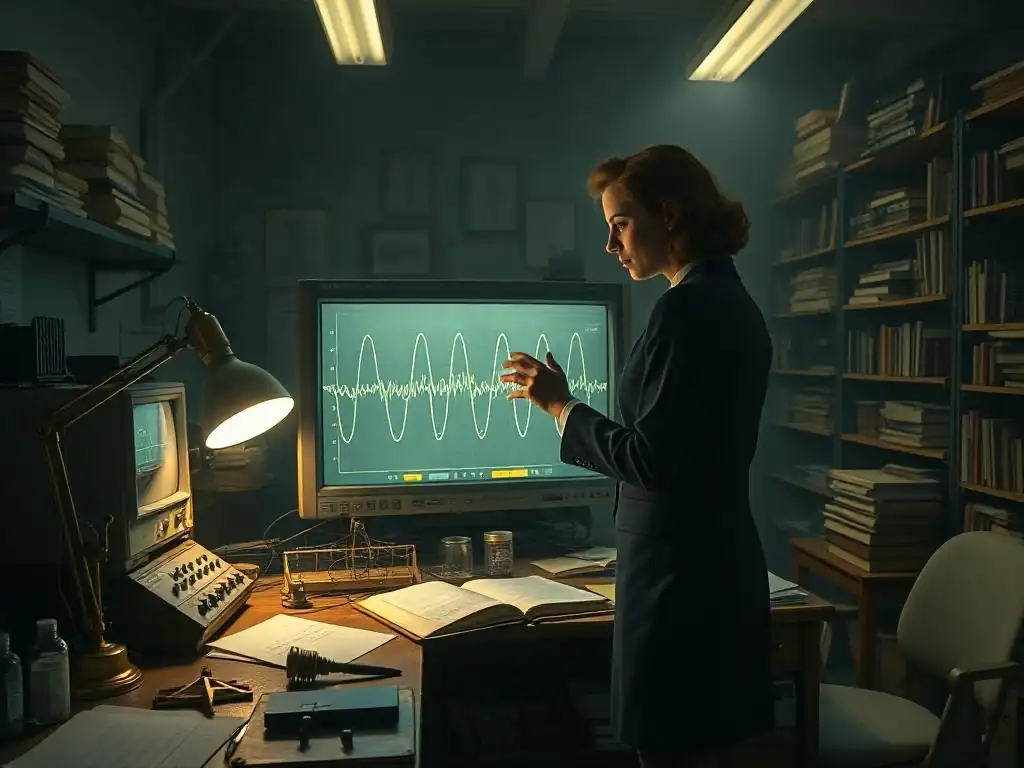
Welcome to WomenInScienceHistory.com, where we unearth the remarkable stories of female scientists who shaped our world. Dive in and discover how their contributions often went unnoticed, overshadowed, or outright stolen. Today, we explore the insidious Matilda Effect in 20th Century Physics, a phenomenon that robbed many brilliant women of the recognition they deserved. What groundbreaking discoveries were lost in this injustice, and what can we learn from these historical oversights? Let's delve into the compelling narratives and uncover the truth behind these silenced voices.
- Introduction to the Matilda Effect and its Impact on Women Physicists
- Key Examples of the Matilda Effect in 20th Century Physics
- Factors Contributing to the Matilda Effect in Physics during the 1900s
- The Consequences of the Matilda Effect for the Field of Physics
- Combating the Matilda Effect: Strategies for Change
- The Ongoing Relevance of the Matilda Effect in Contemporary Physics
- Conclusion: Recognizing and Rectifying Historical Injustices in Physics
-
Frequently Asked Questions
- What is the Matilda Effect, and how does it relate to women in science?
- How prevalent was the Matilda Effect in 20th-century physics?
- Can you give an example of the Matilda Effect impacting a female physicist?
- Why did the Matilda Effect occur in the field of physics?
- What is being done to address the Matilda Effect and promote recognition of women in science today?
- Final Reflection: Unearthing Hidden Contributions
- Empower Knowledge: Amplify Her Story!
Introduction to the Matilda Effect and its Impact on Women Physicists
Defining the Matilda Effect: Systemic Bias in Scientific Recognition
The Matilda Effect describes the systemic bias against acknowledging the achievements of women scientists, where their groundbreaking work is often overlooked, minimized, or even attributed to their male colleagues. Coined by science historian Margaret W. Rossiter in 1993, this term builds upon Robert K. Merton's "Matthew Effect," which noted that established scientists tend to receive disproportionate credit. Rossiter specifically applied it to the consistent pattern of female scientists receiving less credit than their male counterparts for identical or similar contributions. This effect highlights how scientific recognition is not always purely meritocratic but can be deeply influenced by gender bias.
This pervasive bias manifests in various ways, from the omission of women's names on publications and patent applications to their exclusion from prestigious awards, including the Nobel Prize. The Matilda effect ensures that women's contributions are not only denied immediate recognition but also struggle to find their rightful place in the historical narrative of scientific progress. This systemic disadvantage impacts individual careers, stifles opportunities, and ultimately skews our understanding of who truly drives scientific innovation.
The Pervasive Nature of Gender Bias in 20th Century Science
Throughout the 20th century, gender bias was a deeply embedded and often unacknowledged reality within scientific institutions and the broader societal fabric. Despite significant advancements in various fields, the scientific community largely mirrored prevailing societal norms that marginalized women, often viewing their intellectual capabilities as secondary to men's. This environment created systemic barriers for women aspiring to scientific careers, affecting their access to education, research opportunities, and professional networks.
This pervasive bias meant that women scientists frequently faced skepticism regarding their competence, had their ideas dismissed, or found themselves relegated to supportive, often uncredited, roles. Even when their contributions were undeniable, the institutional structures and informal "old boys' club" mentalities within academia and research made it incredibly challenging for women to gain the recognition and status afforded to their male peers. This systemic undervaluation was a fertile ground for the Matilda effect to flourish, making it a significant hurdle for women to overcome in their scientific pursuits.
Focusing on Physics: A Field Historically Dominated by Men
Physics, in particular, stood as one of the most male-dominated scientific disciplines throughout the 20th century, presenting unique and formidable challenges for women. For much of this period, very few women held professorships, led research laboratories, or occupied senior positions in major physics departments at universities worldwide. This demographic imbalance fostered an environment where women physicists were often isolated, their voices less heard, and their contributions more easily overlooked or dismissed.
The field's demanding nature, often requiring extensive access to specialized equipment, large-scale collaborative projects, and informal networking opportunities that were largely exclusive to men, further exacerbated these challenges. The prevailing cultural perception that physics required a "masculine" intellect or temperament also contributed to a subtle yet powerful bias against women. These factors made physics an especially difficult field for women to gain equitable recognition, making instances of the Matilda effect in physics particularly stark and impactful.
Key Examples of the Matilda Effect in 20th Century Physics
Case Study 1: Lise Meitner and the Discovery of Nuclear Fission
The Discovery of Nuclear Fission
Lise Meitner's pivotal role in the discovery of nuclear fission is a foundational example of the Matilda effect in physics. An Austrian physicist, Meitner collaborated closely with chemist Otto Hahn for over 30 years at the Kaiser Wilhelm Institute for Chemistry in Berlin, starting in 1907. Their research focused on nuclear processes, particularly the bombardment of uranium with neutrons.
In late 1938, as Hahn and his assistant Fritz Strassmann conducted experiments, they observed puzzling results: the production of lighter elements like barium after bombarding uranium. It was Meitner, in exile in Sweden after fleeing Nazi Germany in July 1938, who, in collaboration with her nephew Otto Robert Frisch, provided the crucial theoretical explanation. Through a letter with Hahn, she interpreted the experimental findings as the splitting of the uranium nucleus into smaller parts, releasing an immense amount of energy – a process they termed "nuclear fission."
How Otto Hahn Received Sole Credit for the Discovery
Despite Meitner's indispensable theoretical insight and her long-standing collaborative role in the experimental setup, Otto Hahn published the experimental findings in January 1939 in Naturwissenschaften without crediting Meitner as a co-author. He claimed the discovery was purely chemical, perhaps partly to protect Meitner, a Jewish woman, from Nazi authorities, but also to secure sole credit in a competitive scientific landscape.
The ultimate culmination of this oversight occurred in 1944 when the Nobel Prize in Chemistry was awarded solely to Otto Hahn "for his discovery of the fission of heavy atomic nuclei." Meitner's name was conspicuously absent, a decision that has been widely criticized by historians of science and physicists alike as a clear instance of the Matilda effect in physics.
The Long-Term Consequences for Her Career and Recognition
The omission from the Nobel Prize profoundly impacted Lise Meitner's public recognition and her historical legacy regarding nuclear fission. While she received numerous other accolades throughout her life, including the Enrico Fermi Award in the U.S. in 1966 (shared with Hahn and Strassmann), the lack of Nobel recognition for her most significant breakthrough meant that her central role in one of the 20th century's most transformative scientific discoveries was largely obscured for decades.
This marginalization, despite her intellectual brilliance and crucial contribution, cemented her story as a textbook example of how the Matilda effect can unjustly sideline a woman's scientific achievements, influencing how future generations understood the history of nuclear physics.
Case Study 2: Chien-Shiung Wu and the Parity Violation Experiment
Wu's Experimental Verification of Parity Violation
Chien-Shiung Wu, a brilliant experimental physicist, played a pivotal role in one of the most significant discoveries in 20th-century physics: the experimental verification of parity violation. In 1956, theoretical physicists Tsung-Dao Lee and Chen-Ning Yang challenged the long-held principle of "parity conservation," which posited that physical laws are symmetrical under mirror reflection. They theorized that this principle might not hold true for weak nuclear interactions.
Wu, renowned for her meticulous and precise experimental techniques, designed and executed a notoriously difficult experiment at the National Bureau of Standards. Working with supercooled cobalt-60, she observed that electrons emitted during the beta decay of the cobalt nuclei showed a preferred direction, conclusively demonstrating that parity is, in fact, violated in weak interactions.
Instances of Neglect in the Nobel Prize Awarded to Her Male Colleagues
The implications of Wu's experiment were immediate and revolutionary, overturning a fundamental law of physics. Yet, in 1957, just one year after Wu's groundbreaking experimental proof, Tsung-Dao Lee and Chen-Ning Yang were awarded the Nobel Prize in Physics for their theoretical prediction of parity non-conservation.
Chien-Shiung Wu, whose rigorous and definitive experiment provided the irrefutable evidence, was conspicuously omitted from the Nobel award. This decision remains one of the most glaring examples of the Matilda effect in physics, where the critical experimental validation, often considered more challenging to achieve than theoretical prediction, was overlooked in favor of the male theorists.
The Effect on Her Scientific Trajectory and Legacy
Despite the Nobel omission, Chien-Shiung Wu continued to have an exceptionally distinguished career, earning widespread respect within the scientific community. She was awarded the National Medal of Science in 1975, became the first woman elected president of the American Physical Society, and received numerous other prestigious honors. However, the Nobel oversight undeniably impacted her public visibility and historical narrative.
While her brilliance was recognized by her peers, the highest honor in physics eluded her for this particular discovery, cementing her legacy as a powerful symbol of the Matilda effect. Her story serves as a stark reminder that even undeniable experimental genius by a woman could be undervalued in the recognition process, profoundly shaping her place in the public's understanding of physics history.
Case Study 3: Marietta Blau and Particle Physics Discoveries
Blau's Groundbreaking Work on Photographic Emulsions in Particle Physics
Marietta Blau was a pioneering Austrian physicist who made fundamental contributions to particle physics through her innovative work with photographic emulsions. In the 1930s, working at the Institute for Radium Research in Vienna, she significantly refined the photographic emulsion technique for detecting and measuring nuclear particles. Her improvements made it possible to observe and record the tracks of individual particles, offering a powerful new tool for studying cosmic rays and nuclear reactions.
In 1937, in collaboration with her student Herta Wambacher, Blau exposed photographic plates to cosmic rays at high altitudes. Upon developing them, they discovered "disintegration stars"—patterns of tracks emanating from a single point, indicating nuclear reactions caused by cosmic radiation. This discovery was a significant step forward in understanding high-energy particle interactions.
The Challenges She Faced in Gaining Recognition for Her Discoveries
Despite the groundbreaking nature of her work, Marietta Blau faced significant challenges in gaining due recognition, largely due to the Matilda effect. Like Lise Meitner, Blau was Jewish and was forced to flee Austria in 1938 after the Anschluss, severely disrupting her research and career trajectory. She was nominated for the Nobel Prize in Physics multiple times, notably by Erwin Schrödinger in 1950, but never received the award.
A crucial point of comparison is Cecil Powell, who won the Nobel Prize in Physics in 1950 for developing the photographic method of studying nuclear processes and for his discovery of the pion using this method. While Powell's contributions were substantial, Blau's foundational work on the photographic emulsion technique, which preceded and informed later developments, was often overlooked or given insufficient credit in the broader scientific narrative.
Overcoming Barriers: Her Efforts to Secure Her Place in Physics History
Marietta Blau's career after fleeing Austria was marked by persistent efforts to continue her research, often under challenging circumstances, including working with inadequate resources in Mexico and the United States. She continued to make valuable contributions to nuclear physics and medical physics, yet her name remained less prominent than some of her male counterparts who built upon the methods she pioneered.
Her struggle for recognition underscores the systemic difficulties women encountered in establishing and maintaining their scientific standing in the face of institutional and societal biases. Blau's story serves as a testament to her resilience and the enduring impact of the Matilda effect in physics, which systematically diminished the visibility of her foundational contributions to the field.
Factors Contributing to the Matilda Effect in Physics during the 1900s
Societal Gender Roles and Expectations
Throughout the 20th century, deeply ingrained societal gender roles and expectations significantly contributed to the Matilda effect in physics. Prevailing norms dictated that women's primary spheres were domestic—as wives, mothers, and homemakers—rather than professional or scientific. This cultural framework often led to a lack of familial and institutional support for women pursuing rigorous scientific careers. Many women encountered pressure to prioritize family over their scientific ambitions, or their scientific pursuits were viewed as temporary hobbies rather than serious, long-term professions.
These roles also influenced the perception of women's intellectual capabilities, particularly in fields like physics, which were often considered intellectually demanding and "masculine." There was a widespread, albeit unsubstantiated, belief that women were inherently less suited for abstract reasoning or complex problem-solving. Consequently, even when women produced groundbreaking work, it was more easily dismissed, attributed to male collaborators, or simply not taken as seriously as the work of their male peers, thereby reinforcing the systemic undervaluing of their contributions inherent in the Matilda effect.
The "Old Boys' Club" Mentality in Scientific Institutions
The pervasive "Old Boys' Club" mentality within universities, research institutions, and scientific academies was a major driver of the Matilda effect in physics. These networks were overwhelmingly male-dominated, often informal, and operated through patronage and personal connections established over years. Women were largely excluded from these crucial informal spaces—such as faculty clubs, departmental social gatherings, or exclusive research seminars—where ideas were exchanged, collaborations were forged, and reputations were built. This exclusion meant women often missed out on vital opportunities for mentorship, access to cutting-edge research, and informal recognition that could lead to formal accolades.
This insular culture led to conscious and unconscious biases in critical career decisions, including hiring, promotion, and award selections. Decisions were frequently made by men who were more comfortable promoting or recognizing other men within their established circles, perpetuating a cycle of gender inequality. This systemic bias made it incredibly difficult for women, regardless of their scientific brilliance, to break through these barriers and achieve the same level of recognition and advancement as their male counterparts, directly fueling the Matilda effect in physics.
Limited Access to Resources and Opportunities for Women in Physics
Women in physics during the 1900s frequently faced significant limitations in accessing essential resources and opportunities, further entrenching the Matilda effect. This included restricted access to advanced scientific education, particularly at the doctoral and postdoctoral levels, where women might encounter quotas, outright exclusion from certain programs, or a general lack of encouragement. Even when admitted, women often had less access to well-equipped laboratories, state-of-the-art equipment, and sufficient funding for their research, which were crucial for conducting impactful physics experiments.
These disparities in resources severely hampered women's ability to conduct large-scale, independent research or lead ambitious projects. Furthermore, securing permanent faculty positions, especially tenured ones, was exceptionally challenging for women, limiting their ability to establish independent research programs and gain leadership roles. This lack of institutional support and access to critical resources meant that women's contributions were less visible and more susceptible to being overlooked or attributed to others, thereby exacerbating the impact of the Matilda effect.
Implicit Bias in Peer Review and Publication Processes
Even in processes designed for objectivity, such as peer review and scientific publication, implicit gender bias played a significant role in perpetuating the Matilda effect in physics. While often presented as impartial evaluations, these systems could be subtly influenced by unconscious biases against female authors or research perceived as "feminine" or less "rigorous." Although direct evidence from the early 20th century is scarce, later studies have indicated that papers with female first authors or those from female-dominated fields sometimes face higher rejection rates or more stringent review processes compared to those by male authors.
This implicit bias could manifest in delayed publication, harsher critiques, or even outright rejection of important work by women, regardless of its scientific merit. Even if published, the subtle devaluation could impact citation rates and subsequent recognition, making it harder for women's discoveries to gain the widespread acknowledgment necessary for major awards or historical prominence. This systemic bias within the very mechanisms of scientific dissemination was a quiet yet powerful force that contributed to the ongoing Matilda effect in physics, ensuring that women's contributions struggled to gain their rightful place.
The Consequences of the Matilda Effect for the Field of Physics

Loss of Potential: Stifled Innovation and Missed Opportunities
The Matilda effect in physics led to an immeasurable loss of potential for the field itself. By systematically sidelining or discouraging talented women, physics deprived itself of diverse perspectives, novel approaches, and potentially groundbreaking ideas that could have significantly accelerated scientific progress. Many brilliant minds, discouraged by the systemic bias and lack of recognition, may have been deterred from entering or remaining in the field, leading to a narrower pool of talent and a less dynamic research environment.
This stifling of careers also meant missed opportunities for collaboration and synergistic discoveries. When pioneering women like Marietta Blau struggled for adequate resources or were denied full recognition, their ability to lead large research teams or secure funding for ambitious projects was compromised. This not only limited their individual output but also had a ripple effect on the collective advancement of physics, as potential breakthroughs were either delayed, never fully realized, or only achieved much later by others who benefited from a more equitable system.
Perpetuation of Gender Inequality in Science
The Matilda effect in physics actively reinforced and perpetuated gender inequality within the scientific community. By consistently overlooking or denying credit to women's contributions, it solidified the perception that science, particularly physics, was an inherently male domain. This sent a clear and damaging message that women's work was less valuable or that they were not "true" scientists, thereby perpetuating a self-fulfilling prophecy where fewer women entered the field, and those who did faced an uphill battle for recognition.
This pervasive inequality also impacted the institutional structures and cultural norms of scientific bodies. The scarcity of recognized female role models and leaders meant that male-dominated norms persisted unchallenged. This made it significantly harder to advocate for equitable practices, secure funding for women's initiatives, or implement changes to biased review and promotion processes, thereby embedding gender inequality deeper into the fabric of scientific institutions for decades.
Skewed Historical Narratives: The Erasure of Women's Contributions
One of the most profound consequences of the Matilda effect was the distortion of the historical narrative of physics. By systematically denying credit to women like Lise Meitner for nuclear fission or omitting Chien-Shiung Wu from Nobel recognition for parity violation, history books, scientific accolades, and public discourse often presented an incomplete and inaccurate picture of scientific discovery, predominantly featuring male figures. This erasure meant that future generations of scientists and the general public were largely unaware of the true diversity of contributors to some of physics' most significant breakthroughs.
This historical distortion has long-term implications. When women's contributions are erased from the record, it diminishes their legacy and makes it harder for contemporary women to see themselves reflected in the history of science. This historical amnesia perpetuates stereotypes about who can be a scientist and makes it more challenging to challenge existing biases, as the evidence of past injustices is obscured, thereby hindering progress towards a truly inclusive scientific community.
Impact on Future Generations of Women in Physics
The lack of visible role models and the historical injustices caused by the Matilda effect had a significant chilling effect on aspiring young women considering a career in physics. When the groundbreaking stories of pioneering women physicists like Meitner or Wu are omitted or downplayed, it reduces the inspiration and encouragement available to girls and young women. They might perceive the field as unwelcoming, or one where their efforts might not be justly recognized, leading to self-doubt and hesitation.
Furthermore, the knowledge that one's potential contributions might be systematically undervalued can be a significant deterrent. This discouragement contributes to the "leaky pipeline" phenomenon, where women disproportionately leave STEM fields at various career stages, even today. This attrition is partly due to the cumulative effect of subtle and overt biases, including the modern manifestations of the Matilda effect, which create an environment where women feel less supported, less valued, and ultimately less likely to achieve their full potential in physics.
Combating the Matilda Effect: Strategies for Change
Promoting Awareness and Education about Gender Bias in Science
A fundamental step in combating the Matilda effect in physics is promoting widespread awareness and education about gender bias within the scientific community. It is crucial for scientists, particularly those in positions of power—such as journal editors, grant reviewers, and award committee members—to understand unconscious biases and acknowledge historical injustices. Workshops, training programs, and open discussions can help bring these biases to the forefront, making individuals more mindful of their decision-making processes and fostering a culture of self-reflection.
Moreover, actively incorporating the contributions of women physicists into educational curricula and public discourse is vital. By highlighting the achievements of figures like Lise Meitner, Chien-Shiung Wu, and Marietta Blau, and ensuring their stories are presented accurately and prominently, we can correct skewed historical narratives. This not only inspires new generations of scientists but also ensures that the groundbreaking work of these women is not forgotten, directly counteracting the erasure caused by the Matilda effect.
Implementing Fair and Transparent Evaluation Processes
To effectively combat the Matilda effect, scientific institutions must implement fair and transparent evaluation processes for hiring, promotion, funding, and awards. Concrete measures include adopting blind peer review where feasible, diversifying review panels to ensure gender balance and a range of perspectives, and establishing clear, objective criteria for all career progression milestones. Reducing reliance on subjective metrics or "gut feelings" can significantly mitigate the impact of unconscious bias in these critical decisions.
Furthermore, accountability is paramount. Institutions should regularly audit their data for gender disparities in hiring, tenure, grant awards, and promotions. Establishing accessible ombuds systems or clear reporting mechanisms for instances of bias can help ensure that processes are not only fair on paper but also in practice. Such proactive measures are essential to dismantle the systemic biases that perpetuate the Matilda effect in physics, fostering an environment where merit is the sole determinant of recognition.
Mentorship and Support for Women in Physics
Strong mentorship networks and robust support systems are critical strategies for combating the Matilda effect in physics. Women in physics often navigate unique challenges, including isolation in male-dominated environments and subtle biases. Having mentors—both male and female—who can provide guidance on career decisions, research challenges, and institutional politics is invaluable. These mentors can offer encouragement, share insights, and act as powerful advocates, helping women to overcome barriers and gain visibility for their work.
Beyond individual mentorship, formal and informal support systems are essential. This includes establishing women-in-physics groups, organizing networking events, and creating institutional programs designed to foster a sense of community and provide resources tailored to women's needs. Such support can help women build confidence, navigate the complexities of their careers, and ensure their contributions are recognized and celebrated within their immediate scientific circles, thereby lessening the isolating and diminishing effects of the Matilda effect.
Celebrating and Amplifying the Achievements of Women Physicists
Proactive and deliberate efforts to celebrate and amplify the achievements of women physicists are crucial to directly counteract the Matilda effect. This involves actively nominating women for prestigious awards, featuring their research prominently in scientific publications and public media, and ensuring their groundbreaking contributions are acknowledged in historical accounts and textbooks. It requires a conscious push to correct decades of historical omission and ensure their work is not only recognized but also widely known.
Creating visible role models is equally important. By showcasing the success stories of contemporary women physicists, future generations, particularly young girls, can envision themselves in these roles and be inspired to pursue careers in STEM. Platforms like WomenInScienceHistory.com play a vital role in bringing these powerful stories to light, directly confronting the historical invisibility caused by the Matilda effect in physics and encouraging a new wave of diverse talent into the field.
The Ongoing Relevance of the Matilda Effect in Contemporary Physics
Lingering Challenges for Women in STEM Fields
Despite significant progress in gender equality, the Matilda effect is not entirely a relic of the past; it continues to manifest in subtle yet impactful ways for women in physics and other STEM fields. Women still face lingering challenges, including implicit biases in hiring, promotion, and grant funding decisions. Studies consistently show disparities in citation rates, the likelihood of women being invited to speak at major conferences, or the allocation of resources, indicating that unconscious biases persist even if overt discrimination has largely diminished.
These ongoing challenges often appear as microaggressions or the "prove it again" bias, where women feel they must repeatedly demonstrate their competence more than their male colleagues. This constant pressure and the subtle devaluation of their work can lead to increased stress, burnout, and disproportionate attrition from STEM fields, particularly at senior levels. These contemporary manifestations of the Matilda effect continue to contribute to the underrepresentation of women in leadership roles within physics.
The Importance of Continued Advocacy and Reform
Given the lingering presence of the Matilda effect, continued advocacy and proactive reform within scientific institutions are of paramount importance. Vigilance against bias, coupled with sustained efforts to implement equitable policies and diversity initiatives, remains crucial. Organizations dedicated to promoting women in STEM play a vital role in pushing for systemic change, raising awareness, and ensuring that the issue of gender bias remains a priority on the scientific community's agenda.
A multi-faceted approach is necessary, encompassing not only institutional reforms but also fundamental shifts in the cultural norms of the scientific community. Challenging ingrained stereotypes, fostering genuinely inclusive environments, and actively seeking out and celebrating diverse contributions are ongoing tasks. These continuous efforts are essential to dismantle the subtle yet persistent effects of the Matilda effect in physics and create a truly equitable and welcoming environment for all scientists.
Ensuring a More Equitable and Inclusive Future for Physics
Ensuring a more equitable and inclusive future for physics demands a collective commitment to recognizing and valuing contributions from all individuals, regardless of gender. This means actively working to ensure that the next generation of scientific discoveries reflects the full spectrum of human talent, transcending historical biases that favored a privileged few. It's about cultivating an environment where merit is the sole arbiter of recognition, and opportunities are genuinely accessible to all.
The vision for the future is one where the Matilda effect is relegated to a historical footnote, rather than a current reality. Achieving this requires ongoing self-reflection within the scientific community, a courageous willingness to confront uncomfortable truths about past and present biases, and a collective determination to create a physics community where every voice is heard, every discovery is celebrated, and every scientist receives the due credit they deserve. This commitment will undoubtedly lead to a richer, more innovative, and ultimately more impactful future for the field of physics.
Conclusion: Recognizing and Rectifying Historical Injustices in Physics
The Legacy of Women Physicists Affected by the Matilda Effect
The enduring legacy of women physicists like Lise Meitner, Chien-Shiung Wu, and Marietta Blau stands as a powerful testament to their scientific brilliance, intellectual courage, and unwavering perseverance. Despite the profound injustices they faced due to the Matilda effect in physics, their contributions were undeniably foundational and transformative for their respective fields. Their stories serve as crucial reminders of both the immense talent of women in science and the systemic barriers they encountered, often preventing them from receiving the recognition they rightfully deserved.
Recognizing their true place in history is not merely an act of rectification; it is an essential enrichment of our understanding of scientific progress. These narratives illuminate the resilience required to pursue science in an unsupportive environment, providing inspiration and challenging preconceived notions about who contributes to scientific breakthroughs. Their contributions, though often sidelined, underscore the vital and often overlooked role women have played in shaping the course of physics.
A Call to Action for a More Just and Equitable Scientific Community.
The historical evidence of the Matilda effect in physics issues a clear and urgent call to action for the entire scientific community, including educators, policymakers, and the public. We must actively work towards a future where such systemic bias is eradicated. This involves continuous vigilance against all forms of bias, proactive measures to promote diversity and inclusion, and an unwavering commitment to ensuring that all scientific contributions are recognized fairly, transparently, and without prejudice.
A scientific community free from the shackles of bias is not only more just but also inherently more innovative, productive, and reflective of the diverse world it seeks to understand. By learning from the historical injustices caused by the Matilda effect and actively shaping a more equitable future, physics can truly unlock its full potential, ensuring that no discovery, regardless of its origin, is ever again sidelined or forgotten. It is a collective responsibility to build a scientific landscape where every brilliant mind receives its rightful due.
Frequently Asked Questions
What is the Matilda Effect, and how does it relate to women in science?
The Matilda Effect is the systematic denial of recognition of women's contributions in science, often attributed to their male colleagues. It highlights the gender bias that historically led to women's work being overlooked or credited to men.
How prevalent was the Matilda Effect in 20th-century physics?
Unfortunately, the Matilda Effect was significantly prevalent, impacting many female physicists. Numerous documented cases show women's research and discoveries were minimized or attributed to male scientists, hindering their careers.
Can you give an example of the Matilda Effect impacting a female physicist?
While countless examples exist, one notable case involves Lise Meitner. Her crucial role in the discovery of nuclear fission was often overshadowed by her male colleague, Otto Hahn, who received the Nobel Prize without acknowledging her contribution.
Why did the Matilda Effect occur in the field of physics?
The Matilda Effect stemmed from a deeply rooted male-dominated culture within physics, characterized by prejudice and limited opportunities for women. Societal expectations and institutional barriers also played a significant role in undermining women's credibility.
What is being done to address the Matilda Effect and promote recognition of women in science today?
Efforts include raising awareness through initiatives like WomenInScienceHistory.com, promoting inclusive policies, and actively highlighting the achievements of female scientists throughout history and in contemporary research.
The echoes of the past resonate powerfully in the present, and the story of the Matilda Effect in 20th-century physics serves as a stark reminder that historical injustices continue to shape our understanding of scientific progress. By acknowledging the systemic sidelining of women's contributions, we can begin to dismantle the biases that persist in science today.
The impact of the Matilda Effect extends far beyond mere historical correction; it fundamentally alters our perception of scientific innovation. It forces us to confront the uncomfortable truth that brilliance has been consistently overlooked based on gender, robbing the world of potentially groundbreaking discoveries. Until women are fully and equally integrated into the scientific community, the potential for scientific progress will be limited.
This quote underscores the urgent need for a more inclusive and equitable scientific landscape.
Let us not simply remember the names of those who were unjustly overshadowed, but actively champion the voices of women in science today. Consider how you can contribute to a more equitable future, whether through mentorship, advocacy, or simply by recognizing and celebrating the achievements of women in STEM. The legacy of the Matilda Effect demands that we all commit to building a scientific community where talent, not gender, determines success.
Empower Knowledge: Amplify Her Story!
Thank you for diving into the often-overlooked contributions of women in 20th-century physics. Now that you've uncovered the reality of the Matilda Effect, let's turn knowledge into action.
Here's how you can contribute to a more equitable future for women in science:
- Share this article! Help spread awareness of the Matilda Effect and inspire others to recognize overlooked contributions.
- Explore the unsung stories of other female physicists on WomenInScienceHistory.com. You might just rediscover a name that changes everything.
- Nominate a contemporary woman in physics for a local award or spotlight her achievements on social media using the hashtag #RecognizeHerScience.
What overlooked scientific contribution, either historical or contemporary, inspires you the most and why? Share your thoughts in the comments below!