Women in Zoology: Pioneers Who Shaped Our Understanding of the Animal Kingdom
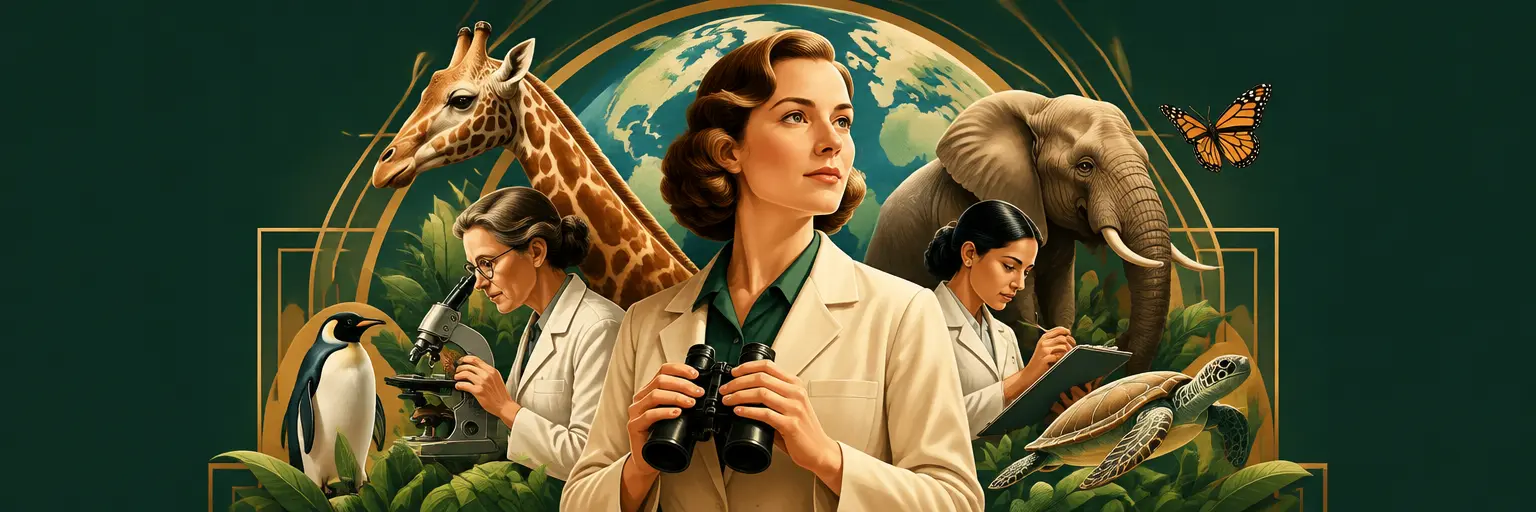
Welcome to our dedicated subcategory on Women in Zoology, a vital part of the broader Environmental Science narrative. Here, we celebrate the fearless female scientists who braved jungles, oceans, and laboratories to decode the mysteries of animal life. From pioneering primatologists to groundbreaking marine biologists, these women defied societal norms to advance conservation, taxonomy, and behavioral research. This page serves as a rich resource for students, educators, and history enthusiasts, offering detailed biographies, field insights, and the lasting impact of these trailblazers on modern ecological science. Dive in to discover how their legacies continue to inspire and shape environmental stewardship.
🦁 Groundbreaking Primatologists and Field Researchers
This section illuminates the extraordinary lives of women who redefined primatology and field research, most notably Jane Goodall, Dian Fossey, and Biruté Galdikas. These scientists spent decades living among wild chimpanzees, gorillas, and orangutans, respectively, providing unprecedented insights into primate social structures, tool use, and emotional lives. Their patient, observational methods were revolutionary, challenging the male-dominated scientific establishment that preferred laboratory experiments.
Beyond their scientific contributions, these women became powerful conservation advocates. They established research stations, trained local communities, and fought against habitat destruction and poaching. Their work highlighted the urgent need for wildlife protection, connecting zoology directly to environmental activism. Readers will gain a profound appreciation for how their fearless dedication not only advanced biological knowledge but also created a blueprint for ethical, immersive field science that remains influential today.
🐋 Pioneers in Marine Biology and Oceanography
Explore the deep blue contributions of women who unlocked the secrets of ocean life, from Rachel Carson’s early marine ecology work to Eugenie Clark, the “Shark Lady,” and Sylvia Earle, a legendary oceanographer. These scientists explored coral reefs, deep-sea trenches, and shark behavior, challenging assumptions about marine species and ecosystems. Their meticulous research laid foundations for modern marine conservation and our understanding of oceanic food webs and biodiversity.
Their stories are marked by extraordinary courage, including pioneering deep-sea dives and lengthy underwater missions. Earle, for instance, led the first all-female team of aquanauts in 1970, living underwater for two weeks. Beyond documentation, these women used their findings to advocate for marine protected areas and sustainable fishing practices. This section offers a compelling look at how their relentless curiosity transformed oceanography from a descriptive science into a critical voice for planetary health.
🦋 Groundbreaking Entomologists and Invertebrate Specialists
Uncover the often overlooked yet crucial work of women who studied insects, spiders, and other invertebrates, such as Maria Sibylla Merian, a 17th-century naturalist who documented insect metamorphosis with stunning accuracy, and later contributors like Lucy King in bee research. These scientists demonstrated that tiny creatures are essential to ecosystem balance, from pollination to decomposition. Their detailed observations and illustrations helped shift scientific focus to arthropod behavior and life cycles.
This subsection emphasizes the immense ecological importance of invertebrates, connecting entomology to broader environmental issues like agricultural sustainability and climate change. These women braved tropical rainforests and hostile academic environments to prove that even the smallest organisms deserve rigorous study. By reading their journeys, you’ll understand how their taxonomic and behavioral work informs modern pest management, biodiversity conservation, and our appreciation for the sheer complexity of invertebrate life.
🦉 Herpetology, Ornithology, and Mammalogy Innovators
Here, we spotlight women who specialized in reptiles, birds, and terrestrial mammals, often working in challenging habitats worldwide. Figures like Joan Beauchamp Procter, a pioneering herpetologist and zoo curator, and Margaret Morse Nice, who revolutionized ornithology through detailed studies of sparrow behavior, exemplify this group. Their work blended taxonomic classification with behavioral ecology, creating comprehensive records of species’ life histories and habitat needs.
These scientists often relied on patience and sharp observational skills, sometimes studying single species for years to document migration patterns, mating rituals, or social hierarchies. They contributed significantly to conservation planning, using data to advise on habitat preservation and captive breeding programs. This section provides insight into how their meticulous studies helped bridge the gap between museum-based taxonomy and dynamic field research, shaping modern wildlife management practices.
🌍 Legacy, Challenges, and Mentorship in Zoology
This final section examines the systemic barriers women faced in zoology—from exclusion from academic societies to lack of funding and field equipment—and how they overcame them. It highlights stories of resilience, networking, and formal and informal mentorship networks that emerged, such as women supporting each other in expedition logistics or co-authoring vital papers. Their persistence opened doors for subsequent generations of female zoologists.
We also explore their legacy in education and policy, showing how these pioneers became role models who inspired science curricula and conservation laws. Institutions like the National Geographic Society and the American Museum of Natural History now actively honor their contributions. This part encourages readers to reflect on ongoing gender disparities in STEM while celebrating the increasing visibility and leadership of women in zoology today, emphasizing that their early struggles created a more inclusive and robust scientific community.
Frequently Asked Questions
Who is considered the first female zoologist in history?
While no single figure is universally acknowledged, Maria Sibylla Merian (1647–1717) is often cited as a pioneering naturalist and entomologist. Her detailed studies of insect life cycles in the 17th century were groundbreaking, and she conducted field research in Suriname. Earlier female naturalists existed, but Merian’s published works became widely influential, establishing her as a foundational figure in zoological field observation.
How did women overcome barriers to fieldwork in zoology?
Women navigated barriers through persistence, collaboration, and sometimes working from museums or home laboratories when expeditions were exclusive. Many partnered with male relatives or used private funds to travel. Others formed informal networks for support and shared data. Over time, their demonstrated scientific rigor forced institutions to grant access, slowly normalizing female presence in field research.
What was a key contribution of Jane Goodall to zoology?
Jane Goodall’s key contribution was her long-term field study of wild chimpanzees in Gombe, beginning in 1960. She discovered that chimpanzees make and use tools—previously thought unique to humans—and documented complex social behaviors and personalities. Her empathetic, observational method redefined primate research and influenced modern animal behavior studies and conservation ethics.
Are there notable women in zoology today?
Yes, many contemporary women lead in zoology, including Dr. Mammen Mammen in wildlife genetics and Dr. Nalini Nadkarni in canopy ecology, though the field is vast. Recent figures like Dr. Jane Whitmore specialize in coral reef restoration, while Dr. Asha de Vos studies blue whales in Sri Lanka. They continue to advance science, emphasize conservation, and mentor young female scientists.
How can I support women in zoology or learn more?
Support by following organizations like the Society for Women in Marine Science or the Association for Women in Science, which offer scholarships and networking. Read biographies from the reference list on our site, or attend virtual lectures by female zoologists. Encourage young girls through STEM programs and share stories of these pioneers to normalize women's leadership in environmental science.