
Avian Architects & Aerial Acrobats: Women Researchers Revealing Secrets of Bird Behavior and Flight

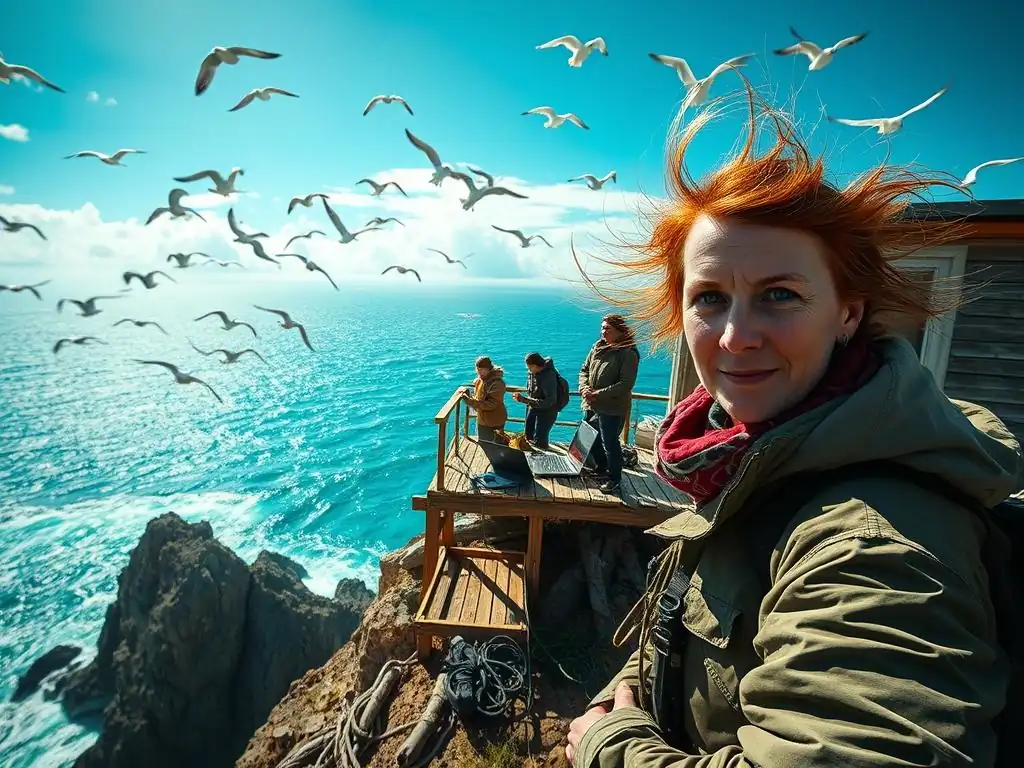
Welcome to WomenInScienceHistory.com!
Dive into the fascinating world where scientific breakthroughs meet untold stories. Ever wondered how women shaped our understanding of the intricate lives of birds? Our latest article, "Avian Architects & Aerial Acrobats: Women Researchers Revealing Secrets of Bird Behavior and Flight," explores the remarkable contributions of women in bird behavior research. Prepare to be inspired by their groundbreaking work and the challenges they overcame to unlock the secrets of the avian world. What discoveries await you within these pages?
- Introduction: Celebrating Women's Contributions to Ornithology
- Pioneering Women in Bird Behavior Research: Breaking Barriers and Soaring High
- Groundbreaking Studies by Women on Avian Behavior
- Women Unveiling the Secrets of Bird Flight and Migration
- The Impact of Women's Research on Conservation Efforts
- Case Studies: Profiles of Influential Women in Bird Behavior Research
- Challenges Faced by Women in Ornithology: Past and Present
- Inspiring the Next Generation of Female Ornithologists
- Conclusion: Acknowledging and Celebrating the Legacy of Women in Bird Research
-
Frequently Asked Questions
- What is the primary focus of WomenInScienceHistory.com?
- Why is it important to highlight the work of women in science, particularly in fields like bird behavior research?
- What kind of information can I find about women in bird behavior research on WomenInScienceHistory.com?
- What were some of the challenges faced by women conducting bird behavior research in the past?
- How can WomenInScienceHistory.com inspire future generations of women to pursue careers in science, specifically in areas like avian research?
- Final Reflection: Soaring Beyond Boundaries
- Unveil the Secrets of Flight & Join the Avian Revolution!
Introduction: Celebrating Women's Contributions to Ornithology
Highlighting the Underrepresented Role of Women in Bird Research History
For centuries, the contributions of women to scientific discovery, particularly in fields like ornithology, have been significantly underrepresented and often overlooked. While men dominated the formal scientific institutions and publishing avenues, countless women pursued their passion for nature, making meticulous observations and conducting foundational studies on birds. Their dedication to understanding avian life, often conducted from their homes or during personal excursions, laid crucial groundwork for what would become modern bird behavior research.
These pioneering efforts in women bird behavior research were frequently dismissed as amateur pursuits or were published under male pseudonyms or through male colleagues, masking the true breadth of female intellectual engagement. Unearthing these hidden histories is not merely an academic exercise; it is essential to paint a complete picture of scientific progress and to acknowledge the ingenuity and perseverance of women who defied societal norms to pursue their scientific curiosities.
WomenInScienceHistory.com: A Platform for Unveiling Untold Stories
WomenInScienceHistory.com serves as a vital digital archive, dedicated to illuminating the often-obscured narratives of women who have profoundly impacted scientific fields throughout history. Our platform aims to rectify the historical imbalance by providing detailed biographies, highlighting groundbreaking discoveries, and discussing the formidable challenges these women faced in male-dominated academic and professional spheres. This commitment extends to every discipline, from physics to zoology.
Specifically within the realm of avian studies, WomenInScienceHistory.com is a crucial resource for showcasing the extraordinary contributions of women bird behavior research. By detailing their specific methodologies, findings, and the impact of their work, the site not only celebrates their achievements but also inspires future generations. It underscores that the pursuit of scientific knowledge knows no gender, and that a holistic understanding of our natural world is incomplete without acknowledging the full spectrum of its contributors.
Pioneering Women in Bird Behavior Research: Breaking Barriers and Soaring High
Early Pioneers: Florence Merriam Bailey and Mabel Osgood Wright
Florence Merriam Bailey stands as a pivotal figure in early American ornithology, renowned for her innovative approach to bird study. Rejecting the prevalent practice of collecting and cataloging specimens, Bailey championed the observation of live birds in their natural habitats. Her seminal work, "Birds Through an Opera Glass" (1890), encouraged a new generation of birdwatchers to appreciate avian life through direct observation. Later, her comprehensive "Handbook of Birds of the Western United States" (1902) became an indispensable guide for field ornithologists, solidifying her legacy in women bird behavior research.
Equally influential was Mabel Osgood Wright, a passionate naturalist and conservationist who significantly popularized bird study among the general public. Wright was instrumental in the early conservation movement, co-founding the Audubon Society of Connecticut and serving as its president for many years. Her widely acclaimed book, "Birdcraft: A Field Book of Two Hundred Song Birds and Water Fowl" (1895), combined scientific accuracy with engaging narrative, making ornithology accessible to a broad audience. These early pioneers exemplified the spirit of women bird behavior research, laying the groundwork for future generations through their dedication to observation, documentation, and conservation.
Overcoming Obstacles: Gender Bias in Scientific Institutions
The path for early women in science was fraught with systemic gender bias, deeply embedded within the scientific institutions of their time. Women were frequently denied access to formal education, research facilities, and professional networks that were readily available to their male counterparts. Many who pursued scientific interests were relegated to unpaid "assistant" roles or were expected to conduct their research as a hobby, rather than a legitimate profession, undermining the value of their women bird behavior research.
This bias manifested in various forms, from exclusion from prestigious scientific societies to difficulty in getting their work published under their own names or with proper credit. For instance, while some women were recognized as illustrators or specimen preparers, their intellectual contributions to the underlying research were often minimized or ignored. Despite these formidable societal and institutional barriers, the persistence and intellectual rigor of these early female ornithologists ultimately paved the way for greater recognition and opportunities for future women bird behavior research.
Groundbreaking Studies by Women on Avian Behavior
The Intricacies of Bird Song: Women Deciphering Avian Communication
Bird song, a complex and vital form of avian communication, has been a rich area of study where women have made significant contributions. Female researchers have meticulously documented the diversity of bird vocalizations, from simple calls to elaborate songs, and explored their functions in territorial defense, mate attraction, and alarm signaling. Their work has often involved countless hours of field recording and laboratory analysis, deciphering the subtle nuances of avian acoustic communication.
For example, research conducted by women has illuminated how birds learn their songs, demonstrating cultural transmission and regional dialects within species. Studies have shown that some species, like the White-crowned Sparrow, develop distinct song dialects based on their geographic location, a phenomenon carefully mapped and analyzed by women bird behavior research. This detailed understanding of the learning processes and ecological functions of bird song has profoundly advanced the field of bioacoustics and avian ethology.
The diverse and often intricate mating rituals and social structures of birds have been a focal point for many female ornithologists, who have brought fresh perspectives and rigorous methodologies to these complex behaviors. From monogamous pair bonds to elaborate lekking displays and cooperative breeding systems, women have dedicated themselves to unraveling the adaptive significance of these interactions. Their research often involves long-term observational studies, tracking individual birds over multiple breeding seasons.
Studies conducted by women in bird behavior research have shed light on topics such as mate choice criteria, the dynamics of extra-pair copulations, and the roles of each sex in parental care. For instance, research on species like the Superb Fairy-wren has revealed the surprising prevalence of extra-pair paternity despite apparent social monogamy, challenging conventional understandings of avian family structures. These detailed investigations have provided crucial insights into the evolutionary pressures shaping avian social organization.
Nest Building and Parental Care: Women's Research on Avian Architecture
The construction of bird nests is an extraordinary feat of engineering, and the subsequent parental care is a testament to avian dedication. Women's research has significantly advanced our understanding of these critical aspects of bird behavior. Female ornithologists have meticulously documented the diversity of nest types, the materials used, and the intricate construction techniques employed by various species, from the delicate cup-shaped nests of hummingbirds to the massive stick structures of eagles.
Their studies have also delved into the division of labor between sexes in nest building and chick rearing, as well as the environmental factors influencing nesting success. For example, research has explored how climate change impacts the timing of breeding and the availability of nesting materials, affecting reproductive outcomes. This women bird behavior research provides vital information not only about avian biology but also offers critical insights for conservation efforts aimed at protecting breeding habitats.
Women Unveiling the Secrets of Bird Flight and Migration
Aerodynamics and Flight Mechanics: Women's Contributions to Understanding Bird Flight
The mechanics of bird flight represent one of nature's most astounding feats of engineering and adaptation. Women have made significant contributions to understanding the complex aerodynamics that allow birds to soar, hover, and maneuver with such precision. Their research often involves detailed observation of wing morphology, feather structure, and flight kinematics, sometimes utilizing advanced photographic and analytical techniques to capture the subtleties of avian movement.
These studies have explored how different bird species optimize their flight for various ecological niches, from the long, narrow wings of an albatross designed for efficient soaring over vast oceans to the short, broad wings of a wren adapted for agile flight through dense undergrowth. Women bird behavior research in this area has helped to elucidate the principles of lift, drag, and thrust in biological systems, contributing to a deeper appreciation of avian evolutionary adaptations for aerial locomotion.
Women Tracking Bird Migration Patterns: Using Technology to Uncover Avian Journeys
Bird migration, an epic annual journey undertaken by billions of birds, is one of the most awe-inspiring phenomena in the natural world. Women have been at the forefront of tracking these incredible movements, utilizing a range of technologies to unravel the mysteries of avian navigation and endurance. From early banding efforts that provided rudimentary connectivity data to modern satellite telemetry and light-level geolocators, female researchers have embraced technological advancements to map these vast journeys.
These technologies have allowed women bird behavior research to pinpoint precise migratory routes, identify crucial stopover sites, and estimate migration speeds, revealing that some birds, like the Arctic Tern, undertake annual round trips exceeding 49,000 miles (approximately 79,000 kilometers). The data collected by these dedicated scientists is indispensable for understanding the physiological demands of migration, the threats birds face along their routes, and the critical habitats that need protection across continents.
Landmark Studies on Bird Migration by Women: Dr. Ellen Ketterson's Dark-eyed Junco Research
Dr. Ellen Ketterson, a distinguished professor at Indiana University, has conducted groundbreaking research on the Dark-eyed Junco, a common North American songbird, providing profound insights into the mechanisms and evolution of bird migration. Her extensive work has focused on the interplay between hormones, behavior, and life history strategies, particularly how testosterone influences migratory restlessness (zugunruhe) and other seasonal behaviors. Her long-term studies have involved both field observations and controlled laboratory experiments.
Dr. Ketterson's women bird behavior research has revealed how different populations of Dark-eyed Juncos exhibit varying migratory strategies, from year-round residency to long-distance migration, and how these differences are often linked to hormonal profiles and environmental cues. Her findings have significantly advanced our understanding of the physiological underpinnings of migration, sexual selection, and the evolutionary trade-offs associated with different life histories, making her work a cornerstone in the field of avian ecology and behavior.
The Impact of Women's Research on Conservation Efforts

Applying Bird Behavior Knowledge to Protect Endangered Species
Understanding the intricate behaviors of birds is not merely an academic pursuit; it is a critical foundation for effective conservation strategies, particularly for endangered species. Women bird behavior research has provided invaluable insights into the specific needs of vulnerable avian populations, from their precise breeding requirements and foraging preferences to their complex social dynamics and migratory routes. This detailed knowledge is essential for designing successful recovery plans.
For instance, understanding the specific nesting habits of a critically endangered species like the California Condor, including their preference for secluded cliff ledges and their slow reproductive rate, directly informs captive breeding programs and reintroduction efforts. Similarly, knowledge of the Whooping Crane's migratory pathways, meticulously mapped through tracking studies, allows conservationists to protect crucial stopover habitats. Women have been instrumental in gathering and applying this behavioral data to prevent extinctions and facilitate species recovery.
Women Leading the Way in Habitat Preservation and Bird Conservation
Beyond the scientific laboratory and field observations, women have consistently taken leadership roles in advocating for habitat preservation and broader bird conservation initiatives. Their scientific expertise, often derived from rigorous women bird behavior research, has provided the credible basis for policy changes and the establishment of protected areas. They have been instrumental in raising public awareness about environmental threats facing avian populations.
A prime example is Rachel Carson, whose seminal book "Silent Spring" (1962), while not exclusively about birds, highlighted the devastating impact of pesticides like DDT on bird populations, leading to a nationwide ban and sparking the modern environmental movement. While Carson's work spanned broader ecological impacts, its profound effect on bird populations was a central theme, illustrating how scientific insights, often championed by women, can galvanize public action and lead to significant policy shifts for bird protection.
The Role of Female Ornithologists in Promoting Environmental Awareness
Female ornithologists have often excelled as powerful communicators and educators, bridging the gap between scientific discovery and public understanding. Their passion for birds and their habitats, fueled by years of dedicated women bird behavior research, has inspired countless individuals to become more environmentally conscious. They have played a crucial role in fostering a deeper appreciation for avian diversity and the importance of healthy ecosystems.
Through popular science books, public lectures, and leadership in citizen science initiatives, female ornithologists have empowered ordinary citizens to contribute to data collection and conservation efforts. Programs like the Christmas Bird Count or various nest monitoring projects rely heavily on public participation, often galvanized by the outreach efforts of women scientists. This public engagement is vital for building a collective stewardship for birds and their environments, ensuring that the insights from women bird behavior research translate into meaningful action.
Case Studies: Profiles of Influential Women in Bird Behavior Research
Case Study 1: Dr. Sandra Vehrencamp, Her Research on Cooperative Breeding in Birds and its Impact
Dr. Sandra Vehrencamp is a highly influential behavioral ecologist renowned for her pioneering work on cooperative breeding systems in birds. A professor at Cornell University, her research has extensively focused on species where individuals help raise offspring that are not their own, such as the Groove-billed Ani. Vehrencamp has developed comprehensive theoretical models, particularly the "skew theory," to explain the distribution of reproduction within cooperative groups, considering factors like relatedness, ecological constraints, and the costs and benefits of helping versus breeding.
Her empirical studies, often involving detailed observations of social interactions and reproductive output in the field, have provided critical data to test these theoretical predictions. Dr. Vehrencamp's women bird behavior research has significantly advanced our understanding of social evolution, reproductive strategies, and the complex dynamics of altruism in avian societies. Her work has fundamentally shaped how scientists approach questions of cooperation and conflict in animal groups, making her a leading figure in behavioral ecology.
Case Study 2: Dr. Patricia Parker, Contributions to Understanding Avian Disease Ecology in the Galapagos
Dr. Patricia Parker, a distinguished conservation biologist and professor at the University of Missouri-St. Louis, has dedicated much of her career to understanding disease ecology in wild bird populations, with a particular focus on the iconic birds of the Galapagos Islands. Her extensive women bird behavior research in this unique archipelago has illuminated the complex interactions between parasites, pathogens, and their avian hosts, including the famous Darwin's finches and other endemic species.
Dr. Parker's work has been crucial in identifying and tracking the prevalence of diseases such as avian malaria and avian pox in Galapagos birds. Her findings have revealed how introduced pathogens pose a significant threat to vulnerable island populations, often leading to declines in bird health and survival. By meticulously studying disease transmission dynamics and host resistance, Dr. Parker's research provides essential scientific data that informs conservation strategies aimed at protecting these irreplaceable avian species from the impacts of emerging infectious diseases.
Case Study 3: Dr. Bridget Stutchbury, Innovative Work on Bird Conservation
Dr. Bridget Stutchbury, a prominent ornithologist and conservation biologist at York University in Canada, is celebrated for her innovative and impactful women bird behavior research, particularly on the migration patterns of songbirds. She pioneered the use of miniature light-level geolocators to track small migratory birds, a technology that revolutionized our understanding of their arduous journeys. This groundbreaking work allowed scientists to follow individual birds from their breeding grounds to their wintering sites and back, uncovering previously unknown routes and stopovers.
Her research has revealed astonishing insights, such as the fact that some songbirds, like the Wood Thrush, can migrate from their North American breeding grounds to their Central American wintering grounds in as little as two weeks, covering vast distances at impressive speeds. Dr. Stutchbury's findings have critical conservation implications, highlighting the importance of protecting habitats across entire migratory flyways. Her work has significantly advanced the field of avian conservation, providing vital data for protecting declining songbird populations.
Challenges Faced by Women in Ornithology: Past and Present
Gender Inequality in Funding and Recognition
Despite significant progress, women in ornithology, like in many STEM fields, continue to face challenges related to gender inequality in funding and recognition. Historically, women were often excluded from grant opportunities or received smaller research budgets compared to their male counterparts, limiting the scope and scale of their women bird behavior research. This disparity often forced them to rely on personal funds or volunteer efforts, hindering career advancement and the broader impact of their discoveries.
Even today, subtle biases can persist in grant reviews and peer recognition, potentially affecting publication rates, citations, and opportunities for leadership roles. Studies have indicated that women may receive less funding for similar research proposals, or their contributions may be less frequently cited. Addressing these systemic issues requires ongoing vigilance, promoting equitable review processes, and actively celebrating the achievements of women bird behavior research to ensure their work receives the recognition it deserves.
Balancing Career and Family in Field Research
The demanding nature of field research, a cornerstone of ornithology, presents unique challenges for women, particularly when balancing career aspirations with family responsibilities. Extensive fieldwork often requires prolonged periods away from home, in remote locations with limited amenities, which can be particularly difficult for women who disproportionately bear the burden of childcare and domestic duties. The traditional structure of academic careers often lacks the flexibility needed to accommodate these demands.
Many institutions have historically provided insufficient support, such as a lack of on-site childcare at field stations, inadequate parental leave policies, or rigid tenure track timelines that do not account for family planning. These systemic gaps can force women to make difficult choices, sometimes leading to career interruptions or even abandonment of their research paths. Creating more supportive and flexible environments is crucial to retain and empower women in bird behavior research.
Strategies for Promoting Gender Equity in Bird Research
Promoting gender equity in bird research requires a multifaceted approach that addresses historical biases and creates a more inclusive environment. One key strategy involves developing and expanding mentorship programs that specifically connect aspiring female ornithologists with established women in the field, providing guidance, support, and networking opportunities. These programs can help navigate career challenges and foster professional growth.
Furthermore, institutions and funding bodies must implement and rigorously enforce policies that ensure equitable access to resources, including targeted grant initiatives for women and diverse hiring practices. Challenging unconscious biases through training and awareness campaigns is also vital. By actively celebrating the achievements of women bird behavior research, promoting visible role models, and fostering a culture of inclusivity, the ornithological community can work towards a truly equitable and diverse future.
Inspiring the Next Generation of Female Ornithologists
Mentorship Programs and Educational Initiatives
Mentorship programs are undeniably crucial for inspiring and nurturing the next generation of female ornithologists. By connecting young women and girls with experienced female scientists, these programs provide invaluable guidance, practical advice, and a sense of community. Such initiatives can range from one-on-one mentoring relationships to structured workshops and field camps, offering hands-on experience in bird identification, banding, and behavioral observation.
Educational initiatives, starting from early schooling, play a vital role in sparking interest in STEM fields and specifically in women bird behavior research. Programs that introduce students to the wonders of avian life through field trips, citizen science projects, and engaging classroom materials can foster a lifelong passion. Highlighting the exciting discoveries being made by women in ornithology can further encourage young minds to consider a career in this dynamic field.
The Importance of Role Models in STEM Fields
The presence of visible and accessible female role models in STEM fields, particularly in specialized areas like ornithology, is profoundly important for inspiring young women. When girls see successful women leading expeditions, publishing groundbreaking research, and holding prominent academic positions, it breaks down stereotypes and demonstrates that a career in science is not only possible but also deeply rewarding. These role models provide tangible proof of what can be achieved.
WomenInScienceHistory.com plays a crucial role in this regard by bringing to light the achievements of historical and contemporary women bird behavior research. By sharing their stories of perseverance, ingenuity, and scientific breakthroughs, the platform provides a rich gallery of role models. Seeing these narratives can empower young women to envision themselves as future scientists, contributing their unique perspectives to the ongoing study and conservation of birds.
Encouraging Young Women to Pursue Careers in Bird Behavior Research
Encouraging young women to pursue careers in bird behavior research requires a multi-pronged approach that combines educational opportunities with supportive environments. It involves showcasing the diverse career paths available, from academic research and university teaching to roles in conservation organizations, government agencies, and environmental consulting firms. Emphasizing the real-world impact of their work, such as contributing to endangered species recovery or understanding climate change effects, can be highly motivating.
Providing early exposure to field science through internships, volunteer opportunities, and citizen science projects can solidify interest and build practical skills. Furthermore, fostering a culture that celebrates curiosity, critical thinking, and a passion for the natural world will empower young women to overcome potential barriers. By investing in these avenues, we can ensure a vibrant future for women bird behavior research, enriching our understanding of the avian world for generations to come.
Conclusion: Acknowledging and Celebrating the Legacy of Women in Bird Research
The Ongoing Importance of Women's Contributions to Ornithology
The legacy of women in ornithology is a testament to their unwavering dedication, intellectual rigor, and profound passion for the avian world. From the meticulous observations of early naturalists to the sophisticated technological applications of modern scientists, women bird behavior research has fundamentally reshaped our understanding of bird biology, ecology, and evolution. Their contributions have provided critical insights into avian communication, social structures, migration patterns, and the intricate dynamics of flight.
This extensive body of work is not merely a historical footnote; it continues to be of paramount importance for ongoing scientific discovery and global conservation efforts. The foundational data collected by women, coupled with their innovative research methodologies, remain indispensable for addressing contemporary challenges such as habitat loss, climate change, and emerging avian diseases. The ongoing contributions of women are vital for the future of ornithology and the health of our planet's bird populations.
Future Directions for Women in Bird Behavior Research and Conservation
Looking ahead, women are poised to continue making significant contributions to bird behavior research and conservation, pushing the boundaries of scientific inquiry. Emerging fields such as neuroethology, which explores the neural mechanisms underlying bird behavior, and advanced genomics, which delves into the genetic basis of avian traits, offer exciting new avenues for discovery. Women are increasingly leading interdisciplinary teams, integrating diverse scientific approaches to tackle complex questions.
The future of women bird behavior research will also undoubtedly focus on understanding the impacts of rapid environmental change on avian populations, including behavioral adaptations to climate shifts and urbanization. Furthermore, women will continue to play a crucial role in translating scientific findings into effective conservation actions, advocating for policy changes, and inspiring public engagement. Ensuring equitable opportunities and robust support for women in science will be key to unlocking their full potential and securing a thriving future for both ornithology and global bird conservation.
Frequently Asked Questions
What is the primary focus of WomenInScienceHistory.com?
The website primarily focuses on celebrating the contributions of women to various scientific fields throughout history. It highlights their groundbreaking work and the challenges they faced.
Why is it important to highlight the work of women in science, particularly in fields like bird behavior research?
Highlighting their work helps correct historical biases and inspires future generations of female scientists. It also sheds light on often overlooked narratives.
What kind of information can I find about women in bird behavior research on WomenInScienceHistory.com?
You can find biographies of pioneering female scientists, discussions on their research into bird behavior and flight, and details about the obstacles they overcame.
What were some of the challenges faced by women conducting bird behavior research in the past?
Women often faced gender bias in academia and research institutions, limited access to resources, and societal expectations that discouraged them from pursuing scientific careers.
How can WomenInScienceHistory.com inspire future generations of women to pursue careers in science, specifically in areas like avian research?
By showcasing the success stories of women who made significant contributions to science, the site provides role models and encourages young women to overcome obstacles and pursue their passions.
Final Reflection: Soaring Beyond Boundaries
The journey into the world of avian architects and aerial acrobats, as revealed by women bird behavior research, is far more than an academic pursuit; it's a testament to the power of observation, dedication, and the relentless pursuit of knowledge that transcends traditional boundaries. These researchers are not just studying birds; they are rewriting our understanding of the natural world, one observation, one flight pattern, one meticulously documented behavior at a time. Their work resonates deeply today, as we grapple with the urgent need to understand and protect our planet's biodiversity.
This exploration into the lives of birds, guided by the insightful work of women scientists, has profoundly influenced how we perceive our relationship with nature. It reminds us that even the smallest creatures hold invaluable lessons about adaptation, resilience, and the interconnectedness of life. The dedication and passion these researchers embody serve as an inspiration, proving that groundbreaking discoveries are often born from unwavering curiosity and a commitment to challenging established norms. Look deep into nature, and then you will understand everything better.
- Albert Einstein. This quote perfectly encapsulates the spirit of these women, who, through their meticulous study of birds, are helping us understand not just the avian world, but our own place within it.
Now, consider the intricate dance of a flock in flight, the meticulous construction of a nest, the complex communication between birds. Reflect on the dedication of the women who dedicate their lives to unraveling these mysteries. How can you apply this same spirit of observation, dedication, and unwavering curiosity to your own life? Let their example inspire you to look closer, to question assumptions, and to contribute, in your own unique way, to a deeper understanding of the world around you. Embrace the spirit of these avian architects and aerial acrobats, and soar beyond your own perceived limitations.
Unveil the Secrets of Flight & Join the Avian Revolution!
Thank you for exploring the fascinating world of women in ornithology. Now that you've discovered their groundbreaking contributions, it's time to spread your wings and take action!
- Commit to learning one new fact about bird behavior each week for the next month. Dive deeper into their complex social lives, migratory patterns, or unique communication styles.
- Share this article with a friend, sparking their interest in these incredible women and the wonders of ornithology.
- Contribute to citizen science! Participate in local bird counts or reporting programs, furthering avian research.
What small step will you take today to honor these pioneers and protect the future of our feathered friends?