Women in Mechanical Engineering: Pioneers, Innovations, and Lasting Impact
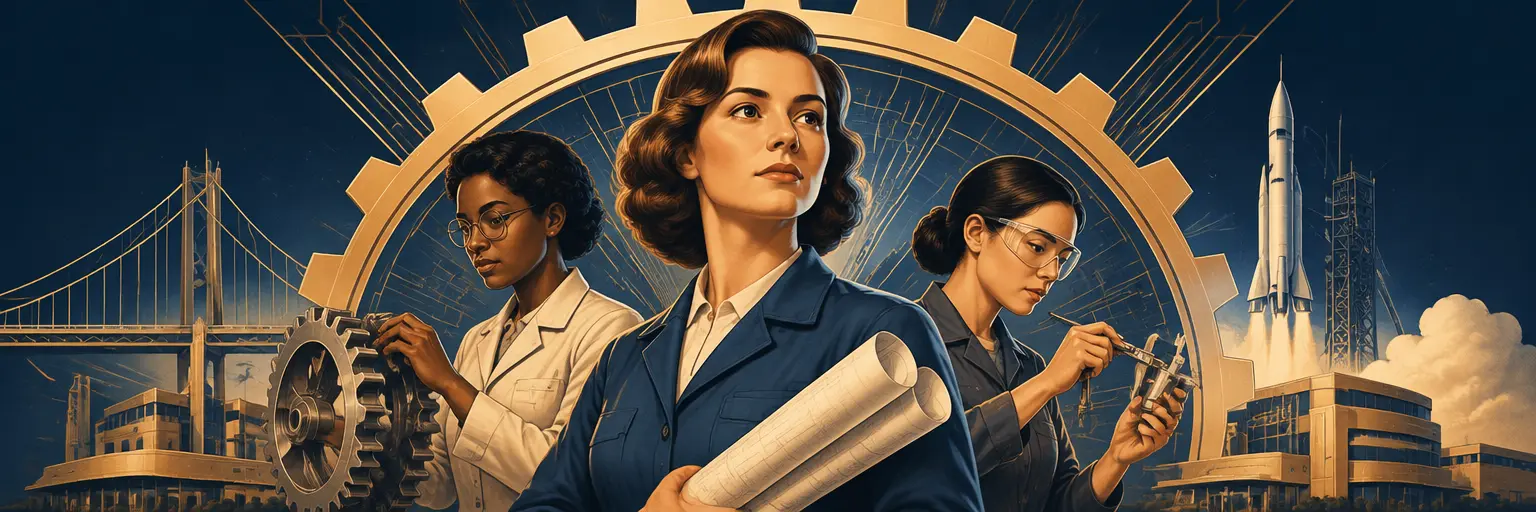
Welcome to our dedicated subcategory on Women in Mechanical Engineering, part of the Engineering & Technology section at WomenInScienceHistory.com. Here, we uncover the remarkable stories of female engineers who defied societal norms to shape machinery, thermal systems, robotics, and aerospace technology. From the 19th-century steam age to modern additive manufacturing, these women contributed foundational principles that power today's infrastructure. Explore their biographies, technical achievements, and the institutional barriers they overcame, offering both historical depth and inspiration for aspiring engineers.
🔧 Trailblazing Pioneers of the 19th and Early 20th Centuries
This section profiles women who entered mechanical engineering when formal education often barred them. Figures like Kate Gleason, the first woman to enroll in mechanical engineering at Cornell (1884), and Lillian Gilbreth, who merged psychology with motion efficiency, stand out. Their work in machine tools, industrial engineering, and ergonomics laid the groundwork for modern production systems. You will discover how they navigated patent offices, factory floors, and academic institutions, often contributing anonymously or under male pseudonyms.
Expect detailed timelines, patent documents, and personal letters that reveal their technical problem-solving. We also discuss how their legacy influenced later generations, including the formation of women's engineering societies. This historical foundation is crucial for understanding the slow but steady shift in workplace dynamics and educational access.
⚙️ Mid-Century Innovators in Thermodynamics and Fluid Mechanics
As the field matured, women like Yvonne Brill (rocket propulsion) and Yvonne C. H. Chiu (heat transfer in electronics) advanced core mechanical principles. This segment highlights their contributions to combustion engines, refrigeration cycles, and aerodynamic design during the Cold War era. Discover how Brill's hydrazine thruster revolutionized satellite station-keeping, and how Chiu's work on microchannel cooling enabled dense computer chips.
We analyze their peer-reviewed papers, laboratory notebooks, and collaboration with NASA or major automotive firms. Additionally, we address the sexual harassment and credit theft they faced, illustrating systemic challenges while celebrating their resilience. These narratives provide a technical deep-dive for engineering students and a human story for general readers.
🤖 Robotics, Automation, and Modern Manufacturing
The digital age brought women to the forefront of mechatronics and robotic systems. This section features Ruzena Bajcsy, a pioneer in machine perception, and Ayanna Howard, who developed autonomous robots for hazardous environments. Their work bridges mechanical design with software intelligence, impacting factories, space exploration, and medical surgery. We explore their control algorithms, sensor integration, and human-robot interaction research.
Expect case studies from automotive assembly lines, additive manufacturing startups, and surgical suites. We also highlight female-led teams in open-source hardware projects, emphasizing collaborative innovation. Interviews and video archives show how they mentor young women, creating pipelines into STEM fields. This content is ideal for those interested in applied engineering careers.
🏭 Overcoming Institutional Barriers and Shaping Policy
Beyond technical feats, this subcategory examines how women in mechanical engineering fought for equal pay, safe working conditions, and educational reform. We profile activists like Vera Rubin (though an astronomer, her advisory roles impacted engineering policy) and Margaret Ingels, who became the first female member of ASHRAE. Their lobbying led to more inclusive engineering curricula and professional certification standards.
We provide archival footage of congressional hearings, industry reports, and diversity initiatives. The section also discusses modern organizations like SWE (Society of Women Engineers) and their role in mentorship, scholarships, and anti-harassment policies. Understanding these institutional changes helps contextualize current diversity metrics and guides future advocacy.
🌍 Global Contributions and Intersectional Perspectives
Mechanical engineering history is incomplete without non-Western narratives. This section honors Sudha Murthy, India's first female engineer at TELCO, and Wei Li, whose hydroelectric turbine designs power rural China. We also spotlight Latin American and African innovators who adapted mechanical systems for local needs, such as low-cost water pumps and solar cookers. Their work emphasizes sustainable engineering and cultural adaptation.
Readers will find comparative analyses of educational access, funding disparities, and traditional roles across continents. We include interviews with contemporary engineers from emerging economies, highlighting how they balance technical excellence with community empowerment. This global lens enriches understanding of mechanical engineering as a universal problem-solving discipline.
Frequently Asked Questions
What contributions did women make to early mechanical engineering?
Women like Kate Gleason designed the first mass-produced gear-cutting machines, while Lillian Gilbreth patented the foot-pedal trash can and improved kitchen ergonomics. They also contributed to boiler efficiency, steam engine safety valves, and textile machinery automation. Their work often went uncredited, but patent records and factory reports verify their technical authorship.
Who is considered the first female mechanical engineer?
Kate Gleason is widely cited as the first woman to study mechanical engineering, graduating from Cornell in 1884. However, some historians argue Eliza Taylor (1838) holds earlier prototype status, though institutional records are incomplete. Gleason's subsequent leadership of the Gleason Works company solidified her legacy as a professional engineer.
What barriers did women face in entering mechanical engineering programs?
Many universities denied admission until the late 19th century, and those admitted often faced hostile faculty, separate classrooms, and restricted lab access. Professional societies sometimes barred women from full membership until the 1920s. Despite this, women like Emily Warren Roebling (Brooklyn Bridge) served as unofficial site engineers, learning subtly through correspondence courses.
How have modern female mechanical engineers influenced robotics?
Ruzena Bajcsy introduced vision-based feedback control for robots, enabling real-time adaptation. Ayanna Howard's work on autonomous navigation for Mars rovers led to similar systems for bomb disposal. Their algorithms now underpin collaborative robots (cobots) used in automotive and pharmaceutical industries, improving safety and precision.
Where can I find original sources about women in mechanical engineering?
Our site links to digitized collections from the MIT Museum Archives, Smithsonian Lemelson Center, and IEEE History Center. We also recommend the SWE Journal (since 1950) and patent databases like Google Patents for technical documentation. Each biography page includes direct citations for further research.