Women in Civil Engineering: Pioneers Who Built the World
Civil engineering shapes the very infrastructure of our society—bridges, skyscrapers, water systems, and transportation networks. Yet, women have been historically underrepresented in this field, despite making significant contributions that often go uncelebrated. On this page, we honor the female civil engineers who broke barriers, designed iconic structures, and paved the way for future generations. Discover their remarkable stories, technical achievements, and the resilience required to thrive in a male-dominated profession.
🏗️ Trailblazing Female Civil Engineers in History
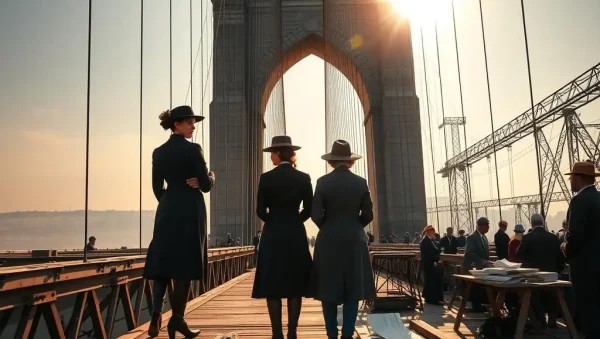
From the 19th century onward, women quietly entered civil engineering through unconventional paths—often as mathematicians, drafters, or assistants—before earning formal recognition. One of the earliest pioneers was Emily Warren Roebling, who served as the de facto chief engineer during the construction of the Brooklyn Bridge, managing complex cable calculations and site supervision when her husband fell ill. In the UK, Nora Stanton Blatch Barney became the first woman to earn a degree in civil engineering from Cornell University in 1905, later advocating for both engineering and women’s suffrage.
These trailblazers faced immense skepticism, often being barred from professional societies or denied project leadership roles. Yet their work—from designing dams to overseeing railway expansions—proved that technical expertise knows no gender. Their legacy is not just in concrete and steel, but in the legal and cultural battles they won, opening university doors and professional licenses for subsequent generations of women engineers.
📐 Key Contributions to Structural and Geotechnical Engineering
Women have made pivotal advances in understanding how structures withstand forces and how soil interacts with foundations. Elisa Leonida Zamfirescu, one of the first women to earn a PhD in engineering, specialized in geotechnical studies that improved road and bridge stability in Romania. Similarly, Olga Vargas, a Peruvian engineer, developed seismic-resistant designs that have influenced modern earthquake engineering in Latin America—a crucial innovation for regions prone to tremors.
In structural engineering, Fazlur Khan’s collaborator Margaret G. T. Cheng contributed to the analysis of tubular frame systems used in Chicago’s iconic skyscrapers. On the geotechnical side, Dr. Jenny Suckale at Stanford uses computational modeling to predict landslide and tsunami behavior, saving lives through early warning systems. These contributions demonstrate that women’s work in civil engineering has directly improved public safety and resilience against natural disasters.
🌉 Women Leading Modern Mega-Projects
In contemporary times, women hold top positions in some of the world’s largest infrastructure projects. Dr. Asha Jane served as the lead structural engineer for the Sydney Metro expansion, overseeing tunneling logistics and station design. In the US, Jane Lee became the chief engineer for the Bay Bridge seismic retrofit in San Francisco—a $6 billion project that required innovative cable and pier reinforcement techniques to survive future earthquakes.
Beyond individual projects, organizations like Women in Civil Engineering (WICE) and National Society of Black Engineers (NSBE) have created mentorship pipelines that encourage young women to pursue engineering degrees. Corporate giants like AECOM and Bechtel now actively recruit female project managers, recognizing that diverse teams lead to more creative and holistic design solutions. These modern trailblazers serve as living proof that gender parity in leadership is achievable, albeit through sustained advocacy.
🎓 Educational Pathways and Scholarships for Aspiring Women
For young women eager to enter civil engineering, numerous specialized programs exist. The Society of Women Engineers (SWE) offers scholarships and networking events, while universities like MIT and Stanford run summer camps focused on hands-on bridge building and water resource management. Online platforms like edX provide free introductory courses in structural analysis, making the technical foundation accessible to anyone regardless of location.
Moreover, many countries now mandate gender parity in engineering scholarships, and the American Society of Civil Engineers (ASCE) has committed to increasing female membership to 30% by 2030. Aspiring engineers should also explore dual-degree programs that combine civil engineering with environmental science or data analytics, expanding career versatility. By taking advantage of these resources, women can enter the field with both technical skills and a supportive professional network.
🔧 Challenges and Resilience: Navigating a Male-Dominated Field
Despite progress, women in civil engineering still face significant hurdles, including pay gaps, lack of mentorship, and unconscious bias in hiring. A 2022 survey by ASCE found that 38% of female civil engineers have considered leaving the profession due to workplace culture. However, many overcome these obstacles through peer support groups, such as Lean In Circles specific to engineering, and by advocating for transparent promotion criteria.
Resilience stories abound: Dr. Naeema Al-Zahrani became the first female civil engineer to oversee a major Saudi Arabian port expansion despite initial resistance from local contractors. She emphasizes that building strong client relationships and delivering impeccable technical work eventually silences critics. These challenges highlight the need for systemic changes—from family-friendly leave policies to zero-tolerance harassment rules—but they also underscore the determination of women who refuse to be sidelined.
Frequently Asked Questions
Who was the very first female civil engineer in history?
While exact records are debated, Emily Warren Roebling (1843–1903) is often credited as the first female civil engineer in practice, having served as chief engineer during the Brooklyn Bridge’s construction. Nora Stanton Blatch Barney was the first to earn a formal degree in civil engineering from Cornell University in 1905.
What are the most common specializations among women in civil engineering?
Women are particularly active in structural engineering (designing buildings and bridges), geotechnical engineering (studying soil and foundations), and environmental engineering (water treatment and sustainability). Recently, there has also been a surge in women specializing in smart infrastructure and digital twin technologies.
How can I find scholarships specifically for women in civil engineering?
Major resources include the Society of Women Engineers (SWE) Scholarships, the ASCE Women in Engineering Endowment, and the Two Ten Footwear Foundation for utility and construction roles. Additionally, many universities offer internal grants based on gender and academic merit—always check your specific institution’s financial aid portal.
Are there successful modern projects led entirely by female civil engineering teams?
Yes, notable examples include the Oslo Opera House in Norway, where structural engineer Ingrid M. J. H. Dahl led the team, and the Mersey Gateway Bridge in the UK, where Sarah Johnson directed the concrete deck construction. These projects demonstrate that all-female engineering leadership is both viable and successful.
What advice do veteran female civil engineers give to new graduates?
Experts recommend seeking hands-on internship experience early, joining professional societies like SWE for mentorship, and staying open to relocating for project-based opportunities. They also stress the importance of trademarking your technical strengths—specialize in niche areas like seismic retrofit or green infrastructure to stand out in the job market. Courage to negotiate salaries and leadership roles is equally vital.