
The Structural Integrity of Courage: Women Who Built More Than Just Infrastructure

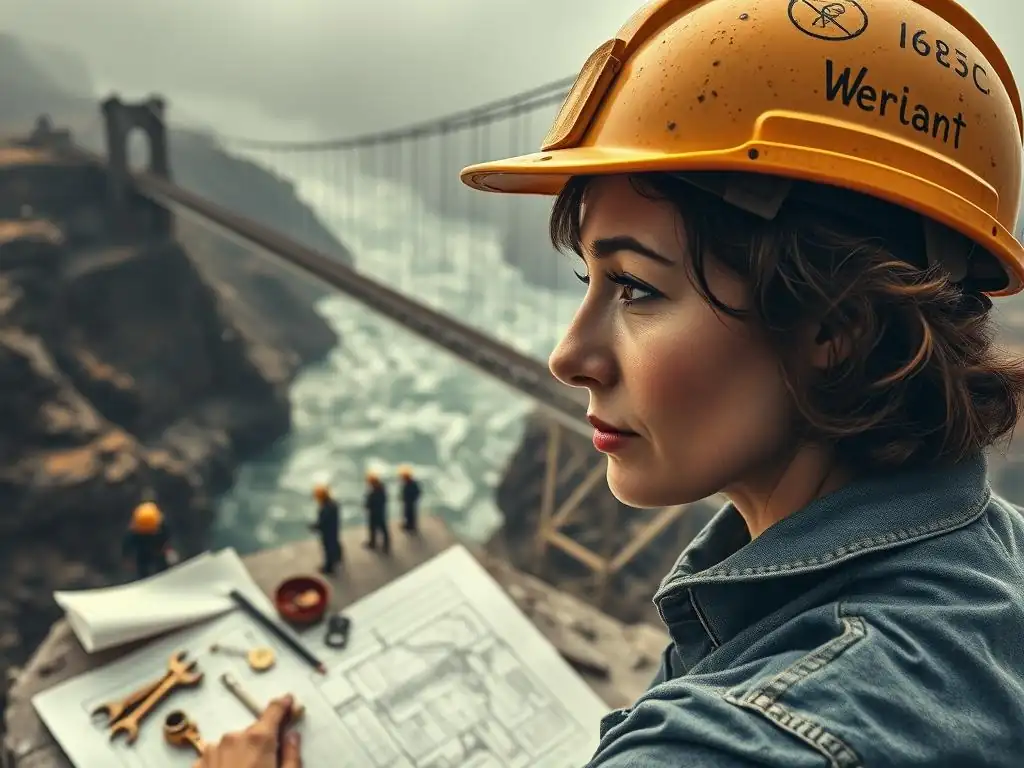
Welcome to WomenInScienceHistory.com, where we illuminate the untold stories of groundbreaking women who shaped the world of science!
Dive into the captivating world of engineering and technology and discover how women's engineering historical challenges were courageously overcome. Uncover the resilient spirit and remarkable achievements of these pioneers, and explore the structural integrity of their courage that allowed them to build more than just infrastructure. Their stories, often overlooked, are ready to inspire. Continue reading to learn more!
- Introduction: Recognizing Women's Impact on Civil Engineering History
- Early Pioneers: Breaking Ground in a Male-Dominated Field
- Overcoming Women’s Engineering Historical Challenges: Societal and Professional Barriers
- Key Projects and Achievements: Women's Contributions to Infrastructure Development
- Modern Women in Civil Engineering: Continuing the Legacy
- The Importance of Recognizing Women's Contributions to Engineering History
- Conclusion: The Enduring Strength of Women in Civil Engineering
-
Frequently Asked Questions
- How did societal expectations impact women pursuing engineering careers historically?
- What were some of the specific challenges women faced in accessing education and training in engineering?
- What types of discrimination did women engineers experience in the workplace historically?
- How did some women overcome these historical challenges to make significant contributions to engineering?
- What is the importance of highlighting the historical contributions of women in engineering?
- Final Reflection: Building Legacies of Resilience
- Ignite Your Inner Architect: Build a Legacy of Your Own!
Introduction: Recognizing Women's Impact on Civil Engineering History
Highlighting Overlooked Contributions of Female Civil Engineers
For centuries, the narratives surrounding monumental engineering achievements have predominantly featured men, often overshadowing the significant and foundational contributions made by women. From the design of complex structures to the meticulous management of vast construction projects, female civil engineers have consistently applied their intellect and skill, often in the face of immense societal and professional barriers. Their work, though frequently relegated to the footnotes of history or entirely omitted, has been indispensable to the development of critical infrastructure worldwide.
These women were not merely assistants or background figures; they were innovators, problem-solvers, and leaders whose expertise helped shape the built environment. Their contributions spanned various facets of civil engineering, including structural design, urban planning, water resource management, and transportation systems, proving that ingenuity and technical prowess know no gender. Recognizing their efforts is crucial for a complete and accurate understanding of engineering history.
The Significance of Documenting Women's Engineering Historical Challenges
Documenting the historical challenges faced by women in engineering is not merely an academic exercise; it is a vital step toward understanding systemic inequalities and inspiring future generations. These narratives illuminate the pervasive gender bias and discrimination that women encountered in education, professional organizations, and the workplace, providing crucial context for the "Women’s engineering historical challenges overcoming" theme. By acknowledging these struggles, we can appreciate the immense resilience and determination required to succeed in a male-dominated field.
Furthermore, a comprehensive record of these challenges and how they were overcome serves as a powerful source of inspiration. It demonstrates that despite formidable obstacles—from being denied entry to engineering schools to facing professional ostracization—women persevered and made indelible marks. This documentation fosters a more inclusive historical perspective, validates the experiences of pioneering women, and encourages young girls to pursue STEM fields, knowing that their contributions are valuable and that the path, though challenging, is navigable.
Early Pioneers: Breaking Ground in a Male-Dominated Field
Emily Warren Roebling - Engineering the Brooklyn Bridge
Emily Warren Roebling stands as a towering figure in the history of civil engineering, though her pivotal role in the construction of the Brooklyn Bridge was largely obscured for decades. When her husband, Chief Engineer Washington Roebling, became incapacitated by caisson disease in 1872, Emily stepped into an unprecedented position, effectively taking over the day-to-day management and technical oversight of the monumental project. She became the crucial link between her bedridden husband and the on-site engineers and contractors, demonstrating an extraordinary grasp of the complex engineering principles involved.
Over the next 11 years, Emily immersed herself in the intricacies of bridge construction, studying higher mathematics, materials science, stress analysis, and cable manufacturing techniques. She meticulously reviewed plans, drafted specifications, and managed the immense workforce, proving her capabilities far beyond what was expected of a woman in the late 19th century. Her dedication ensured the continuity and ultimate success of one of the most ambitious engineering projects of its time.
The Engineering Challenges She Faced and How She Overcame Them
The construction of the Brooklyn Bridge presented numerous unprecedented engineering challenges. The use of pneumatic caissons for the foundations, descending to depths of up to 78 feet below the riverbed, introduced the then-unknown dangers of decompression sickness, or "the bends," which afflicted many workers, including Washington Roebling. Emily mastered the complexities of these innovative techniques, understanding the pressures and structural demands of the massive stone towers and the revolutionary steel cables, a material largely untested for such a grand scale.
Beyond the technical hurdles, Emily faced the immense societal challenge of being a woman in a position of such authority in a field overwhelmingly dominated by men. She navigated skepticism from the public and the engineering establishment. By diligently overseeing every aspect of the project, communicating effectively with engineers and politicians, and demonstrating an unparalleled command of the subject matter, she gradually earned respect. Famously, she testified before the American Society of Civil Engineers, eloquently defending her husband's work and implicitly her own, a powerful act of "Women’s engineering historical challenges overcoming."
Her Contributions to Bridge Engineering and Construction Management
Emily Warren Roebling's contributions to the Brooklyn Bridge went beyond mere oversight; they encompassed critical aspects of construction management and material quality control. She was responsible for inspecting the massive steel cables, ensuring their proper manufacture and installation, a task crucial to the bridge's structural integrity. Her direct involvement in managing the finances, negotiating contracts, and liaising with the project's board of trustees highlighted her comprehensive administrative and strategic skills.
Her legacy is not only the magnificent bridge itself, which has stood for over a century and a half, but also the groundbreaking precedent she set for women in engineering. She proved that a woman, given the opportunity and possessing the intellect, could lead and execute a project of immense complexity and scale. The Brooklyn Bridge stands as a testament to her enduring strength, her technical acumen, and her ability to overcome profound "Women’s engineering historical challenges overcoming" through sheer determination and competence.
Nora Stanton Blatch Barney - A Trailblazer in Structural Steel and Suffrage
Nora Stanton Blatch Barney, granddaughter of the renowned suffragist Elizabeth Cady Stanton, was a formidable force who seamlessly blended her passion for civil engineering with her unwavering commitment to women's rights. In 1905, she made history as the first woman to earn a civil engineering degree from Cornell University, a remarkable achievement that opened doors for women in higher education. She then immediately plunged into the professional world, securing a position at the American Bridge Company, where she gained invaluable experience in structural steel design and construction.
Her ambition and intellect were undeniable, leading her to become the first female junior member of the American Society of Civil Engineers (ASCE) in 1906. This was a significant milestone, though it was a temporary victory; her subsequent efforts to gain full membership were met with persistent resistance for years. Despite the professional obstacles, Nora continued to work on various engineering projects, including the design of reinforced concrete structures and contributions to the massive Catskill Aqueduct project in New York City, demonstrating her versatile technical skills.
Navigating Societal Barriers and Professional Obstacles
Nora Stanton Blatch Barney encountered relentless societal and professional barriers throughout her career. Despite her exceptional qualifications and practical experience, she faced pervasive gender discrimination that limited her employment opportunities and professional advancement. The ASCE, for instance, refused to grant her full membership for years, arguing that women were not "intended" to be engineers and that her work would be "temporary" due to marriage. This forced her to sue the organization in 1916, a bold move highlighting the "Women’s engineering historical challenges overcoming" through legal and social advocacy.
Her career was often interrupted by these biases, compelling her to take on roles that did not always fully utilize her engineering expertise, such as working in real estate development or serving as a consultant. Yet, she persevered, consistently advocating for women's suffrage and equal rights, believing that professional equality for women was intrinsically linked to broader social justice. Her fight was not just for herself, but for all women aspiring to careers in male-dominated fields.
Her Innovative Solutions and Lasting Legacy in Reinforced Concrete Design
Despite the systemic hindrances, Nora Stanton Blatch Barney made tangible contributions to engineering, particularly in the nascent field of reinforced concrete design. Her work at the Radley Steel Construction Company and later as an independent consultant showcased her expertise in creating durable and efficient structures. She understood the principles of combining steel and concrete to create robust and resilient buildings, contributing to the advancements in modern construction techniques.
Her legacy extends far beyond her specific engineering projects. Nora Stanton Blatch Barney's unwavering determination to practice engineering while simultaneously championing women's rights paved the way for countless future female engineers. She was a living embodiment of "Women’s engineering historical challenges overcoming," demonstrating that intellectual capacity and professional ambition were not exclusive to one gender. Her life's work underscored the vital importance of both technical excellence and persistent advocacy in breaking down barriers for women in STEM.
Overcoming Women’s Engineering Historical Challenges: Societal and Professional Barriers
Gender Bias and Discrimination in Engineering Education and Practice
For much of history, engineering education and practice were explicitly designed to exclude women. Universities either refused admission to women or offered limited, separate programs, often under the guise of protecting "feminine sensibilities." Even when admitted, female students frequently faced skepticism, isolation, and outright hostility from male peers and faculty. This gender bias extended into professional practice, where women engineers struggled to find employment, gain recognition, or be assigned to significant projects.
Many qualified women were relegated to drafting, clerical, or research support roles, rather than leadership or design positions, regardless of their qualifications. Salaries were often lower for women performing the same work as men, and opportunities for promotion were scarce. This systemic discrimination created a "leaky pipeline" effect, where many talented women, despite their initial passion and aptitude, left the field due to the pervasive and discouraging environment.
The Fight for Equal Opportunities and Recognition
The fight for equal opportunities and recognition for women in engineering has been a protracted battle, marked by the persistent efforts of pioneering individuals and the formation of dedicated advocacy groups. Early female engineers, like Nora Stanton Blatch Barney, challenged discriminatory practices through legal action and public advocacy, demanding fair treatment and professional acknowledgment. Their individual acts of courage laid the groundwork for broader change, embodying the spirit of "Women’s engineering historical challenges overcoming."
A pivotal moment arrived with the establishment of organizations like the Society of Women Engineers (SWE) in 1950. SWE provided a crucial platform for networking, mentoring, and collective advocacy, working to eliminate discrimination and promote women's inclusion in engineering. Through lobbying efforts, educational initiatives, and public awareness campaigns, these groups have gradually chipped away at institutional biases, leading to increased access to education and more equitable professional environments, though challenges still persist.
The Impact of Mentorship and Support Networks
In a field historically unwelcoming to women, mentorship and robust support networks have been indispensable for "Women’s engineering historical challenges overcoming." For early female engineers, finding a supportive professor, a sympathetic colleague, or even a male ally who believed in their capabilities could make a profound difference in their ability to persist. These mentors often provided not only technical guidance but also crucial emotional support and professional navigation strategies.
As more women entered the field, formal and informal support networks became vital. Professional associations like SWE fostered communities where women could share experiences, offer advice, and find solidarity in their struggles. These networks provided a safe space to discuss challenges, celebrate successes, and collaborate on solutions to systemic issues. The collective strength derived from these relationships empowered women to confront discrimination, build confidence, and ultimately thrive in environments that were often designed to exclude them.
Key Projects and Achievements: Women's Contributions to Infrastructure Development
The Hoover Dam - Elsie Eaves' Contributions to Data Analysis
While the colossal Hoover Dam is often associated with the male engineers and construction workers who poured its massive concrete structures, women also made significant, albeit less visible, contributions. Elsie Eaves, a civil engineer and long-time editor for Engineering News-Record (ENR), played a critical role in documenting and analyzing the massive project. Eaves was a meticulous compiler of statistics and a keen observer of infrastructure development, whose work provided invaluable insights into the scale and progress of such monumental undertakings.
Her specific contribution to the Hoover Dam, largely from her office at ENR, involved tracking construction costs, material consumption, and labor statistics. She analyzed the economic impact of the project, the efficiency of resource allocation, and the overall progress, providing a crucial, data-driven narrative of this unprecedented engineering feat. Her work ensured that the lessons learned from the Hoover Dam's construction were systematically recorded and disseminated, influencing future large-scale projects.
The Technical Challenges and Innovative Solutions in Concrete Placement
The construction of the Hoover Dam presented unparalleled technical challenges, particularly concerning concrete placement. To manage the immense heat generated by the curing of 3.25 million cubic yards of concrete, engineers devised an ingenious system of embedded cooling pipes that circulated chilled river water. This innovative solution prevented the concrete from cracking due to thermal expansion and contraction, a critical factor for the dam's structural integrity.
While Elsie Eaves was not directly involved in the design or implementation of these cooling systems, her comprehensive data analysis and reporting for ENR helped to document the efficacy and groundbreaking nature of these solutions. Her ability to synthesize complex technical and financial data provided a vital record of how these engineering challenges were overcome, contributing to the collective knowledge base of the civil engineering community.
The Impact on Water Resource Management and Power Generation
The Hoover Dam's impact on water resource management and power generation in the American Southwest was revolutionary. It transformed arid landscapes into fertile agricultural regions, provided a reliable water supply for millions of people in Nevada, Arizona, and California, and became a major source of hydroelectric power. Its construction allowed for the controlled flow of the Colorado River, mitigating floods and enabling sustainable development across a vast region.
Elsie Eaves' detailed reporting helped to communicate the immense scale and profound benefits of this project to a broader audience. Her analyses underscored the economic and social significance of the dam, demonstrating how such massive infrastructure projects could fundamentally reshape regions and improve quality of life. Her efforts in accurately documenting these aspects contributed to the historical understanding of this critical piece of "Women’s engineering historical challenges overcoming" through data and analysis.
The Panama Canal - Women's Roles in Support Services and Engineering Assistance
The construction of the Panama Canal, an engineering marvel that reshaped global trade, was a colossal undertaking fraught with immense challenges, including tropical diseases, formidable terrain, and complex logistics. While the narrative often focuses on male engineers and laborers, women played crucial, though often unacknowledged, roles in support services and engineering assistance that were vital to the project's success. These contributions ranged from administrative support and medical care to scientific research and community building.
Women, often wives of engineers, doctors, or administrators, managed households in challenging environments, created social structures, and provided essential medical and educational services. For instance, female nurses were on the front lines of combating yellow fever and malaria, diseases that had previously decimated workforces. Their direct and indirect efforts were critical in maintaining the health and morale of the thousands of workers, thereby ensuring the continuity of the immense construction effort.
Addressing Logistical and Engineering Problems with Creative Solutions
The logistical and engineering problems of the Panama Canal were staggering. Beyond the excavation of millions of cubic yards of earth and rock, managing the health of the workforce was paramount. Women, particularly those in healthcare and laboratory roles, played a direct role in addressing these critical issues. Nurses and medical assistants worked alongside doctors like William C. Gorgas, implementing mosquito control measures and treating the sick, dramatically reducing mortality rates from tropical diseases.
Furthermore, women in administrative roles managed supplies, payrolls, and communications, ensuring the smooth operation of a project spanning decades and continents. Their meticulous organization and problem-solving skills in these support functions were essential for the overall efficiency and progress of the canal's construction, contributing to the "Women’s engineering historical challenges overcoming" through vital, often overlooked, support.
The Significance of Their Contribution to Global Trade and Infrastructure Development
The Panama Canal fundamentally transformed global trade by providing a shortcut between the Atlantic and Pacific Oceans, drastically reducing shipping times and costs. It remains one of the most strategically important waterways in the world, a testament to human ingenuity and perseverance. The successful completion of this monumental infrastructure project relied not only on groundbreaking engineering but also on the sustained efforts of a diverse workforce.
The contributions of women, whether through direct engineering assistance, critical medical support, or essential logistical management, were integral to creating an environment where such a massive undertaking could succeed. Their collective efforts ensured that the project could overcome its human and environmental challenges, solidifying the Panama Canal as an enduring symbol of global connectivity and a powerful example of how diverse contributions are essential for grand infrastructure development.
Modern Women in Civil Engineering: Continuing the Legacy
Examples of Contemporary Female Civil Engineers Making a Difference
Today, women civil engineers are at the forefront of addressing some of the world's most pressing challenges, continuing the legacy of "Women’s engineering historical challenges overcoming." For instance, Dr. Arati Prabhakar, a former director of DARPA and now a key figure in technology policy, has influenced how federal research shapes future infrastructure, though she is more broadly known for her work in advanced technology.
More directly, women like Lisa Robert, an executive vice president at a major engineering firm, have led the design and construction of complex transportation networks, including significant highway interchanges and transit systems in major metropolitan areas, ensuring sustainable and efficient urban development.
Another impactful example is Dr. Lucy Arendt, an expert in disaster resilience and infrastructure planning. Her work focuses on preparing communities for natural disasters, designing resilient buildings, and developing strategies for rapid recovery, directly contributing to public safety and sustainable urban living. These women, among countless others, are not only excelling in traditional civil engineering disciplines but are also pioneering interdisciplinary approaches that integrate environmental science, data analytics, and community engagement into their practice.
Addressing Current Challenges in the Field of Civil Engineering
Contemporary female civil engineers are actively engaged in addressing critical global challenges that span from climate change adaptation to aging infrastructure. They are designing innovative solutions for sustainable water management, developing green building technologies, and implementing smart city initiatives that leverage data to improve urban efficiency and quality of life. For example, many are working on projects to upgrade dilapidated bridges and dams, ensuring these vital structures can withstand future demands and environmental shifts.
Furthermore, women engineers are leading efforts in developing resilient infrastructure that can better withstand the impacts of extreme weather events, such as flood-resistant urban designs or earthquake-proof buildings. Their perspectives are crucial in creating equitable and inclusive infrastructure that serves all members of society, ensuring that communities have access to clean water, reliable transportation, and safe living environments. Their work showcases how "Women’s engineering historical challenges overcoming" now involves tackling global issues with innovative and inclusive approaches.
Inspiring Future Generations of Women in STEM
The visibility and achievements of modern women in civil engineering are profoundly inspiring future generations to pursue STEM fields. By seeing successful female engineers in leadership roles, designing iconic structures, and solving complex problems, young girls and women gain tangible role models. Organizations like the Society of Women Engineers (SWE) and various university outreach programs actively highlight these contemporary figures, showcasing the diverse and impactful career paths available in civil engineering.
These initiatives often involve mentorship programs, workshops, and school visits where current female engineers share their experiences, demystify the profession, and demonstrate the exciting possibilities within the field. By challenging traditional stereotypes and showcasing the creativity, problem-solving, and societal impact inherent in civil engineering, these women are actively encouraging a new wave of female talent, ensuring a more diverse and innovative future for the profession.
The Importance of Recognizing Women's Contributions to Engineering History
Promoting Diversity and Inclusion in STEM Fields
Recognizing the historical contributions of women to engineering is fundamental to promoting diversity and inclusion in contemporary STEM fields. By acknowledging the achievements of pioneers like Emily Warren Roebling and Nora Stanton Blatch Barney, we dismantle the myth that engineering is an inherently male domain. This historical validation provides a powerful counter-narrative to centuries of exclusion, demonstrating that women have always possessed the intellect, skill, and courage to excel in technical disciplines.
A historically inclusive perspective fosters a more welcoming and equitable environment today. When young women see their predecessors celebrated, they are more likely to envision themselves in similar roles, increasing female representation in engineering schools and workplaces. This diversity, in turn, leads to richer problem-solving, more innovative solutions, and infrastructure that better serves the needs of a diverse global population, reflecting a continuous process of "Women’s engineering historical challenges overcoming."
Celebrating the Achievements of Women in Science and Engineering
Celebrating the achievements of women in science and engineering is not merely about correcting historical oversights; it is about providing powerful narratives of perseverance, ingenuity, and profound impact. These stories serve as vital sources of inspiration, demonstrating how individuals can overcome systemic barriers through intelligence, determination, and resilience. Highlighting their groundbreaking work validates their struggles and showcases their invaluable contributions to human progress.
Such celebrations also serve to educate the public and future generations about the critical role women have played in shaping our modern world. From the bridges they helped build to the scientific principles they advanced, their legacies are woven into the fabric of society. By amplifying these narratives, we ensure that these women receive the recognition they deserve and that their experiences continue to motivate and empower aspiring female engineers and scientists worldwide.
Ensuring a More Equitable Future for Women in Civil Engineering
Understanding the historical struggles and triumphs of women in civil engineering is crucial for ensuring a more equitable future. By analyzing the "Women’s engineering historical challenges overcoming," we can identify persistent biases and systemic issues that still affect women in the profession today, such as the gender pay gap, lack of representation in leadership, and unconscious bias in hiring and promotion. This historical context informs current advocacy efforts and policy changes aimed at creating truly equitable opportunities.
Moreover, by celebrating female pioneers, we provide strong role models who can inspire young women to enter and thrive in the field. Ensuring a future where women have equal access to education, mentorship, leadership roles, and equitable compensation is paramount. This ongoing commitment will not only benefit women individually but will also enrich the entire field of civil engineering, leading to more innovative solutions and a more representative profession capable of tackling the complex challenges of the 21st century.
Conclusion: The Enduring Strength of Women in Civil Engineering
Reflecting on the Women’s Engineering Historical Challenges Overcoming
The journey of women in civil engineering is a powerful testament to their enduring strength, resilience, and unwavering commitment to building a better world. From the uncredited efforts of Emily Warren Roebling in overseeing the Brooklyn Bridge to Nora Stanton Blatch Barney's dual fight for structural engineering advancements and women's suffrage, these pioneers faced daunting "Women’s engineering historical challenges overcoming" with extraordinary courage. They navigated pervasive gender bias, professional exclusion, and societal skepticism, often excelling in environments that actively sought to diminish their contributions.
Their stories are a compelling narrative of how individual tenacity, coupled with collective advocacy, gradually chipped away at entrenched barriers. They demonstrated that engineering prowess knows no gender, and that diverse perspectives are not just desirable but essential for innovation and progress. Reflecting on their struggles and triumphs reveals a rich tapestry of contributions that have fundamentally shaped our built environment, despite the immense obstacles placed in their path.
Inspiring Future Generations to Build a Better World
The legacies of these formidable women in civil engineering extend far beyond the structures they helped create; they serve as a beacon of inspiration for future generations. Their unwavering commitment to their craft, their intellectual curiosity, and their courageous pursuit of professional equality provide a powerful blueprint for aspiring engineers. By highlighting their stories, we empower young women to envision themselves as leaders, innovators, and problem-solvers in fields that have historically excluded them.
As the world faces complex challenges such as climate change, rapid urbanization, and the need for sustainable infrastructure, the diverse talents and perspectives of women in civil engineering are more critical than ever. The history of "Women’s engineering historical challenges overcoming" is not just a record of the past; it is a call to action for the future, encouraging every young woman to embrace her potential, break new ground, and contribute her unique strength to building a more resilient, equitable, and sustainable world.
Frequently Asked Questions
How did societal expectations impact women pursuing engineering careers historically?
Historically, societal expectations often steered women towards more "feminine" roles, creating significant barriers to entry in male-dominated fields like engineering. This included limited access to education and professional opportunities.
What were some of the specific challenges women faced in accessing education and training in engineering?
Women faced outright exclusion from engineering programs at many institutions. Even when admitted, they often experienced discrimination and a lack of mentorship, hindering their progress.
What types of discrimination did women engineers experience in the workplace historically?
Women in engineering faced lower pay, fewer promotions, and a lack of recognition for their contributions. They also experienced sexism and harassment, making it difficult to thrive professionally.
How did some women overcome these historical challenges to make significant contributions to engineering?
Despite the obstacles, many women persevered through sheer determination and resilience. They actively sought out mentors, built networks, and challenged discriminatory practices, paving the way for future generations.
What is the importance of highlighting the historical contributions of women in engineering?
Highlighting these contributions redresses historical omissions and provides role models for aspiring female engineers. It also helps to foster a more inclusive and equitable future for the field.
Final Reflection: Building Legacies of Resilience
The stories shared within this article highlight more than just engineering feats; they illuminate the unyielding spirit of women who dared to defy societal constraints and build lasting legacies. Their contributions, often overlooked or minimized, resonate powerfully today, reminding us that progress is forged through perseverance and the courage to challenge the status quo.
The impact of these women extends far beyond the physical structures they created. Their journeys serve as a powerful reminder of the importance of mentorship, advocacy, and unwavering belief in one's own capabilities. They paved the way for future generations of women in STEM, demonstrating that brilliance knows no gender. The most effective way to do it, is to do it.
- Amelia Earhart. This quote encapsulates the spirit of these women, who chose action over acquiescence, shaping not only the landscape but also the future possibilities for women in engineering.
As you reflect on the challenges these women overcame, consider the structures you are building in your own life. What obstacles are you facing, and how can you draw inspiration from their resilience? Embrace your own potential, challenge the limitations imposed upon you, and contribute to a future where every voice is heard and every talent is valued. The world needs your unique perspective and your unwavering courage.
Ignite Your Inner Architect: Build a Legacy of Your Own!
Thank you for diving into the stories of these incredible women! We hope their unwavering spirit and groundbreaking achievements have left you feeling inspired and empowered. Now, it's your turn to contribute to the ongoing narrative of women in science and engineering.
Here are a few ways you can take action:
- Share this article to inspire others! Let's amplify these stories and make sure more people know about these phenomenal women.
- Explore our "Hidden Figures" section and uncover even more untold tales of women who shaped our world.
- Start a conversation: Research and share about the achievements of a local woman engineer or scientist in your community.
What small but significant step will you take today to build a more equitable future for women in STEM?