Women in Science Education: Inspiring the Next Generation of Innovators
Welcome to the Women in Science Education subcategory, a dedicated space within WomenInScienceHistory.com that explores how pioneering female scientists have shaped not only their fields but also the way science is taught, mentored, and championed. Here, we delve into the legacies of educators, curriculum reformers, and advocates who broke barriers in classrooms and laboratories. Expect to discover actionable insights on pedagogy, historical case studies, and modern initiatives that continue to close the gender gap in STEM. Whether you are an educator, a student, or a lifelong learner, this page offers a rich tapestry of stories and resources designed to inspire and inform your journey.
🔬 Trailblazing Educators Who Transformed STEM Classrooms
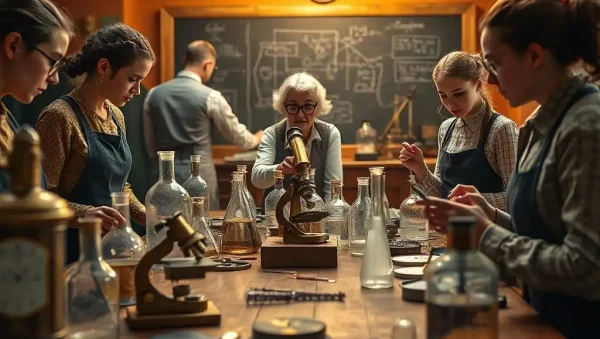
This section uncovers the lives of women like Maria Mitchell, the first female professor of astronomy in the U.S., and Ellen Swallow Richards, a pioneer of environmental science education. These educators didn’t just teach; they redefined curricula to include hands-on experimentation and critical thinking. You’ll learn how their teaching philosophies—often rooted in accessibility and real-world application—laid the groundwork for modern STEM pedagogy. Their stories highlight how women navigated restrictive academic environments to create inclusive learning spaces, influencing generations of students who might otherwise have been excluded.
Expect detailed profiles that connect their classroom practices to broader educational reforms. For example, we analyze how Mitchell used observational astronomy to teach scientific method to women at Vassar College, a radical act in the 19th century. Similarly, Richards’ integration of “home economics” as a science legitimized daily life as a subject of rigorous study. These narratives reveal a pattern: women educators often prioritized collaborative, inquiry-based learning long before it became mainstream, offering timeless lessons for today’s educators seeking to diversify their teaching approaches.
📚 Overcoming Barriers: Mentorship and Advocacy in Education
Many women in science education faced systemic exclusion, but they turned obstacles into advocacy. This section focuses on mentorship networks and institutional reforms led by figures like Chien-Shiung Wu and Barbara McClintock, who despite their groundbreaking research, devoted significant energy to mentoring younger scientists, especially women. We explore how these women created informal support systems that bypassed discriminatory policies, and how their advocacy led to changes in university hiring practices and grant allocations. Their efforts underscore the importance of role models in encouraging girls to pursue STEM careers.
We also examine more recent initiatives, such as the Association for Women in Science and the Rosalind Franklin Society, which continue the legacy of these pioneers by providing scholarships, workshops, and policy advocacy. By profiling both historical and contemporary advocates, you’ll see how sustained mentorship can counteract implicit bias and structural inequities. This section is essential reading for anyone interested in fostering inclusive environments in academic or corporate science settings, offering concrete strategies drawn from successful programs worldwide.
🧪 Innovative Teaching Methods Inspired by Women Scientists
From Jane Goodall’s immersive fieldwork to Nobel laureate Donna Strickland’s open-access teaching materials, women have pioneered novel educational approaches. This section showcases specific techniques—like inquiry-based learning, citizen science projects, and cross-disciplinary curricula—that originated or were championed by women in science. You’ll find case studies on how these methods improve student engagement and retention, particularly among underrepresented groups. For example, we detail how May-Britt Moser’s spatial memory research translates into interactive classroom maps that teach neuroscience concepts to middle schoolers.
We also highlight digital innovations, such as free online course platforms created by women like Daphne Koller, co-founder of Coursera, which democratized access to high-quality STEM education. By analyzing these methods, we provide practical templates that educators can adapt for their own classrooms. Whether you’re developing a lab module or a fully online course, the principles described here—active learning, real-world relevance, and collaborative problem-solving—are proven to close achievement gaps and spark curiosity. This is a treasure trove of actionable strategies for modern science teachers.
🌍 Global Perspectives on Women in Science Education
Science education isn’t a monolith; it varies dramatically across cultures and historical periods. Here, we explore how women educators in Africa, Asia, Latin America, and the Middle East have adapted Western scientific frameworks to local contexts. For instance, we profile Sun Yat-sen University’s Xiaodong Wang, who integrated traditional medicinal plants into biochemistry curricula, and South African naturalist Marjorie Courtenay-Latimer, who used local biodiversity to teach evolution. These stories reveal how culturally responsive teaching can make science more relevant and engaging for students worldwide.
We also analyze systemic challenges, such as gender-based policy gaps in STEM education in developing nations, and highlight successful interventions by organizations like UNESCO’s STEM and Gender Advancement project. By comparing global approaches, you’ll gain a nuanced understanding of how women have navigated varying societal expectations to become educators. This section is invaluable for policymakers, global educators, and researchers interested in cross-cultural gender equity, offering both inspirational narratives and evidence-based recommendations for reform in diverse educational systems.
🌱 Modern Initiatives and Resources for Future Generations
Finally, this section aggregates current programs, scholarships, and digital tools that build on the legacies of historical figures. We cover initiatives like Girls Who Code, Black Girls Do Engineer, and Association for Women in Mathematics’ mentorship programs, explaining how they integrate storytelling about female scientists into their curricula. You’ll also find a curated list of online archives—such as the Science History Institute’s Women in Science collection—that offer free primary sources for educators. Each initiative is assessed for effectiveness, with data on participation and outcomes.
We also discuss emerging trends, such as the use of virtual reality to recreate historical lab settings and AI-driven tutoring systems designed to reduce gender bias in feedback. By aligning with contemporary tech, these programs make history accessible and engaging. Whether you’re a parent, teacher, or student, this section provides a comprehensive starting point for integrating women’s contributions into your own learning environment. From lesson plans to grant opportunities, you’ll leave with a toolkit to actively support the next generation of women in science.
Frequently Asked Questions
Why is it important to teach women’s history in science education?
Teaching women’s history in science education provides role models that help girls envision themselves in STEM careers, boosting confidence and persistence. It also corrects historical inaccuracies by acknowledging contributions that were often erased. For all students, it fosters a more complete, inclusive understanding of scientific progress and encourages critical thinking about bias in knowledge production.
What are some common challenges women educators faced historically?
Women educators historically faced limited access to advanced degrees, exclusion from formal academic networks, lower salaries, and societal expectations to prioritize family over career. Many were forced to work in women’s colleges or under male colleagues’ names. They also encountered resistance to teaching certain subjects, such as physics or engineering, considered “unfeminine” at the time.
How can I incorporate women scientists into my existing science curriculum?
Start by integrating short biography features into each unit, linking the scientist’s work to the topic you’re teaching. Use primary sources like original papers or letters. Also, highlight their errors and revisions to humanize science. Finally, invite guest speakers or use virtual talks to connect students with living women scientists, making history relevant and current.
Are there any scholarships or grants for women pursuing science education careers?
Yes, several organizations offer funding. The American Association of University Women provides fellowships for women in STEM education. Elsevier Foundation offers early-career grants for women scientists in developing countries. Additionally, Sheryl Sandberg’s Lean In doesn’t fund directly but offers network support. Always check university departments and national science foundations for local opportunities.
What is the current state of gender parity in science classrooms today?
While enrollment in life sciences is now balanced, physics and computer science remain male-dominated. Women make up only about 30% of the global STEM workforce. But progress is steady: more girls are taking advanced STEM courses, and gender gaps have narrowed in most countries. However, retention, especially at leadership levels, remains a challenge due to biased evaluation and work-life policies.