
Their Lessons Echo Still: Honoring Women Who Transformed Science Learning

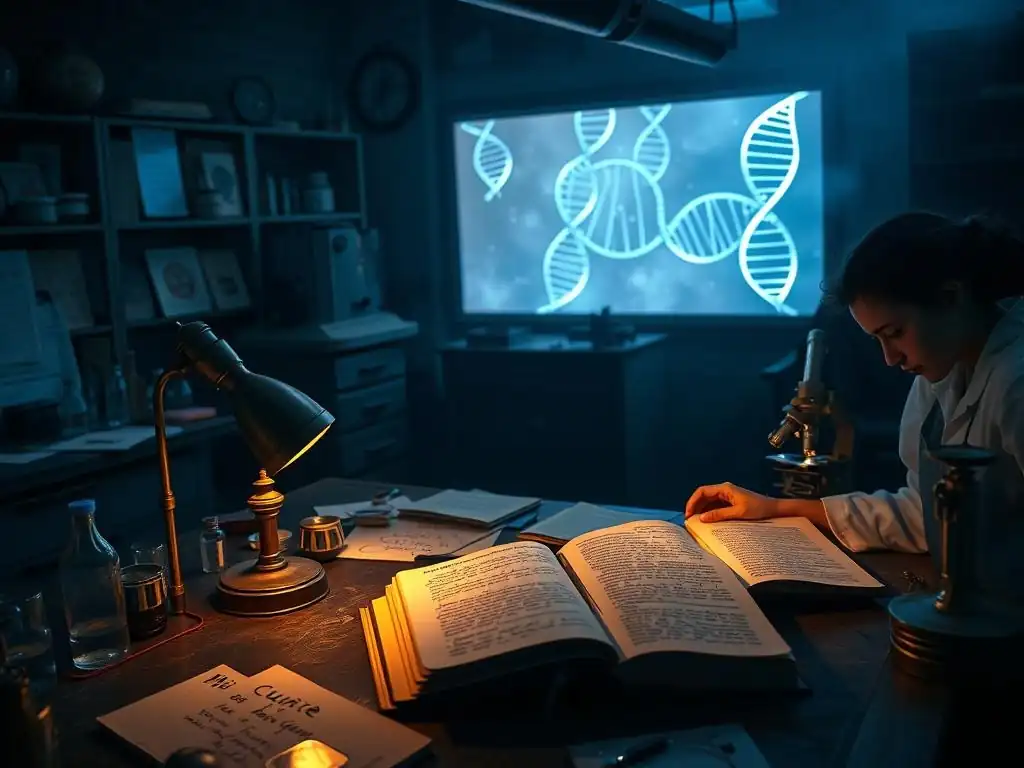
Welcome to WomenInScienceHistory.com!
Discover the remarkable and often untold stories of women who shaped the landscape of scientific discovery. From groundbreaking research to overcoming societal barriers, these trailblazing figures left an indelible mark. Explore their lives and legacies, starting with our latest feature exploring the women scientists' historical impact across disciplines and learn how their lessons echo still, inspiring innovation today. Intrigued? Dive in and uncover the powerful narratives that have transformed science learning.
- Introduction: Recognizing the Enduring Impact of Women Scientists in Education
- Pioneering Women in Science Education: Shaping Future Generations
- Case Studies: Examining the Impact of Women's Contributions to Science Learning
- The Historical Impact of Women Scientists: Beyond the Classroom
- Key Lessons from Women Scientists: Principles for Effective Science Teaching
- Celebrating the Enduring Legacy: Women Scientists and Their Lasting Influence on Education
-
Frequently Asked Questions
- What is WomenInScienceHistory.com's primary goal?
- What kind of content can I expect to find on the website?
- What does "Their Lessons Echo Still: Honoring Women Who Transformed Science Learning" title mean?
- Why is it important to learn about women scientists' historical impact?
- How does WomenInScienceHistory.com aim to improve search engine ranking for "Women scientists historical impact"?
- Final Reflection: The Enduring Legacy of Women in Science
- Ignite Your Curiosity: Champion Women in Science!
Introduction: Recognizing the Enduring Impact of Women Scientists in Education
Expanding the Narrative: Highlighting Women's Contributions to Science Education
The narrative of scientific progress often focuses solely on groundbreaking discoveries, overlooking the equally vital role of education and the individuals who shaped how scientific knowledge is disseminated and understood. Within this often-simplified history, the profound contributions of women scientists to science education are particularly underrepresented. These pioneering women not only pushed the boundaries of scientific understanding through their research but also actively developed innovative pedagogical approaches, mentored countless students, and advocated for broader scientific literacy, leaving an indelible "women scientists historical impact" on how science is learned and taught.
Their influence extends far beyond the confines of their laboratories, reaching into classrooms, public discourse, and the very philosophy of learning. By exploring their roles as educators, curriculum developers, and public advocates, we gain a more complete appreciation of the multifaceted "women scientists historical impact" on society. This expanded view reveals how their commitment to education was often intertwined with their scientific pursuits, driven by a desire to share knowledge, inspire curiosity, and equip future generations with the tools for critical scientific thinking.
The Overlooked Narratives: Addressing Gender Bias in Science History
Historically, the contributions of women in science have been systematically marginalized, a bias that extends deeply into the recognition of their educational roles. Traditional accounts often prioritize male figures and their discoveries, inadvertently obscuring the significant teaching, mentoring, and educational advocacy undertaken by their female counterparts. This gender bias has resulted in a skewed perception of scientific history, where the "women scientists historical impact" on the very foundations of science learning is frequently unacknowledged.
Addressing these overlooked narratives is crucial for a more accurate and equitable understanding of science history. By consciously bringing forward the stories of women who shaped science education, we not only rectify historical injustices but also provide diverse role models for aspiring scientists. Recognizing their pedagogical innovations and their tireless efforts to make science accessible helps dismantle the myth that science education is solely the domain of a select few, highlighting instead a rich tapestry woven by many, including the often-forgotten women who dedicated their lives to both discovery and dissemination.
Pioneering Women in Science Education: Shaping Future Generations
Maria Montessori: A Visionary Approach to Science in Early Childhood
Maria Montessori, an Italian physician and educator, revolutionized early childhood education with her "scientific pedagogy," which inherently integrated scientific principles into the learning process. Her method, developed in the early 20th century, emphasized hands-on exploration, observation, and discovery, allowing children to learn at their own pace through direct interaction with their environment. Montessori believed that children possess an innate curiosity and a "scientific mind" that, if nurtured correctly, could lead to a lifelong love of learning and understanding of the natural world.
Her approach to science education in early childhood was radical for its time, moving away from rote memorization towards an experiential model. Children in Montessori classrooms engage with materials designed to help them classify, sort, and understand concepts like gravity, botany, and zoology through sensory experiences. This systematic approach to fostering independence and critical thinking has had a profound "women scientists historical impact" on educational practices worldwide, with thousands of Montessori schools globally still adhering to her foundational principles of self-directed learning and prepared environments that encourage scientific inquiry from a very young age.
Rachel Carson: Cultivating Environmental Awareness Through Education
Rachel Carson, a marine biologist and conservationist, wielded her pen as a powerful educational tool, profoundly shaping public understanding of environmental science. While most renowned for Silent Spring (1962), which exposed the dangers of pesticides, her earlier works like The Sea Around Us (1951) and The Edge of the Sea (1955) were masterful examples of popular science writing, making complex ecological concepts accessible and engaging for a broad audience. Carson's ability to combine rigorous scientific accuracy with evocative, narrative prose cultivated a deep appreciation for the natural world and its intricate systems.
Her writings served as an informal yet immensely influential form of public science education, fostering a nascent environmental consciousness that would eventually blossom into a global movement. Carson’s work demonstrated that effective science education extends beyond formal classrooms; it involves inspiring wonder, conveying urgency, and empowering individuals with knowledge to make informed decisions about their world. Her "women scientists historical impact" lies not only in her scientific insights but also in her unparalleled success in translating complex ecological principles into compelling narratives that educated a generation and laid the groundwork for modern environmental education curricula.
Case Studies: Examining the Impact of Women's Contributions to Science Learning
Case Study 1: Marie Curie and Innovative Teaching Methods in Radioactivity
The Challenge: Understanding and Communicating the Complexities of Radioactivity
At the turn of the 20th century, radioactivity was a newly discovered and profoundly mysterious phenomenon, posing significant challenges for both scientific understanding and effective communication. The very nature of radioactive elements was revolutionary, overturning classical physics and chemistry, and their potential dangers were only beginning to be understood. There was no established curriculum or pedagogical framework for teaching such a novel and hazardous field, demanding entirely new approaches to laboratory safety, experimental design, and theoretical instruction for aspiring researchers.
The need to train a new generation of scientists capable of working with these elusive and potent substances was paramount for the advancement of physics, chemistry, and eventually, medicine. This complex educational void required not only brilliant scientific minds but also innovative educators who could demystify the invisible forces at play and build a practical, hands-on understanding of their properties and applications, ensuring both scientific rigor and personal safety in an uncharted domain.
The Solution: Curie's Direct Involvement in Teaching and Mentoring Researchers
Marie Curie, a Nobel laureate and pioneer in radioactivity, recognized this educational imperative and took an active, hands-on role in teaching and mentoring. Beyond her groundbreaking research, she lectured at the Sorbonne, becoming its first female professor in 1906, and established the Radium Institute (now the Curie Institute) in 1914. There, she personally supervised and trained numerous researchers from across Europe and beyond, focusing on rigorous experimental techniques, meticulous data collection, and a deep theoretical understanding of radioactive phenomena.
Curie's teaching philosophy emphasized direct engagement with materials and problems, fostering an environment where students learned by doing, often side-by-side with her in the laboratory. She taught courses specifically on radioactivity, sharing her unparalleled expertise and developing practical methods for handling and measuring radioactive substances safely. This direct, immersive approach, combining theoretical instruction with extensive practical laboratory work, was crucial for preparing the next generation of scientists in a rapidly evolving field, leaving a significant "women scientists historical impact" on the development of nuclear science education.
The Result: Advancement of Research and Training in Nuclear Physics and Chemistry
Curie's innovative teaching and mentorship produced a cadre of highly skilled researchers who went on to make significant contributions to nuclear physics and chemistry. Her students and colleagues, many of whom were women, carried forward her methods and expanded the field, contributing to advancements in medical applications of radium, fundamental atomic theory, and radiation safety protocols. The Radium Institute, under her guidance, became a world-renowned center for research and training, attracting brilliant minds and fostering a collaborative scientific community.
The educational infrastructure and pedagogical rigor established by Curie ensured that the knowledge of radioactivity was not confined to a few but was systematically transmitted and built upon. Her direct "women scientists historical impact" on science learning through her teaching ensured that the foundational principles of radioactivity were deeply understood and applied, leading to exponential growth in the field and ultimately contributing to the development of nuclear medicine, energy, and weaponry in the decades that followed.
Case Study 2: Alice Augusta Ball and Her Role in Developing Treatment for Hansen's Disease
Focusing on Bridging Research and Practical Application
Alice Augusta Ball, an African American chemist, distinguished herself by focusing her research not merely on theoretical discovery but on solving a pressing public health crisis: Hansen's Disease (leprosy). As a young researcher at the University of Hawaii in the early 20th century, Ball dedicated her work to finding an effective and practical treatment for a disease that caused immense suffering and social ostracism. Her approach epitomized the bridge between fundamental scientific inquiry and its direct application for human benefit, a critical aspect of effective science education.
Ball’s research was driven by the urgent need for a viable solution, moving beyond the traditional, often ineffective, methods of administering chaulmoogra oil, which was known to have some therapeutic properties but was difficult to ingest and caused severe side effects. Her work demonstrated that scientific research could and should be directly impactful on real-world problems, inspiring a focus on translational science and illustrating a powerful "women scientists historical impact" on public health.
Developing an Injectable Oil Extract from the Chaulmoogra Tree
Ball's groundbreaking achievement was the development of the "Ball Method," a technique for isolating the active compounds from chaulmoogra oil and converting them into a water-soluble, injectable form. This innovation made the treatment far more effective and less painful for patients. Prior to her method, the oil was either orally ingested, causing nausea, or topically applied with limited success. Her chemical expertise allowed her to synthesize ethyl esters of the oil's fatty acids, creating a stable, easily absorbable compound.
This breakthrough, achieved before her untimely death at the age of 24 in 1916, revolutionized the treatment of Hansen's Disease. The injectable form allowed for systemic delivery of the therapeutic agents, significantly improving patient outcomes and offering hope where there was previously little. Her precise chemical manipulation of a natural product into a viable pharmaceutical demonstrated an extraordinary scientific acumen and a practical application of organic chemistry, marking a pivotal "women scientists historical impact" in medical science.
Long-Term Effects on Treatment and Public Health
The "Ball Method" became the most effective treatment for Hansen's Disease for over two decades, until the advent of sulfone drugs in the 1940s. Her injectable solution was widely adopted and used globally, fundamentally changing the lives of countless individuals suffering from the disease. It allowed many patients to be released from isolation and lead more normal lives, reducing the stigma associated with the illness and improving public health on a global scale.
The long-term effects of Alice Ball's work extended beyond the immediate treatment of Hansen's Disease; it served as a powerful testament to the potential of applied scientific research to address critical health challenges. Her pioneering efforts underscored the importance of innovative pharmaceutical chemistry and demonstrated how a single scientific breakthrough, driven by a commitment to practical solutions, could have a massive "women scientists historical impact" on global health policy and patient care, leaving a lasting legacy that continues to inspire.
The Historical Impact of Women Scientists: Beyond the Classroom
Mentorship and Role Modeling: Inspiring Future Female Scientists
Beyond their direct teaching roles, many women scientists exerted a profound educational influence through their roles as mentors and powerful role models. In fields traditionally dominated by men, their very presence, perseverance, and intellectual achievements served as beacons of possibility for aspiring female scientists. Figures like Lise Meitner, whose brilliant work in nuclear physics was often overlooked, still inspired countless women to pursue scientific careers, even if they never directly taught them in a formal classroom setting.
These women demonstrated that scientific excellence was not gender-specific, challenging prevailing societal norms and opening doors for future generations. Their struggles against discrimination, their resilience in the face of skepticism, and ultimately, their groundbreaking discoveries, offered tangible proof that women could not only participate in science but lead its advancement. This indirect educational impact, fostering aspiration and confidence, constitutes a vital part of the "women scientists historical impact" on the demographic landscape of STEM fields, slowly but surely diversifying the scientific workforce.
Advocating for Science Education Reform: Promoting Scientific Literacy
A number of pioneering women scientists actively championed broader science education reform, recognizing that scientific literacy was essential for informed citizenship and societal progress. They understood that the benefits of scientific discovery extended beyond the laboratory and needed to be accessible to the general public. A notable example is Ellen Swallow Richards, a chemist and pioneer in sanitary engineering, who became a leading advocate for applying scientific principles to everyday life, particularly in the emerging field of home economics.
Richards established the first women's laboratory at MIT in 1876 and later founded the American Home Economics Association. Her work was instrumental in advocating for scientific education that equipped individuals, especially women, with the knowledge to improve public health, nutrition, and environmental conditions within their communities. Her efforts illustrate a significant "women scientists historical impact" on the movement to promote scientific literacy and integrate scientific thinking into practical, daily decision-making, demonstrating that science education is a fundamental component of societal well-being.
Key Lessons from Women Scientists: Principles for Effective Science Teaching
Emphasizing Inquiry-Based Learning and Investigation
The careers of many groundbreaking women scientists inherently underscore the power of inquiry-based learning and rigorous investigation. Their successes often stemmed from challenging established paradigms, asking fundamental questions, and meticulously designing experiments to uncover new truths. Marie Curie's relentless pursuit of understanding radioactivity through hands-on experimentation, or Rachel Carson's meticulous observations of ecological systems, exemplify how deep scientific understanding emerges from direct engagement with phenomena rather than passive reception of facts.
These historical figures provide compelling models for effective science teaching today, demonstrating that the most profound learning occurs when students are encouraged to ask their own questions, formulate hypotheses, and design investigations to find answers. By emphasizing critical observation, data analysis, and the iterative nature of scientific discovery, educators can foster the same spirit of inquiry that propelled these women to their remarkable achievements, ensuring a lasting "women scientists historical impact" on pedagogical approaches.
Fostering Critical Thinking and Collaboration
Throughout history, women scientists often faced significant barriers, requiring them to employ exceptional critical thinking skills to navigate complex scientific problems and institutional biases. Their ability to analyze data rigorously, challenge conventional wisdom, and persevere in the face of skepticism is a testament to the power of independent thought. Furthermore, while often unacknowledged, collaboration was frequently integral to their scientific progress, whether through formal partnerships or informal networks of support and intellectual exchange.
These aspects of their work offer vital lessons for contemporary science education. Teaching students to think critically, evaluate evidence, and engage in constructive collaboration—skills that were essential for the success of these pioneering women—is paramount for preparing them for both scientific careers and informed citizenship. By highlighting the collaborative nature of scientific discovery, even when individual contributions were marginalized, we reinforce the importance of teamwork and intellectual exchange, furthering the "women scientists historical impact" on educational values.
Promoting Interdisciplinary Connections in Science Education
Many of the most impactful contributions by women scientists transcended traditional disciplinary boundaries, highlighting the interconnectedness of scientific knowledge. Alice Ball's work, for instance, seamlessly blended organic chemistry, pharmacology, and public health, demonstrating how solutions to complex problems often lie at the intersection of multiple fields. Similarly, Rachel Carson's environmental advocacy drew on biology, ecology, and social science, illustrating the holistic nature of modern challenges.
These interdisciplinary approaches offer a powerful blueprint for science education. By encouraging students to see connections between different scientific disciplines, as well as between science and other fields like ethics, policy, and history, educators can prepare them to tackle the multifaceted problems of the 21st century. The legacy of these women scientists encourages a holistic view of science, fostering a more comprehensive and relevant understanding of the world and emphasizing a broad "women scientists historical impact" on curriculum design.
Celebrating the Enduring Legacy: Women Scientists and Their Lasting Influence on Education
Continuing the Fight for Equity in STEM Education
The inspiring stories of women scientists who transformed science learning underscore the progress made in recognizing female contributions, yet they also serve as a stark reminder that the fight for equity in STEM education is far from over. Despite increased awareness and initiatives, significant disparities persist in certain scientific and engineering fields, with women remaining underrepresented in leadership roles and some technical disciplines. The historical struggles faced by pioneering women provide valuable context for understanding the systemic barriers that still exist, such as unconscious bias, lack of visible role models, and societal expectations.
By continuing to highlight the "women scientists historical impact" on education and discovery, we not only celebrate their past achievements but also fuel ongoing advocacy for inclusive STEM environments. This historical perspective reinforces the critical need for sustained efforts to dismantle remaining obstacles, ensure equitable access to quality science education for all, and actively encourage girls and young women to pursue their scientific passions, thereby enriching the entire scientific enterprise.
Resources for Learning More about Women in Science History
To fully appreciate the profound "women scientists historical impact" on science learning and beyond, it is essential to delve deeper into their individual stories and collective struggles. Numerous scholarly works, biographies, and historical archives offer invaluable insights into the lives, challenges, and triumphs of these remarkable women. Exploring these resources provides a richer, more nuanced understanding of their scientific contributions and their often-overlooked roles as educators, mentors, and advocates.
Engaging with these materials allows for a critical examination of how historical biases shaped perceptions of their work and how their perseverance ultimately paved the way for future generations. Seeking out academic journals focused on the history of science, university archives, and dedicated websites like WomenInScienceHistory.com can illuminate the multifaceted ways in which these women influenced not just scientific discovery, but also the very methodologies and philosophies of science education.
Honoring the Past, Inspiring the Future: A Call to Action
The enduring lessons from women scientists who transformed science learning are not merely historical footnotes; they are powerful calls to action for the present and future. By honoring their past achievements—their groundbreaking research, their innovative teaching methods, their tireless advocacy—we gain a deeper appreciation for the multifaceted "women scientists historical impact" on our understanding of the world and how we learn about it. Their legacies challenge us to look beyond conventional narratives and recognize the diverse voices and contributions that have shaped scientific progress.
This recognition is not just about historical accuracy; it is about inspiring the next generation. By showcasing these resilient, intelligent, and often revolutionary women, we provide tangible role models that can encourage young minds, especially girls, to pursue careers in STEM, to embrace scientific inquiry, and to believe in their own capacity to make a difference. The continued celebration of their influence ensures that their lessons echo still, guiding us toward a more inclusive, equitable, and scientifically literate future.
Frequently Asked Questions
What is WomenInScienceHistory.com's primary goal?
The site aims to celebrate the contributions of women to science, highlighting their work and the challenges they faced. It seeks to inspire future generations by sharing their stories.
What kind of content can I expect to find on the website?
You'll find biographies of pioneering female scientists, discussions about their groundbreaking work, and analyses of the obstacles they overcame. The focus is on historical impact and inspiration.
What does "Their Lessons Echo Still: Honoring Women Who Transformed Science Learning" title mean?
It emphasizes the enduring influence of women scientists on science education. It suggests that their innovations and experiences continue to shape how science is learned today.
Why is it important to learn about women scientists' historical impact?
Understanding their contributions helps to correct historical biases and provides diverse role models for aspiring scientists. It also reveals the challenges of gender inequality in STEM fields.
How does WomenInScienceHistory.com aim to improve search engine ranking for "Women scientists historical impact"?
By creating content focused on their contributions, using the phrase in titles and descriptions, and providing valuable information about their achievements and struggles. This increases visibility and relevance.
Final Reflection: The Enduring Legacy of Women in Science
The stories we've explored, highlighting the profound and often overlooked contributions of women to science learning, are not just historical anecdotes. They are vital reminders that progress is built on the shoulders of those who dared to challenge the status quo, and their struggles and triumphs continue to resonate deeply within the scientific community and beyond. Their impact is not confined to textbooks; it's woven into the very fabric of how we approach scientific inquiry and education today.
These pioneering women not only advanced scientific knowledge but also fundamentally reshaped the landscape for future generations. Their perseverance in the face of systemic barriers serves as a constant source of inspiration, reminding us that true innovation often arises from diverse perspectives and unwavering determination. Science knows no country, because knowledge belongs to humanity, and is the torch which illuminates the world.
- Louis Pasteur, a sentiment these women embodied despite the obstacles they faced.
As we reflect on the "Women scientists historical impact" and the lessons gleaned from their journeys, let us commit to fostering a more inclusive and equitable scientific environment. Let us actively seek out and amplify the voices of underrepresented groups, ensuring that the torch of knowledge continues to illuminate the world, guided by the brilliance and resilience of all who seek to understand it.
Ignite Your Curiosity: Champion Women in Science!
Thank you for exploring the incredible stories of these pioneering women and their impact on science education. Now, let's carry their legacy forward and inspire the next generation.
- Boldly share this article with your network to amplify these untold stories.
- Explore the "Women in Science History" archives for further inspiration on impactful female scientists.
- Volunteer at a local school's STEM program to help foster the love of science in young minds.
What actions are you taking to ensure women's contributions to science are never forgotten?