
The Human Element: Women Teaching Medicine and Health Sciences Against All Odds

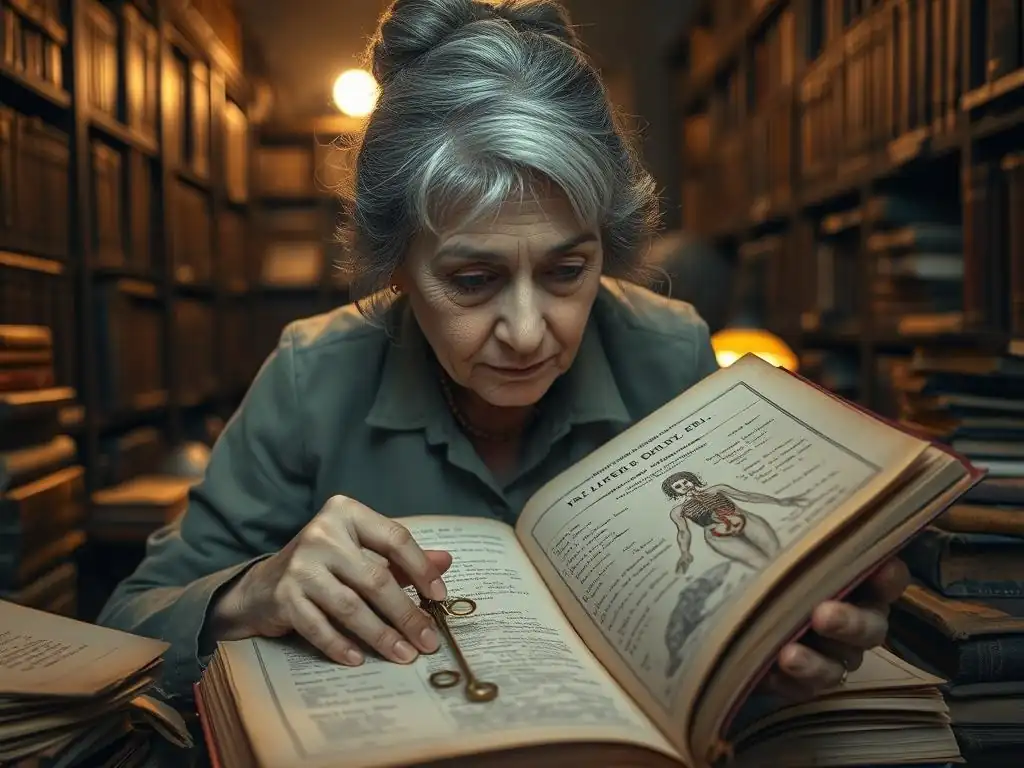
Welcome to WomenInScienceHistory.com, where we uncover the untold stories of brilliant women who shaped the scientific landscape. Delve into our latest feature, "The Human Element: Women Teaching Medicine and Health Sciences Against All Odds," a captivating exploration of women teaching medicine history and their pivotal roles in shaping healthcare education. Prepare to be inspired by their resilience, ingenuity, and the enduring impact they've had on generations of medical professionals. What challenges did they overcome, and what legacies did they leave behind? Read on to discover the answers...
- Introduction: Recognizing the Unsung Heroines of Medical Education
- Trailblazing Women Educators: Shaping the Future of Medicine
- Contributions to Medical Curriculum and Pedagogy
- Impact on Students and the Medical Profession
- The Enduring Legacy of Women in Medical Education
- Conclusion: Honoring Women's Contributions
-
Frequently Asked Questions
- What were some of the main obstacles faced by women teaching medicine history and health sciences in the past?
- How did women teaching medicine history contribute to the advancement of medical knowledge?
- Why is it important to highlight the contributions of women teaching medicine history?
- Did women teaching medicine history primarily teach other women, or did they also teach men?
- How does the website "WomenInScienceHistory.com" help to preserve and promote the legacy of women teaching medicine history?
- Final Reflection: Empowering Futures Through Education
- Ignite Your Passion: Champion Women in Science!
Introduction: Recognizing the Unsung Heroines of Medical Education
Societal Expectations and Gender Bias
Historically, prevailing societal norms relegated women primarily to domestic roles, largely discouraging their participation in professional fields, especially those as demanding and prestigious as medicine. It was widely believed that women lacked the intellectual rigor, emotional fortitude, or physical stamina required for medical practice and, consequently, for teaching. This deeply entrenched gender bias meant that aspiring female physicians and educators often faced outright skepticism and ridicule from male colleagues, academic institutions, and even the general public, who viewed their ambitions as unnatural or even dangerous.
This pervasive bias manifested in various forms, from informal discouragement to formal institutional barriers. Medical schools often cited reasons such as women's supposed "nervous debility" or "emotional fragility" as justifications for denying them admission. The idea that a woman could not maintain the necessary detachment for surgical procedures or the intellectual discipline for complex scientific research was a common argument used to exclude them, severely limiting the emergence of "women teaching medicine history."
Limited Access to Education and Opportunities
For much of the 19th and early 20th centuries, opportunities for women to receive formal medical education were extremely scarce. Mainstream medical schools predominantly refused admission to women, forcing pioneering individuals to either seek training abroad or enroll in the handful of women's medical colleges established specifically to address this exclusion. The Woman's Medical College of Pennsylvania, founded in 1850, stands as a notable example, providing a vital pathway for women to earn medical degrees when other doors remained closed.
Even upon graduating, the challenges persisted. Women physicians often struggled to secure internships, residencies, or hospital privileges, which were crucial for gaining practical experience and establishing a professional reputation. This lack of access to clinical training severely limited their ability to transition into teaching roles or establish themselves as authorities in their fields. Without the foundational experience gained from these opportunities, the journey of "women teaching medicine history" was fraught with formidable obstacles, often requiring them to create their own clinical and educational spaces.
Overcoming Resistance in Medical Schools
The journey of "women teaching medicine history" within established medical institutions was often met with active and passive resistance from male faculty and administrators. When women were eventually admitted to medical schools or hired for faculty positions, they frequently encountered discriminatory practices, including lower salaries, fewer resources, and limited opportunities for promotion compared to their male counterparts. Their expertise was often undervalued, and their contributions marginalized, particularly in research-intensive or surgical disciplines.
Despite these formidable challenges, determined women persevered, slowly chipping away at the institutional barriers. Figures like Elizabeth Blackwell, the first woman to earn a medical degree in the United States in 1849, faced immense ostracism and was initially rejected by numerous institutions before finally being admitted to Geneva Medical College. Her unwavering commitment and the subsequent successes of other early female graduates gradually demonstrated the capability of women in medicine, paving the way for more widespread, albeit slow, acceptance of "women teaching medicine history" in formal academic settings.
Trailblazing Women Educators: Shaping the Future of Medicine
Dr. Dorothy Reed Mendenhall: Pioneering Pediatric Pathology
Dr. Dorothy Reed Mendenhall (1874-1964) was a groundbreaking figure in both pathology and public health, whose early research laid foundational knowledge that continues to inform medical understanding. A graduate of Johns Hopkins Medical School in 1900, she conducted seminal work on Hodgkin's disease during her fellowship at Johns Hopkins, where she famously identified the large, multinucleated cells characteristic of the disease, now known as Reed-Sternberg cells. This discovery was critical for the accurate diagnosis and classification of Hodgkin's lymphoma, profoundly impacting pathology education and practice.
While Dr. Mendenhall's direct teaching roles in a traditional classroom setting were less prominent in her early career, her research profoundly shaped how future pathologists were educated. Later in her career, she transitioned into public health, working for the U.S. Children's Bureau.
In this capacity, she became a powerful educator of the public, particularly mothers, on infant and child health, nutrition, and hygiene. Her efforts effectively taught preventative medicine on a broad scale, embodying a crucial aspect of "women teaching medicine history" not just to students, but to entire communities, thereby influencing the health outcomes of countless children across the nation.
Dr. Helen Brooke Taussig: Championing Pediatric Cardiology
Dr. Helen Brooke Taussig (1898-1986) is widely recognized as the founder of pediatric cardiology, a field she helped establish through her pioneering clinical work and dedication to teaching. After earning her M.D. from Johns Hopkins in 1927, she became the head of the Children's Heart Clinic there. Her most famous contribution was the development of the Blalock-Taussig shunt, a surgical procedure created in collaboration with surgeon Alfred Blalock and technician Vivien Thomas, designed to alleviate the symptoms of "blue baby syndrome" (tetralogy of Fallot), saving thousands of infants' lives globally.
As a professor of pediatrics at Johns Hopkins University, Dr. Taussig was an exceptional educator and mentor. She trained an entire generation of pediatric cardiologists, many of whom went on to lead their own departments and research centers. Her teaching style emphasized meticulous clinical observation, careful listening to patients and their families, and a deep understanding of cardiac anatomy. She conducted legendary clinical rounds, demonstrating by example how to approach complex congenital heart defects, thereby profoundly shaping the curriculum and pedagogical approach in pediatric cardiology and solidifying her place among "women teaching medicine history."
Dr. Gerty Cori: Breaking Ground in Biochemistry and Research
Dr. Gerty Cori (1896-1957) was a brilliant biochemist whose groundbreaking research fundamentally advanced the understanding of carbohydrate metabolism. In 1947, she became the first American woman to win a Nobel Prize in Physiology or Medicine, shared with her husband Carl Cori, for their discovery of the mechanism by which glycogen is converted into glucose and back again in the body – a process now known as the Cori cycle. This discovery provided crucial insights into how energy is stored and utilized, impacting fields from diabetes research to exercise physiology.
Although primarily known as a researcher, Dr. Cori's laboratory at Washington University in St. Louis was a vibrant hub of education and mentorship. She meticulously guided numerous students and post-doctoral fellows, teaching them advanced biochemical techniques, rigorous experimental design, and the art of scientific inquiry. Her precision, intellectual honesty, and dedication to fundamental research set an extraordinarily high standard for scientific education and professional development. Through her direct mentorship and the profound influence of her discoveries, Dr. Cori significantly shaped the landscape of biochemical education and research, embodying a powerful aspect of "women teaching medicine history" through scientific leadership.
Contributions to Medical Curriculum and Pedagogy

Innovative Teaching Methods
Women educators in medicine often adopted or pioneered innovative teaching methods, partly out of necessity due to initial exclusion from traditional academic structures, and partly from a desire to make medical education more effective and patient-centered. Early female physicians, for instance, often emphasized hands-on clinical experience and direct patient interaction, rather than solely relying on didactic lectures, which was a hallmark of their approach. Florence Nightingale, though primarily a nurse, significantly influenced medical training by emphasizing practical observation and bedside instruction in her nursing schools, advocating for a more experiential learning model that resonated across healthcare professions.
Furthermore, many women, having fought hard for their place in medicine, were keen to demonstrate their competence and relevance through practical application and innovative problem-solving in their teaching. This often led to the integration of new scientific discoveries into the curriculum more rapidly, and the development of interdisciplinary approaches to patient care. Their teaching methods often fostered critical thinking and problem-solving skills, moving beyond rote memorization to prepare students for the complexities of real-world medical practice, thereby enriching the pedagogical landscape of "women teaching medicine history."
Integrating Women's Health Perspectives
A significant contribution of women physicians and educators to medical curriculum was their instrumental role in bringing women's specific health needs and reproductive health into the mainstream of medical education. For decades, medical schools, predominantly shaped by male perspectives, often overlooked or inadequately covered topics vital to women's well-being, including gynecology, obstetrics, and diseases unique to women. Pioneering female medical faculty championed the inclusion of these subjects, advocating for a more comprehensive understanding of female anatomy, physiology, and pathology.
This advocacy led to the development of specialized courses, clinics, and even entire departments focused on women's health within medical institutions. By ensuring that future generations of doctors received robust training in these areas, "women teaching medicine history" profoundly impacted the quality of care provided to female patients. Their efforts highlighted the importance of a gender-sensitive approach to medicine, pushing for research and education that addressed the full spectrum of health issues affecting women across their lifespans.
Emphasizing Compassion and Communication
Many women educators in medicine brought a heightened emphasis on the "human element" of healthcare – promoting empathy, effective patient communication, and a holistic approach to care. This focus often contrasted with a more purely scientific or procedure-focused training prevalent in some traditional medical curricula. Particularly in fields like pediatrics, family medicine, and public health, where many early women doctors found opportunities, the importance of understanding the patient as an individual within their social context became a cornerstone of their teaching.
This emphasis translated into practical pedagogical approaches, where students were taught the value of active listening, understanding the social determinants of health, and cultivating a compassionate bedside manner. For instance, Dr. Helen Taussig's approach to pediatric cardiology was renowned for its patient-centeredness, demonstrating how profound scientific knowledge could be combined with deep human empathy. This focus enriched the medical curriculum, preparing physicians who were not only technically proficient but also skilled in the art of healing and human connection, a profound legacy of "women teaching medicine history."
Impact on Students and the Medical Profession
Mentoring Future Female Physicians
The presence of "women teaching medicine history" has been absolutely critical in mentoring and inspiring future generations of female physicians. For aspiring female medical students, seeing women in positions of authority as professors, researchers, and clinicians provided tangible proof that a career in medicine was not only possible but achievable, directly countering historical societal skepticism and institutional barriers. These women educators served as vital role models, demonstrating resilience, intellectual prowess, and professional success in a male-dominated field.
Beyond serving as role models, these mentors provided invaluable guidance, practical advice, and often crucial emotional support to their female students. They helped navigate the complexities of medical school, provided insights into career pathways, and offered strategies for overcoming gender-specific challenges in the profession. These mentorship relationships were instrumental in retaining women in medicine and fostering a pipeline of talented female leaders, ensuring a continuous legacy of "women teaching medicine history" for decades to come.
Diversifying the Medical Workforce
The increasing number of "women teaching medicine history" has played a pivotal role in diversifying the medical workforce. As more women entered faculty positions and leadership roles, they encouraged and supported a greater influx of female students into medical schools, ultimately leading to a more balanced representation within the profession. For instance, in 1960, women comprised less than 7% of U.S. physicians; by 2019, that figure had risen significantly to over 36%, with women now constituting over half of medical school matriculants in many Western countries. This shift directly reflects the impact of visible female educators and mentors.
This diversification has brought new perspectives, research interests, and approaches to patient care. A more diverse workforce is better equipped to understand and address the varied health needs of a diverse patient population, leading to more comprehensive and culturally competent healthcare. The presence of women in all medical specialties and leadership tiers has enriched the entire medical field, fostering a more inclusive and representative environment for both practitioners and patients alike.
Promoting Collaborative Learning
Women educators often fostered more collaborative and less hierarchical learning environments within medical schools. Perhaps stemming from their own experiences with exclusion and the necessity of building strong supportive networks, they frequently emphasized teamwork, peer learning, and interdisciplinary dialogue. This approach contrasted with traditional, often highly competitive and hierarchical medical education models, promoting an atmosphere where students felt more comfortable sharing ideas, asking questions, and learning from each other.
This shift in pedagogical approach has had a profound impact on preparing students for the realities of modern healthcare, which is increasingly team-based and requires seamless collaboration among multiple specialists. By promoting a culture of shared learning and mutual respect, "women teaching medicine history" have helped to cultivate medical professionals who are not only scientifically adept but also skilled collaborators, capable of working effectively within complex healthcare systems to deliver integrated patient care.
The Enduring Legacy of Women in Medical Education
Ongoing Need for Gender Equity
Despite the monumental strides made by "women teaching medicine history," the journey towards full gender equity in medical education and leadership positions continues. While women now comprise over half of medical school matriculants in many Western countries—for instance, 50.5% in the U.S. in the 2019-2020 academic year—they remain significantly underrepresented in top leadership roles such as deanships, department chairs, and full professorships. This disparity highlights persistent barriers, including unconscious bias, unequal career progression opportunities, and challenges related to work-life integration.
Addressing this ongoing need requires sustained advocacy for equal opportunities, proactive measures to identify and mitigate unconscious bias in hiring and promotion, and the creation of more inclusive and supportive environments within academic medicine. Ensuring that women have equitable access to leadership development programs, mentorship, and sponsorship is crucial to achieving true gender parity at all levels, building upon the foundations laid by pioneering "women teaching medicine history."
Celebrating Achievements in Science and Leadership
It is imperative to continuously recognize and celebrate the historical and ongoing achievements of women in medical education, research, and leadership. Their groundbreaking work has not only advanced scientific understanding and medical practice but has also fundamentally transformed the very fabric of healthcare delivery. From identifying critical disease markers to developing life-saving surgical procedures and pioneering new fields of study, their contributions are immense and far-reaching.
Platforms dedicated to archiving these stories, such as WomenInScienceHistory.com, play a vital role in ensuring that the contributions of "women teaching medicine history" are not forgotten. By highlighting their resilience, intellectual brilliance, and leadership, we honor their legacy and ensure that their narratives serve as powerful inspirations. This celebration is not merely historical acknowledgment but an active effort to inspire current and future generations.
Inspiring Future Generations
The stories of these pioneering "women teaching medicine history" continue to serve as powerful sources of inspiration for young people, particularly girls, who aspire to careers in science, medicine, and academia. Their journeys, marked by perseverance against formidable odds and unwavering dedication to their fields, demonstrate that passion, intellect, and hard work can overcome even the most entrenched barriers. By showcasing their achievements, we empower the next generation to dream big and pursue their scientific curiosities without limits.
Understanding the profound impact of "women teaching medicine history" is crucial for fostering a more equitable and advanced medical future. These narratives encourage young individuals to challenge existing norms, to innovate, and to contribute their unique perspectives to the ever-evolving landscape of health sciences. Their legacy is not just about the past; it is about shaping a future where talent knows no gender and where every voice contributes to the advancement of human health.
Conclusion: Honoring Women's Contributions
Frequently Asked Questions
What were some of the main obstacles faced by women teaching medicine history and health sciences in the past?
Women often faced discrimination and were excluded from formal educational opportunities. They also encountered societal expectations that limited their roles to the domestic sphere.
How did women teaching medicine history contribute to the advancement of medical knowledge?
Despite facing barriers, women made significant contributions through research, practical care, and mentorship. They often focused on areas like public health and nursing.
Why is it important to highlight the contributions of women teaching medicine history?
Highlighting their contributions rectifies historical omissions and provides role models for future generations. It also challenges the narrative of science as solely a male domain.
Did women teaching medicine history primarily teach other women, or did they also teach men?
While some women's medical colleges existed, many women teaching medicine history eventually taught both men and women. This helped to integrate women into medicine.
How does the website "WomenInScienceHistory.com" help to preserve and promote the legacy of women teaching medicine history?
The website offers biographies, articles, and resources that shed light on the lives and work of these pioneering women. It also aims to inspire future generations of female scientists and educators.
Final Reflection: Empowering Futures Through Education
The stories shared within this article underscore a profound truth: the unwavering dedication of women teaching medicine and health sciences has shaped the very fabric of medical history. Their contributions, often achieved against significant odds, are not merely historical footnotes but rather foundational pillars upon which modern healthcare education stands. Recognizing and celebrating these achievements is crucial for inspiring future generations and ensuring a more equitable and inclusive medical landscape.
This journey through the past reveals the enduring power of mentorship and the transformative impact of female educators in traditionally male-dominated fields. The resilience and ingenuity displayed by these women serve as a constant reminder that progress is not linear, but rather a testament to the unwavering spirit of those who dare to challenge the status quo. You educate a man; you educate a man. You educate a woman; you educate a generation.
This African proverb encapsulates the ripple effect of empowering women in education, extending far beyond individual achievement to benefit entire communities.
As we reflect on the legacy of these pioneering women, let us not only acknowledge their past struggles but also actively champion the ongoing efforts to create a more equitable and supportive environment for women in medicine and health sciences. Consider how you can contribute to this vital cause, whether through mentorship, advocacy, or simply by amplifying the voices of women in your own sphere of influence.
The future of healthcare depends on our collective commitment to fostering a world where every individual, regardless of gender, has the opportunity to thrive and contribute their unique talents to the advancement of medical knowledge and patient care.
Ignite Your Passion: Champion Women in Science!
Thank you for exploring the inspiring stories of women who shaped medicine and health sciences. Your interest fuels our mission to recognize these incredible figures. Now, let's translate that inspiration into action!
- Amplify Their Voices: Share this article to help bring these unsung heroines into the spotlight and inspire future generations.
- Explore similar stories on WomenInScienceHistory.com and dive deeper into the lives of other pioneering women.
- Discuss: What personal qualities do you think were most crucial for these women to overcome obstacles in their fields?