Women in Public Health & Epidemiology: Pioneers Who Protected the World
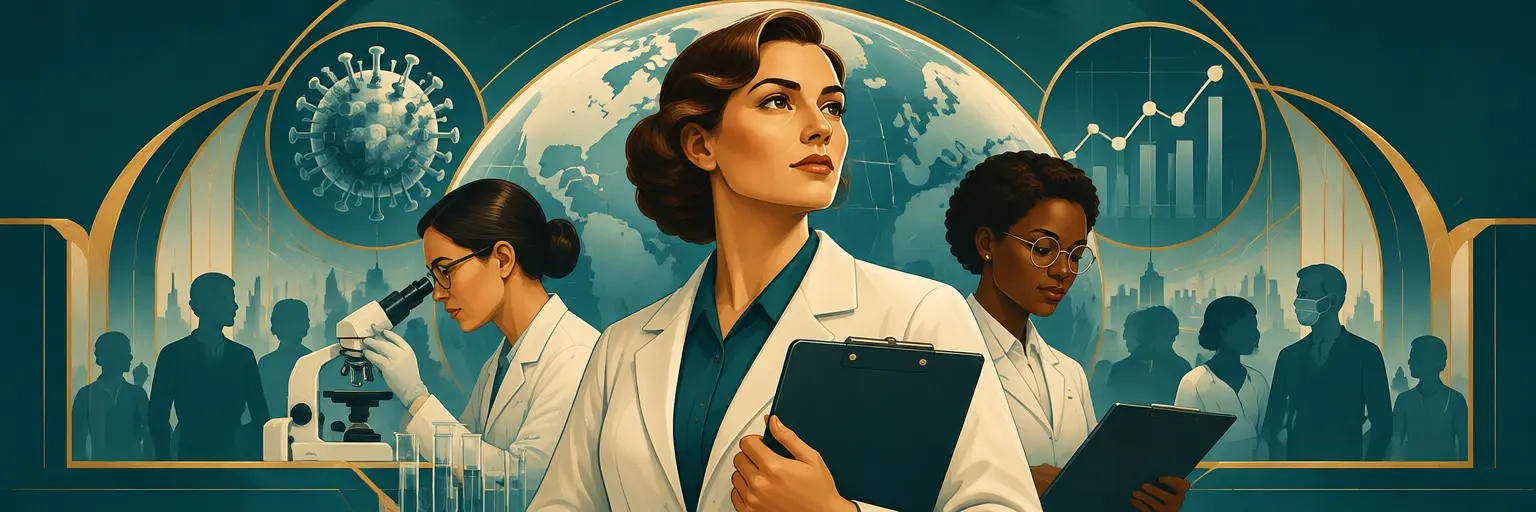
Welcome to our dedicated subcategory on Women in Public Health & Epidemiology, a vital segment of WomenInScienceHistory.com. Here, we celebrate the brilliant female scientists who have shaped modern medicine, disease control, and global health policies. From eradicating smallpox to uncovering the mysteries of cholera, these trailblazers have saved millions of lives. Explore their biographies, discover their methodologies, and understand the societal barriers they overcame in a field historically dominated by men. This page is your gateway to the heroines of epidemiology and public health advocacy.
🩺 The Groundbreaking Epidemiologists You Should Know
In this section, we delve into the lives and careers of iconic figures like Dr. Margaret Chan, former WHO Director-General, and Dr. Kizzmekia Corbett, a key scientist behind mRNA COVID-19 vaccines. You will also meet Florence Nightingale, whose statistical work in nursing revolutionized sanitation, and Dr. Gladys Dick, co-developer of the scarlet fever antitoxin. Each profile highlights their research methods, landmark discoveries, and the historical context in which they worked.
Expect detailed timelines, direct quotes from their publications, and analysis of how their findings changed public health policies. We also explore their mentorship roles and how they paved the way for future generations of female epidemiologists. This content is optimized for keywords like “female epidemiologists,” “public health pioneers,” and “women in disease control,” ensuring you find both inspiration and scholarly depth.
🔬 Innovations in Disease Tracking and Prevention
Here, we focus on the technical contributions women made to epidemiology. Learn about Dr. Janet Lane-Claypon, who pioneered the case-control study method, and Dr. Alice Hamilton, a founder of occupational health who identified industrial toxins. Their work laid the foundation for modern contact tracing, outbreak investigation, and preventive medicine. We break down their statistical techniques and field protocols in accessible language.
This section also examines how women used emerging technologies—from early microscopy to genomic sequencing—to identify pathogens and transmission routes. Keywords such as “disease surveillance,” “epidemiological methods,” and “public health innovations” are woven throughout. You’ll gain a practical understanding of how these female scientists shaped the tools we use today to combat pandemics.
🌍 Global Health Advocacy and Policy Leadership
Many women in public health moved beyond the lab to influence global policy. This part highlights figures like Dr. Gro Harlem Brundtland, former WHO Director-General, and Dr. Nafis Sadik, who championed reproductive health. We discuss their strategies for international cooperation, vaccine distribution, and health equity. Content here is rich with keywords like “global health policy,” “women leaders in WHO,” and “health advocacy.”
You will find case studies on their successful campaigns, such as tobacco control and maternal mortality reduction. We also cover the resistance they faced from patriarchal institutions and how they navigated diplomacy. This SEO-friendly section aims to rank for searches on female leadership in public health, offering actionable lessons for current health professionals.
📊 Data-Driven Decisions: Statistics and Epidemiology
Epidemiology hinges on data, and women have been instrumental in advancing biostatistics. Explore the work of Dr. Sarah Stewart, who linked smoking to lung cancer, and Dr. Ellen Ochoa, though an astronaut, inspired data-heavy public health models. This section explains how women like Dr. Dorothy Reed Mendenhall used mortality statistics to identify Hodgkin’s lymphoma. We emphasize keywords like “biostatistics in public health,” “data analysis in epidemiology,” and “female statisticians.”
We provide step-by-step breakdowns of their statistical models, from chi-square tests to multivariate analysis, making complex concepts digestible. You’ll see how their data-driven approach disproved medical myths and guided evidence-based policies. This content is optimized for searchers wanting to learn about the intersection of women, numbers, and global health impact.
🌡️ Lessons for Modern Pandemics: Historical Insights
In light of recent global health crises, this section draws parallels between past female pioneers and today’s challenges. We analyze how women like Dr. Hilda Bastian advocated for evidence-based medicine during COVID-19 and how Dr. Soumya Swaminathan led WHO’s science division. Keywords include “pandemic response women,” “female virologists history,” and “public health lessons.”
We offer critical reflections on the gendered dimensions of healthcare work, including frontline roles and vaccine hesitancy campaigns. This section aims to rank for urgent searches about women’s roles in pandemic preparedness. You’ll find practical recommendations inspired by historical successes, such as community outreach models and transparent communication strategies.
Frequently Asked Questions
Who is considered the first female epidemiologist?
Florence Nightingale is often cited as a pioneer due to her data-driven nursing reforms during the Crimean War, though some credit Dr. Janet Lane-Claypon for formalizing case-control methods. Nightingale’s statistical diagrams on mortality led to sanitation improvements, laying groundwork for modern epidemiology.
What major diseases were discovered by women in public health?
Women contributed to understanding tuberculosis (e.g., Dr. Florence Sabin), scarlet fever (Dr. Gladys Dick), and Hodgkin’s lymphoma (Dr. Dorothy Reed Mendenhall). Dr. Sarah Stewart linked smoking to lung cancer, a landmark finding for chronic disease epidemiology.
How did women overcome barriers to enter public health?
Many pursued nursing or voluntary work initially, as medical schools often barred them. They leveraged statistics and field research, published under male pseudonyms, or partnered with male colleagues. Institutions like the Johns Hopkins School of Hygiene gradually opened doors after advocacy from figures like Dr. Martha May Eliot.
What is the most significant legacy of women in epidemiology?
The adoption of case-control studies and community-based health interventions are among their greatest legacies. Their emphasis on social determinants of health—poverty, environment, education—eventually shaped the WHO’s definition of health as holistic well-being, not just absence of disease.
How can I find more biographies of women in public health?
Explore our full category on Biology & Medicine, plus external archives like the National Library of Medicine’s “Changing the Face of Medicine.” Follow our site’s search tags for “epidemiology,” “global health,” and “vaccines” to access dozens of detailed profiles with primary sources.