
"Physics" Before Its Time: What Did It Mean for Women in the Pre1700s?


Welcome to WomenInScienceHistory.com!
Delve into the captivating world of scientific discovery and uncover the often-untold stories of brilliant women who shaped our understanding of the universe. Ever wondered how women navigated the complex landscape of science before the 18th century? Our latest article, " Physics" Before Its Time: What Did It Mean for Women in the Pre-1700s?, explores just that, revealing the ingenious ways women contributed to the foundations of physics despite societal barriers.
Prepare to be inspired by their resilience and groundbreaking contributions. Discover more about the hidden history of women in physics history and embark on a journey of scientific enlightenment!
- Women's Contributions to Natural Philosophy and Proto-Science Before 1700
- Introduction: Reassessing Women's Roles in the Development of Early Science
- The Scientific Landscape Before 1700: Access and Barriers for Women
- Notable Women and Their Contributions to Early Scientific Thought
- Key Areas of Women's Engagement in Proto-Science
- Obstacles Encountered by Women in Early Scientific Pursuits
- The Importance of Recognizing Women's Early Scientific Work
- Conclusion: Honoring the Legacy of Women in Pre-1700 Science
-
Frequently Asked Questions
- What is "WomenInScienceHistory.com" about?
- What does the article "Physics Before Its Time: What Did It Mean for Women in the Pre1700s?" discuss?
- Why is it important to highlight women in physics history?
- What kind of challenges did women in physics face historically?
- What scientific fields besides physics are covered on "WomenInScienceHistory.com"?
- Final Reflection: Illuminating Forgotten Pioneers
- Unearth Hidden Legacies: Empowering Women in Science!
Women's Contributions to Natural Philosophy and Proto-Science Before 1700
Introduction: Reassessing Women's Roles in the Development of Early Science
Recovering the Overlooked Contributions of Women
For centuries, the traditional narrative of scientific progress has largely focused on male figures, often presenting a history where women's contributions were either minimized or entirely absent. This oversight has led to an incomplete and skewed understanding of how scientific knowledge truly developed, particularly in the foundational period before 1700, when the seeds of modern physics were being sown. It is imperative to actively seek out and highlight the roles of women who, despite immense societal barriers, engaged in intellectual pursuits that directly or indirectly laid the groundwork for contemporary scientific disciplines.
By meticulously examining historical records and reinterpreting existing sources, we can uncover the significant, albeit often unacknowledged, impact of women in various fields that constituted early science. These pioneering women, whether through private study, family workshops, or informal intellectual networks, contributed to the empirical observations, mathematical calculations, and theoretical discussions that characterize the early stages of what would eventually become women in physics history. Their stories challenge the long-held assumption that scientific inquiry was an exclusively male domain.
Defining Proto-Science: Understanding the Scope of Pre-1700 Scientific Inquiry
Before the formalization of distinct scientific disciplines as we know them today, scientific inquiry was a much broader and more integrated endeavor, often referred to as "proto-science" or "natural philosophy." This umbrella term encompassed a wide array of intellectual pursuits, including astronomy, alchemy, medicine, botany, and the study of the fundamental properties of matter and motion. Unlike modern physics, which emerged as a highly specialized field, these earlier forms of inquiry frequently overlapped and drew from philosophical, theological, and practical traditions.
Understanding this broader scope is crucial for appreciating the contributions of women in physics history from this early period. Elements that would later form the core of physics—such as investigations into celestial mechanics, the nature of light, the principles of motion, and the transformation of substances—were integral to natural philosophy and alchemy. Therefore, recognizing women's engagement in these foundational areas allows for a more accurate and inclusive historical account of scientific development.
The Scientific Landscape Before 1700: Access and Barriers for Women
Societal Limitations on Education and Scientific Participation
In the centuries leading up to 1700, formal education was largely inaccessible to women across most of Europe and beyond. Universities, which were nascent centers of intellectual and scientific discourse, were almost exclusively male institutions. Women's education, if provided at all, was typically confined to domestic skills, religious instruction, or, for the elite, classical languages and arts, with little emphasis on scientific inquiry or advanced mathematics. This systemic exclusion from formal learning environments severely hampered the ability of aspiring women in physics history to engage with scientific thought.
Beyond formal education, prevailing societal norms dictated that women's roles were primarily within the domestic sphere. Public intellectual life, including participation in learned societies or scientific debates, was largely closed off to them. This meant limited access to private libraries, nascent laboratories, or the informal intellectual circles where scientific ideas were discussed and advanced. The very notion of a woman pursuing rigorous scientific study was often met with skepticism, ridicule, or outright prohibition, creating formidable barriers for women in physics history and other scientific fields.
Alternative Paths to Scientific Engagement: Networks and Self-Study
Despite the pervasive societal and institutional barriers, some women found alternative pathways to engage with scientific ideas and practices. For women from aristocratic or wealthy merchant families, access to private tutors, extensive family libraries, or familial workshops could provide an informal education. For instance, a noblewoman might have access to instruments and books, or a daughter of an artisan might learn practical chemistry or mechanics within her family's trade.
Intellectual networks, often informal salons or correspondence circles, also served as crucial avenues for women to engage with scientific discourse. Figures like Margaret Cavendish, Duchess of Newcastle, maintained extensive correspondence with leading intellectuals of her time, discussing natural philosophy. Self-study was paramount for many, relying on personal diligence and intellectual curiosity. Maria Cunitz, for example, was largely educated by her father, allowing her to delve deeply into subjects like mathematics and astronomy, laying the groundwork for her significant contributions to women in physics history.
Notable Women and Their Contributions to Early Scientific Thought
Maria Cunitz: Mathematical Astronomy
Astronomy and Mathematics
Maria Cunitz (1610–1664) was an extraordinary Silesian astronomer and mathematician, whose work profoundly impacted the field of mathematical astronomy, making her a significant figure among women in physics history. Born into a family of scholars, she was largely self-taught, demonstrating a remarkable intellectual capacity from a young age. Her father, a physician and polymath, provided her with an exceptional education, enabling her to master multiple languages—reportedly seven, including Latin, Greek, Hebrew, and Arabic—alongside a profound understanding of mathematics, astronomy, and medicine.
Cunitz's primary focus was on planetary tables and ephemerides, which were crucial for navigation, astrology, and understanding celestial mechanics. Her deep grasp of trigonometry and complex mathematical calculations was essential for this work. In an era where computational tools were rudimentary, her ability to perform intricate astronomical computations with accuracy distinguished her as a leading intellect in the field, solidifying her place in the early annals of women in physics history.
Cunitz's "Urania Propitia" and its Impact on Astronomical Calculations
Maria Cunitz's most celebrated work, "Urania Propitia" (Latin for "Propitious Urania," referring to the muse of astronomy), was published in 1650. This monumental book was a simplification and correction of Johannes Kepler's "Rudolphine Tables," which were groundbreaking but notoriously complex and prone to errors due to their reliance on logarithms and intricate calculations. Cunitz meticulously re-calculated these tables, devising a new method that bypassed the need for logarithms, making the calculations more accessible and less error-prone for practical astronomical use.
"Urania Propitia" presented new ephemerides, which are tables predicting the positions of celestial objects at given times, and included new tables and methods that significantly simplified the determination of planetary orbits. This work was critical for astronomers, navigators, and even astrologers of the time, as it offered a more user-friendly and reliable tool for understanding and predicting celestial phenomena. Her dedication to accuracy and simplification demonstrated a profound grasp of both theoretical astronomy and practical computation, cementing her legacy as a pioneering woman in physics history.
Hildegard of Bingen: Natural History and Medicine
Natural History and Medicine
Hildegard of Bingen (1098–1179) was a German Benedictine abbess, mystic, composer, philosopher, and polymath whose extensive writings on natural phenomena and the human body reveal an early, systematic approach to understanding the physical world. While centuries before the term "physics" was formally coined, her detailed observations and classifications of the natural world laid foundational groundwork for what would become natural philosophy, making her a significant precursor among women in physics history. Her intellectual curiosity extended to every aspect of the world around her, from the smallest plant to the vast cosmos.
Her two major works, "Physica" (also known as "Liber Subtilitatum Diversarum Naturarum Creaturarum") and "Causae et Curae" (Latin for "Causes and Cures"), showcase her keen observational eye and her attempt to categorize and understand the properties of nature. She meticulously detailed plants, animals, and minerals, often describing their growth, behavior, and purported uses. This systematic approach to observation and classification of natural phenomena was a crucial step in the development of empirical methods that underpin scientific disciplines, including aspects related to the physical world.
Hildegard's Contributions to Understanding the Natural World and its Medicinal Properties
In "Physica," Hildegard cataloged over 400 different plants, trees, animals, and stones, describing their physical characteristics and their medicinal applications. For example, she provided detailed descriptions of herbs like hyssop, noting its properties for treating lung ailments, or lavender, for its calming effects, often based on empirical observation and traditional knowledge passed down through generations. Her work represents an early form of systematic botanical and zoological inquiry, contributing to a body of knowledge about the physical environment.
"Causae et Curae" delved into human anatomy, physiology, and the causes of illness, proposing remedies often derived from natural sources detailed in "Physica." She discussed the balance of humors in the body, the influence of environmental factors on health, and the physical manifestations of various ailments. While rooted in medieval cosmology, her attempts to understand the body's physical processes and its interaction with its environment demonstrate an early form of systematic inquiry into the physical and biological world, broadly connecting her to the historical trajectory of women in physics history through natural philosophy and medicine.
Isabella Cortese: Alchemy and Practical Knowledge
Alchemy and Practical Knowledge
Isabella Cortese, an Italian alchemist and writer of the 16th century, represents another crucial facet of early scientific engagement for women, particularly in the realm of practical chemistry and the study of matter. Her work primarily focused on the applied aspects of chemical processes, firmly within the context of alchemy. In the pre-1700 period, alchemy was not merely a mystical pursuit but a vibrant field of empirical investigation, deeply intertwined with the development of what would later become chemistry and the study of the physical properties of substances – a domain highly relevant to women in physics history.
Alchemy involved extensive hands-on experimentation with various substances, including distillation, purification, and the creation of new compounds. It was a practical, empirical pursuit aimed at understanding material transformations, and women like Cortese engaged directly in these processes, often within domestic or artisanal settings. Their work, though sometimes driven by esoteric aims, contributed significantly to the practical knowledge of materials and chemical reactions.
Cortese's Book of Secrets and its Influence on Alchemy and Practical Arts
Cortese is primarily known for her highly influential work, "I secreti della signora Isabella Cortese" (The Secrets of Signora Isabella Cortese), which was first published in Venice in 1561. This book quickly became a bestseller, reprinted multiple times throughout the 16th and 17th centuries, indicating its widespread popularity and practical utility. It was a comprehensive collection of recipes and practical advice, covering an astonishingly wide range of topics, from cosmetics and medicines to dyeing, metallurgy, and even instructions for making fireworks.
Her "Secrets" provided detailed, actionable instructions for various chemical processes, such as preparing specific dyes, extracting essential oils, or creating pigments. While not theoretical physics, her systematic approach to experimentation and the manipulation of matter contributed significantly to the empirical foundation that underpinned later scientific developments. The book's popularity underscores its substantial influence on practical knowledge and early chemical understanding, showcasing a practical contribution from women in physics history through their engagement with alchemical practices.
Key Areas of Women's Engagement in Proto-Science
Astronomy: Observation, Calculation, and Celestial Models
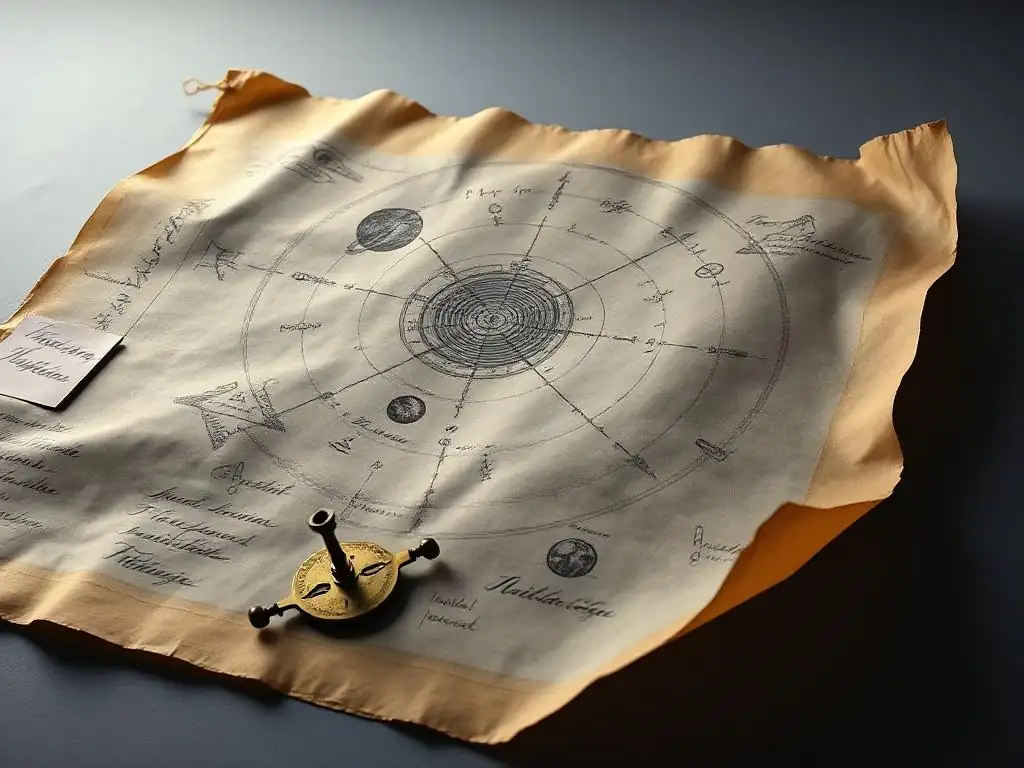
Women's involvement in astronomy before 1700 was often through family workshops, where they collaborated with or assisted male relatives. Notable examples include Maria Cunitz, who independently published her astronomical tables, and Elisabetha Hevelius, who was instrumental in assisting her husband, Johannes Hevelius, with meticulous observations and the recording of celestial events from their private observatory in Danzig. Their contributions included precise observations, diligent recording of celestial phenomena, and performing the complex mathematical calculations necessary for ephemerides and star charts. This dedication to empirical data and rigorous computation was fundamental to understanding the physical laws governing the cosmos.
These activities, whether collaborative or individual, demanded a deep understanding of geometry, trigonometry, and the nascent mechanics of celestial bodies. The precision required for such work, often involving manual calculations over long periods, laid critical groundwork for future physical theories of the universe, directly linking these women in physics history to the origins of astrophysics and celestial mechanics.
Natural Philosophy: Investigation of Natural Phenomena
Natural philosophy, the precursor to modern science, encompassed a broad inquiry into the fundamental workings of the natural world, including aspects that would later be categorized as physics, biology, and geology. Women like Margaret Cavendish, Duchess of Newcastle (1623–1673), actively participated in these intellectual debates. Her extensive philosophical works, such as "Observations upon Experimental Philosophy" (1666) and "Blazing World" (1666), delved into topics like atomism, the nature of matter, motion, and the very structure of the universe.
These women engaged in speculative and observational inquiries into phenomena such as light, sound, and gravity, even if they did not always conduct formal experiments in the modern sense. Their intellectual contributions challenged existing paradigms, proposed alternative explanations for natural phenomena, and explored theoretical concepts central to the development of physics, even in its nascent stages. Cavendish, for example, critiqued aspects of mechanistic philosophy and proposed her own vitalist theories of matter and motion.
Alchemy and Early Chemistry: Experimentation and Understanding of Matter
Alchemy, the direct precursor to modern chemistry, was a field where women could engage in hands-on experimentation, often within the domestic sphere. This allowed for the manipulation of substances, processes like distillation and sublimation, and the careful observation of chemical reactions. Women like Isabella Cortese demonstrated practical expertise in these areas, compiling books of "secrets" that detailed recipes for various compounds and transformations.
While driven by different aims than modern chemistry, these alchemical practices involved systematic observation of matter, an understanding of states of matter (solid, liquid, gas), and the effects of heat and pressure. This empirical engagement with the physical and chemical properties of substances was a vital step towards a scientific understanding of matter, making these practitioners relevant to the broader narrative of women in physics history through their contributions to the study of material science.
Medicine and Botany: Herbal Knowledge and Healing Practices
Women were central to traditional medicine and botany in the pre-1700 era, often serving as healers, midwives, and herbalists within their communities. This role necessitated detailed observation of plant growth, identification of medicinal properties, and understanding the human body's responses to various treatments. Hildegard of Bingen, centuries earlier, set a precedent for systematic botanical and medical inquiry, but countless unnamed women contributed to this cumulative body of knowledge.
While seemingly distinct from physics, this field involved a practical understanding of natural cycles, biological processes, and the physical properties of natural remedies. The systematic collection, classification, and application of this knowledge contributed significantly to empirical methods and a practical understanding of the natural world that would later inform scientific inquiry. This deep, practical engagement with the physical world broadly connects these women in physics history to the foundations of applied science and the study of natural phenomena.
Obstacles Encountered by Women in Early Scientific Pursuits
Limited Recognition and Credibility
Even when women made significant intellectual or practical contributions to proto-science, their work was frequently attributed to male relatives or simply overlooked in historical accounts. Maria Cunitz's "Urania Propitia," for instance, was initially published under her husband's name, though a preface clarified her authorship, a common practice to lend credibility in a male-dominated world. This systemic lack of recognition hindered their influence and visibility, making it challenging to trace the full extent of women in physics history.
Furthermore, their intellectual abilities were often doubted or dismissed, regardless of the quality or rigor of their work. This pervasive skepticism undermined their credibility within the nascent intellectual landscape, making it difficult for their ideas to gain widespread traction or for them to be seen as serious, independent scientific thinkers. The societal bias against female intellectual authority was a formidable barrier to their lasting recognition.
Exclusion from Formal Scientific Institutions
The emerging scientific societies, academies, and universities of the pre-1700 era were almost exclusively male. Women were systematically barred from attending lectures, participating in debates, or presenting their findings in these formal venues. The Royal Society in London, for example, did not admit its first female Fellow until the 20th century. This exclusion denied women crucial opportunities for collaboration, peer review, and access to the burgeoning resources and networks of the scientific community.
This institutional barrier meant that even highly talented women in physics history and other scientific fields had to operate largely outside the developing mainstream scientific community. They often relied on informal networks, personal patronage, or the support of enlightened male relatives, which severely limited the dissemination and broader impact of their groundbreaking work.
Societal Expectations and Gendered Roles
Prevailing societal norms in the pre-1700 period dictated that women's primary roles were domestic: managing households, raising children, and maintaining family honor. Intellectual pursuits beyond these spheres were frequently viewed as unfeminine, inappropriate, or even disruptive to the established social order. A woman who dedicated herself to scholarly or scientific endeavors might be perceived as neglecting her "proper" duties.
Women who dared to pursue scientific interests faced significant social disapproval, ridicule, or accusations of eccentricity. This immense social pressure was a constant deterrent, making it exceedingly difficult for women in physics history to devote significant time and energy to scientific endeavors without facing personal and social repercussions. The expectation of domesticity was a powerful invisible barrier that few could overcome.
The Importance of Recognizing Women's Early Scientific Work
Broadening the Historical Understanding of Science
Acknowledging the contributions of women in proto-science provides a more accurate, nuanced, and comprehensive history of scientific development. It challenges the long-held notion that scientific inquiry was an exclusively male enterprise, revealing that intellectual curiosity and discovery were far more diverse and multifaceted. This expanded view allows us to understand that foundational scientific concepts were not solely the product of a few elite men but emerged from a wider spectrum of individuals and contexts.
By integrating these previously overlooked narratives, we move beyond a linear, male-centric view of scientific progress. It allows us to appreciate the complex, often informal, pathways through which knowledge was accumulated, shared, and refined, enriching our understanding of how early scientific thought, including the precursors to women in physics history, truly evolved.
Promoting Inclusivity in the History of STEM
Highlighting the pioneering female scientists from the pre-1700 era promotes essential inclusivity within the historical narrative of STEM disciplines. It vividly demonstrates that women have always been intellectual participants and contributors, even when their roles were systematically suppressed, ignored, or attributed to others. This historical inclusivity challenges contemporary biases about who is capable of scientific thought or who "belongs" in science.
This recognition is vital for current and future generations. When young girls and aspiring women in physics history see themselves reflected in the past, discovering that women have a long and rich tradition of scientific inquiry, it validates their aspirations and encourages them to pursue careers in science, knowing they are part of a continuous legacy of female ingenuity and perseverance.
Inspiring Future Generations in Science
The stories of women like Maria Cunitz, Hildegard of Bingen, and Isabella Cortese, who persevered against formidable societal and institutional odds, serve as powerful inspirations. They demonstrate that intellectual curiosity, dedication, and a commitment to understanding the natural world can overcome significant barriers, even in the most challenging historical contexts. Their resilience is a testament to the enduring human drive for knowledge.
By showcasing these trailblazing women in physics history and related fields, we provide tangible role models who defied conventions and expanded human knowledge. These narratives encourage young women and girls to envision themselves as active contributors to scientific advancement, fostering a sense of possibility and belonging in fields where women have historically been underrepresented.
Conclusion: Honoring the Legacy of Women in Pre-1700 Science
The Lasting Significance of Their Intellectual Contributions
The work of women in natural philosophy, astronomy, alchemy, and medicine before 1700, though often unsung and conducted outside formal institutions, formed crucial building blocks for the scientific revolution that followed. Their meticulous observations, innovative calculations, and practical experiments contributed invaluable empirical data and conceptual frameworks upon which modern scientific disciplines, including physics, were built. Their understanding of celestial mechanics, the properties of matter, and the natural world, however nascent, laid essential groundwork.
Their intellectual courage and persistence in the face of immense societal pressure underscore the profound impact they had on the trajectory of human knowledge. Recognizing their unique contributions is not merely about historical accuracy; it is about appreciating the diverse and often overlooked origins of our scientific understanding, particularly for women in physics history and their foundational roles.
Encouraging Further Research into Women's Roles in Early Science
Despite increasing scholarly attention to the history of women in science, much remains to be discovered about the full extent of women's involvement in pre-1700 scientific endeavors. Many historical records are fragmented, hidden in obscure archives, or require careful reinterpretation to uncover female agency and contributions. This necessitates meticulous archival work, interdisciplinary approaches, and a commitment to challenging traditional narratives.
Continued research is essential to fully flesh out these narratives, identify more unsung heroines, and understand the nuances of their engagement with proto-science. This ongoing effort will ensure that the complete and inclusive history of women in physics history and other scientific fields is finally written and celebrated, providing a more accurate, inspiring, and equitable legacy for all.
Frequently Asked Questions
What is "WomenInScienceHistory.com" about?
It's a website dedicated to celebrating the contributions of women to various scientific fields throughout history, focusing on their biographies and groundbreaking work. It also addresses the challenges they faced.
What does the article "Physics Before Its Time: What Did It Mean for Women in the Pre1700s?" discuss?
The article likely explores the experiences and contributions of women in physics before the 1700s, a time when scientific opportunities were extremely limited, and their roles were often unrecognized or dismissed.
Why is it important to highlight women in physics history?
Highlighting these stories is crucial because it provides role models for future generations and corrects the historical record by acknowledging the overlooked contributions of women to physics. Their achievements were often downplayed or attributed to men.
What kind of challenges did women in physics face historically?
Women faced significant challenges including limited access to education, social biases that discouraged their participation in science, and the lack of recognition for their scientific endeavors. They had to overcome gender stereotypes to contribute.
What scientific fields besides physics are covered on "WomenInScienceHistory.com"?
While the site aims to rank for "Women in physics history," it covers the contributions of women in various scientific fields, not just physics, as the website's description suggests. It's a broad overview of women's contributions.
Final Reflection: Illuminating Forgotten Pioneers
The journey through the lives of women who dared to engage with physics before the 1700s reveals a powerful truth: scientific curiosity transcends societal barriers. While their contributions may have been obscured by historical biases, their intellectual tenacity and pursuit of knowledge laid a crucial, often unacknowledged, foundation for the scientific advancements we celebrate today. Their stories are not just historical footnotes; they are vital reminders of the diverse minds that have always shaped our understanding of the universe.
The enduring impact of these women lies in their quiet rebellion against the limitations imposed upon them. They demonstrate that passion and intellect cannot be suppressed, even in the face of systemic obstacles. Their struggles resonate deeply, reminding us of the ongoing fight for equity and inclusion in STEM fields. The mind has no gender.
This simple truth, often overlooked, underscores the importance of recognizing and celebrating the contributions of all individuals, regardless of their background, to the advancement of knowledge.
As we reflect on the lives and legacies of these pioneering women in physics, let us be inspired to challenge the status quo and create a more inclusive future for science. Consider how you can actively support and uplift underrepresented voices in STEM, ensuring that future generations have the opportunity to explore the wonders of the universe without the constraints of prejudice or limitation. Let their stories ignite a flame of curiosity and a commitment to equity within you.
Thank you for exploring the untold stories of women shaping physics before its time. Now, let's carry their legacy forward and celebrate the pioneers who defied limitations and laid the groundwork for future generations.
- Dive deeper by researching a specific pre-1700 woman physicist mentioned in the article, and share your findings in the comments.
- Spread their stories: share this article with a friend or on social media to amplify the voices of these unsung heroines.
- Explore WomenInScienceHistory.com:nominate a contemporary woman physicist whom you admire for their contributions to the field.
What will you do to ensure these remarkable stories are never forgotten?