
Beyond the Lecture Hall: 21st Century Women Physicists as Public Intellectuals and Communicators

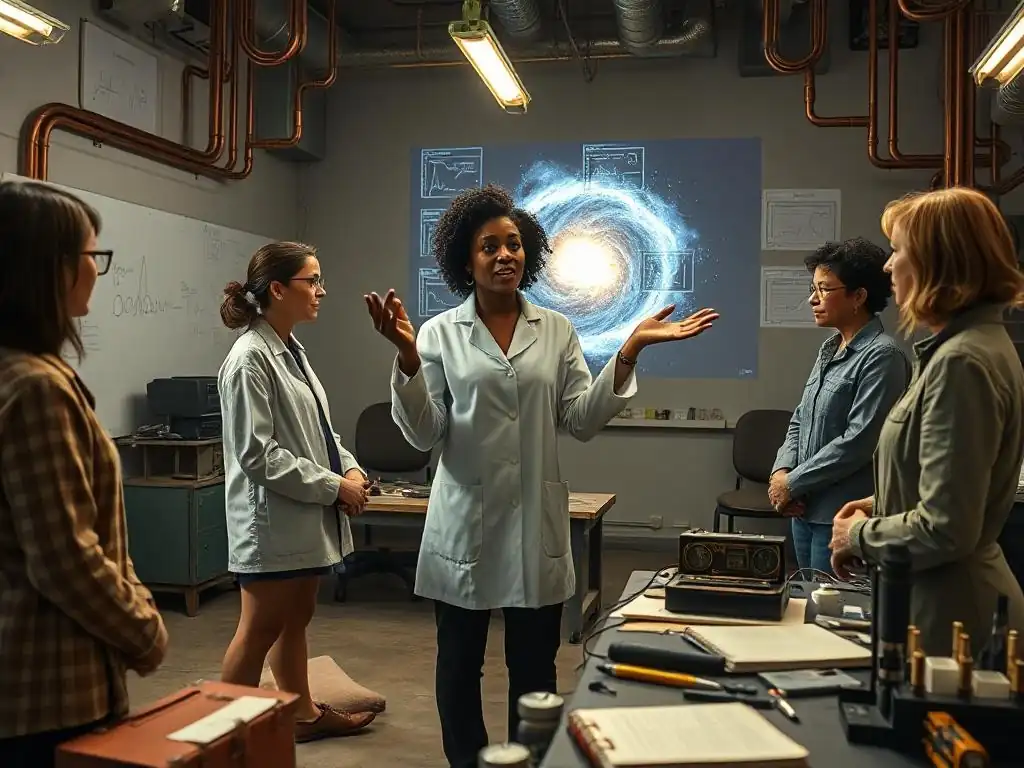
Welcome to WomenInScienceHistory.com, where we unearth the remarkable stories of women who shaped the scientific landscape. Delve into the often-untold narratives of groundbreaking discoveries and persistent resilience. This month, we ask: how are today's female physicists breaking barriers beyond the lab? Our in-depth exploration of " Women physicists public engagement" reveals how 21st-century researchers are becoming vital public intellectuals and communicators, shaping the future of scientific understanding. What challenges do they face, and what impact are they making? Read on to discover more!
Introduction: The Evolving Role of Women Physicists in the 21st Century
Traditionally, the image of a physicist has been one confined to the isolated laboratory or the hallowed halls of academia, deeply immersed in complex equations and abstract theories. However, the 21st century has heralded a significant transformation in this perception, particularly for women in the field.
No longer are their groundbreaking discoveries and profound insights solely contained within scientific journals or specialized conferences; instead, a new generation of women physicists is stepping boldly into the public sphere, embracing roles as public intellectuals and communicators. This shift is reshaping how society views physics and, critically, who is seen as a physicist.
This evolution is driven by a growing recognition that scientific progress is not just about discovery, but also about dissemination and engagement. For women physicists, this expanded role offers a powerful platform to share their expertise, inspire future generations, and challenge long-standing stereotypes. Their increasing involvement in public discourse on science, technology, and society is vital for fostering a more scientifically literate public and ensuring that diverse voices contribute to critical conversations. The burgeoning trend of women physicists public engagement is a testament to their dedication not only to advancing knowledge but also to democratizing it.
- What is meant by "public engagement" in the context of women physicists?
- Why is public engagement important for women physicists?
- What are some challenges women physicists face in public engagement?
- How can women physicists effectively engage the public with their work?
- What resources are available to support women physicists in public engagement?
The Rise of Women Physicists as Public Figures
Breaking Barriers: Women in Physics Gaining Visibility
The history of physics, like many scientific disciplines, has been largely dominated by male narratives, with the contributions of women often overlooked or marginalized. However, the 21st century marks a turning point as women physicists are increasingly gaining prominent visibility, actively challenging and dismantling these historical barriers. Through concerted efforts in science communication and advocacy, they are ensuring that their voices and research are heard far beyond academic circles. This rise in visibility is not merely incidental but a strategic and deliberate effort to carve out space in a field where they have long been underrepresented.
This growing visibility is supported by a slow but steady increase in the number of women pursuing physics. For instance, while still a minority, the percentage of women earning physics bachelor's degrees in the U.S. has seen an upward trend, reaching approximately 21% in recent years, a notable increase from around 15% in the early 2000s.
This demographic shift provides a larger cohort of talented women physicists who are now leveraging various platforms—from major media outlets to social media—to share their work and perspectives. Their presence as public figures is not just about individual recognition; it is fundamentally about normalizing the image of women as intellectual leaders in physics, thereby inspiring a new generation to envision themselves in these roles.
The Importance of Public Engagement for Women in STEM
Public engagement is a cornerstone for the advancement and societal integration of all STEM fields, and it holds particular significance for women in these disciplines. It provides a crucial avenue for demystifying complex scientific concepts, fostering scientific literacy among the general public, and building trust between the scientific community and society.
For women in STEM, engaging with the public offers an unparalleled opportunity to showcase their expertise, challenge preconceived notions about gender roles in science, and demonstrate the diverse faces of scientific inquiry. This active participation in public discourse helps bridge the gap between academic research and everyday life, making science more relatable and accessible.
Furthermore, public engagement by women in STEM serves as a powerful tool for advocacy and inspiration. By sharing their personal journeys, research findings, and the challenges they have overcome, these scientists become tangible role models for aspiring young minds, particularly girls and young women who may not otherwise see themselves reflected in scientific professions.
This direct connection can significantly influence career choices and help dismantle the "leaky pipeline" phenomenon, where women disproportionately leave STEM fields at various stages of their careers. The impact of visible women physicists public engagement extends beyond individual careers, contributing to a more equitable and representative scientific landscape.
Why Public Engagement Matters for Women in Physics
Addressing the Gender Gap in Physics Through Communication
Physics continues to exhibit one of the largest gender gaps among STEM fields. For example, in the United States, women are awarded only about 20% of physics Ph.D.s annually, a figure that has shown slow improvement over decades. This persistent disparity highlights the critical need for proactive strategies to attract and retain more women in the discipline.
Public communication by women physicists plays a pivotal role in directly addressing this imbalance. By stepping into the public eye, these scientists demonstrate that physics is a viable and exciting career path for women, helping to normalize their presence in a field often perceived as male-dominated.
Effective communication by women physicists can transform public perception, making the field seem less intimidating and more inclusive. When young girls and women see female physicists explaining complex concepts with clarity and passion on television, in books, or through social media, it provides tangible proof that they too can excel in this challenging discipline.
This visibility counters the subtle biases and stereotypes that often deter women from pursuing physics. Through their public engagement, women physicists are not just sharing science; they are actively shaping the future demographics of the field, working to narrow the gender gap one conversation, one article, and one public appearance at a time.
Inspiring Future Generations: Role Models in Physics
The adage "you can't be what you can't see" profoundly resonates within the context of women in physics. For decades, the scarcity of visible female role models in popular culture and educational materials has inadvertently perpetuated the notion that physics is primarily a male domain. However, the increasing presence of women physicists in public engagement roles is fundamentally altering this narrative.
When young students, particularly girls, encounter accomplished female physicists through television documentaries, popular science books, or social media, it provides them with concrete examples of success and possibility. These interactions can be transformative, shifting abstract aspirations into tangible career goals.
These public-facing women physicists serve as powerful beacons, demonstrating that intellectual curiosity, analytical rigor, and groundbreaking discovery are not gender-specific traits. Their stories of overcoming challenges, making significant contributions, and passionately communicating their work resonate deeply, inspiring a sense of belonging and capability. For instance, a single public lecture or a compelling interview by a female astrophysicist can ignite a lifelong passion for the cosmos in a young girl. This direct inspiration is invaluable, helping to fill the pipeline of future scientists and ensuring that the next generation of innovators reflects the full diversity of talent available.
Counteracting Stereotypes: Women Physicists Shaping Public Perception
The public perception of a physicist often remains tethered to outdated stereotypes: an older, eccentric man in a lab coat, detached from societal realities. This narrow image not only misrepresents the diverse community of scientists but also inadvertently discourages many, particularly women, from considering a career in physics.
Women physicists engaging with the public are at the forefront of dismantling these entrenched stereotypes, presenting a more accurate, dynamic, and inclusive portrayal of what it means to be a physicist in the 21st century. Their visibility challenges the idea that physics is a niche or exclusive field, showing it to be vibrant, collaborative, and accessible to all.
By appearing in various media, from mainstream news to online platforms, women physicists demonstrate that intellect, creativity, and rigorous scientific inquiry are found across all demographics. They showcase that physicists can be articulate communicators, passionate advocates, and relatable individuals with diverse interests beyond their research.
This multifaceted representation helps to humanize the profession and break down barriers of perception. Through their sustained public presence and active communication, women physicists are not merely sharing scientific knowledge; they are actively reshaping the collective consciousness, proving that expertise in physics is compatible with diverse identities and personalities, ultimately broadening the appeal and accessibility of the field.
Strategies for Effective Public Engagement by Women Physicists
In the 21st century, social media platforms have emerged as indispensable tools for science communication, offering women physicists an unprecedented opportunity to engage directly with a global audience. Platforms like Twitter (now X), Instagram, TikTok, and YouTube allow for the rapid dissemination of scientific information, breaking down traditional barriers between experts and the public. Women physicists are increasingly using these channels to share bite-sized explanations of complex theories, behind-the-scenes glimpses of their research, and personal reflections on their scientific journeys. This direct, often informal, communication style fosters a sense of accessibility and relatability, demystifying physics for millions.
The power of social media for women physicists public engagement lies in its immediate feedback loop and broad reach. A single tweet or a short video can go viral, sparking curiosity and discussion among diverse demographics who might not otherwise seek out scientific content.
For instance, some astrophysicists have amassed hundreds of thousands of followers on platforms like X, regularly sharing insights into cosmic phenomena and engaging in Q&A sessions. This active online presence not only educates but also builds a community around science, allowing women physicists to connect with aspiring scientists, answer questions, and directly address misinformation, thereby enhancing public understanding and fostering a more informed populace.
Writing for a General Audience: Popularizing Physics Concepts
Beyond the brevity of social media, writing for a general audience offers women physicists a profound avenue for popularizing complex physics concepts and sharing their unique perspectives. This strategy often takes the form of popular science books, articles in mainstream magazines or newspapers, and personal blogs. The art of this communication lies in translating intricate scientific principles into accessible language, often employing analogies, compelling narratives, and real-world examples without sacrificing accuracy. This approach allows readers to grasp foundational ideas in physics that might otherwise seem impenetrable, fostering a deeper appreciation for the wonders of the universe.
Prominent examples include best-selling popular science books authored by women physicists that explore everything from the origins of the cosmos to the mysteries of quantum mechanics. These works often weave personal anecdotes with scientific explanations, making the subject matter more engaging and relatable.
By crafting narratives that resonate with non-specialists, women physicists ensure that the beauty and relevance of physics are understood by a much broader readership than just the academic community. This form of public engagement is crucial for cultivating a scientifically literate society and inspiring individuals who may have never considered themselves "science people" to explore the fascinating world of physics.
Public Speaking and Media Appearances: Communicating with Confidence
Public speaking and media appearances represent another powerful strategy for women physicists to engage with a broader audience, allowing them to communicate their expertise and passion with direct impact. This includes delivering TED Talks, keynote speeches at major conferences, participating in panel discussions, or appearing as expert commentators on television, radio, and podcasts. These platforms provide an invaluable opportunity to convey complex scientific ideas through compelling narratives and confident delivery, reaching millions who might not actively seek out scientific content. The visual and auditory nature of these engagements adds a layer of personal connection that written formats sometimes lack.
For women physicists, excelling in these high-profile settings is particularly significant. It allows them to showcase their intellectual prowess and confidence, directly challenging stereotypes about who can be a leading voice in science. When a female astrophysicist articulates the intricacies of black holes on a prime-time news segment, or a quantum physicist captivates an audience at a TED event, it not only educates but also inspires. These appearances normalize the presence of women in expert roles, providing powerful role models and demonstrating that women physicists can communicate with authority and charisma, effectively shaping public discourse on scientific matters.
Science Outreach Programs: Engaging with Communities
Science outreach programs form a vital component of public engagement, allowing women physicists to connect directly with communities, particularly young students, through interactive and hands-on experiences. These initiatives can range from visiting local schools to conduct workshops, participating in large-scale science festivals, developing museum exhibits, or mentoring aspiring scientists. The direct, often informal, nature of these programs makes physics tangible and exciting, demystifying the subject and fostering a sense of curiosity from an early age. By bringing science out of the laboratory and into public spaces, women physicists can spark a lifelong interest in STEM.
These programs are particularly effective in reaching diverse groups, including those from underserved communities who might have limited exposure to scientific role models. When a young girl interacts with a female physicist during a hands-on experiment, she gains a concrete understanding of what a career in science might entail and sees herself reflected in that role.
For instance, many women physicists dedicate time to initiatives aimed at encouraging girls in STEM, leading workshops where students build simple circuits or explore astronomical concepts. This direct, personal engagement is crucial for building foundational interest, breaking down perceived barriers, and cultivating the next generation of physicists, ensuring a more inclusive and diverse scientific workforce.
Profiles of Prominent 21st Century Women Physicists in Public Engagement
Dr. Chanda Prescod-Weinstein stands as a preeminent figure in the realm of 21st-century women physicists public engagement, seamlessly blending her rigorous scientific research with impassioned advocacy for social justice. As a theoretical cosmologist and particle astrophysicist, her work delves into profound questions surrounding dark matter, the early universe, and the fundamental nature of spacetime, pushing the boundaries of our understanding of the cosmos. Her academic contributions are significant, yet it is her unwavering commitment to equity and inclusion within STEM that has solidified her role as a powerful public intellectual, particularly for Black women in physics.
Beyond her research, Dr. Prescod-Weinstein is a prolific writer and speaker, actively using platforms like social media, essays, and her critically acclaimed book, "The Disordered Cosmos: A Journey into Dark Matter, Spacetime, and Dreams Deferred." This book not only explores complex physics concepts but also weaves in deeply personal narratives and incisive critiques of systemic racism and sexism in science.
Her public engagement is characterized by an unflinching honesty about the challenges faced by marginalized groups in academia, advocating for a more just and equitable scientific community. She embodies the multifaceted role of a modern physicist: not just a discoverer of knowledge, but also a powerful voice for change and an inspiration for a more inclusive future in science.
Dr. Katie Mack: Astrophysicist and Popular Science Communicator
Dr. Katie Mack is a theoretical astrophysicist renowned for her exceptional ability to communicate the most complex and mind-bending concepts of cosmology to a broad, general audience. Her research focuses on the early universe, dark matter, black holes, and the ultimate fate of the cosmos, making her an expert on subjects that naturally pique public curiosity. What truly sets Dr. Mack apart as a leader in women physicists public engagement is her remarkable talent for translating these intricate ideas into clear, engaging, and often humorous narratives that resonate far beyond the scientific community.
Dr. Mack has leveraged social media, particularly Twitter (now X), to build a massive following, where she regularly answers questions about the universe, debunks scientific myths, and shares insights into her research. Her accessible and witty style has garnered her hundreds of thousands of followers, demonstrating her significant public reach.
Her bestselling book, "The End of Everything (Astrophysically Speaking)," further exemplifies her prowess as a science communicator, exploring various scenarios for the universe's demise with both scientific rigor and captivating storytelling. Through her extensive public outreach, Dr. Mack has not only demystified astrophysics for millions but has also become a prominent and inspiring role model for aspiring scientists worldwide.
Dr. Jess Wade: Physicist and Wikipedia Editor for Increased Representation of Women in Science
Dr. Jess Wade is a physicist at Imperial College London, specializing in organic electronics and pioneering the development of new materials for applications like LEDs and solar cells. While her research contributions are substantial, Dr. Wade has gained international recognition for a unique and highly impactful form of public engagement: her dedicated efforts to increase the representation of women and other underrepresented groups in science on Wikipedia.
Recognizing the significant visibility gap for female scientists in online encyclopedias, she has taken it upon herself to meticulously research and create hundreds of Wikipedia biographies for women in STEM who previously lacked an online presence.
This focused initiative directly addresses a critical aspect of women physicists public engagement: ensuring their contributions are formally recognized and easily accessible to a global audience. By meticulously documenting the achievements of often-overlooked female scientists, Dr. Wade is actively rewriting the digital narrative of science history.
She has created over 2,000 Wikipedia pages for women scientists, directly combating historical biases and ensuring that their stories are not forgotten. Her work highlights how even seemingly small, consistent actions in public information dissemination can have a monumental impact on visibility, inspiring countless individuals and providing invaluable resources for students, researchers, and the general public seeking information on diverse scientific role models.
The Impact of Women Physicists' Public Engagement on the Field
Increased Representation and Visibility for Women in Physics
The active public engagement of women physicists has had a profound and measurable impact on increasing their representation and visibility within the field. Historically, physics has struggled with a persistent gender imbalance, where female contributions were often less recognized or highlighted. However, as women physicists step into the public sphere through various communication channels, they inherently challenge this status quo. Their presence in popular media, on social media, and at public events normalizes the image of women as intellectual leaders and innovators in physics, making it clear that the field is not exclusively male.
This increased visibility creates a positive feedback loop: as more women physicists engage publicly, more young women and girls are exposed to relatable role models, which in turn encourages greater participation in physics. This is evidenced by the gradual but significant rise in the proportion of women pursuing physics degrees and careers in recent decades. The consistent presence of these women physicists in public discourse helps to dismantle long-held stereotypes and broadens the perception of who can be a physicist, ultimately fostering a more inclusive and representative community within the discipline itself.
Enhanced Public Understanding of Physics and its Applications
Beyond inspiring future generations, the public engagement efforts of women physicists significantly contribute to enhancing the general public's understanding of physics and its vast applications. Physics, with its often abstract and complex theories, can seem daunting to those outside the scientific community. However, women physicists, through their skilled communication, are adept at demystifying these concepts, making them accessible and relevant to everyday life. They translate intricate ideas about quantum mechanics, cosmology, or condensed matter physics into relatable narratives, analogies, and real-world examples.
This accessible communication clarifies how fundamental physics research underpins technological advancements, from medical imaging and renewable energy to the internet and space exploration. When a female physicist explains the principles behind a new material or the cosmic origins of the elements, it not only educates but also fosters a deeper appreciation for the scientific method and the value of basic research. This enhanced public understanding is crucial for informed decision-making on science-related policies, for encouraging public support for scientific funding, and for creating a more scientifically literate populace capable of navigating an increasingly complex world.
Fostering a More Inclusive and Diverse Scientific Community
The public engagement of women physicists plays a critical role in fostering a more inclusive and diverse scientific community, extending its impact far beyond merely increasing numbers. By actively participating in public discourse, these women are not only sharing scientific knowledge but are also advocating for systemic changes within academic and research institutions. They often speak openly about the challenges faced by underrepresented groups, including gender bias, microaggressions, and the need for more equitable opportunities. This advocacy helps to shine a light on existing inequities and pushes for a more welcoming environment for all aspiring scientists.
Furthermore, the very act of diverse women physicists engaging publicly demonstrates that scientific excellence is not monolithic. Their varied backgrounds, experiences, and perspectives enrich the scientific discourse and challenge the traditional image of a scientist.
This multifaceted representation helps to create a sense of belonging for individuals from all walks of life who might otherwise feel alienated from the scientific community. By promoting a more inclusive culture through their visible leadership and communication, women physicists are not just expanding the pool of talent; they are ensuring that the scientific enterprise itself becomes more equitable, innovative, and reflective of global society.
Challenges and Opportunities for Women Physicists in Public Communication
Overcoming Gender Bias in Science Communication
Despite the growing prominence of women physicists in public engagement, they frequently encounter gender bias, a persistent challenge in science communication. This bias can manifest in various forms, including online harassment, dismissive comments, being underestimated, or having their expertise questioned simply because of their gender. Studies have indicated that women scientists often receive disproportionately more negative and gendered online feedback compared to their male counterparts when discussing similar scientific topics. This can create a hostile environment, requiring immense resilience and mental fortitude to navigate.
However, these challenges also present opportunities for collective action and advocacy. By openly discussing these biases, women physicists contribute to a broader conversation about gender equality in STEM and the media. They can also leverage their public platforms to educate audiences on respectful discourse and the importance of valuing diverse voices.
Furthermore, supportive networks and organizations dedicated to women in STEM communication are emerging, offering training, mentorship, and strategies to effectively counter bias. Overcoming these hurdles is not only crucial for individual women physicists but also for ensuring that the public sphere for science communication remains inclusive and equitable for all.
Balancing Research and Public Engagement Responsibilities
One of the most significant challenges for women physicists committed to public engagement is effectively balancing their demanding research responsibilities with the time-intensive nature of communication. Academic careers in physics are often characterized by immense pressure to publish groundbreaking research, secure competitive grants, teach courses, and mentor students. Each of these activities requires substantial dedication and time, creating a palpable tension with the demands of writing popular science books, maintaining an active social media presence, or regularly giving public lectures.
This balancing act often leads to a "double burden" for women physicists who feel compelled to engage publicly to inspire others and advocate for diversity, while simultaneously meeting stringent academic metrics. The opportunity, however, lies in the growing recognition within academic institutions that public engagement is a valuable contribution to scholarship and societal impact.
Some universities and funding bodies are beginning to incorporate public outreach into tenure and promotion criteria, providing dedicated resources, and offering workshops on efficient science communication. This institutional support is crucial for validating and facilitating women physicists public engagement, ensuring that it is seen as a complementary, rather than competing, aspect of a successful scientific career.
The Future of Women Physicists as Public Intellectuals
The trajectory for women physicists as public intellectuals is one of increasing influence and evolving roles. As communication technologies continue to advance, new platforms and methods will emerge, offering even more diverse avenues for engagement. The future will likely see an even greater integration of virtual reality, augmented reality, and interactive online experiences in science communication, allowing for deeper and more immersive ways to convey complex physics concepts. Women physicists are uniquely positioned to lead these innovations, leveraging their expertise to shape how the public interacts with cutting-edge science.
Furthermore, the role of women physicists as public intellectuals will extend beyond merely explaining scientific phenomena to actively shaping public discourse on critical societal issues. Their analytical rigor and evidence-based approach will be invaluable in discussions on climate change, artificial intelligence, ethical considerations in scientific research, and the role of science in policy-making. As the scientific community continues to strive for greater diversity and inclusion, the voices of women physicists will become even more central, ensuring that a broad spectrum of perspectives informs public understanding and decision-making about the future of science and technology.
Resources for Women Physicists Interested in Public Engagement
Organizations Supporting Women in STEM Communication
For women physicists eager to delve into public engagement, numerous organizations offer invaluable support, resources, and networking opportunities. These entities often operate with the explicit mission of promoting diversity in STEM and enhancing science communication skills among underrepresented groups. Professional societies, for instance, frequently have dedicated committees or programs focused on outreach and communication, providing platforms for members to share their work with broader audiences. They may offer mentorship programs connecting seasoned communicators with emerging voices, fostering a supportive environment for professional growth in this specialized area.
Beyond professional societies, various non-profit organizations are specifically dedicated to science communication or to empowering women in STEM. These organizations often host workshops, webinars, and conferences designed to equip scientists with the necessary skills for effective public engagement, from media training to storytelling techniques. They also serve as vital networking hubs, allowing women physicists to connect with peers, share best practices, and collaborate on public outreach initiatives. Engaging with these organizations can provide the foundational knowledge, practical tools, and community support essential for impactful women physicists public engagement.
Training Programs and Workshops for Science Communicators
To effectively engage with the public, women physicists can significantly benefit from specialized training programs and workshops designed to hone their science communication skills. These programs, offered by universities, science communication institutes, and professional organizations, provide structured learning environments to develop a diverse toolkit for outreach. Curricula often cover a range of topics, including translating complex scientific jargon into accessible language, crafting compelling narratives, understanding audience demographics, and utilizing various media platforms effectively.
Examples of such training include intensive media training workshops that simulate interviews and public speaking engagements, equipping participants with confidence and clarity in high-pressure situations. Other programs focus on popular science writing, teaching the nuances of storytelling and rhetorical techniques for engaging a general readership. There are also workshops dedicated to leveraging digital platforms, providing hands-on experience with social media strategy, video production, and podcasting. These targeted educational opportunities are crucial for empowering women physicists to become articulate, confident, and influential public communicators, ensuring their message resonates widely and effectively.
Funding Opportunities for Public Engagement Initiatives
Securing funding is often a critical factor for women physicists looking to undertake significant public engagement initiatives, as these activities can require resources for travel, materials, or dedicated time. Fortunately, there is a growing recognition within the scientific and philanthropic communities of the importance of public outreach, leading to an increase in available funding opportunities. Major science funding bodies, such as governmental research agencies, are increasingly incorporating public engagement components into their grant applications or offering specific grants dedicated to science communication.
Beyond governmental sources, numerous private foundations and charitable organizations prioritize projects that aim to increase scientific literacy, promote diversity in STEM, or foster public trust in science. These grants can support a wide array of activities, from developing interactive educational exhibits and organizing community science festivals to writing popular science books or producing science documentaries. Universities themselves are also often a source of internal grants or support for public engagement activities. Actively seeking out and applying for these funding opportunities is essential for enabling women physicists to pursue ambitious public communication projects and amplify their impact on society.
Conclusion: Empowering Women Physicists to Shape the Future of Science Communication
The Enduring Legacy of Women Physicists as Public Communicators
The 21st century has undeniably marked a pivotal era for women physicists, transcending their traditional roles within research labs and lecture halls to emerge as powerful public communicators and intellectuals. Their enduring legacy will not merely be defined by their groundbreaking scientific discoveries, but equally by their profound impact on how science is perceived, understood, and embraced by society. Through their tireless efforts in public engagement, these pioneering women have shattered stereotypes, demystified complex concepts, and demonstrated that intellectual rigor and passionate advocacy can coexist within the scientific realm.
Their work has fundamentally reshaped the landscape of physics, fostering greater inclusivity and inspiring countless aspiring scientists. The visible presence of women physicists in media, literature, and educational outreach has created a powerful ripple effect, encouraging more diverse talent to enter the field and ensuring that the narrative of scientific progress is one that truly reflects the full spectrum of human intellect. This commitment to public communication by women physicists is not just a temporary trend; it is a fundamental shift that will continue to shape the future of scientific discourse for generations to come.
A Call to Action: Encouraging Greater Public Engagement from Women in Physics
The transformative impact of women physicists public engagement underscores an urgent call to action for even greater participation from women in the field. While significant strides have been made, the need for diverse voices in science communication remains paramount in an increasingly complex world. Institutions, funding bodies, and senior scientists must actively support and value public engagement as a legitimate and vital component of a physicist's career, providing the necessary resources, training, and recognition. This includes integrating outreach efforts into career progression pathways and celebrating communicators as much as discoverers.
For women physicists themselves, this is an invitation to step forward, to share their unique perspectives, their research, and their personal journeys. Whether through a blog post, a social media thread, a community workshop, or a national media appearance, every act of communication contributes to a larger movement.
By embracing their roles as public intellectuals, women physicists can continue to inspire future generations, challenge societal biases, and ensure that scientific knowledge is accessible and relevant to all. Their continued public presence is not just beneficial for physics; it is essential for the future of science and for fostering a more informed, equitable, and scientifically curious society.
Frequently Asked Questions
What is meant by "public engagement" in the context of women physicists?
Public engagement refers to women physicists actively sharing their knowledge and research with the general public, moving beyond traditional academic settings like lecture halls. It encompasses activities like giving talks, writing articles, and engaging on social media to make physics accessible to a wider audience.
Why is public engagement important for women physicists?
Public engagement helps to raise the visibility of women in a field where they have historically been underrepresented. It also allows them to inspire future generations of female scientists and challenge existing stereotypes within the STEM fields.
What are some challenges women physicists face in public engagement?
Women physicists may face challenges like gender bias and skepticism about their expertise. They may also encounter online harassment or disproportionate scrutiny of their communication styles compared to their male counterparts.
How can women physicists effectively engage the public with their work?
Effective strategies include simplifying complex concepts without sacrificing accuracy, using storytelling and relatable examples, and actively engaging with audience questions and feedback. Building trust and creating welcoming spaces for dialogue are also crucial.
What resources are available to support women physicists in public engagement?
Organizations dedicated to STEM outreach and communication training can provide valuable support. Mentorship programs and networks of other women in science can also offer guidance and encouragement for navigating the public sphere.
Final Reflection: Amplifying Voices in Physics
The journey of exploring how women physicists are stepping into the public sphere as intellectuals and communicators reveals a powerful shift in how science is perceived and shared. No longer confined to the lecture hall or laboratory, these individuals are actively shaping public discourse, challenging stereotypes, and inspiring future generations. This active engagement is crucial in a world increasingly reliant on scientific understanding.
This movement towards public engagement has profoundly influenced the cultural landscape, fostering a more inclusive and accessible understanding of physics. Witnessing women physicists confidently sharing their expertise and passion dismantles long-held biases and encourages broader participation in STEM fields. Science is not finished until it's communicated.
This quote, often attributed to Sir Henry Dale, underscores the vital role these women play in bridging the gap between complex scientific concepts and the everyday lives of people.
As we conclude this exploration, consider how you can contribute to amplifying these vital voices. Whether through supporting science communication initiatives, engaging in constructive dialogue, or simply celebrating the achievements of women in physics, each of us has a role to play in fostering a more informed and equitable future. Let us all strive to be active participants in shaping a world where scientific knowledge is accessible to all, and where the contributions of women physicists are not only recognized but celebrated.
Amplify Your Voice: Empower Future Women in Physics!
Thank you for exploring the vital role of women physicists as public intellectuals. Now, let's translate that inspiration into action and build a stronger future for women in science.
- Amplify their stories: Share this article with your network to highlight the contributions of women physicists and inspire future generations.
- Explore local initiatives: Research and support organizations in your community that promote STEM education for girls and young women.
- Start a conversation: Discuss the challenges and opportunities for women in physics with students, colleagues, and mentors.
What specific steps will you take to ensure that the voices of women physicists are heard and valued?