
Mentorship Gaps: The Scarcity of Role Models for Early Women Scientists

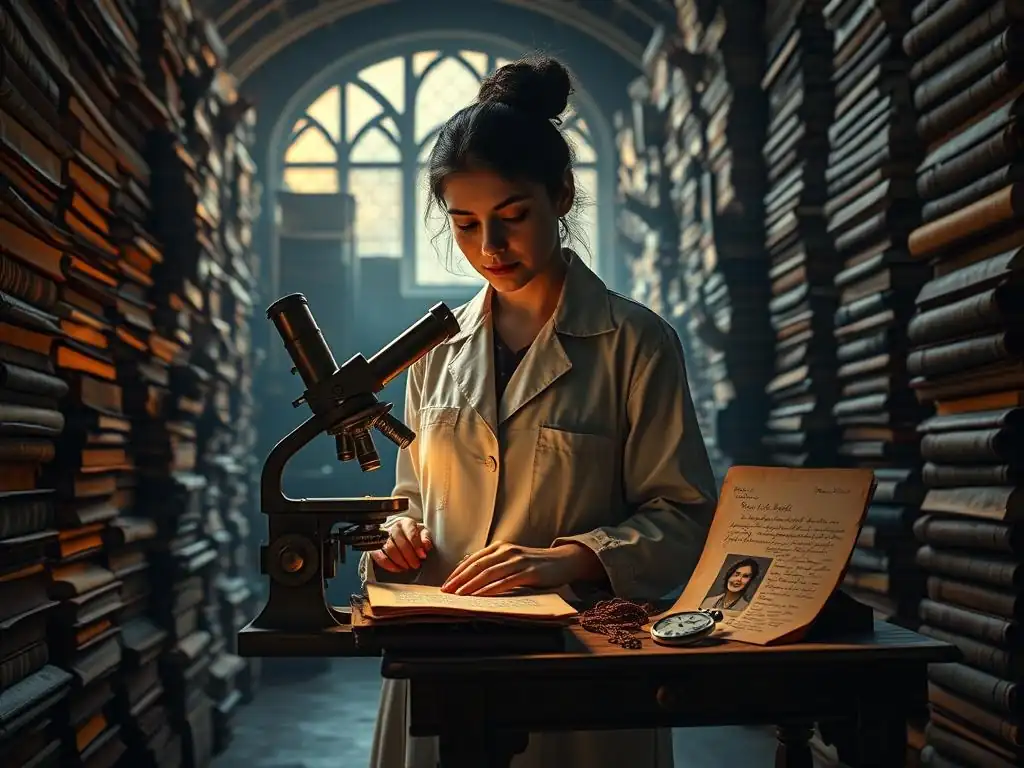
Welcome to WomenInScienceHistory.com!
Delve into the fascinating, and often untold, stories of women who shaped the world of science. Today, we're exploring a critical, cross-disciplinary theme: the significant impact of women scientists mentorship role models. Discover the historical challenges early female scientists faced due to the scarcity of these crucial figures, and how their absence shaped the landscape of scientific progress. What impact did this lack of mentorship have, and what lessons can we learn from it? Read on to uncover the captivating details.
- Introduction: The Critical Need for Women Scientists Mentorship Role Models
- The Historical Context: Limited Opportunities for Women in STEM
- The Scarcity of Female Role Models in Early Scientific Fields
- Challenges Faced by Early Women Scientists Without Mentors
- Impact on Career Advancement and Scientific Contributions
- Case Studies: Examples of Women Scientists Who Overcame Mentorship Barriers
- Strategies for Addressing the Mentorship Gap Today
- The Role of Institutions in Fostering Inclusive Mentorship
- Conclusion: Empowering Future Generations of Women Scientists Through Mentorship
-
Frequently Asked Questions
- What is the primary focus of WomenInScienceHistory.com?
- Why is the scarcity of role models a problem for early women scientists?
- What type of content can I expect to find on WomenInScienceHistory.com?
- How does WomenInScienceHistory.com aim to inspire future generations?
- What is the significance of highlighting the challenges faced by women scientists?
- Final Reflection: Empowering the Next Generation of Women Scientists
- Ignite Your Scientific Journey: Become the Role Model You Searched For!
Introduction: The Critical Need for Women Scientists Mentorship Role Models
Highlighting the Importance of Mentorship in Scientific Careers
Mentorship serves as a cornerstone for professional development in any field, but its impact is particularly profound within the demanding and specialized world of scientific research. A strong mentor provides invaluable guidance, helping navigate complex career paths, refine technical skills, and understand the unwritten rules of academic and industrial science. They can open doors to networking opportunities, provide critical feedback on research, and offer psychological support during challenging phases, fundamentally shaping a budding scientist's trajectory.
For aspiring women scientists, the presence of dedicated mentorship role models transcends mere professional guidance; it offers a vital source of inspiration and validation. These relationships are crucial for building self-efficacy, understanding gender-specific challenges that might arise, and envisioning a successful future in fields where women have historically been underrepresented. A mentor can help a young woman scientist identify and pursue opportunities she might otherwise overlook, providing the confidence needed to excel.
Addressing the Historical Mentorship Gap for Women in Science
Historically, the scientific landscape was overwhelmingly male-dominated, creating an inherent and pervasive mentorship gap for women scientists. As women were largely excluded from formal scientific education, institutions, and professional networks for centuries, there were simply very few senior female figures who could serve as mentorship role models. This absence was not a mere inconvenience but a significant systemic barrier to women's entry and advancement in science.
This historical void meant that early women scientists often operated in isolation, lacking the guidance, advocacy, and community support that their male counterparts frequently received. The consequences were profound: slower career progression, limited access to resources and collaborations, and increased susceptibility to professional burnout or abandonment of their scientific aspirations. Understanding this historical mentorship gap is crucial to appreciating the challenges faced by pioneering women scientists and the ongoing efforts to foster robust women scientists mentorship role models today.
The Historical Context: Limited Opportunities for Women in STEM
Societal Barriers Restricting Women's Access to Scientific Education
For centuries, deeply entrenched societal norms and expectations severely limited women's access to formal education, particularly in scientific and technical disciplines. In many parts of the world, female education was confined to domestic skills or rudimentary literacy, with intellectual pursuits in science deemed inappropriate or even detrimental to women's perceived roles. For instance, in the 18th and much of the 19th centuries, major universities across Europe and North America either did not admit women at all or relegated them to separate, often less rigorous, "ladies' courses" that rarely included advanced scientific training.
This systemic exclusion forced many early women scientists to pursue knowledge through unconventional means, such as self-study, private tutelage, or informal apprenticeships within family circles. For example, Caroline Herschel, a pioneering astronomer in the late 18th century, learned astronomy from her brother William Herschel. While remarkable, such ad-hoc learning environments rarely provided the structured academic environment or the diverse network of peers and senior figures that could serve as women scientists mentorship role models, which was readily available to men.
The Underrepresentation of Women in Scientific Institutions and Academia
Even when some women managed to acquire scientific knowledge, their entry into established scientific institutions and academia was met with formidable resistance. Scientific societies, universities, and research laboratories were overwhelmingly male strongholds, often explicitly excluding women from membership, faculty positions, or even access to research facilities. This pervasive underrepresentation meant that the few women who did manage to contribute were often relegated to uncredited or subordinate roles, such as "calculators" or technical assistants.
The impact of this underrepresentation was devastating for the development of women scientists mentorship role models. If women were not present as professors, principal investigators, or recognized research leaders, there were virtually no visible senior women scientists to inspire, guide, or advocate for younger female aspirants. This created a self-perpetuating cycle where the absence of female leadership contributed to the continued lack of female participation, further exacerbating the scarcity of women scientists mentorship role models within the institutional framework.
The Scarcity of Female Role Models in Early Scientific Fields
Lack of Visibility of Accomplished Women Scientists
Throughout history, even when women achieved significant scientific breakthroughs, their contributions were frequently overlooked, downplayed, or even directly attributed to male colleagues. This historical "erasure" meant that the stories and successes of pioneering women scientists were not widely known or celebrated, significantly diminishing their potential to serve as mentorship role models for future generations. Academic records, scientific publications, and public narratives often failed to acknowledge female intellectual labor.
Consider the "Harvard Computers," a group of women employed by the Harvard College Observatory in the late 19th and early 20th centuries. While figures like Henrietta Leavitt made groundbreaking discoveries in stellar luminosity (essential for measuring cosmic distances) and Annie Jump Cannon developed a stellar classification system still used today, they were largely seen as skilled assistants rather than independent scientists. This lack of public recognition and academic credit meant that their profound impact on astronomy was not widely understood, limiting their visibility as powerful women scientists mentorship role models.
Impact of Limited Female Faculty on Aspiring Women Scientists
The paucity of women in senior academic positions, particularly as university faculty, directly translated into a critical shortage of accessible women scientists mentorship role models for female students. Without female professors, department chairs, or laboratory heads, young women pursuing scientific studies often found themselves in an educational environment where their gender was virtually unrepresented at the higher echelons. This absence left a significant void in terms of direct, relatable guidance.
This pervasive lack of female faculty had profound psychological and practical implications. Aspiring women scientists might have felt isolated, lacking individuals who could truly understand and address the unique challenges they faced in a male-dominated field. Furthermore, they missed out on the specific career advice, networking opportunities, and advocacy that a female mentor could provide, potentially leading to self-doubt, a lack of clear career pathways, and ultimately, a higher attrition rate among talented young women in science.
Challenges Faced by Early Women Scientists Without Mentors
Early women scientists often found themselves as solitary figures in overwhelmingly male-dominated laboratories, university departments, and scientific conferences. This pervasive gender imbalance led to significant social and professional isolation, making it difficult for them to integrate into informal networks where crucial information, collaborations, and opportunities were often shared. Without a women scientists mentorship role model, they lacked guidance on how to navigate these often unwelcoming social dynamics.
This environment frequently manifested in subtle and overt forms of exclusion. Women might have been left out of discussions, ignored during meetings, or found their ideas dismissed without proper consideration. Without a senior women scientists mentorship role model who had successfully navigated similar terrains, they lacked the strategic advice on how to assert their intellectual authority, build alliances, and gain the respect necessary to thrive in these challenging scientific communities.
Overcoming Gender Bias and Discrimination in Scientific Research
The path of early women scientists was fraught with systemic gender bias and outright discrimination. They faced hurdles ranging from being denied access to essential laboratory equipment or research materials to having their scientific findings scrutinized more heavily or their intellectual contributions undervalued compared to their male counterparts. Without a women scientists mentorship role model, these women often had to confront these biases in isolation, with little institutional support or strategic advice.
For instance, a female researcher might find her grant application summarily rejected or her publication subjected to undue skepticism, simply because of her gender. The absence of a mentorship role model meant that learning to identify, challenge, and overcome these discriminatory practices was often a trial-and-error process, demanding immense resilience and often leading to frustration. This systemic bias, unmitigated by mentorship, significantly impeded the progress and recognition of early women scientists.
Difficulty in Securing Funding and Research Opportunities Without Mentorship
Securing adequate funding and access to research opportunities is paramount for any scientist's career, and early women scientists faced disproportionate challenges in this regard, especially without the benefit of a mentor. Mentors often serve as crucial gatekeepers, introducing mentees to funding agencies, connecting them with established research teams, and vouching for their capabilities. This vital support system was largely absent for pioneering women in science.
Consequently, women scientists often struggled to secure even modest grants, were excluded from prestigious, well-funded research projects, and found it difficult to gain access to cutting-edge facilities. This lack of financial and infrastructural support severely constrained their research capabilities, limiting the scope and impact of their work. Without a mentorship role model to advocate on their behalf or guide them through the intricate world of scientific patronage, many talented women found their research ambitions stifled.
Impact on Career Advancement and Scientific Contributions

Hindered Professional Growth Due to Lack of Guidance
The absence of strong women scientists mentorship role models significantly hindered the professional growth of early female researchers. Without experienced guides, these women often lacked crucial insights into navigating academic politics, understanding publishing strategies, or developing effective leadership skills. This meant slower progression through academic ranks, fewer promotions, and a general delay in achieving the recognition commensurate with their scientific abilities.
This lack of guidance could manifest in practical ways, such as not knowing how to effectively negotiate for better positions or salaries, or how to build a robust publication record that would attract attention from hiring committees or grant panels. Consequently, many women scientists remained stuck in junior or unacknowledged roles for longer periods, if they did not leave the field altogether, preventing them from reaching their full potential as scientific leaders and innovators.
Reduced Opportunities for Collaboration and Networking
Mentors traditionally act as vital connectors, introducing their mentees to broader professional networks, facilitating collaborations, and identifying opportunities for interdisciplinary research. For early women scientists who lacked such mentorship role models, these critical networking avenues were often closed off, leading to professional isolation. They missed out on informal gatherings, specialized workshops, and large-scale research initiatives that are vital for scientific advancement.
This reduced access to collaboration and networking limited their ability to exchange ideas, share resources, and participate in larger, more impactful projects. Scientific discovery is increasingly collaborative, and operating in isolation can significantly impede progress. The historical scarcity of women scientists mentorship role models meant that many brilliant women were prevented from forming the synergistic partnerships that could have amplified their research and accelerated their careers.
The Potential Loss of Innovative Ideas and Scientific Breakthroughs
Perhaps the most profound impact of the mentorship gap was the potential loss of innovative ideas and scientific breakthroughs that never came to fruition. When talented women scientists faced insurmountable barriers due to a lack of mentorship role models and support, many either left science prematurely or had their contributions marginalized. This represents an immeasurable loss to the collective body of human knowledge.
Consider the cumulative effect: if even a small percentage of potential discoveries were never made because brilliant women were unable to thrive or were pushed out of the field, the overall pace and direction of scientific progress were undoubtedly altered. The historical neglect of women scientists mentorship role models meant that unique perspectives, diverse approaches, and potentially groundbreaking insights were lost, highlighting the profound societal cost of gender inequality in science.
Case Studies: Examples of Women Scientists Who Overcame Mentorship Barriers
Marie Curie: Overcoming Isolation and Securing Recognition in Physics and Chemistry
Marie Curie stands as a towering figure in science, yet her early career path demonstrates the profound challenges faced by women scientists in the absence of traditional mentorship role models. Arriving in Paris from Poland, she largely forged her own intellectual trajectory, entering a scientific establishment where senior women scientists, particularly in physics and chemistry, were virtually non-existent. While her husband, Pierre Curie, became her scientific partner and collaborator, she confronted immense skepticism and resistance from the male-dominated French scientific community.
Despite this isolation and the systemic biases of her era, her unwavering determination led her to isolate and characterize new radioactive elements, polonium and radium. Her groundbreaking work culminated in her sharing the 1903 Nobel Prize in Physics, a testament to her independent brilliance. She later achieved an unparalleled feat, securing a second Nobel Prize in Chemistry in 1911 entirely on her own, solidifying her recognition through sheer scientific merit in the absence of traditional women scientists mentorship role models advocating for her early career.
Rosalind Franklin, a brilliant X-ray crystallographer, made indispensable contributions to understanding the molecular structures of DNA and RNA in the early 1950s. Working at King's College London, she operated in an environment rife with institutional gender bias, where women were often excluded from informal scientific discussions in common rooms and treated as subordinate. She notably lacked a senior women scientists mentorship role model who could have guided her through the political complexities of her research field and advocated for her intellectual property.
Franklin's meticulously produced X-ray diffraction images, particularly Photo 51, provided crucial empirical evidence that underpinned the double helix model of DNA. However, her data was accessed by Watson and Crick without her explicit permission or full understanding of its intended use. Tragically, her seminal contribution was not fully acknowledged during her lifetime, and she was not included in the 1962 Nobel Prize awarded to Watson, Crick, and Wilkins. Her story starkly illustrates the challenges faced by women scientists without adequate mentorship role models to champion their work and ensure proper attribution in a competitive, male-dominated scientific landscape.
Strategies for Addressing the Mentorship Gap Today
Promoting Visibility of Contemporary Women Scientists
A fundamental strategy for addressing the historical mentorship gap is actively promoting the visibility of contemporary women scientists. By showcasing their achievements, breakthroughs, and diverse career paths, we provide tangible, relatable examples for aspiring female researchers. This involves robust media coverage, public speaking engagements, and institutional recognition through awards and leadership positions, ensuring that young scientists have numerous visible women scientists mentorship role models to inspire them.
Websites like "Women in Science History" play a vital role in documenting past contributions, but current efforts must also spotlight living leaders. Initiatives such as the L'Oréal-UNESCO For Women in Science Awards, for instance, actively promote the work of outstanding female researchers globally, creating a powerful network of women scientists mentorship role models. This increased visibility not only inspires but also normalizes the idea of women excelling in scientific fields.
Creating Mentorship Programs Specifically for Women in STEM
To systematically bridge the historical gap, the establishment of formalized mentorship programs specifically for women in STEM is crucial. These programs strategically connect aspiring female scientists with experienced women scientists mentorship role models who can offer tailored advice, support, and career guidance that addresses the unique challenges women often encounter in scientific fields. Such structured relationships go beyond informal connections, ensuring equitable access to guidance.
Many universities, professional societies, and scientific organizations have successfully implemented such programs. For example, the American Association for the Advancement of Science (AAAS) offers various mentoring initiatives, and organizations like the Association for Women in Science (AWIS) provide extensive networking and mentoring opportunities. These programs often see hundreds of mentees participating annually, demonstrating a concerted effort to provide structured access to women scientists mentorship role models and foster a supportive community.
Encouraging Male Allies to Support and Mentor Women Scientists
While the presence of women scientists mentorship role models is paramount, male allies also have a significant and indispensable role to play in addressing the mentorship gap. Actively encouraging established male scientists to mentor women, advocate for their work, and challenge biases within their institutions can greatly accelerate progress towards gender equity in STEM. Their influence and position within existing power structures can be leveraged for positive change.
This involves male scientists using their positions of influence to open doors, provide research opportunities, and amplify the voices of their female colleagues. For instance, a senior male professor might actively sponsor a talented female postdoctoral researcher for a leadership position, nominate her for prestigious awards, or ensure her contributions are properly credited in joint publications. By championing their female colleagues, male allies serve as powerful, albeit indirect, mentorship role models, helping to dismantle systemic barriers and foster an inclusive scientific culture.
The Role of Institutions in Fostering Inclusive Mentorship
Implementing Policies to Promote Gender Equality in STEM Fields
For inclusive mentorship to truly flourish, institutions must actively implement and enforce policies that promote gender equality across all STEM fields. This includes transparent and equitable hiring, promotion, and tenure processes, ensuring equal pay for equal work, and establishing robust anti-harassment and anti-discrimination policies. Such systemic changes are foundational to creating an environment where women scientists can thrive and, subsequently, become mentorship role models themselves.
Many institutions are now adopting concrete measures, such as requiring diverse candidate pools for faculty searches (similar to the "Rooney Rule" in sports), mandating unconscious bias training for hiring committees, and regularly auditing salary structures for gender disparities. These policy shifts signal a commitment to equity, making scientific institutions more welcoming and conducive for women scientists to build successful careers and emerge as influential mentorship role models.
Providing Resources and Support for Women Scientists' Career Development
Beyond policy, institutions must invest in tangible resources and support systems specifically designed to facilitate the career development of women scientists. This includes funding for professional development workshops, leadership training programs, and networking events that are tailored to address the unique challenges and opportunities faced by women in science. Such resources empower women to acquire the skills and connections needed to advance.
Furthermore, providing family-friendly policies such as flexible work arrangements, accessible childcare support, and structured re-entry programs for those returning after career breaks can be pivotal. These resources help women scientists navigate the complexities of work-life balance, ensuring they can sustain their careers and achieve leadership positions. By investing in these comprehensive support systems, institutions enable more women scientists to remain in the pipeline and ultimately serve as powerful, accessible mentorship role models for the next generation.
Conclusion: Empowering Future Generations of Women Scientists Through Mentorship
The Enduring Importance of Role Models and Mentorship for Women in Science
The historical scarcity of women scientists mentorship role models created significant, often insurmountable, barriers for pioneering female researchers. Understanding this challenging past underscores the profound and enduring importance of such relationships for current and future generations of women scientists. Mentorship is not merely a beneficial addition to a scientific career; it is a fundamental pillar of professional success, intellectual growth, and personal resilience in the demanding world of scientific discovery.
By actively cultivating and providing access to strong women scientists mentorship role models, we equip aspiring female scientists with the essential confidence, strategic knowledge, and vital networks necessary to navigate complex scientific landscapes, overcome systemic biases, and push the boundaries of human understanding. These relationships empower women to persevere, innovate, and ultimately shape the future of science, ensuring that talent is recognized and nurtured irrespective of gender.
Call to Action: Investing in Programs that Support Women Scientists' Success
To truly accelerate scientific progress and achieve genuine gender equity, it is imperative that all stakeholders—governments, academic institutions, private industry, and individuals—actively commit to investing in initiatives that foster robust mentorship and comprehensive support for women scientists. This call to action demands more than just acknowledging the problem; it requires concrete financial commitment and sustained effort.
This investment includes funding for dedicated women scientists mentorship role models programs, promoting inclusive institutional cultures, and celebrating the diverse achievements of female researchers at all stages of their careers. By consciously building robust systems for women scientists mentorship role models and support, we ensure that every brilliant mind has the opportunity to contribute fully, accelerating scientific progress and creating a more equitable, diverse, and innovative future for all.
Frequently Asked Questions
What is the primary focus of WomenInScienceHistory.com?
The site celebrates the contributions of women to various scientific fields throughout history, providing biographies and discussions of their work. It also highlights the challenges they faced in male-dominated environments.
Why is the scarcity of role models a problem for early women scientists?
The lack of women scientists mentorship role models can lead to feelings of isolation and limited access to career advancement opportunities and support. It can also hinder their belief in their own potential.
What type of content can I expect to find on WomenInScienceHistory.com?
You'll find biographies of pioneering women scientists, analyses of their groundbreaking research, and discussions of the obstacles they overcame. It also aims to inspire future generations.
How does WomenInScienceHistory.com aim to inspire future generations?
By showcasing the stories of successful women in science, the platform provides inspiring examples and demonstrates the possibilities for future female scientists. This visibility is crucial for encouraging young women to pursue STEM fields.
What is the significance of highlighting the challenges faced by women scientists?
Acknowledging the historical and ongoing challenges faced by women in science helps to understand the systemic barriers and work towards creating a more equitable and inclusive scientific community.
Final Reflection: Empowering the Next Generation of Women Scientists
The challenges highlighted throughout this article underscore a stark reality: the scarcity of accessible mentorship for early-career women scientists remains a significant impediment to their advancement. This isn't just a historical issue; it's a present-day obstacle that directly impacts the diversity and innovation within STEM fields. Addressing this gap is crucial for fostering a more equitable and vibrant scientific community.
The absence of relatable role models not only hinders career progression but also deeply affects the confidence and sense of belonging for aspiring women scientists. This lack of representation can lead to feelings of isolation and imposter syndrome, ultimately discouraging talented individuals from pursuing their scientific passions. You can't be what you can't see.
This quote, often attributed to Marian Wright Edelman, perfectly encapsulates the profound impact of mentorship and the urgent need to amplify the visibility of successful women in science.
As we conclude this exploration of mentorship gaps, let us all commit to becoming active participants in bridging this divide. Whether you are a seasoned scientist, a student, or simply an advocate for equality, consider how you can contribute to creating a more supportive and inclusive environment for women in STEM. Reflect on your own journey, identify opportunities to mentor or be mentored, and actively champion the success of women scientists. The future of scientific discovery depends on it.
Ignite Your Scientific Journey: Become the Role Model You Searched For!
Thank you for delving into the challenges and triumphs of early women scientists. We hope this article has inspired you to recognize the importance of mentorship and representation in STEM. Now, let's turn that inspiration into action.
- Step up and become a mentor! Connect with a young woman interested in science and share your knowledge and experiences.
- Explore our website, WomenInScienceHistory.com, to learn about more unsung heroines and share their stories with your network to amplify their legacy.
- Participate in a local science outreach program; volunteering just a few hours a month can make a huge impact.
What unique perspectives can you bring to the next generation of women scientists?