
"Not the Right Fit": Unpacking Vague Justifications for Excluding Women Scientists


Welcome to WomenInScienceHistory.com, where we illuminate the often-hidden stories of remarkable women who shaped the scientific landscape! Ever wondered about the subtle yet powerful barriers that prevented talented women from pursuing science careers? Dive into our featured article, " Not the Right Fit": Unpacking Vague Justifications for Excluding Women Scientists," and explore the complex reasons behind these exclusions. Prepare to have your perspective challenged and your curiosity piqued as we uncover the systemic biases that have historically shaped, and continue to shape, the world of science. Read on to discover more about this crucial cross-disciplinary theme!
- Introduction: The Subtle Barriers Facing Women in Science Careers
- The "Not the Right Fit" Justification: A Closer Look
- Case Studies: Instances of Women Excluded from Science
- The Impact of Vague Justifications on Women's Scientific Advancement
- Deconstructing the "Right Fit": Identifying and Challenging Biases
- Promoting Equity and Inclusion: Creating a Welcoming Environment for Women in Science
- Conclusion: Towards a More Equitable Future for Women in Science
-
Frequently Asked Questions
- What were some common, vague reasons women were excluded from science careers in the past?
- How did the gendered expectations of society impact women's access to science careers?
- What types of challenges did women in science face specifically due to being in male-dominated fields?
- Why is it important to learn about the history of women's exclusion from science?
- How does "WomenInScienceHistory.com" contribute to a better understanding of Women excluded science careers?
- Final Reflection: Breaking Barriers, Building Bridges
- Empower Change: Rewrite the Narrative!
Introduction: The Subtle Barriers Facing Women in Science Careers
The Enduring Challenge of Gender Bias in STEM
Despite significant progress in recent decades, gender bias continues to be a pervasive challenge for women in science, technology, engineering, and mathematics (STEM) fields. Historically, women were often overtly denied access to scientific education and professional roles, with pioneering figures like Marie Curie facing immense skepticism and limited opportunities even after groundbreaking discoveries. While overt discrimination has largely diminished in many academic and industrial settings, a more insidious form of bias persists, subtly influencing who gets hired, promoted, and recognized, often leading to women excluded science careers from positions of influence.
This enduring challenge manifests in various ways, from unequal pay and fewer leadership positions to a lack of recognition for their intellectual contributions. For instance, a 2021 study by the American Association of University Women (AAUW) highlighted that women remain underrepresented in senior faculty positions in STEM, holding only about 28% of full professorships in science and engineering fields, despite earning nearly half of all science and engineering doctorates. This disparity indicates that factors beyond qualifications are at play, contributing to the persistent issue of women excluded science careers at higher echelons.
Moving Beyond Overt Discrimination: Unveiling Subtle Exclusionary Practices
The landscape of discrimination has evolved, shifting from explicit prohibitions to more nuanced, often unconscious, exclusionary practices. These subtle barriers are far harder to identify and challenge, as they rarely involve direct statements of prejudice. Instead, they manifest as subjective judgments about a candidate's "fit," "potential," or "collaboration style," which can inadvertently carry gendered assumptions. Such practices contribute significantly to the phenomenon of women excluded science careers, as they create invisible hurdles that can derail promising trajectories.
One of the most potent of these subtle practices is the reliance on vague justifications for denying opportunities. Phrases like "not the right fit," "lacks executive presence," or "needs to be more assertive" are often used to mask underlying biases. These nebulous criteria make it difficult for women to understand the real reasons for their exclusion, preventing them from addressing specific areas for improvement and perpetuating a cycle where women are subtly but effectively excluded from science careers, particularly in competitive environments where subjective assessments hold sway.
The "Not the Right Fit" Justification: A Closer Look
Defining "Not the Right Fit": Ambiguity and Subjectivity
The phrase "not the right fit" is a remarkably ambiguous and subjective justification frequently encountered in hiring, promotion, and tenure decisions within scientific institutions. It lacks objective criteria, making it a convenient, yet problematic, catch-all for unspoken biases or personal preferences. When a candidate is deemed "not the right fit," it often implies a perceived misalignment with an existing team's dynamics, cultural norms, or even undefined personality traits, rather than a quantifiable deficiency in skills or experience.
This inherent ambiguity allows for unconscious biases to seep into decision-making processes. For example, a male-dominated research group might unconsciously seek candidates who mirror their own communication styles or social behaviors, inadvertently overlooking equally or more qualified female applicants who might simply present themselves differently. Such subjective assessments directly contribute to women excluded science careers, as they create an opaque barrier that is difficult to challenge, often leaving the denied individual questioning their own suitability rather than the fairness of the process.
How "Not the Right Fit" Masks Gender Bias in Scientific Fields
In scientific fields, where objective data and merit are ostensibly paramount, the "not the right fit" justification can be a particularly potent mask for gender bias. Research has shown that women exhibiting traits traditionally associated with leadership or success, such as assertiveness or a direct communication style, are sometimes perceived negatively—labeled as "abrasive" or "aggressive"—while the same traits in men are often praised as "strong leadership" or "decisiveness." This double standard frequently leads to women being deemed "not the right fit" for roles requiring strong leadership or independent thought.
Furthermore, the concept of "fit" can inadvertently reinforce existing gender imbalances. For instance, a team looking for a "collegial" atmosphere might unknowingly interpret a woman's focus on individual research output as a lack of team-orientation, even if her productivity is high.
Conversely, a male colleague with similar working habits might be seen as "focused" or "independent." This subtle misinterpretation of behaviors, rooted in gender stereotypes, directly contributes to the challenges faced by women in science careers, making it difficult for them to navigate the unwritten rules of advancement and leading to many instances of women excluded science careers from vital opportunities.
Case Studies: Instances of Women Excluded from Science
Dr. Rossi: Overlooked for Department Chair Position
Dr. Elena Rossi, a distinguished professor of astrophysics at a prominent university, had an exemplary record spanning two decades. Her research on exoplanet atmospheres had garnered international acclaim, resulting in numerous high-impact publications and significant grant funding. She had also demonstrated strong leadership as a successful lab director and served on several key university committees. When the position for Department Chair became vacant, Dr. Rossi, with her extensive experience and academic prowess, was considered a leading internal candidate.
However, despite her superior qualifications and a strong recommendation from the outgoing chair, the position was ultimately offered to a male colleague with fewer publications, less administrative experience, and a smaller grant portfolio. The official feedback provided to Dr. Rossi was vague, citing that the search committee felt the selected candidate had "a better overall cultural fit" and "the right temperament" for the role, without specifying what these terms entailed or how Dr. Rossi fell short.
This outcome left Dr. Rossi feeling demoralized and questioning her future at the institution, a stark example of how highly qualified women are excluded from science careers in leadership.
Dr. Chen: Tenure Denial Based on "Lack of Collaboration"
Dr. Li Chen, an assistant professor of biomedical engineering, was on the tenure track at a research-intensive university. Her five years at the institution were marked by impressive scientific output, including multiple first-author papers in top-tier journals and the successful acquisition of a highly competitive early-career grant. She regularly presented her work at national conferences and supervised a growing team of graduate students. Her research was innovative and highly promising, positioned at the cutting edge of regenerative medicine.
Despite her significant individual achievements, Dr. Chen was denied tenure. The primary justification provided was a perceived "lack of collaboration" and "insufficient integration" within the departmental research community. While Dr. Chen had indeed focused intensely on establishing her independent lab and securing funding, she had also co-authored papers with colleagues and participated in departmental seminars.
The feedback failed to acknowledge her collaborative efforts outside her immediate research group or contextualize her independent work within the broader scientific landscape. This subjective assessment, focusing on an undefined "integration" rather than concrete metrics, highlights how talented women are excluded from science careers at pivotal junctures, particularly when their working styles do not conform to unstated expectations.
Analyzing the Common Threads: Patterns of Exclusion for Women in STEM
The cases of Dr. Rossi and Dr. Chen, while distinct in their specifics, reveal striking commonalities in the patterns of exclusion faced by women in STEM. Both instances involved highly qualified female scientists whose objective achievements were overshadowed by subjective, ill-defined criteria such as "cultural fit" or "integration." The feedback provided was vague, making it nearly impossible for the individuals to understand precisely why their candidacies were rejected or how they could address the perceived shortcomings. This lack of transparency is a hallmark of subtle bias, creating an opaque barrier for women.
These patterns reinforce existing gender imbalances, particularly at senior levels where subjective evaluations often hold more weight. Such outcomes not only disadvantage individual women but also perpetuate a system where the contributions and leadership potential of female scientists are systematically undervalued. The repeated use of nebulous justifications for denying opportunities means that many accomplished women are excluded from science careers in leadership and tenured positions, hindering the overall progress towards gender equity within the scientific community and depriving it of diverse perspectives.
The Impact of Vague Justifications on Women's Scientific Advancement
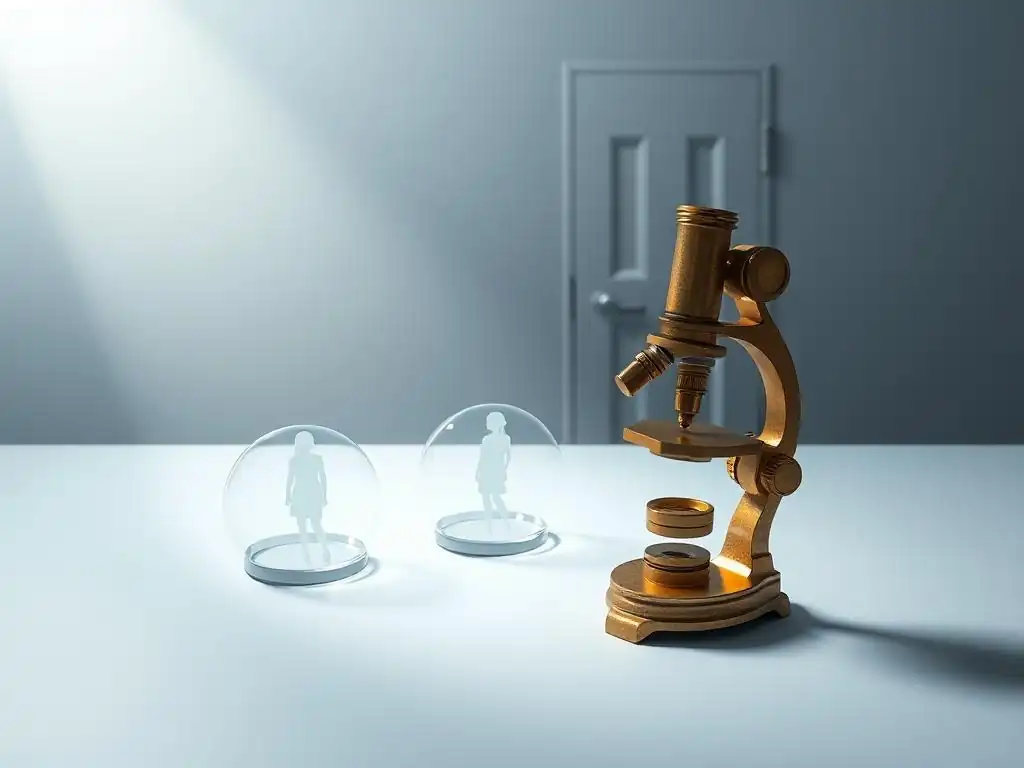
Career Stagnation and Limited Opportunities for Female Scientists
The pervasive use of vague justifications like "not the right fit" significantly contributes to career stagnation and limits opportunities for female scientists. When women are repeatedly passed over for promotions, leadership roles, or tenure based on subjective and undefined criteria, their professional trajectories can be severely hampered. This isn't merely about individual disappointment; it represents a systemic barrier that prevents a substantial portion of the scientific talent pool from reaching their full potential. Without clear feedback on why they were excluded, women find it challenging to adapt or improve, leading to repeated setbacks.
This stagnation has broader consequences. If women are less likely to advance to senior professorships, lead research centers, or serve on influential committees, their voices and perspectives are underrepresented in critical decision-making processes within science. This perpetuates a cycle where the norms and structures of scientific institutions continue to be shaped primarily by those already in power, often leading to an environment where women are subtly, yet consistently, excluded from science careers at the highest levels, irrespective of their merit or innovative contributions.
The Psychological Toll: Self-Doubt and Imposter Syndrome
Beyond the tangible career setbacks, the psychological toll of vague justifications on female scientists is profound. When an individual's hard work, expertise, and accomplishments are dismissed with nebulous feedback, it can lead to intense self-doubt, anxiety, and a heightened sense of imposter syndrome. Accomplished women, despite their objective successes, may begin to question their own abilities, intelligence, and belonging within the scientific community, internalizing the idea that they are indeed "not the right fit."
This insidious psychological burden can be debilitating. It can lead to burnout, disengagement, and even cause talented women to leave science careers altogether, seeking environments where their contributions are more clearly valued and their paths to advancement are more transparent. The emotional weight of constantly having to prove oneself against undefined criteria, coupled with the frustration of opaque decision-making, significantly impacts mental well-being and diminishes the overall vibrancy of the scientific workforce, as valuable talent is lost due to subjective and unfair assessments.
The Broader Consequences: Loss of Talent and Innovation in Science
The consistent exclusion of women from science careers, particularly through vague and subjective means, has far-reaching consequences that extend beyond individual careers to impact the entire scientific enterprise. When a significant portion of the talent pool is undervalued or prematurely exited, the collective capacity for innovation, discovery, and problem-solving is demonstrably diminished. Diverse teams, encompassing a variety of perspectives, backgrounds, and experiences, have been shown to outperform homogeneous teams in terms of creativity and effectiveness.
By failing to fully integrate and promote women, scientific fields lose out on unique insights, alternative approaches, and the potential for groundbreaking discoveries that might emerge from different life experiences. For example, research on gender diversity in STEM indicates that teams with greater gender balance publish more impactful papers and produce more novel research. The persistent issue of women excluded science careers means that science is not operating at its full potential, missing out on crucial contributions that could accelerate progress and address complex global challenges more effectively.
Deconstructing the "Right Fit": Identifying and Challenging Biases
Unconscious Bias Training: Raising Awareness and Promoting Inclusive Practices
A crucial step in deconstructing the "not the right fit" narrative is the widespread implementation of effective unconscious bias training within scientific institutions. This training aims to make individuals aware of the implicit biases they unknowingly hold, which can influence their perceptions of competence, leadership, and "fit" in others. By understanding how biases related to gender, race, or other characteristics can subtly sway evaluations, hiring committees, grant reviewers, and promotion panels can begin to mitigate their impact.
While not a standalone solution, unconscious bias training serves as a foundational element for fostering a more equitable environment. It helps to equip decision-makers with the tools to recognize when subjective judgments might be masking deeper prejudices, thereby reducing instances where women are excluded from science careers due to unsubstantiated feelings about their suitability. The goal is to shift from intuitive, potentially biased, assessments to more deliberate and evidence-based evaluations of merit.
Objective Evaluation Criteria: Moving Beyond Subjective Assessments
To effectively challenge the "not the right fit" justification, scientific institutions must commit to developing and implementing clear, objective evaluation criteria for all stages of career progression—from hiring and grant applications to tenure and promotion decisions. This means moving away from nebulous qualities and focusing on measurable achievements, defined skills, and demonstrable impact. For instance, instead of assessing "collaboration," criteria could focus on specific co-authored publications, successful team grants, or documented contributions to interdisciplinary projects.
Standardized rubrics, blind review processes (where feasible, such as for initial manuscript or grant submissions), and a focus on quantifiable outputs (publications, citations, grant funding, student mentorship) can significantly reduce the scope for subjective "fit" judgments. By establishing transparent and consistent benchmarks, institutions create a more level playing field, ensuring that decisions are based on merit and performance rather than implicit biases, thereby reducing the likelihood of women being unfairly excluded from science careers.
Mentorship and Sponsorship: Supporting Women's Career Trajectories in Science
Robust mentorship and sponsorship programs are vital mechanisms for supporting women's career trajectories in science and counteracting exclusionary practices. Mentors provide invaluable guidance, sharing insights into navigating academic politics, securing funding, and building professional networks. They can help female scientists decode unwritten rules and prepare them for challenges, including potential encounters with subjective "fit" assessments.
Sponsorship goes a step further: a sponsor is an influential individual who actively advocates for a protégé, promoting their work, recommending them for opportunities, and speaking up for them in closed-door discussions. This active endorsement can directly counteract the subtle biases that lead to women being excluded from science careers. By having powerful allies who champion their achievements and potential, women are more likely to be seen, heard, and considered for positions they are qualified for, breaking down invisible barriers to advancement.
Promoting Equity and Inclusion: Creating a Welcoming Environment for Women in Science
Institutional Reforms: Addressing Systemic Barriers to Women's Advancement
Achieving true equity and inclusion for women in science necessitates comprehensive institutional reforms that address systemic barriers. This goes beyond individual training and involves re-evaluating policies and practices that might inadvertently disadvantage women. Examples include transparent promotion and tenure processes with clearly defined benchmarks, equitable parental leave policies that do not penalize career progression, and robust anti-harassment and anti-discrimination policies with effective enforcement mechanisms.
Furthermore, institutions must actively work to dismantle outdated structures that lead to women being excluded from science careers. This could involve re-thinking the traditional academic clock for tenure, which often conflicts with prime childbearing and rearing years, or providing accessible childcare options. By committing to these fundamental reforms, universities and research organizations can create an environment where the default is inclusion, not exclusion, and where female scientists are supported throughout their careers.
Fostering a Culture of Belonging: Celebrating Diversity and Inclusion
Beyond policies, creating a truly welcoming environment for women in science requires fostering a culture of belonging, where diversity is not just tolerated but actively celebrated and integrated. This involves consciously challenging stereotypes, promoting inclusive language, and encouraging open dialogue about the unique challenges faced by women in STEM. When women feel genuinely valued, respected, and that their contributions are integral to the scientific community, they are more likely to thrive and remain engaged.
This culture shift can manifest in various ways: establishing affinity groups for women in STEM, showcasing the achievements of female scientists through public recognition, and ensuring diverse representation on committees and in leadership roles. When a sense of belonging is cultivated, the subtle pressures that lead to women being subtly pushed out or feeling "not the right fit" diminish, allowing all scientists to contribute their best work and reducing the instances of women excluded from science careers due to cultural misalignment.
Empowering Women Scientists: Amplifying Their Voices and Achievements
A critical component of promoting equity is actively empowering women scientists by amplifying their voices and celebrating their achievements. For too long, the contributions of women in science have been overlooked, downplayed, or attributed to male colleagues. By deliberately highlighting their groundbreaking research, leadership roles, and mentorship efforts, institutions can not only correct historical oversights but also inspire future generations and challenge prevailing biases.
This empowerment involves proactive measures such as nominating women for prestigious awards, ensuring their representation as keynote speakers at conferences, and featuring their work prominently in institutional communications. By consistently showcasing the brilliance and impact of female scientists, the narrative shifts from one where women are potentially excluded from science careers to one where their invaluable contributions are recognized as essential to scientific progress. This visibility creates powerful role models and encourages a more inclusive perception of what a successful scientist looks like.
Conclusion: Towards a More Equitable Future for Women in Science
Dismantling the "Not the Right Fit" Narrative
The "not the right fit" justification, though seemingly innocuous, represents a pervasive and subtle barrier that significantly contributes to women being excluded from science careers. It is a nebulous concept that often masks unconscious biases, subjective preferences, and outdated stereotypes, preventing qualified female scientists from advancing to positions of influence and recognition. Dismantling this narrative requires a conscious and concerted effort to bring transparency, objectivity, and accountability to evaluation processes across all scientific domains.
By recognizing the insidious nature of this justification, institutions and individuals can begin to challenge its use, demanding clear, measurable criteria instead of vague impressions. This shift is essential for creating a meritocratic system where talent and contribution are the sole determinants of success, rather than undefined notions of suitability. Addressing this subtle form of exclusion is a critical step towards ensuring that the scientific community truly benefits from the full spectrum of human potential.
Ensuring Equal Opportunities for Women in STEM Fields
Ensuring equal opportunities for women in STEM fields requires a multi-faceted approach that addresses both individual biases and systemic barriers. This involves implementing robust unconscious bias training, establishing objective evaluation criteria for hiring and promotion, fostering strong mentorship and sponsorship networks, and enacting institutional reforms that support women's career progression at every stage. The goal is to create pathways where women are encouraged, supported, and rewarded for their scientific contributions, rather than being subtly sidelined.
A truly equitable scientific landscape is one where every scientist, regardless of gender, has the chance to contribute fully, innovate freely, and lead effectively. This means actively dismantling the invisible walls that have historically led to women being excluded from science careers, and instead, building bridges that facilitate their advancement and success. The benefits of such an environment extend far beyond individual careers, enriching the entire scientific enterprise with diverse perspectives and accelerated discovery.
A Call to Action: Fostering a Truly Inclusive Scientific Community
The journey towards a truly inclusive scientific community demands continuous vigilance and proactive engagement from everyone involved: individual scientists, departmental chairs, university administrators, funding bodies, and professional organizations. It is a call to action to identify, challenge, and eliminate the subtle biases that lead to women being excluded from science careers, often without clear justification. This means fostering environments where transparency, fairness, and merit are paramount, and where diversity is seen as a strength, not a challenge.
By committing to these principles, the scientific community can move beyond merely acknowledging the problem to actively cultivating a culture where women feel genuinely valued, supported, and empowered to achieve their fullest potential. A future where all talent is recognized and utilized will undoubtedly lead to more robust research, more innovative solutions, and a more representative and equitable scientific landscape for generations to come.
Frequently Asked Questions
What were some common, vague reasons women were excluded from science careers in the past?
Often, women were deemed "not the right fit" or lacked the "necessary temperament," terms that masked underlying biases and gender stereotypes. These were used instead of concrete qualifications.
How did the gendered expectations of society impact women's access to science careers?
Societal expectations often pushed women towards domestic roles, creating a perception that science was unsuitable for women. This led to limited opportunities and systemic discouragement from pursuing scientific paths.
What types of challenges did women in science face specifically due to being in male-dominated fields?
Women often experienced exclusion from professional networks, received less recognition for their work, and faced discrimination in hiring and promotion, all stemming from the male dominance of the field.
Why is it important to learn about the history of women's exclusion from science?
Understanding the historical barriers faced by women helps us recognize and address ongoing biases and work towards creating a more equitable and inclusive scientific community.
How does "WomenInScienceHistory.com" contribute to a better understanding of Women excluded science careers?
The website provides biographies and stories that highlight the contributions of women in science and the challenges they overcame, shedding light on the history of their exclusion and inspiring future generations.
Final Reflection: Breaking Barriers, Building Bridges
The preceding analysis underscores a deeply concerning reality: the persistent and often subtle exclusion of women from science careers remains a significant impediment to progress. The vague justifications offered, cloaked in ambiguity and lacking concrete evidence, perpetuate a system that disproportionately disadvantages talented individuals and ultimately weakens the scientific community as a whole. This isn't just a historical issue; it's a present-day challenge demanding immediate and sustained attention.
This insidious form of discrimination has subtly, yet powerfully, shaped the landscape of scientific innovation for generations. The impact on women's self-perception, career trajectories, and overall representation in leadership positions is undeniable, and the loss of their potential contributions is a profound disservice to society. Science is not a boy's game, it's not a girl's game. It's everyone's game. It's about where we are and where we're going.
- Nichelle Nichols. This quote reminds us that inclusivity is not just a matter of fairness, but a fundamental requirement for achieving scientific excellence.
Now, consider the implications of these findings in your own life. How can you actively challenge biased assumptions and advocate for equitable opportunities within your own sphere of influence? Let us all commit to fostering a culture of genuine inclusion, where talent is recognized and nurtured regardless of gender, and where the scientific community truly reflects the diversity of the world it seeks to understand. The future of science depends on it.
Empower Change: Rewrite the Narrative!
Thank you for delving into the important topic of gender bias in science. Now that you're equipped with a deeper understanding, let's work together to dismantle these outdated justifications.
Here's how you can make a difference:
- Boldly challenge instances of vague "not the right fit" reasoning you encounter in academic or professional settings. Ask for specific, objective criteria.
- Share this article with your network to spark crucial conversations about inclusivity and fairness in STEM.
- Explore the stories of other remarkable women scientists on WomenInScienceHistory.com to inspire yourself and others.
What concrete steps will you take today to advocate for greater equity in science?