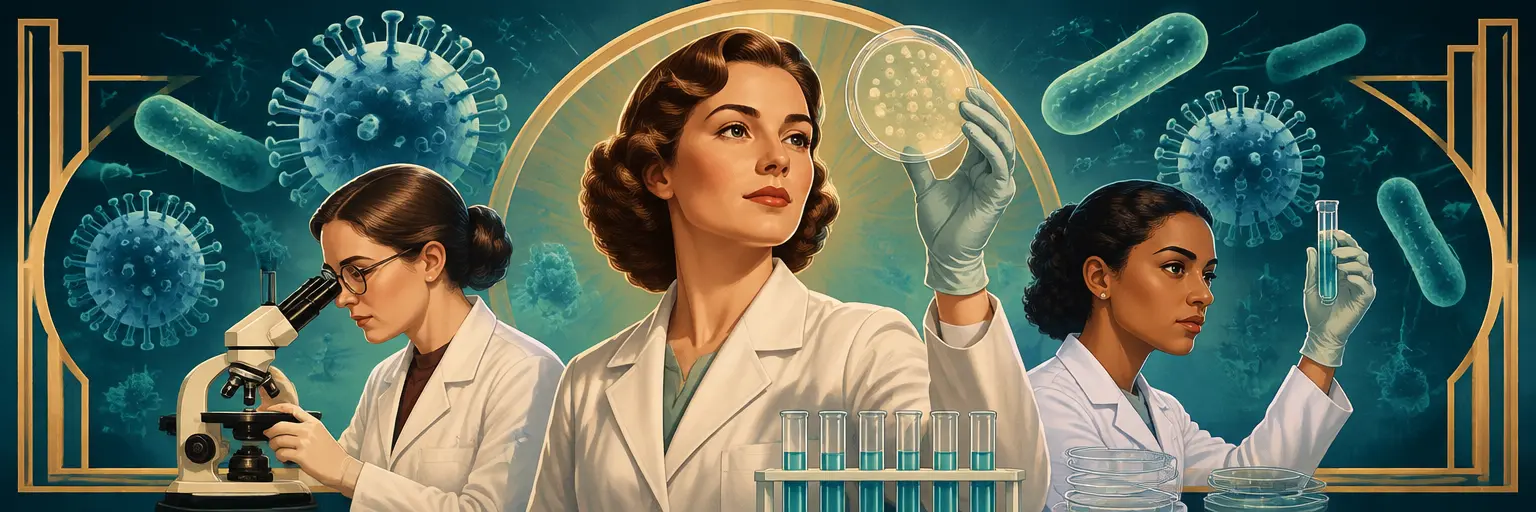
Women in Microbiology & Virology: Pioneers Who Shaped Our Understanding of the Invisible World
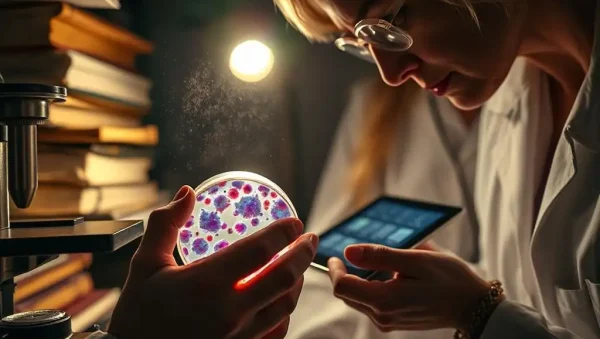
Microbiology and virology have been revolutionized by brilliant women whose discoveries saved millions of lives, yet their contributions are frequently overshadowed in mainstream history. From uncovering the structure of DNA to developing life-saving vaccines, these scientists battled both microscopic pathogens and systemic gender discrimination. This subcategory on WomenInScienceHistory.com illuminates the trailblazing figures, pivotal breakthroughs, and enduring legacies of women who dared to explore the unseen realms of bacteria, viruses, and immune systems. Dive in to discover how their tenacity continues to inspire modern research and public health policy.
🔬 Groundbreaking Discoveries by Women in Microbiology
Women have been central to some of the most transformative microbiological discoveries. Alice Evans, for instance, linked brucellosis to unpasteurized milk, paving the way for food safety standards. Gladys Hobby played a key role in mass-producing penicillin during WWII, while Esther Lederberg discovered lambda phage and the fertility factor F, fundamental to molecular genetics. Their work not only advanced scientific knowledge but also demonstrated that rigorous experimental design and patient observation could come from any gender.
Visitors to this section will learn how these pioneers navigated underfunded labs and exclusionary policies, often working as unpaid assistants. Their stories reveal that many discoveries credited to male colleagues were built on the unseen labor of women. Expect detailed timelines, primary source quotes, and comparative analyses of their contributions alongside contemporary male counterparts, offering a rebalanced view of scientific history.
🧪 Viral Heroes: Women Who Decoded Viruses and Saved Lives
Virology owes much to women like Gertrude Elion, who developed antiviral drugs for herpes and AIDS without a traditional PhD, and Jill Armstrong, whose team isolated the first HIV-1 strains used in vaccines. Maurice Hilleman’s wife, Lorraine, co-developed the rubella vaccine, but her name rarely appears in textbooks. This section highlights how women shaped vaccine development, epidemiological tracking, and viral genetics—often with limited institutional backing.
Here you’ll find case studies of their lab notebooks, patent disputes, and global health impacts. The content emphasizes how their breakthroughs shortened pandemics, reduced child mortality, and laid foundations for mRNA technology. By showcasing their analytical rigor and risk-taking, we aim to reframe virology as a field where female creativity has always been indispensable, even when unrecognized by awards committees.
🏆 Overcoming Barriers: Gender Bias in Micro Lab Culture
The professional obstacles women faced—from being denied graduate admissions to having their work ghostwritten by male superiors—are meticulously documented. Ruth Ella Moore, the first Black woman with a PhD in bacteriology, faced dual discrimination yet published influential work on tuberculosis. Martha Chase, who co-designed the Hershey-Chase experiment, was famously omitted from the 1969 Nobel Prize. These case studies encourage reflection on how meritocracy was historically, and still is, compromised.
Readers will gain insights into the social dynamics of academic laboratories, including salary inequities and credit theft. We provide archival photographs, personal letters, and oral histories that humanize these struggles. This section also discusses modern initiatives like the Ada Lovelace Day and institutional reforms that aim to correct past exclusions, making it an essential read for current STEM students and policy advocates.
🌍 Global Impact: Women Addressing Outbreaks and Antibiotic Resistance
On a global scale, women microbiologists have led responses to cholera, Ebola, and COVID-19. Mira Murati, though known for AI, initially trained in public health; meanwhile, Nita Patel helped develop the Novavax vaccine. Gayle Harris pioneered wastewater epidemiology to track poliovirus. This section explores how female leadership fostered culturally sensitive community outreach and rapid diagnostic toolkits in low-resource settings.
Expect data-driven narratives of their field missions in Africa, Asia, and Latin America, showing how they navigated political instability and gendered violence to deliver vaccines. We also analyze how their holistic approaches—combining lab science with social education—produced more sustainable health outcomes. This part of the website doubles as a resource hub, linking to open-access papers and interviews with these contemporary heroes.
📚 Educational Legacy and Mentorship Models
These scientists did more than publish papers; they trained future generations. Violet Brown established the first microbiology course for women at Johns Hopkins, while Ruth Nussenzweig mentored dozens of vaccine researchers across Brazil and the US. This section examines their pedagogical philosophies, including apprenticeship styles, lab rotations, and inclusive grading practices that reduced female dropout rates in STEM.
Readers will find detailed syllabi, lab safety manuals, and funding strategies used by these mentors. We also highlight how their legacy persists through named fellowships, endowed chairs, and museum exhibits. For young women considering a career in infectious diseases, this content provides concrete pathways—from undergraduate internships to policy fellowships—mirroring the resilience demonstrated by these historical figures.
Frequently Asked Questions
Who was the first woman to win a Nobel Prize in Physiology or Medicine for microbiology-related work?
Gerty Cori won in 1947, but strictly for biochemistry of glycogen metabolism, not microbiology. The first specifically for infectious disease research was Françoise Barré-Sinoussi, who in 2008 shared the Nobel for discovering HIV. However, many earlier female microbiologists like Florence Seibert (tuberculosis) were nominated but never won.
Why are women like Esther Lederberg not credited alongside James Watson and Francis Crick?
Lederberg’s work on lambda phage and bacterial conjugation was foundational, but Nobel Prizes were often awarded to high-profile male lab heads. She worked as her husband’s research assistant without formal pay for years. Institutional sexism meant her discoveries were subsumed under the lab’s overall output, a common pattern still debated by historians.
What role did women play in eradicating smallpox?
Nicole Grasset, a Swiss epidemiologist, led WHO’s intradermal vaccination campaigns in West Africa, and Indian physician M.I.D. Sharma coordinated surveillance. Their logistical brilliance in tracking every case, combined with community trust-building, proved decisive. Their contributions are rarely publicized compared to male WHO officials, but they ensured the 1980 eradication milestone.
How can I find primary sources on these women’s works?
Our site links to digitized manuscript collections at institutions like the Rockefeller Archive Center, the British Library’s Women in Science collection, and the NIH’s “Changing the Face of Medicine” exhibit. We also recommend searching PubMed for their original papers and using the Digital Public Library of America for archival photographs.
Are there open-access resources for teachers to include these stories in classrooms?
Yes, our subcategory includes downloadable lesson plans, annotated timelines, and discussion prompts aligned with NGSS standards. We also partner with the Microbe Library and the Khan Academy to offer virtual field trips. Teachers can filter by grade level and science topic, ensuring these stories are integrated into every biology curriculum.