
Gaming's First Ladies: Women Pioneers in Early PC Game Development

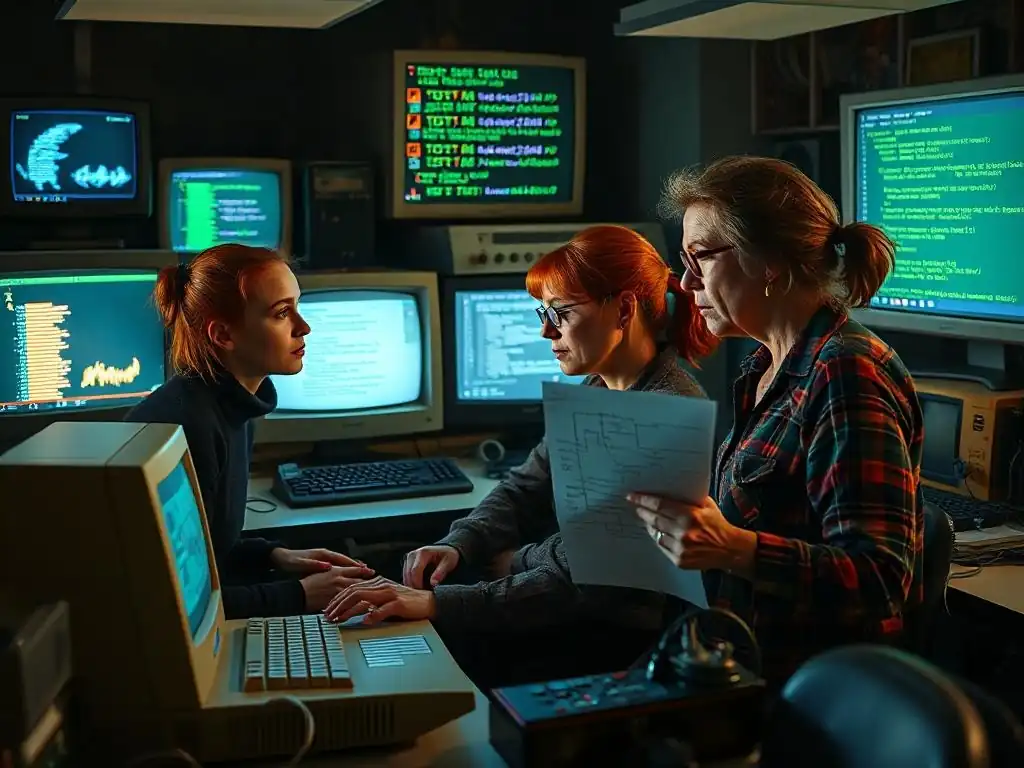
Welcome to WomenInScienceHistory.com!
Dive into the fascinating world where science meets innovation and resilience. Ever wondered about the unsung heroines who shaped the digital landscapes we explore today? Prepare to be amazed as we uncover the pivotal roles of women in Women PC game development, a story often overlooked. Explore how these brilliant minds broke barriers and built the foundations of an industry. What challenges did they face, and what legacy did they leave behind? Keep reading to discover the inspiring stories of gaming's first ladies!
- Introduction: Recognizing Women's Contributions to PC Gaming History
- The Pre-PC Era: Women in Early Gaming and Computing
- The Rise of the PC and Opportunities for Women in Game Development
- Pioneering Women PC Game Developers: Profiles
- Challenges Faced by Women in Early PC Game Development
- The Legacy of Women Pioneers in PC Game Development
- Conclusion: Honoring the First Ladies of PC Gaming
-
Frequently Asked Questions
- What significant obstacles did women face in early PC game development?
- Who are some notable "first ladies" of PC game development mentioned in this context?
- How did the contributions of women impact the early PC gaming industry?
- What kind of games or genres did women tend to work on in early PC game development?
- Why is it important to highlight the stories of women in PC game development history?
- Final Reflection: Honoring the Trailblazers
- Ignite Your Gaming History Passion!
Introduction: Recognizing Women's Contributions to PC Gaming History
Highlighting the Overlooked Role of Women in Early PC Game Creation
The narrative of early personal computer (PC) game development is often dominated by male figures, leading to a significant oversight of the foundational contributions made by women. From the late 1970s through the 1990s, women were not merely peripheral participants; they were integral programmers, designers, and visionaries who shaped the very landscape of interactive entertainment. Their ingenuity brought forth groundbreaking titles, established new genres, and pushed the boundaries of what was technically possible on nascent PC platforms, yet their stories frequently remain untold or relegated to footnotes in historical accounts.
These pioneering women in PC game development faced unique challenges, navigating a burgeoning industry that was, from its inception, heavily male-dominated. Despite the societal biases and limited visibility, they innovated with remarkable persistence, laying crucial groundwork for the multi-billion-dollar industry we know today. Recognizing their efforts is not just about historical accuracy; it is about acknowledging the diverse intellectual capital that fueled the PC revolution and ensuring that future generations understand the full breadth of talent involved in creating their beloved digital worlds.
Why Women in PC Game Development Matter to Computer Science History
The work of women in PC game development is fundamentally intertwined with the broader history of computer science. Early PC games were often laboratories for new programming techniques, graphics rendering methods, and user interface designs. The algorithms developed for game physics, artificial intelligence, and memory management in titles like King's Quest or Centipede directly advanced capabilities within computer science. Women like Roberta Williams, Dona Bailey, and Carol Shaw were not just creating entertainment; they were actively contributing to the evolution of software engineering and human-computer interaction.
Their pioneering roles in PC game development demonstrate how practical applications can drive theoretical advancements in computer science. By crafting complex interactive systems on limited hardware, these women helped define best practices for code optimization, data structuring, and scalable software design. Their achievements highlight that innovation is not exclusive to formal research environments but can flourish in creative, commercial endeavors, making their stories indispensable to a complete and accurate understanding of computer science history.
The Pre-PC Era: Women in Early Gaming and Computing
Women Programmers in the Dawn of Computing
Long before the advent of the personal computer, women were instrumental in the very genesis of computing. Ada Lovelace, in the mid-19th century, is widely regarded as the first computer programmer for her work on Charles Babbage's Analytical Engine. Decades later, during World War II, women like the ENIAC programmers — Kathleen Antonelli, Jean Bartik, Betty Holberton, Marlyn Meltzer, Frances Spence, and Ruth Teitelbaum — were the unsung heroes who manually programmed the first electronic digital computer. They meticulously wired complex calculations, debugging systems and establishing fundamental programming methodologies.
Following the war, figures like Grace Hopper continued to shape the nascent field, developing the first compiler and coining the term "bug" for computer glitches. These women laid the intellectual and practical groundwork for all subsequent software development, including the earliest forms of interactive computing. Their logical prowess and systematic approach to problem-solving were critical in transforming theoretical machines into functional tools, setting a precedent for women's deep involvement in technical roles, a legacy that would continue into the era of women in PC game development.
Early Female Game Designers Before the Personal Computer
While the concept of "game design" as a distinct profession emerged more clearly with the commercialization of video games, women were involved in creating interactive experiences even before the personal computer. In academic and research settings, female programmers and scientists often experimented with early graphical displays and input devices to create simple simulations or playful programs. For instance, in the 1960s, a student programmer named Sandra Lee from Dartmouth College was involved in creating early versions of "Spacewar! ", one of the very first digital computer games, on the PDP-1 mainframe.
These early interactive programs, though not commercially released games, were crucial steps in the evolution of digital entertainment. They demonstrated the potential for computers to be more than just calculation machines, paving the way for the dedicated game consoles and eventually, the personal computer. The participation of women in these foundational, experimental stages underscores their early engagement with the creative and technical aspects of what would soon blossom into the vibrant field of PC game development.
The Rise of the PC and Opportunities for Women in Game Development
The Personal Computer Revolution: A New Frontier for Game Design
The late 1970s and early 1980s witnessed an explosion in personal computing, fundamentally democratizing access to technology. Machines like the Apple II, Commodore 64, and IBM PC brought computing power out of university labs and corporate mainframes into homes and small businesses. This revolution dramatically lowered the barrier to entry for software development, shifting it from highly specialized institutional environments to individual enthusiasts. Suddenly, anyone with a PC and a bit of programming knowledge could create their own applications, including games.
This newfound accessibility ignited a creative boom, turning garages and bedrooms into nascent game development studios. The burgeoning market for home computers created an insatiable demand for software, particularly games, which were often the primary reason many consumers purchased a PC. This fertile ground provided unprecedented opportunities for a diverse range of individuals, including many women, to enter the field of PC game development, transforming it from a niche hobby into a rapidly growing industry.
Early PC Game Development: Accessibility and Opportunities for Women
The decentralized nature of early PC game development offered a unique pathway for women to contribute. Unlike the established, often male-dominated corporate structures of larger tech companies or arcade game manufacturers, the personal computer scene allowed for independent creation and distribution. Individuals could learn programming languages like BASIC or assembly from manuals, develop games on their home computers, and distribute them through mail-order, local computer stores, or even early online bulletin board systems. This self-starter culture bypassed some of the traditional gatekeepers.
Many women, who might have faced barriers in more formal tech settings, found a welcoming space in this new frontier. Their creative visions, often nurtured outside of traditional computer science programs, found an outlet in the flexible and accessible environment of early PC game development. This era saw a significant number of women emerge as influential designers and programmers, demonstrating that talent and innovation were not limited by gender when the playing field became more level.
Pioneering Women PC Game Developers: Profiles

Roberta Williams: Breaking Barriers in Adventure PC Gaming
Early Life and Education
Roberta Williams, born in 1953, had no formal computer science education. Her background was primarily in traditional storytelling and creative writing. It was her husband, Ken Williams, who introduced her to the nascent world of home computing and text-based adventure games like Colossal Cave Adventure. Frustrated by the lack of visual elements in these games and inspired by the growing capabilities of personal computers, Roberta envisioned a new kind of interactive experience that combined rich narratives with graphical representation. This creative spark, combined with Ken's technical prowess, led to a groundbreaking collaboration.
Key PC Game Development Projects
In 1980, Roberta and Ken Williams co-founded On-Line Systems, later known as Sierra On-Line, a powerhouse in PC game development. Their first major project was Mystery House, released in 1980 for the Apple II. This game is widely recognized as the first graphical adventure game, featuring static, monochrome line drawings that accompanied text descriptions. It was a monumental achievement, selling over 10,000 copies and proving the viability of graphical interactive fiction.
Roberta’s most iconic contribution, however, came with the King's Quest series, beginning in 1984. This series defined the graphical adventure genre, introducing animated characters, intricate puzzles, and expansive fantasy worlds. Her emphasis on storytelling, character development, and immersive environments set a new standard for narrative PC game development.
Overcoming Challenges in a Male-Dominated Industry
As a woman leading creative direction in the early PC game development industry, Roberta Williams faced the implicit and explicit biases of a male-dominated field. She often had to prove her capabilities and vision in a professional landscape where female leadership in technology was rare.
Despite this, her unwavering commitment to narrative excellence and innovative gameplay mechanics allowed her to consistently deliver commercially successful and critically acclaimed titles. Her ability to translate complex stories into interactive experiences, combined with her pioneering use of graphics, not only secured Sierra On-Line's place in history but also solidified her own legacy as one of the most influential figures in the history of women in PC game development.
Dona Bailey: A Trailblazer in Arcade-to-PC Game Development
Contribution to Arcade and PC Game Development
Dona Bailey is a pivotal figure in early game development, most famously known as the co-creator of Atari's iconic arcade game Centipede, released in 1982. With a background in psychology and experience in assembly language programming, Bailey brought a unique perspective to game design. Centipede was revolutionary for its time, featuring a vibrant color palette, innovative trackball control, and a fast-paced, challenging gameplay loop.
Its design, which involved the player shooting at a segmented centipede descending the screen, was highly addictive and appealed to a broader audience than many male-centric arcade games. The overwhelming success of Centipede naturally led to its widespread porting to various home computer systems, including the Atari 8-bit family, Commodore 64, and IBM PC, making her work directly influential in early PC game development.
Impact on the Game Development Community
As one of the very few prominent female game designers in the early 1980s arcade scene, Dona Bailey's presence was significant. Her success with Centipede demonstrated that women could not only excel in the highly technical and creative demands of game development but could also create immensely popular and commercially successful titles. Her game's unique aesthetic and gameplay mechanics set it apart, influencing subsequent designs and proving that different perspectives could lead to widespread appeal. Bailey's work directly challenged the prevailing notion that game design was an exclusively male domain, inspiring future women in PC game development.
Legacy and Influence
Dona Bailey's legacy extends beyond Centipede's commercial success. Her involvement as a co-creator of such a beloved and enduring arcade classic cemented her place as a pioneer in the industry. Centipede has been continually referenced, remade, and celebrated for its innovative design, and Bailey's contribution is a key part of that history.
Although she later left the game industry, her impact as a trailblazer who broke through gender barriers in a nascent field remains profound. Her story continues to be a source of inspiration, highlighting the critical role women played in shaping the early days of interactive entertainment, including its expansion into the PC realm.
Carol Shaw: Innovation and Technical Prowess in PC Game Design
Notable Achievements in Programming and Design
Carol Shaw is celebrated as one of the first professional female video game designers and programmers. A graduate of UC Berkeley with a Master's degree in Computer Science, Shaw joined Atari in 1978, bringing a high level of technical expertise to the burgeoning field. Her most famous work for Atari was the critically acclaimed River Raid, released in 1982 for the Atari 2600.
River Raid was lauded for its smooth scrolling, sophisticated enemy AI, and challenging gameplay, pushing the technical limits of the console. The game's innovative design, particularly its procedural generation of the river and strategic resource management, made it a benchmark for action games. Her work on Atari 2600 titles like 3-D Tic-Tac-Toe and Video Checkers also demonstrated her strong programming skills and ability to create engaging experiences on limited hardware, skills directly transferable to early PC game development.
Recognition and Awards
Carol Shaw's technical contributions and pioneering status have earned her significant recognition. She is often highlighted in discussions about the early history of video games as one of the few prominent female programmers who directly designed and coded major commercial hits. Her induction into the Video Game Hall of Fame at the Strong National Museum of Play in 2017 further cemented her legacy as a foundational figure in the industry. Her achievements underscored the fact that women were not only capable but essential to the technical and creative evolution of interactive entertainment.
Continuing Influence on Game Development
Shaw's work on River Raid, in particular, set a high bar for action games, influencing countless subsequent titles with its blend of fast-paced action and strategic depth. Her ability to optimize code for constrained hardware environments taught valuable lessons about efficiency and clever design, which were crucial skills for all early PC game development.
Her career serves as a powerful testament to the technical prowess of women in computing and game design. By demonstrating exceptional skill and innovation, Carol Shaw paved the way for future generations of women to pursue careers in programming and game development, proving that technical excellence knows no gender.
Challenges Faced by Women in Early PC Game Development
Gender Bias and Discrimination in the Tech Industry
Women in early PC game development, much like their counterparts across the broader tech industry, frequently encountered pervasive gender bias and outright discrimination. This manifested in various forms, from subtle condescension and assumptions about their technical capabilities to overt exclusion from informal networks and decision-making processes.
Many women recall being the only female in a meeting or on a development team, often having to work harder to prove their competence and gain respect from male colleagues and superiors. The "boys' club" culture, prevalent in nascent tech spaces, made it difficult for women to advance or even be taken seriously, despite their significant contributions to PC game development.
This bias also extended to the perception of games themselves, with many early titles catering primarily to a male demographic, further marginalizing the perspectives and creative input of women designers. The industry's nascent marketing often reinforced these gender stereotypes, inadvertently discouraging female participation and leadership. Such an environment created an uphill battle for women seeking to establish themselves as integral parts of the PC game development landscape.
Lack of Mentorship and Support Networks
A significant challenge for women in early PC game development was the severe lack of mentorship and robust support networks. With so few women in prominent technical or leadership roles, aspiring female developers had limited access to experienced female mentors who could guide them through career challenges, share insights, or advocate on their behalf. The informal "old boys' networks" that often facilitated career progression for men were largely inaccessible to women, leaving them feeling isolated.
This absence of dedicated support structures meant that women often had to navigate career paths and industry politics largely on their own. The psychological toll of being an outlier, combined with the professional disadvantage of limited networking opportunities, made it harder for women to persist in the industry or rise to positions of greater influence. The trailblazing women in PC game development often had to forge their own paths without the benefit of established female role models or community support.
Balancing Work and Family in a Demanding Field
The early PC game development industry was characterized by intense work hours, tight deadlines, and a relentless pace, often involving "crunch time" that demanded extreme dedication. For women, this already demanding environment was compounded by societal expectations regarding family responsibilities. Many women faced the dual burden of proving themselves in a male-dominated professional sphere while also being the primary caregivers at home. The lack of flexible work arrangements, parental leave, or adequate childcare support in the nascent industry made it incredibly difficult to balance a demanding career with family life.
This imbalance often led to women either delaying family or making difficult choices between career progression and personal life. The pressure to conform to an industry culture that often prioritized single-minded dedication above all else disproportionately affected women who were also navigating societal expectations of motherhood and domestic duties. This created a significant barrier to long-term retention and advancement for many talented women in PC game development.
The Legacy of Women Pioneers in PC Game Development
Inspiring Future Generations of Female Game Developers
The enduring legacy of women pioneers in PC game development, such as Roberta Williams, Dona Bailey, and Carol Shaw, lies significantly in their role as powerful inspirations for future generations of female game developers. Their visible success and groundbreaking work shattered the myth that game design and programming were exclusively male domains. By demonstrating exceptional creativity, technical skill, and entrepreneurial spirit, they provided tangible role models at a time when such examples were scarce. Their stories, often overlooked in mainstream histories, are now crucial narratives that encourage young girls and women to pursue careers in technology and game creation.
These pioneers showed that it was possible to not only enter but also thrive and innovate within the demanding field of PC game development. Their achievements serve as a testament to the fact that diverse perspectives enrich the creative process and lead to more innovative and widely appealing games. By highlighting their journeys, we empower new generations of women to envision themselves as leaders and innovators in the continually evolving gaming industry.
The Importance of Recognizing and Celebrating Women's Contributions
Recognizing and celebrating the contributions of women in early PC game development is not merely an act of historical correction; it is essential for a complete and accurate understanding of computer science history itself. Their work fundamentally shaped game genres, advanced programming techniques, and pushed hardware capabilities, directly influencing the trajectory of interactive software. Overlooking their achievements diminishes the true scope of innovation that occurred during the PC revolution and perpetuates an incomplete narrative of technological progress.
By actively acknowledging these women, we validate their struggles, honor their ingenuity, and ensure that their foundational work is properly credited. This recognition also serves a critical contemporary purpose: it demonstrates that diversity has always been a catalyst for innovation, reinforcing the argument for greater inclusivity in today's tech and gaming industries. Celebrating these pioneers enriches our collective understanding and provides a more nuanced, truthful account of where PC game development truly began.
The Ongoing Fight for Gender Equality in the Gaming Industry
Despite the pioneering efforts of women in early PC game development, the fight for true gender equality in the gaming industry is far from over. While more women are entering the field today, significant disparities persist in representation, leadership roles, and compensation. Issues such as workplace harassment, "bro culture," and implicit biases continue to create barriers for women, reminiscent of the challenges faced by the first generation of female developers. The stories of early pioneers highlight that these struggles are not new but are deeply embedded in the industry's historical fabric.
The ongoing advocacy for gender equality in gaming draws strength from the legacy of these early women. Their resilience and determination in the face of adversity serve as a reminder of the progress that has been made and the work that still needs to be done. By understanding the historical context of women in PC game development, we are better equipped to address contemporary issues, push for equitable practices, and ensure that the industry becomes a truly inclusive and welcoming space for all talent.
Conclusion: Honoring the First Ladies of PC Gaming
Reaffirming the Significance of Women in Computer Science History
The journey through the early days of PC game development unequivocally reaffirms the profound significance of women in computer science history. From the theoretical foundations laid by Ada Lovelace to the groundbreaking graphical adventures crafted by Roberta Williams, the innovative arcade mechanics engineered by Dona Bailey, and the technical masterpieces programmed by Carol Shaw, women have been indispensable architects of the digital world. Their contributions were not tangential but central to the evolution of personal computing and interactive entertainment, shaping not only how we play but also how we interact with technology itself.
Their pioneering spirit, technical acumen, and creative vision pushed boundaries, overcame limitations, and forged new pathways in a rapidly evolving field. By integrating their stories into the mainstream narrative, we gain a more accurate, richer, and more inspiring understanding of how computer science progressed from abstract concepts to ubiquitous applications. The "first ladies of PC gaming" are not just footnotes; they are foundational pillars of computer science history.
Encouraging Further Research into Women's Roles in Early PC Game Development
While this article sheds light on some prominent figures, the full breadth of women's roles in early PC game development remains a vast and largely unexplored territory. Countless other female programmers, designers, artists, and testers contributed to the growth of the industry, often without public recognition. Much of their work is undocumented, their names lost to time, and their stories untold. Further dedicated research is crucial to uncover these hidden histories, bringing to light the full scope of their collective impact.
Encouraging academic studies, archival preservation, and oral history projects focused on women in PC game development will not only enrich our understanding of historical technology but also provide invaluable insights into the challenges and triumphs of diversity in innovation. By actively seeking out and documenting these narratives, we ensure that the complete story of how gaming and personal computing came to be is finally told, honoring every individual who contributed to this transformative era.
Frequently Asked Questions
What significant obstacles did women face in early PC game development?
Women faced significant gender bias and lack of recognition in a male-dominated field. They often had to prove their abilities repeatedly and were sometimes excluded from key projects.
Who are some notable "first ladies" of PC game development mentioned in this context?
While the specific individuals depend on the "Women in Science History" article, think of pioneering programmers, game designers, and artists who contributed to early PC games. The article likely highlights specific names and titles.
How did the contributions of women impact the early PC gaming industry?
Women brought diverse perspectives and creative talents to game development, influencing game design, narrative, and user experience. Their contributions helped shape the early successes and innovation of the industry.
What kind of games or genres did women tend to work on in early PC game development?
There wasn't necessarily a specific genre limitation, but women contributed across various genres. This can be adventure games, educational games, or even early simulations. Specific examples would be in the article.
Why is it important to highlight the stories of women in PC game development history?
It's crucial to acknowledge their contributions, correct historical oversights, and inspire future generations of women to pursue careers in STEM and game development. Highlighting these narratives shows their valuable role and encourages greater diversity.
Final Reflection: Honoring the Trailblazers
The stories shared within this article highlight not only the ingenuity and talent of these women pioneers in PC game development, but also their enduring impact on the industry we know and love today. Their contributions, often overlooked, laid the foundation for countless innovations and inspired generations of developers. Recognizing their achievements is crucial to understanding the full history of gaming and ensuring a more inclusive future.
This journey through the early days of PC game development underscores the vital role women played in shaping the digital landscapes we explore today. Their creativity and technical prowess defied societal expectations and paved the way for future generations of female game developers. You can't be what you can't see.
This quote resonates deeply, reminding us of the importance of visibility and representation in inspiring future generations to pursue their passions, regardless of perceived limitations.
As we close this chapter, let us remember the courage and dedication of these remarkable women. Consider how their stories can inspire you to challenge the status quo, to champion diversity and inclusion in your own fields, and to recognize the invaluable contributions of those who have been historically marginalized. The legacy of these gaming's first ladies calls us to build a future where everyone has the opportunity to contribute their unique talents and shape the world around us.
Ignite Your Gaming History Passion!
Thank you for diving into the fascinating world of pioneering women in early PC game development. We hope you've gained a new appreciation for their often-overlooked contributions. Ready to take your interest further?
- Explore the untold stories: Commit to researching one female game developer each month and sharing her story on social media.
- Join the conversation: Contribute to online forums or communities dedicated to classic gaming history to share insights and connect with fellow enthusiasts.
- Preserve the legacy: Consider donating to organizations that archive and preserve early PC games and related documents.
Which female gaming pioneer's story resonated with you the most, and what will you do to ensure her contributions are never forgotten?