
From Looms to Logic: The 19thCentury Women Who Conceptualized Programming

Welcome to WomenInScienceHistory.com!
Did you know that the seeds of modern programming were sown not just in circuits and vacuum tubes, but also in the minds of visionary women during the 19th century? Prepare to be amazed as we delve into the untold stories of the 19th century programming women who, against societal odds, laid the conceptual groundwork for the digital age. Their brilliance and ingenuity are often overlooked, and their contributions deserve to be celebrated. Discover how these pioneering figures transformed looms into logic, and unlock the secrets behind their groundbreaking achievements. Intrigued? Keep reading to uncover their remarkable legacies!
- Introduction: Unveiling the Pioneering 19th Century Programming Women
- The Jacquard Loom's Influence: Weaving Patterns of Code
- Ada Lovelace: The First Computer Programmer
- Mary Everest Boole: Logic and Education
- Augusta Ada King, Countess of Lovelace: A Deeper Dive
- Challenges Faced by 19th Century Programming Women
- Legacy and Impact: Inspiring Future Generations of Female Coders
- Conclusion: Celebrating the Foremothers of Programming
-
Frequently Asked Questions
- What is the main focus of WomenInScienceHistory.com?
- Why is it important to highlight the stories of 19th-century programming women?
- Who is a prominent example of a 19th-century woman who contributed to programming?
- What kinds of challenges did 19th-century women face in the field of programming?
- How did 19th-century women contribute to programming beyond direct coding?
- Final Reflection: Weaving the Future of Code
- Unveil Your Inner Innovator!
Introduction: Unveiling the Pioneering 19th Century Programming Women
The story of computing often begins with prominent male figures like Charles Babbage and Alan Turing, yet significant contributions to the conceptualization of programming emerged from the brilliant minds of 19th-century women. These pioneering figures, often working against considerable societal odds, laid theoretical and practical groundwork that proved indispensable for the future of computational science. Their insights transcended the mere mechanics of calculation, envisioning machines capable of complex logical operations and symbolic manipulation.
This article delves into the lives and groundbreaking work of these unsung heroines, particularly focusing on Ada Lovelace and Mary Everest Boole, who were instrumental among the 19th century programming women shaping nascent ideas about algorithms and logical thought. Their narratives illuminate how the seeds of modern programming were sown in an era far removed from silicon chips, demonstrating a profound understanding of principles that would only fully materialize generations later.
The Jacquard Loom's Influence: Weaving Patterns of Code
The Jacquard Loom: A Mechanical Precursor to Modern Computing
The Jacquard Loom, invented by Joseph Marie Jacquard in 1801, stands as a pivotal machine in the history of automation and computing. This mechanical loom revolutionized textile production by using punched cards to control the weaving of intricate and repetitive patterns. Each hole in a card corresponded to a specific action of the loom's needles, dictating which threads would be raised or lowered to create complex designs. This system allowed for the rapid and accurate replication of elaborate patterns, a task previously requiring immense manual dexterity and prone to error.
The loom's impact was immediate and widespread within the textile industry. By 1812, just over a decade after its invention, an estimated 11,000 Jacquard looms were in operation across France, significantly boosting efficiency and artistic complexity in fabric manufacturing. Its ingenious use of punched cards for programmed control made it a tangible example of a machine executing a sequence of instructions, setting a precedent for future innovations in automated processes.
How 19th Century Looms Inspired Computational Thinking
The operational principles of the Jacquard Loom provided a concrete, albeit mechanical, model for what would later become known as programming. The punched cards functioned as a form of early data storage, encoding instructions that the loom would then "read" and execute sequentially. This demonstrated that a machine could perform a series of complex, repeatable tasks based on pre-programmed instructions, rather than constant human intervention. For thinkers like Charles Babbage, who visited Jacquard's loom in France, this concept was profoundly influential.
The loom illustrated the power of conditional logic and sequential operations, key elements of modern algorithms. Its ability to create diverse patterns by simply changing the set of punched cards highlighted the distinction between the machine's hardware and the instructions (software) it processed. This direct connection between a physical mechanism and programmable instruction sets deeply inspired the visionaries among 19th century programming women and men, offering a tangible example of how abstract ideas could be translated into automated, mechanical action.
Ada Lovelace: The First Computer Programmer
Ada Lovelace's Notes on the Analytical Engine: A Vision of General-Purpose Computing
Augusta Ada King, Countess of Lovelace, daughter of the poet Lord Byron, possessed an extraordinary mathematical mind that set her apart in the 19th century. Her most significant contribution came through her extensive "Notes" on Luigi Menabrea's article describing Charles Babbage's proposed Analytical Engine. These notes, published in 1843, were not merely a translation; they were three times longer than the original article and contained her own groundbreaking insights.
Lovelace articulated a revolutionary concept: that the Analytical Engine could do far more than just numerical calculations. She envisioned it manipulating symbols, processing non-numerical data, and even composing complex musical pieces.
This vision of a general-purpose machine, capable of executing a vast array of operations beyond simple arithmetic, was centuries ahead of its time. While Babbage focused on the engine as a powerful calculator, Lovelace grasped its potential as a universal symbol manipulator, a concept that underpins all modern software. Her "Notes" effectively laid out the theoretical framework for what we now understand as software and artificial intelligence, showcasing her profound understanding of algorithmic potential.
Lovelace's Algorithm for Bernoulli Numbers: Early Programming Concepts
Within her "Notes," Ada Lovelace meticulously detailed a step-by-step procedure for how the Analytical Engine could calculate a sequence of Bernoulli numbers. This detailed plan is widely recognized as the world's first computer program or algorithm. She charted a complex sequence of operations, including iterative loops and conditional branching, which are fundamental constructs in modern programming languages. Her explicit instructions demonstrated how the machine's operations could be sequenced to achieve a specific, non-trivial mathematical result.
The complexity of calculating Bernoulli numbers provided a perfect canvas for Lovelace to illustrate the Analytical Engine's capabilities. She didn't just describe the machine; she provided a concrete example of how it could be programmed to perform a series of intricate logical steps. This algorithm clearly demonstrated her understanding of how to translate a mathematical problem into a machine-executable sequence, cementing her legacy as the pioneer among 19th century programming women.
Beyond Calculation: Ada Lovelace's Understanding of Algorithmic Potential
Ada Lovelace's genius extended beyond merely outlining how the Analytical Engine could perform calculations. She possessed a unique foresight into the machine's broader applications. While Babbage's primary focus was on mechanical computation for scientific and engineering purposes, Lovelace envisioned the Analytical Engine as a "nerve system" capable of processing any data that could be expressed by symbols. She famously wrote, "The Analytical Engine might act upon things other than number, were objects found whose mutual fundamental relations could be expressed by those of the abstract science of operations."
This quote encapsulates her visionary understanding that the machine could manipulate not just quantities, but any form of symbolic representation, including music, images, or logical propositions. She foresaw the machine's capacity to compose, to generate graphics, and even to perform scientific reasoning. This profound conceptual leap, differentiating the machine's operational potential from its mere mechanical function, truly established Lovelace as a foundational figure in the history of computer science and a leading light among 19th century programming women.
Mary Everest Boole: Logic and Education
Mary Everest Boole's Contributions to Mathematical Logic
Mary Everest Boole, a gifted mathematician and educator, played a crucial role in the dissemination and understanding of mathematical logic in the 19th century. As the wife of George Boole, the originator of Boolean algebra, she not only understood her husband's revolutionary work but also actively contributed to its interpretation and application. Her insights went beyond mere comprehension; she intuitively grasped the philosophical and practical implications of logical systems.
Boole explored the connections between mathematics, logic, and human thought processes. Her writings, such as "Philosophy and Fun of Algebra" (published posthumously in 1909 but reflecting her earlier work), aimed to make complex mathematical ideas accessible. She emphasized the importance of understanding the underlying logical structures rather than just memorizing formulas, a perspective that is profoundly relevant to the principles of computer science.
Teaching Logic to Children: A Foundational Approach to Computing Concepts
Mary Everest Boole was a pioneering educator who developed innovative methods for teaching mathematics and logic to children. She believed in fostering an intuitive understanding of abstract concepts from an early age, often using manipulative objects, games, and storytelling. Her approach aimed to make mathematics a natural extension of a child's thought process, rather than a dry, rote subject. For instance, she advocated for "curve stitching" and other hands-on activities to illustrate geometric and algebraic principles.
Her educational philosophy directly resonates with modern computational thinking, which emphasizes problem decomposition, pattern recognition, and algorithmic design. By teaching children to think logically and systematically about problems, she was, in essence, laying foundational cognitive groundwork for what would later become programming concepts. Her unique pedagogical methods make her an often-overlooked but significant contributor among 19th century programming women who influenced computational thought.
Boole's Influence on Early Computing Thought
While Mary Everest Boole did not directly program machines as Ada Lovelace did, her profound understanding and popularization of mathematical logic indirectly but significantly influenced the trajectory of computing. Her work helped to demystify complex logical principles, making them more accessible to a wider audience and fostering an intellectual environment where such abstract reasoning was valued. The logical operations that underpin all modern computer processes—the very "AND," "OR," and "NOT" gates—are derived from her husband's Boolean algebra, which she championed and clarified.
Her advocacy for a holistic and intuitive approach to mathematics and logic ensured that these critical theoretical underpinnings were understood not just by specialists, but by a broader intellectual community. This intellectual groundwork was essential for the eventual development of electronic computers, which rely heavily on the precise application of logical rules. Mary Everest Boole's contributions, therefore, were foundational to the theoretical fabric from which computing emerged.
Augusta Ada King, Countess of Lovelace: A Deeper Dive
Collaboration with Charles Babbage
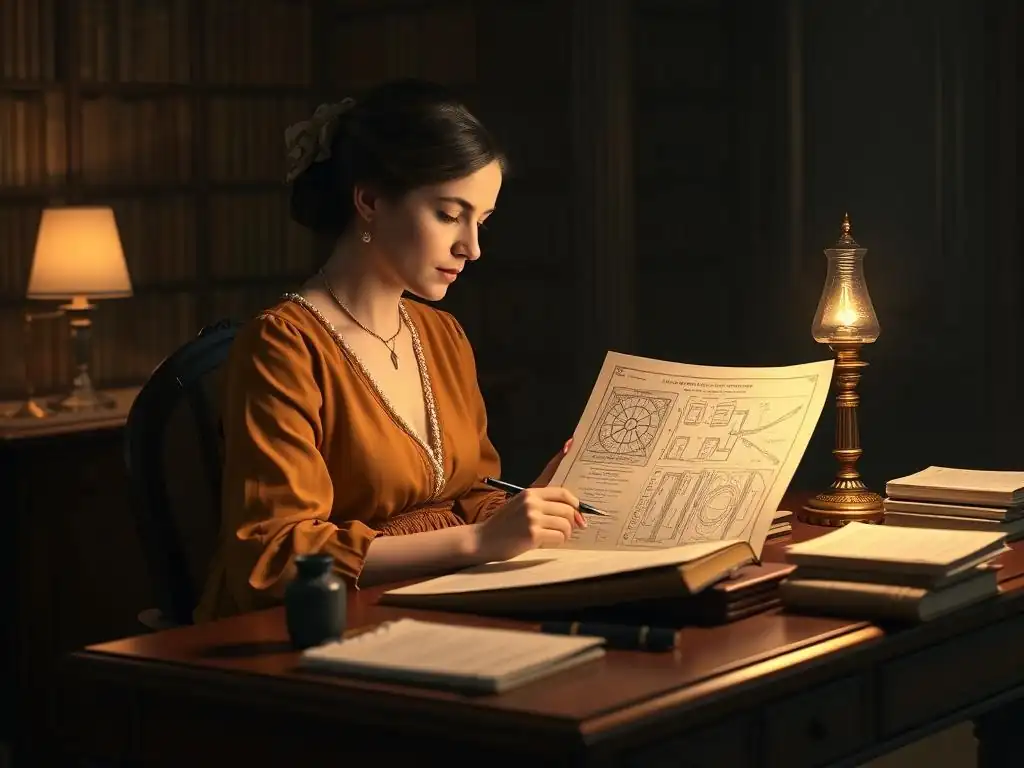
Augusta Ada King, Countess of Lovelace, commenced her intellectual partnership with Charles Babbage in 1833, when she was merely 17 years old. Their collaboration began with Babbage's Difference Engine, a mechanical calculator, and evolved significantly with his more ambitious Analytical Engine. While Babbage, often hailed as the "Father of the Computer," conceived the mechanical design of the Analytical Engine, it was Lovelace who truly grasped its conceptual potential beyond mere numerical computation.
Their interaction was a unique intellectual synergy: Babbage provided the intricate mechanical framework, while Lovelace provided the visionary conceptual leap toward general-purpose computation. Her notes on the Analytical Engine were not just an explanation of Babbage's ideas but an expansion, illustrating how the machine could process symbolic logic and execute iterative operations. This profound understanding cemented her unique and indispensable position among 19th century programming women, transforming a mechanical calculator into a theoretical precursor of the modern computer.
Challenges Faced by 19th Century Programming Women
Societal Barriers and Limited Access to Education
The 19th century presented formidable societal barriers for women seeking to engage in intellectual and scientific pursuits. Prevailing norms largely confined women to domestic roles, viewing higher education and professional careers as unfeminine or even detrimental to their health. Formal education for women, particularly in advanced mathematics and science, was severely limited or entirely inaccessible. Universities like Oxford and Cambridge, for instance, did not officially admit women to degrees until 1920, decades after the work of Lovelace and Boole.
Even for women from privileged backgrounds, like Ada Lovelace, access to the male-dominated scientific circles was a constant challenge, often requiring the patronage of male relatives or mentors. Their participation was frequently tolerated rather than celebrated, and their intellectual contributions were often viewed through the lens of their gender, undermining their professional standing.
Recognition and Attribution: Overcoming Gender Bias in Science
One of the most persistent challenges faced by 19th century programming women was the pervasive issue of recognition and attribution. In a scientific landscape dominated by men, women's intellectual contributions were frequently overlooked, minimized, or, in many cases, outright attributed to their male counterparts. Ada Lovelace's "Notes," for example, were initially published under the initials "A.A.L." to maintain contemporary decorum, although her identity was generally known within scientific circles.
Even when their work was acknowledged, it was often framed as assistance to men rather than groundbreaking research in its own right. The long delay in fully recognizing Ada Lovelace as the first computer programmer, with her contributions only gaining widespread appreciation in the mid-20th century, serves as a poignant illustration of this historical gender bias. This systemic undervaluing of women's intellectual labor significantly hindered their visibility and lasting impact during their lifetimes.
Legacy and Impact: Inspiring Future Generations of Female Coders
The Enduring Influence of Ada Lovelace and Mary Everest Boole
The foundational ideas championed by Ada Lovelace and Mary Everest Boole continue to resonate profoundly within modern computer science. Lovelace's visionary concept of a general-purpose computing machine, capable of manipulating symbols beyond mere numbers, laid the theoretical groundwork for all software development. Her articulation of complex algorithms, including iterative processes and conditional logic, remains fundamental to programming. Similarly, Mary Everest Boole's emphasis on mathematical logic and intuitive understanding of abstract principles provided essential theoretical underpinnings for the logical operations that power every computer.
Though their work was largely conceptual and theoretical, given the technological limitations of their era, their foresight was extraordinary. They understood that machines could be more than just calculators; they could be tools for abstract thought and symbolic manipulation. Their contributions prove that the core intellectual leaps in computing were made by these pioneering 19th century programming women long before the advent of electronic computers.
Paving the Way for Women in Computer Science
The stories of these remarkable 19th century programming women serve as powerful inspirations, demonstrating that women have always been at the forefront of scientific and technological innovation, even when facing immense societal and systemic obstacles. Their achievements challenge the historical narrative that often sidelines women's contributions, providing crucial role models for future generations. By highlighting the intellectual prowess and perseverance of figures like Lovelace and Boole, we can encourage more girls and women to pursue careers in STEM fields, particularly computing.
Their legacy underscores the critical importance of diversity in technology and science. Recognizing their rightful place in history not only corrects past oversights but also empowers contemporary and future female coders to see themselves as part of a long, distinguished lineage of women who have shaped the digital world. Their pioneering spirit continues to illuminate the path for women in computer science today.
Conclusion: Celebrating the Foremothers of Programming
The conceptual birth of programming owes an undeniable debt to the brilliant minds of 19th-century women. Figures like Ada Lovelace, with her visionary algorithms for Babbage's Analytical Engine, and Mary Everest Boole, through her profound contributions to mathematical logic and educational philosophy, laid critical groundwork for the information age. These 19th century programming women were not merely assistants or footnotes; they were independent thinkers whose insights into symbolic manipulation, algorithmic thinking, and logical processes were revolutionary.
Their stories remind us that innovation often springs from unexpected places and that genius knows no gender. Despite the formidable societal barriers and the historical tendency to overlook their contributions, the legacy of these foremothers of programming endures. Celebrating their achievements is not just about historical accuracy; it is about inspiring future generations and ensuring that the full, diverse tapestry of scientific progress is recognized and honored.
Frequently Asked Questions
What is the main focus of WomenInScienceHistory.com?
The site primarily focuses on celebrating the contributions of women to various scientific fields throughout history, highlighting their biographies and groundbreaking work. It also addresses the challenges they faced.
Why is it important to highlight the stories of 19th-century programming women?
It's crucial to recognize these women because their contributions are often overlooked, and their stories can inspire future generations to pursue careers in STEM fields. They were pioneers in a male-dominated field.
Who is a prominent example of a 19th-century woman who contributed to programming?
Ada Lovelace is a well-known example. She's often considered the first computer programmer for her work on Charles Babbage's Analytical Engine, specifically her algorithm notes.
What kinds of challenges did 19th-century women face in the field of programming?
They faced gender bias and discrimination, limited access to education and resources, and societal expectations that discouraged women from pursuing scientific and technical careers.
How did 19th-century women contribute to programming beyond direct coding?
Their contributions included conceptualizing programming logic, developing theoretical frameworks, and creating foundational ideas that influenced the future of computer science, even if they didn't always have access to actual machines.
Final Reflection: Weaving the Future of Code
The threads of innovation spun by 19th century programming women continue to resonate profoundly in our digital age. Their pioneering spirit, often overlooked in historical narratives, laid the groundwork for the complex algorithms and software that shape our modern world. Recognizing their contributions is not just about historical accuracy; it's about understanding the diverse roots of a field often perceived as monolithic.
The impact of these women extends far beyond the lines of code they wrote. Their stories serve as a powerful reminder that ingenuity knows no gender and that challenging societal norms can unlock extraordinary potential. I am now about to set seriously to work upon the purposes for which I came into the world.
- Ada Lovelace. This quote encapsulates the unwavering determination that propelled these women forward, inspiring generations to break barriers and pursue their passions in STEM fields.
As we navigate an increasingly technological landscape, let us remember the legacy of these remarkable women. Consider how their perseverance and vision can inform our own approach to problem-solving and innovation. Embrace the opportunity to champion diversity and inclusion in the tech industry, ensuring that future generations have the chance to weave their own threads into the ever-evolving tapestry of code.
Unveil Your Inner Innovator!
Thank you for delving into the fascinating stories of these pioneering women and their contributions to programming! You've discovered how their brilliance laid the groundwork for the technology we use today. Now, it's your turn to connect with that legacy.
Here's how you can continue the journey:
- Dive deep and create your own simple program using a language like Python or Scratch. You might be surprised at what you can build!
- Explore the biographies of other unsung heroes in STEM and share their stories to inspire others.
- Participate in or create a local event to celebrate women in computing.
What small coding project will you tackle this week to honor these incredible women?