
From Niche to Necessity: Women's Role in Popularizing Personal Computers Globally

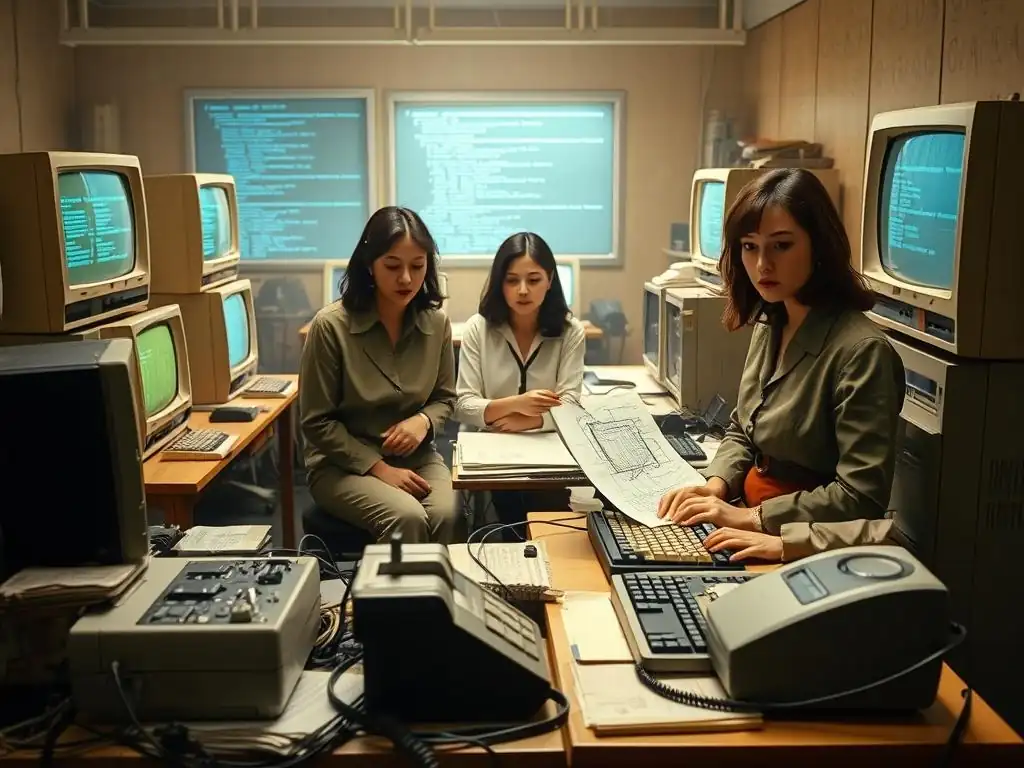
Welcome to WomenInScienceHistory.com!
Dive into a world where brilliance overcomes barriers. Explore the untold stories of women who shaped scientific history, often against incredible odds. This month, we uncover a fascinating chapter in computer science, examining Women’s Role in Personal Computer History. How did these unsung heroes transform clunky machines into the ubiquitous devices we know and love? Discover their crucial contributions and the pivotal moments that propelled the personal computer into homes and offices worldwide. Intrigued? Keep reading to learn more about the remarkable women who made it all possible.
- Introduction: Recognizing Women's Impact on the Personal Computer Revolution
- Early Pioneers: Women Shaping the Foundation of Personal Computing
- From Labs to Living Rooms: Women Driving the Adoption of Personal Computers
- Marketing and Sales: Women Bridging the Gap Between Technology and Consumers
- The Home Computer Revolution: Women as Early Adopters and Advocates
- Education and Training: Women Empowering Others Through Computer Literacy
- The Impact on Business: Women Leveraging Personal Computers for Entrepreneurship
- Challenging Gender Stereotypes in Computer Science: A Continuing Struggle
- Conclusion: Celebrating the Enduring Legacy of Women in Personal Computer History
-
Frequently Asked Questions
- What crucial role did women play in the early adoption of personal computers?
- How did the historical societal context impact the opportunities available for women in the personal computer industry?
- In what specific areas of personal computer development did women make significant contributions, often overlooked in mainstream history?
- How does understanding the history of women's involvement in the personal computer industry help to inspire future generations of female scientists and engineers?
- What challenges did women face in gaining recognition for their contributions to the personal computer's evolution from a niche tool to a global necessity?
- Final Reflection: Recognizing the Unsung Architects of the Digital Age
- Empower Change: Champion Women in Tech!
Introduction: Recognizing Women's Impact on the Personal Computer Revolution
The narrative of the personal computer revolution often spotlights a select few male innovators, presenting a seemingly linear progression of technological breakthroughs. However, this perspective overlooks the profound and multifaceted contributions of women, whose ingenuity, adaptability, and vision were absolutely critical in transforming the personal computer from a niche enthusiast's tool into a global necessity. From the foundational theoretical work to its widespread adoption in homes and businesses, women played an indispensable role, often behind the scenes, in shaping the technology we use today.
This article aims to illuminate the often-unsung heroines whose efforts were pivotal in the personal computer's journey from laboratory curiosity to an indispensable part of daily life. Understanding women’s role personal computer history is not just about correcting historical oversight; it's about recognizing the diverse perspectives and skills that truly drove innovation and accessibility, ensuring that the full scope of human endeavor in this transformative period is acknowledged.
Early Pioneers: Women Shaping the Foundation of Personal Computing
The Untold Stories of Women in Early PC Development
Before the advent of the personal computer, the very concept of "computer" often referred to a human being, predominantly a woman, performing complex calculations by hand. These women, known as "human computers," laid crucial groundwork by meticulously executing algorithms and verifying data for scientific and engineering projects. Their precision and dedication were essential for the early stages of computational science, directly influencing the design and logical structure of the first electronic computing machines.
As electronic computers emerged in the 1940s and 1950s, women transitioned into roles as programmers, debugging specialists, and even hardware assemblers. Figures like the ENIAC programmers—Kathleen Antonelli, Jean Bartik, Betty Holberton, Marlyn Meltzer, Frances Spence, and Ruth Teitelbaum—were not merely operators; they were the architects of the first software, devising the instructions that made these colossal machines function. Their work in understanding machine logic and translating complex problems into executable code was a direct precursor to the software development that would later define the personal computer era, showcasing an early and vital aspect of women’s role personal computer history.
Ada Lovelace and Her Contributions
Centuries before the first electronic computer, Ada Lovelace, daughter of Lord Byron, demonstrated an extraordinary intellectual foresight that cemented her place as a foundational figure in computer science. Collaborating with Charles Babbage on his Analytical Engine in the mid-19th century, Lovelace moved beyond merely understanding the machine's mechanical capabilities. She grasped its potential far beyond numerical calculations, envisioning it as a device capable of manipulating symbols, including music and text, and even generating graphics.
Lovelace's most significant contribution was her development of an algorithm designed for the Analytical Engine to compute Bernoulli numbers, widely considered the first computer program. Her "Notes" on Babbage's work revealed a profound understanding of the abstract nature of computation, articulating concepts like loops and subroutines that are fundamental to modern programming. Her visionary insights into what a machine could achieve, extending to artificial intelligence and creative applications, directly anticipated the multifunctional nature of the personal computer, illustrating a profound women’s role personal computer history.
Overcoming Barriers: Challenges Faced by Female Computer Scientists in the 1940s-1970s
Despite their foundational contributions, women in early computer science faced significant societal and professional barriers. The perception of computing as a clerical or "feminine" task in its nascent stages often led to women being relegated to lower-status programming roles, while men were increasingly elevated to hardware design and leadership positions. Their intellectual contributions were frequently downplayed, overlooked, or even appropriated by male colleagues, making it difficult for them to gain recognition or advance within the burgeoning field.
Furthermore, the prevailing cultural norms of the mid-20th century often steered women away from STEM fields, viewing them as unsuitable for "serious" scientific pursuits. Academic institutions and corporations alike exhibited biases, making it challenging for women to access higher education in computer science or secure positions of authority. Despite these systemic obstacles, many women persevered, driven by intellectual curiosity and a pioneering spirit, quietly laying the groundwork for the personal computer revolution while simultaneously challenging ingrained gender stereotypes.
From Labs to Living Rooms: Women Driving the Adoption of Personal Computers
Women's Influence on User Interface Design and Accessibility
As personal computers began to move from specialized laboratories to mainstream homes, the complexity of their operation posed a significant barrier to widespread adoption. Women, often bringing a user-centric perspective and an intuitive understanding of human interaction, played a crucial role in simplifying these intricate machines. They contributed significantly to the development of more accessible and user-friendly interfaces, moving away from command-line prompts towards graphical user interfaces (GUIs) that were more intuitive and visually appealing.
This shift was vital for demystifying computing for the general public, making it approachable for individuals without extensive technical training. Women involved in early software companies and design teams advocated for features that prioritized ease of use, clear navigation, and visual feedback, recognizing that the personal computer's success depended on its ability to integrate seamlessly into everyday life. Their influence ensured that the technology was not just powerful but also practical and inviting, a key aspect of women’s role personal computer history.
Software Development and Women: Creating User-Friendly Applications
Beyond interface design, women were instrumental in developing the essential software applications that made personal computers indispensable tools for homes and small businesses. In the 1970s and 1980s, as companies like Microsoft and Apple began to dominate the software landscape, female programmers and software engineers contributed significantly to the creation of word processors, spreadsheet programs, and early database management systems. These applications transformed the personal computer from a hobbyist's gadget into a powerful productivity machine.
Consider the development of early word processing software, which revolutionized how documents were created and edited. Women, often with backgrounds in secretarial work or education, brought practical insights into designing these tools to meet real-world needs, ensuring they were efficient and intuitive for tasks like drafting letters, managing household budgets, or writing school reports. Their contributions ensured that the personal computer offered tangible benefits that resonated with a broad audience, solidifying its place in daily life.
The Rise of Educational Software: A Field Where Women Made Early Contributions
The emergence of educational software in the 1980s was a pivotal moment in the popularization of personal computers, and women were at the forefront of its development. Recognizing the potential of PCs as learning tools, female educators, programmers, and instructional designers created a wealth of programs that introduced children and adults alike to computing concepts, literacy, and various academic subjects. These applications often employed engaging graphics, interactive elements, and pedagogical principles that made learning fun and accessible.
From typing tutors to math games and early encyclopedic programs, women shaped the content and delivery of digital education. Their work helped integrate personal computers into school curricula and homes, transforming them into valuable educational resources. This focus on learning, often driven by women's insights into child development and teaching methodologies, significantly broadened the appeal of PCs beyond technical enthusiasts, making them a fixture in many households and classrooms.
Marketing and Sales: Women Bridging the Gap Between Technology and Consumers
Women in Marketing: Targeting Home Users and Families
As personal computers evolved, so did the strategies for selling them. Early marketing efforts often targeted male hobbyists and business professionals, emphasizing technical specifications and raw processing power. However, as the industry sought to expand its market, women in marketing roles became crucial in shifting the focus towards home users and families. They understood that to appeal to a broader demographic, the narrative needed to highlight the practical benefits and emotional connections the technology could foster.
These female marketers helped craft campaigns that showcased PCs as tools for education, communication, and family organization, rather than just complex machines. They emphasized how a personal computer could help children with homework, manage household finances, or even facilitate creative expression. This strategic pivot, driven by a deep understanding of consumer needs beyond pure technical prowess, was instrumental in making the personal computer a desirable household item, demonstrating a vital women’s role personal computer history.
Shaping the Narrative: How Women Influenced the Perception of Personal Computers
Women in marketing and public relations played a significant part in demystifying personal computers and making them less intimidating for the average consumer. They worked to dismantle the perception of PCs as exclusive tools for "tech gurus" and instead presented them as accessible, user-friendly devices for everyone. This involved simplifying technical jargon, focusing on real-world applications, and portraying diverse individuals, including women, using computers confidently in everyday scenarios.
Through advertisements, brochures, and public demonstrations, women helped to normalize the presence of personal computers in homes and small businesses. They contributed to shaping a narrative that emphasized empowerment, convenience, and connectivity, rather than just processing speed. This nuanced approach to communication was essential in overcoming initial consumer apprehension and fostering a sense of familiarity and trust with the new technology.
Apple's Early Marketing and the Role of Women
Apple's marketing campaigns in the 1980s, particularly for the Macintosh, are legendary for their innovative approach to connecting with a broader audience. While specific individual women in these marketing teams are not always highlighted in historical accounts, the company's ethos of user-friendliness and design simplicity inherently appealed to a wider demographic, including women who sought practical, intuitive technology. Apple's focus on "the rest of us" rather than just engineers resonated deeply.
The Macintosh's graphical interface and emphasis on creativity and ease of use were powerful selling points that moved beyond technical specifications. While the iconic "1984" Super Bowl commercial is often cited, subsequent campaigns continued to emphasize the personal and creative potential of the Mac, often depicting diverse users engaging with the machine in inspiring ways. This strategic marketing, which implicitly broadened its appeal to non-traditional tech users, including a significant segment of women, contributed to the personal computer's meteoric rise.
The Home Computer Revolution: Women as Early Adopters and Advocates
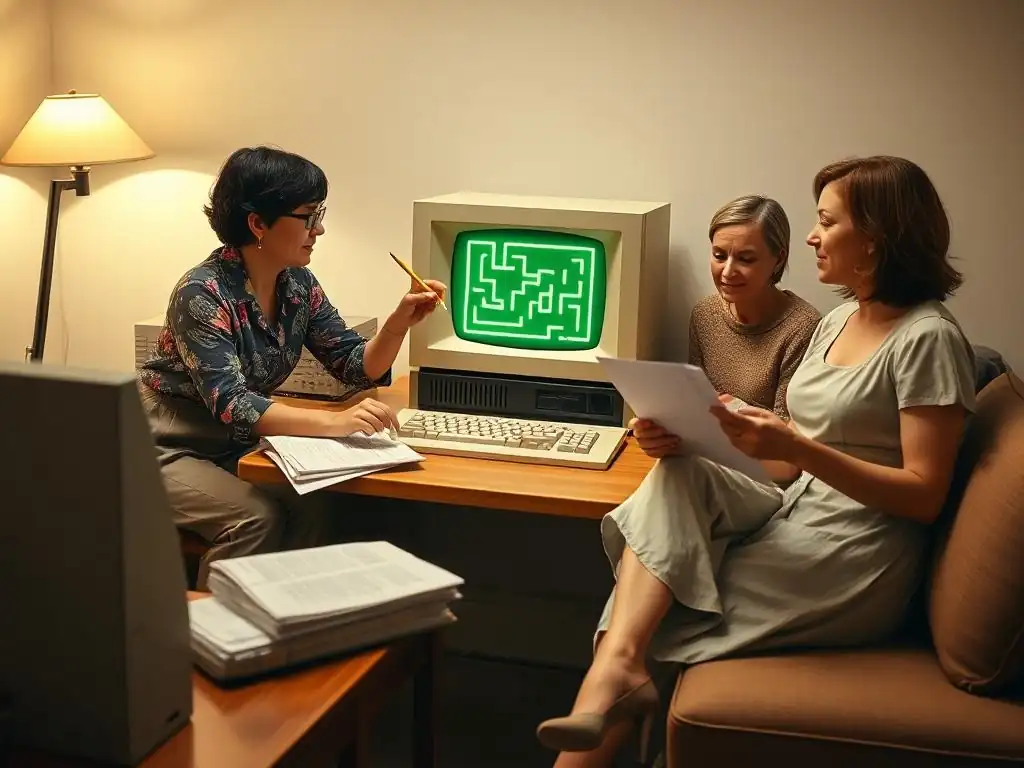
Empowering Homes and Families: Women's Role in Integrating PCs into Daily Life
The true revolution of the personal computer occurred not just in offices, but within homes, and women were often at the forefront of this integration. As primary managers of household finances, education, and family schedules, many women quickly recognized the immense practical benefits a personal computer could offer. They spearheaded the adoption of PCs for tasks such as budgeting, managing household inventories, creating greeting cards, and assisting children with school projects, transforming the abstract concept of computing into a tangible tool for daily living.
This hands-on engagement with the technology demonstrated a crucial aspect of women’s role personal computer history: their ability to identify and leverage the PC's potential for real-world applications within the domestic sphere. They weren't just users; they were innovators in applying technology to everyday challenges, proving the versatility and necessity of personal computers beyond purely professional or recreational uses.
Breaking the Stereotype: Women as Tech-Savvy Early Adopters
While the popular image of an early PC adopter often features a young man tinkering with circuit boards, a significant number of women were equally enthusiastic and tech-savvy pioneers. Many women actively sought out opportunities to learn about and engage with personal computers, driven by curiosity, a desire for efficiency, or an interest in the emerging digital landscape. They attended computer literacy classes, read technical manuals, and were early participants in online communities.
These women challenged prevailing gender stereotypes by demonstrating their proficiency and eagerness to embrace new technologies. They explored programming, experimented with new software, and even built their own systems, contributing to the diverse tapestry of early adopters. Their active participation helped to normalize women's presence in the computing world, laying the groundwork for future generations to see themselves as integral to technological advancement.
Creating Communities: Online Forums and the Role of Women in Early Internet Adoption
The rise of bulletin board systems (BBSs) in the 1980s and the nascent internet in the early 1990s provided new platforms for connection, and women were active participants in shaping these early online communities. Using their personal computers, women accessed these forums to discuss a vast array of topics, from shared hobbies and personal interests to career advice and technical support. They found spaces where they could connect with like-minded individuals, often transcending geographical barriers.
Women played a vital role in fostering inclusive and supportive online environments, contributing to the etiquette and culture of these digital spaces. Their presence diversified conversations and helped to build the foundational social fabric of the internet. This active engagement with early online platforms, facilitated by their personal computers, underscored women's capacity not only to adopt technology but also to shape its social dimensions and foster vibrant digital communities.
Education and Training: Women Empowering Others Through Computer Literacy
Women Leading Computer Literacy Programs in Schools and Communities
As personal computers gained traction, the need for widespread computer literacy became apparent. Women, particularly those in educational roles, stepped up to lead this crucial effort in schools, public libraries, and community centers throughout the 1980s and 1990s. They developed curricula, taught introductory courses, and patiently guided countless individuals—especially other women and children—through the basics of computing, from turning on a machine to using word processors and navigating early operating systems.
These female educators were instrumental in demystifying technology for the general public, making it accessible and less intimidating. Their dedication ensured that foundational digital skills were imparted to a broad segment of the population, thereby expanding the user base for personal computers exponentially. Their work was a direct, hands-on contribution to the popularization of PCs, making computer literacy a widespread aspiration.
Training the Next Generation: Female Educators Shaping Future Programmers
Beyond basic literacy, women in higher education and specialized technical schools played a vital role in training the next generation of computer scientists and programmers. Female professors and instructors inspired young women to pursue careers in a field that was increasingly male-dominated. They provided rigorous academic instruction, mentorship, and encouragement, often serving as crucial role models in environments where female representation was scarce.
These educators helped to shape the technical skills and problem-solving abilities of thousands of students, many of whom would go on to contribute to the software and hardware industries. Their commitment to teaching not only imparted knowledge but also fostered a passion for computing, demonstrating a continuous and critical women’s role personal computer history in shaping the workforce that drove technological advancement.
Addressing the Gender Gap: Encouraging Women to Pursue Computer Science
Despite the early presence of women in computing, the mid-1980s saw a noticeable decline in the number of women pursuing computer science degrees, a trend often attributed to shifting cultural perceptions and marketing efforts that increasingly targeted young men. In response, many women within academia and the tech industry became vocal advocates for addressing this growing gender gap. They initiated programs, scholarships, and outreach efforts aimed at encouraging girls and young women to consider computer science as a viable and rewarding career path.
These initiatives highlighted the creative and impactful aspects of computing, working to counter the stereotype of a solitary, male-dominated field. By promoting diversity and inclusion, these women sought to ensure that future technological innovation would benefit from a broader range of perspectives and talents, reinforcing the ongoing importance of women’s role personal computer history in shaping the industry's future.
The Impact on Business: Women Leveraging Personal Computers for Entrepreneurship
Women-Owned Businesses: Utilizing PCs for Growth and Efficiency
The advent of the personal computer significantly lowered the barrier to entry for entrepreneurship, particularly for women who sought greater flexibility or faced discrimination in traditional corporate environments. With a PC, women could manage their businesses from home, reducing the need for costly office space and large administrative staffs. This newfound accessibility empowered a surge in women-owned businesses across various sectors, from consulting and graphic design to retail and service industries.
Personal computers became indispensable tools for these ventures, enabling efficient management of finances, client communications, marketing efforts, and inventory. For example, a small business owner could use spreadsheet software for bookkeeping, word processing for proposals, and early email for client outreach, all from a single, relatively affordable machine. This practical application of technology by female entrepreneurs significantly contributed to the broader economic impact and popularization of the personal computer.
Redefining Work: The Rise of Telecommuting and Women's Opportunities
The personal computer was a primary catalyst for the rise of telecommuting, a work model that offered unprecedented flexibility and proved particularly beneficial for women. For many women balancing professional ambitions with family responsibilities, telecommuting provided the ability to work from home, reducing commutes and allowing for more adaptable schedules. This shift redefined traditional notions of the workplace and expanded opportunities for women to participate in the labor force in new and significant ways.
Fields like freelance writing, virtual assistance, and remote project management blossomed, largely facilitated by personal computers and nascent internet connectivity. Women could leverage their skills and expertise without being confined to a traditional office environment, fostering greater autonomy and work-life integration. This development underscores how the personal computer not only created new jobs but also reshaped the structure of work in ways that empowered women.
Mary Kay Cosmetics: Early PC Adoption for Sales and Inventory Management
A compelling real-world example of women leveraging personal computers for business growth is found within Mary Kay Cosmetics. In the 1980s and 1990s, Mary Kay, a company built on a direct sales model primarily driven by independent female beauty consultants, actively encouraged and facilitated the adoption of personal computers among its sales force. This initiative was revolutionary for its time, demonstrating the practical business utility of PCs in a distributed, female-dominated network.
Consultants used their personal computers for a variety of critical tasks: managing customer databases, tracking sales and inventory, processing orders, and even communicating with their upline directors. This early and widespread adoption of personal computing tools within such a large, female-centric organization highlighted the PC's power to enhance efficiency and profitability for small-scale entrepreneurs. It showcased how women, as both users and beneficiaries, were instrumental in demonstrating the personal computer's broad applicability beyond traditional corporate settings.
Challenging Gender Stereotypes in Computer Science: A Continuing Struggle
Addressing Gender Bias in the Tech Industry
Despite the foundational contributions of women to personal computer history, the tech industry has historically struggled with significant gender bias, often leading to a "bro culture" that can be unwelcoming or exclusionary. This bias manifests in various forms, including unequal pay, fewer opportunities for advancement, and a lack of representation in leadership roles. Such systemic issues have, at times, pushed talented women out of the field, creating a self-perpetuating cycle of underrepresentation.
Addressing this bias requires deliberate and sustained effort, including promoting inclusive hiring practices, implementing mentorship programs, and fostering supportive work environments where women feel valued and respected. Organizations and individuals are increasingly recognizing that a diverse workforce, one that includes a strong women’s role personal computer history, is essential not just for equity but for driving innovation and better serving a diverse global user base.
Role Models and Mentorship: Inspiring Future Generations of Female Computer Scientists
The visibility of female role models is paramount in inspiring future generations of women to pursue careers in computer science and technology. By highlighting the achievements of pioneering women throughout personal computer history—from Ada Lovelace to the ENIAC programmers, and contemporary female tech leaders—we can challenge existing stereotypes and demonstrate that computing is a field for everyone. These role models provide tangible examples of success and innovation.
Furthermore, robust mentorship programs are crucial. Experienced women in tech can guide and support younger women entering the field, helping them navigate challenges, build networks, and develop their careers. Such mentorship provides invaluable advice, encouragement, and a sense of community, ensuring that the pipeline of female talent in computer science continues to grow and thrive.
The Importance of Representation: Highlight
ing Women's Achievements in PC History
A complete and accurate understanding of personal computer history necessitates the consistent and prominent representation of women's achievements. For too long, their contributions have been marginalized or entirely omitted from mainstream narratives, perpetuating a skewed view of technological progress. Actively researching, documenting, and celebrating the multifaceted women’s role personal computer history is not merely an academic exercise; it is a vital step in fostering a more inclusive and equitable future for technology.
By ensuring that women are recognized as integral innovators, developers, marketers, and users, we can inspire new generations of girls and women to see themselves as creators and leaders in the tech world. This ongoing effort to highlight their enduring legacy helps to dismantle lingering gender stereotypes and paves the way for a more diverse and innovative technological landscape.
Conclusion: Celebrating the Enduring Legacy of Women in Personal Computer History
Acknowledging the Unsung Heroines of the PC Revolution
The journey of the personal computer from a niche fascination to a global necessity is a testament to collective human ingenuity, but it is a story incomplete without acknowledging the profound and often-unsung contributions of women. From their foundational work as early "computers" and programmers to their pivotal roles in software development, user interface design, marketing, and widespread home adoption, women were indispensable at every stage of the personal computer revolution. Their insights, dedication, and practical application of technology transformed complex machines into accessible tools for millions.
These heroines, though frequently overlooked in historical accounts, were instrumental in shaping the digital landscape we inhabit today. Their stories illuminate not only their individual brilliance but also the systemic barriers they often faced and overcame, underscoring the resilience and pioneering spirit that defined their contributions.
Looking Ahead: The Future of Women in Computer Science and Technology
While significant strides have been made, the journey towards full gender equity in computer science and technology is ongoing. The lessons learned from women’s role personal computer history provide a powerful foundation for future progress. Continued efforts are needed to dismantle persistent biases, promote inclusive environments, and ensure that girls and young women are encouraged and supported in pursuing careers in STEM fields.
By celebrating the past achievements of women in computing, we inspire a future where diversity is not just an aspiration but a fundamental characteristic of the tech industry. This forward-looking perspective aims to ensure that the next wave of technological innovation is driven by a truly representative array of talent and perspectives, building on the rich legacy of those who came before.
Women’s role in personal computer history: A vital piece of the puzzle
Ultimately, understanding women’s role personal computer history is not just about adding a footnote to existing narratives; it is about re-evaluating and enriching the entire story of technological advancement. Their contributions were not peripheral but central to the personal computer's evolution from a specialized device to a household staple and a global economic engine. From the intricacies of early programming to the broad strategies for mass market adoption, women infused the personal computer with accessibility, practicality, and widespread appeal.
Their enduring legacy reminds us that innovation flourishes when diverse voices are heard and valued. By recognizing the full spectrum of contributions, we gain a more accurate, inspiring, and comprehensive understanding of how the personal computer became an indispensable part of modern life, forever shaped by the pioneering spirit and ingenuity of women.
Frequently Asked Questions
What crucial role did women play in the early adoption of personal computers?
Women were instrumental in making personal computers accessible and user-friendly for wider audiences, contributing significantly to the software development and educational materials that popularized them.
How did the historical societal context impact the opportunities available for women in the personal computer industry?
Historically, societal biases limited women's access to technical education and leadership positions, creating challenges despite their significant contributions to personal computer development and adoption.
In what specific areas of personal computer development did women make significant contributions, often overlooked in mainstream history?
Women excelled in programming, interface design, and documentation, making computers more intuitive and appealing to the general public, thus playing a key role in the personal computer's popularity.
How does understanding the history of women's involvement in the personal computer industry help to inspire future generations of female scientists and engineers?
By showcasing the achievements of pioneering women in computing, we can challenge stereotypes, promote diversity, and encourage more women to pursue careers in STEM fields.
What challenges did women face in gaining recognition for their contributions to the personal computer's evolution from a niche tool to a global necessity?
Women often faced gender bias, lack of credit, and limited opportunities for advancement, hindering their recognition despite their vital role in shaping the personal computer revolution.
Final Reflection: Recognizing the Unsung Architects of the Digital Age
The narrative we've explored underscores a crucial truth: the history of personal computing is inextricably linked to the often-overlooked contributions of women. From programming pioneers to marketing strategists, their influence shaped the trajectory of technology, transforming it from a niche tool for specialists into an indispensable part of global society. Ignoring their role diminishes our understanding of how personal computers truly became ubiquitous.
The impact of these women resonates even now, shaping how we interact with technology and perceive its potential. Their dedication to accessibility and user-friendliness laid the foundation for the intuitive interfaces we take for granted today. You can never underestimate the power of a small group of committed people to change the world. Indeed, it is the only thing that ever has.
- Margaret Mead. This quote perfectly encapsulates the spirit of the women who, despite facing systemic barriers, persevered and left an indelible mark on the digital landscape.
As we navigate an increasingly digital world, let us remember the women who paved the way. Let us actively seek out and celebrate their stories, ensuring that their contributions are not forgotten. Consider how you can champion inclusivity and diversity in the tech industry, fostering an environment where future generations of women can thrive and continue to shape the future of technology for the better.
Empower Change: Champion Women in Tech!
Thank you for exploring the pivotal role women played in shaping the personal computer revolution. Now, let’s translate that inspiration into action.
- Share this article with your network to amplify awareness of women's contributions to technology.
- Research and highlight a contemporary woman making waves in the tech industry on your social media.
- Consider mentoring a young woman interested in pursuing a career in STEM – your guidance could be transformative.
How can you personally contribute to ensuring women receive due recognition for their impact on science and technology?