
The Fight for the Keyboard: Women's Struggle for Access in Early PC Development

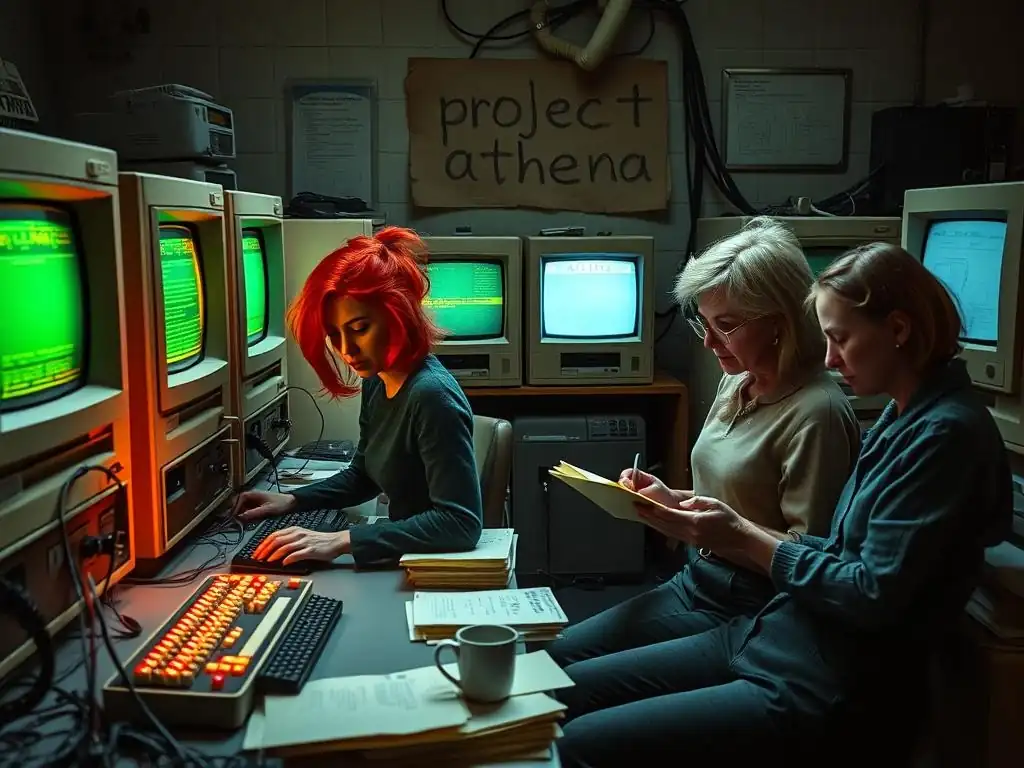
Welcome to WomenInScienceHistory.com!
Dive into the fascinating and often untold stories of women who shaped the scientific world. Ever wondered about women's early PC development challenges? The Fight for the Keyboard unveils the obstacles and triumphs of female pioneers in computer science, revealing how they battled for access and recognition in a burgeoning field. Prepare to be inspired and informed as we explore their groundbreaking contributions and the systemic hurdles they overcame, leaving you eager to learn more about their enduring legacy.
- Introduction: Unveiling Women's Contributions to Early PC Development
- The Gendered Landscape of Early Computing
- Barriers to Access: Obstacles Faced by Women in PC Development
- Pioneering Women Who Brobroke Barriers in Early PC Development
- The Fight for Recognition and Equal Opportunities
- The Impact of Women's Contributions on PC Development
- Lessons Learned and the Ongoing Struggle for Gender Equality in Tech
- Conclusion: Honoring the Legacy of Women in Early PC Development
-
Frequently Asked Questions
- What were some of the key early challenges faced by women in PC development?
- How did gender bias specifically impact women in early PC development?
- What kind of groundbreaking work did women contribute to in the early days of PC development?
- How did WomenInScienceHistory.com aim to highlight the achievements of women in science?
- Why is it important to understand the historical struggles of women in PC development?
- Final Reflection: Empowering Voices in Computing History
- Ignite Your Passion for Untold Stories
Introduction: Unveiling Women's Contributions to Early PC Development
Highlighting Overlooked Roles: Women's Impact on the Personal Computer Revolution
The narrative of the personal computer revolution often focuses on singular male figures, yet the foundational work and continuous innovation that propelled computing into the mainstream were significantly shaped by women. From the very first large-scale electronic computers to the burgeoning personal computer market of the 1970s and 80s, women were integral to programming, debugging, software design, and even the conceptualization of how these machines would interact with users. Their contributions, though often relegated to the background of historical accounts, were indispensable in transforming complex machinery into accessible tools for everyday life.
These pioneering women operated across various sectors, including military projects, academic institutions, and nascent technology companies. For example, in the post-WWII era and into the 1960s, a substantial portion of programming roles, sometimes as high as 30% or more in some fields, were held by women who were seen as meticulous and well-suited for the detailed work of coding. They were the unsung architects of early software, laying the groundwork for the interactive systems that would define the personal computer.
Women’s early PC development challenges: Setting the Stage
Despite their critical roles and undeniable talent, women faced a formidable array of obstacles that complicated their participation and recognition in the rapidly evolving field of personal computing. The landscape of early technology was inherently gendered, reflecting broader societal biases that limited women's access to education, opportunities, and professional advancement. These were not merely minor inconveniences but systemic barriers that actively shaped career trajectories and historical visibility.
The "Women’s early PC development challenges" were multifaceted, encompassing everything from pervasive stereotypes about technical aptitude to outright discrimination in hiring and promotion. As the field gained prestige and higher salaries, it gradually became perceived as a male domain, leading to a significant shift in demographics and the marginalization of many accomplished female professionals. Understanding these challenges is crucial to fully appreciate the resilience and determination of the women who persevered and left an indelible mark on PC development.
The Gendered Landscape of Early Computing
Challenging the "Male Genius" Narrative in Computer Science
The prevailing "male genius" narrative in computer science has long obscured the extensive contributions of women, painting a picture of innovation dominated almost exclusively by men. This perception often overlooks the historical reality that women were among the very first programmers and system designers. For instance, during the 1940s and 1950s, programming was frequently considered a clerical or mathematical task, roles often filled by women. It was only as the field gained academic prestige and higher salaries that it became increasingly masculinized, with the narrative shifting to highlight male pioneers almost exclusively.
This re-gendering of the field contributed significantly to the "Women’s early PC development challenges," as the very foundation of computing history began to exclude or minimize female roles. While figures like Alan Turing and John von Neumann are rightly celebrated, the systematic omission of women like the ENIAC programmers or Grace Hopper from popular histories created a skewed understanding of who built the digital world. This historical erasure not only devalued their past work but also influenced the perception of women's capabilities in technology for decades to come.
Societal Expectations and Limited Opportunities for Women in Tech
Societal expectations played a profound role in shaping the opportunities available to women in early tech. Traditional gender roles often steered women away from "hard sciences" and engineering, instead encouraging pursuits deemed more "feminine" or supportive. This meant fewer women were encouraged to pursue higher education in fields like electrical engineering or computer science, even as the personal computer industry began to flourish. For many, a career in tech was not presented as a viable or desirable path.
Even for women who did enter the field, the range of opportunities was often constrained. They might be funneled into roles like data entry, technical writing, or quality assurance, rather than hardware design or lead programming, despite possessing the necessary skills. This limited access to core development roles exacerbated the "Women’s early PC development challenges," making it difficult for them to gain the experience and visibility needed to climb the corporate ladder or be recognized as innovators in their own right.
Barriers to Access: Obstacles Faced by Women in PC Development
Unequal Access to Education and Training in Computer Science
One of the most significant "Women’s early PC development challenges" was the unequal access to quality education and specialized training in computer science. During the formative years of personal computing, from the 1970s through the 1990s, universities and technical schools often saw a low enrollment of women in computer science programs.
While the percentage of women earning computer science bachelor's degrees peaked around 37% in 1984, this figure dramatically declined to less than 20% by the early 2000s, reflecting a cultural shift away from women in computing. This decline was partially attributed to the rise of the "nerd" stereotype, which became increasingly male-coded, and a lack of early exposure or encouragement for girls in STEM fields.
Furthermore, even when women entered these programs, they often faced an unsupportive environment. Curricula and teaching methods were frequently designed without considering diverse learning styles, and a lack of female faculty or mentors meant fewer role models. This educational disparity created a pipeline problem, limiting the number of women who could enter the personal computer development workforce with the necessary credentials and confidence.
The "Boys' Club" Culture: Exclusion and Discrimination in the Workplace
The early tech industry was notorious for its pervasive "boys' club" culture, which presented formidable "Women’s early PC development challenges" in the workplace. This culture manifested in various ways, from informal networking events held in male-dominated spaces to outright discrimination in hiring, promotion, and project assignments. Women often reported feeling isolated, being overlooked for challenging tasks, or having their technical contributions dismissed. A study from the 1980s, for example, indicated that women in tech were significantly less likely to hold leadership positions than their male counterparts, even with similar qualifications.
This exclusionary environment often meant that women had to work twice as hard to prove their competence, constantly battling stereotypes and assumptions about their technical abilities. Microaggressions, condescending remarks, and a lack of respect were common experiences, making it difficult for women to thrive, share their ideas, and contribute fully to development teams. The absence of formal HR policies or diversity initiatives in many early tech companies further compounded these issues, leaving women with little recourse against discriminatory practices.
Lack of Mentorship and Support Networks for Women in Tech
A critical barrier among the "Women’s early PC development challenges" was the severe lack of mentorship and robust support networks. In a field predominantly populated by men, women often struggled to find experienced female mentors who could guide their careers, offer advice on navigating the male-dominated environment, or advocate for their advancement. This absence of role models and internal champions made it exceptionally difficult for women to gain visibility, secure promotions, or even identify viable career paths within tech companies.
Moreover, informal support networks, which are crucial for career growth and knowledge sharing, were largely inaccessible to women. Many significant career opportunities and technical insights were often exchanged in casual, male-centric settings outside of formal work hours. Without these connections, women were often left out of crucial information flows and professional development opportunities, further isolating them and hindering their progress in personal computer development.
Pioneering Women Who Brobroke Barriers in Early PC Development
Ada Lovelace: Conceptualizing the Analytical Engine and Early Algorithms
Ada Lovelace, often hailed as the world's first computer programmer, made groundbreaking theoretical contributions that fundamentally shaped the understanding of computing long before the advent of electronic personal computers. Working with Charles Babbage on his Analytical Engine in the mid-19th century, Lovelace moved beyond simply documenting the machine's capabilities. She envisioned its potential to go beyond mere calculation, foreseeing its ability to manipulate symbols and perform complex operations, effectively laying the conceptual groundwork for modern software.
Her most significant contribution was her "Notes" on Babbage's Analytical Engine, published in 1843. Within these notes, she detailed a method for the Engine to calculate a sequence of Bernoulli numbers, which is widely recognized as the first algorithm specifically designed for a machine. This visionary work demonstrated a profound understanding of how a mechanical device could be programmed to execute a series of instructions, a principle central to all subsequent computer development, including the personal computer.
Grace Hopper: Pioneering Compiler Technology and Programming Languages
Rear Admiral Dr. Grace Murray Hopper was a visionary figure whose work directly addressed some of the most significant "Women’s early PC development challenges" in making computing more accessible. A true pioneer, she joined the Harvard Mark I computer project during World War II and went on to develop groundbreaking concepts in programming. Her most famous achievement was the invention of the first compiler, the A-0 System, in 1952. This invention revolutionized programming by allowing instructions to be written in a human-readable language, then translated into machine code, rather than requiring programmers to write directly in complex binary.
Hopper also played a pivotal role in the development of COBOL (Common Business-Oriented Language) in the late 1950s, a high-level programming language designed to be machine-independent and usable across different computer systems. Her philosophy was that programming languages should be closer to English, making coding more accessible to a wider range of users, including business professionals. Her work dramatically simplified the programming process, directly influencing the design and usability of software for future personal computers.
Jean Bartik: ENIAC Programmer and Advocate for Software Development
Jean Bartik was one of the original six women who programmed the ENIAC (Electronic Numerical Integrator and Computer), the first large-scale electronic digital computer, in the 1940s. Initially, their work was considered "clerical" and was largely uncredited, a stark example of the "Women’s early PC development challenges" in gaining recognition. These women manually programmed the ENIAC by physically wiring and switching its components, a complex and intellectually demanding task that laid the very foundation for modern software development.
Bartik, along with her fellow ENIAC programmers, developed many of the fundamental programming techniques still used today, including subroutines, nesting, and debugging. After her work on the ENIAC, she continued her career at the UNIVAC I and II, contributing to the development of early commercial computers. Her efforts, and those of her colleagues, were crucial in demonstrating that computers could be programmed for complex tasks beyond simple calculations, directly influencing the trajectory toward versatile personal computing.
The Fight for Recognition and Equal Opportunities
Documenting the Underrepresentation of Women in Computer Science History
For decades, the historical narratives of computer science and personal computer development largely omitted or downplayed the significant contributions of women, exacerbating the "Women’s early PC development challenges" in terms of recognition. This systemic underrepresentation was not accidental; it was a consequence of societal biases, a lack of dedicated historical research, and often, the perception of women's technical roles as less significant than those of men. For instance, the crucial work of the ENIAC programmers remained largely unacknowledged for nearly 50 years until dedicated historians began to uncover their stories.
Efforts to correct this historical oversight gained momentum in the late 20th and early 21st centuries. Researchers and advocates began to meticulously document the biographies and technical achievements of pioneering women, bringing their stories to light. This ongoing work is vital not only for historical accuracy but also for providing role models and inspiring future generations of women in tech, demonstrating that women have always been at the forefront of technological innovation.
Advocacy and Activism: Women Pushing for Change in the Tech Industry
Despite the pervasive "boys' club" culture and significant "Women’s early PC development challenges," women within the tech industry engaged in various forms of advocacy and activism to push for change. While highly formalized movements might have been less visible in the nascent stages of personal computing, individual women and small groups quietly challenged norms and demanded better opportunities. They often did so through persistent excellence in their work, by mentoring younger women informally, and by speaking out against discriminatory practices where possible.
Later, as the industry matured, more structured efforts emerged. Professional organizations, though initially male-dominated, eventually began to form committees or sub-groups focused on women in computing. These groups provided crucial networking opportunities, shared resources, and advocated for policy changes within companies and academic institutions, slowly chipping away at the systemic barriers that limited women's participation and advancement.
Overcoming Stereotypes: Challenging Gender Bias in Perceptions of Technical Ability
One of the most insidious "Women’s early PC development challenges" was the pervasive gender bias that questioned women's inherent technical ability. Stereotypes often portrayed women as less logical, less adept at engineering, or more suited to "soft" skills, even when their work directly contradicted these notions. This bias meant that women often had to consistently prove their competence more than their male counterparts, facing skepticism and underestimation in their technical roles.
Women in early PC development actively challenged these stereotypes through their groundbreaking work. Grace Hopper, for example, not only developed the first compiler but also championed user-friendly programming, demonstrating that technical expertise could go hand-in-hand with an understanding of human interaction. Their success in creating innovative software and hardware solutions directly refuted the notion that computing was an exclusively male domain, slowly shifting perceptions though the battle against bias continues even today.
The Impact of Women's Contributions on PC Development
Innovations Driven by Women: Early Programming Languages and Software Design
The innovations driven by women were absolutely critical to the evolution of personal computing, particularly in the realm of programming languages and software design. Beyond Ada Lovelace's foundational algorithms and Grace Hopper's pioneering work on compilers and COBOL, other women made significant strides. For instance, Adele Goldberg, a computer scientist at Xerox PARC, was instrumental in developing Smalltalk-80, an object-oriented programming language that profoundly influenced the development of graphical user interfaces (GUIs). Her work directly inspired Steve Jobs and Apple's development of the Macintosh, a cornerstone of early personal computing user experience.
These contributions were vital because they moved computing beyond complex machine-level operations, making it more accessible and intuitive for a broader audience. Women like Goldberg focused on creating user-friendly interfaces and robust programming environments, recognizing that the true power of personal computers lay in their usability by non-experts. Their foresight in software design laid the groundwork for the intuitive operating systems and applications that defined the PC revolution.
Shaping the User Experience: Women's Influence on PC Design
While women were less often in visible hardware design roles during the early PC era, their influence on the overall user experience was profound, addressing a subtle but critical aspect of "Women’s early PC development challenges." Through their work in software development, documentation, and early human-computer interaction research, they helped shape how users would interact with these new machines. For example, women were often employed in roles that required them to translate complex technical specifications into understandable user manuals and help guides, making PCs less intimidating for the average consumer.
Furthermore, women involved in early software testing and quality assurance provided invaluable feedback that led to more user-friendly interfaces and fewer bugs. Their perspective, often grounded in practical application and problem-solving, contributed to the iterative design process that made personal computers increasingly intuitive and reliable. This focus on usability, often championed by women, was essential for the mass adoption of PCs beyond hobbyists and technical experts.
The Legacy of Early Women PC Developers: Inspiring Future Generations
The enduring legacy of early women PC developers is undeniable, serving as a powerful source of inspiration for future generations and highlighting the persistence required to overcome "Women’s early PC development challenges." Their stories of perseverance, intellectual brilliance, and groundbreaking innovation demonstrate that despite systemic barriers, women have always been at the forefront of technological advancement. By revealing their often-overlooked contributions, we provide crucial role models for young girls and women considering careers in STEM.
This legacy extends beyond individual achievements. The very existence of women in these pioneering roles challenges the historical narrative that computing is a male-only domain, encouraging a more inclusive vision for the future of technology. Their work laid the foundation for the digital world we inhabit today, and acknowledging their impact is essential for fostering an environment where all talent is recognized and celebrated, regardless of gender.
Lessons Learned and the Ongoing Struggle for Gender Equality in Tech
Addressing the Persistent Gender Gap in Computer Science Today
The historical "Women’s early PC development challenges" offer crucial lessons for addressing the persistent gender gap in computer science today. Despite increased awareness and numerous diversity initiatives, women still remain significantly underrepresented in many technical roles, particularly in leadership and core engineering positions. For example, recent data indicates that women comprise approximately 28% of the tech workforce, a figure that has seen only modest growth over the past decade and remains far from parity. The percentage of women graduating with computer science degrees also remains lower than its peak in the mid-1980s.
This ongoing disparity highlights that the systemic issues faced by early women in PC development—such as unconscious bias, exclusionary workplace cultures, and a lack of visible role models—continue to impact the industry. Addressing these challenges requires a multi-faceted approach, including targeted efforts to encourage girls in STEM from an early age, fostering inclusive educational environments, and implementing equitable hiring and promotion practices within tech companies.
Strategies for Promoting Inclusion and Diversity in the Tech Industry
Learning from the "Women’s early PC development challenges" is paramount for developing effective strategies to promote inclusion and diversity in the contemporary tech industry. One key strategy involves actively challenging unconscious biases in hiring and promotion processes, for instance, through blind resume reviews or structured interview panels. Companies are also increasingly implementing mentorship and sponsorship programs specifically designed to support women and underrepresented groups, helping to overcome the historical lack of support networks.
Furthermore, fostering inclusive workplace cultures is critical. This includes promoting flexible work arrangements, establishing clear anti-harassment policies, and creating employee resource groups that provide a sense of community and advocacy. Investing in STEM education for girls from primary school through university, coupled with showcasing diverse role models, is also essential to build a more robust and diverse pipeline of talent for the tech sector.
The Importance of Recognizing and Celebrating Women's Contributions to Tech History
Recognizing and celebrating the contributions of women to tech history, especially those who navigated the "Women’s early PC development challenges," is not merely an academic exercise; it is a fundamental step toward building a more equitable future. By highlighting the groundbreaking work of pioneers like Ada Lovelace, Grace Hopper, and Jean Bartik, we actively dismantle the myth of computing as a male-dominated field and provide tangible evidence of women's historical and ongoing impact. This historical accuracy is crucial for inspiring future generations.
These stories serve as powerful counter-narratives to persistent stereotypes, demonstrating that technical prowess and innovation know no gender. Platforms like "Women in Science History" play a vital role in ensuring these narratives are widely accessible, helping to shape public perception and encourage more young women to pursue careers in technology by showing them they belong and have a rich lineage of innovators to look up to.
Conclusion: Honoring the Legacy of Women in Early PC Development
Women’s early PC development challenges: A Call to Action for a More Inclusive Future
The journey of women in early personal computer development was marked by profound intellectual contributions, relentless perseverance, and significant "Women’s early PC development challenges." From the foundational algorithms conceptualized by Ada Lovelace to the pioneering compilers of Grace Hopper and the hands-on programming of the ENIAC by Jean Bartik, women were indispensable architects of the digital age. Yet, their stories were often sidelined, obscured by a narrative that favored male innovators and overlooked systemic barriers. This historical oversight not only diminished their accomplishments but also deprived subsequent generations of crucial role models.
Understanding these historical struggles is not just about correcting the past; it is a powerful call to action for a more inclusive future in technology. The persistent gender gap in STEM fields today echoes the challenges faced by these pioneers, reminding us that the fight for true equality is ongoing. By actively celebrating the legacy of women in early PC development, challenging lingering biases, and fostering environments where all talent can thrive, we honor their contributions and build a tech industry that truly reflects the diverse world it serves.
Frequently Asked Questions
What were some of the key early challenges faced by women in PC development?
Women faced limited access to resources and education, often being excluded from formal training and professional networks. This made it difficult for them to gain the necessary skills and opportunities for advancement. They also battled gender bias and discrimination.
How did gender bias specifically impact women in early PC development?
Gender bias manifested as limited career advancement opportunities, lower pay compared to male counterparts, and a general lack of recognition for their contributions. Women were often relegated to support roles rather than leading development projects.
What kind of groundbreaking work did women contribute to in the early days of PC development?
Despite facing significant obstacles, women contributed to programming languages, operating systems, and hardware design. Their work was often unacknowledged or attributed to male colleagues.
How did WomenInScienceHistory.com aim to highlight the achievements of women in science?
The website focuses on biographies of pioneering women scientists, showcasing their innovative work and the obstacles they overcame. It aims to inspire future generations by sharing these often-overlooked narratives and promoting gender equality in STEM.
Why is it important to understand the historical struggles of women in PC development?
Understanding these struggles helps us to recognize and address ongoing gender disparities in the tech industry. It also ensures that the contributions of women are properly acknowledged and celebrated, inspiring future generations to pursue careers in STEM.
Final Reflection: Empowering Voices in Computing History
The journey through the early days of PC development reveals a stark truth: the contributions of women were often overlooked and undervalued, despite their significant impact. This history isn't just a relic of the past; it echoes in the present-day tech industry, where gender disparities persist, reminding us of the ongoing need for equitable access and recognition.
The fight for a place at the keyboard, for a voice in shaping the digital world, continues to resonate. Understanding the historical barriers faced by women in early PC development is crucial for dismantling the systemic biases that still exist. You can't be what you can't see.
This quote, often attributed to Marian Wright Edelman, encapsulates the importance of visibility and representation in inspiring future generations of women to pursue careers in technology.
Let us not forget the pioneers who paved the way. As we reflect on their struggles and triumphs, consider how you can contribute to creating a more inclusive and equitable tech landscape. What steps can you take to amplify the voices of women in technology, challenge unconscious biases, and ensure that future generations have equal opportunities to shape the digital world? The fight for the keyboard is far from over; it's a call to action for each of us to build a future where innovation knows no gender.
Ignite Your Passion for Untold Stories
Thank you for diving into the remarkable journey of women who shaped early PC development. We hope this article has sparked a new appreciation for their ingenuity and perseverance. Now, let's keep their legacy alive!
Here are a few ways to get involved:
- Amplify their voices: Share this article with your friends, family, and colleagues to spread awareness of these unsung heroes.
- Dive deeper: Explore WomenInScienceHistory.com for more inspiring stories of pioneering women in STEM.
- Contribute to the narrative: Research and write about a forgotten female figure in technology and submit it to our site. Let's ensure their contributions are never overlooked again.
What untold story of a woman in science history inspires you the most, and how can we work together to bring it to light?