
Beatrice Worsley: Canada's First Female PhD in CS and Early Computer Designer


Welcome to WomenInScienceHistory.com! Ever heard of the unsung heroes behind the dawn of computing? Prepare to be amazed as we delve into the fascinating life of Beatrice Worsley, Canada's first female PhD in Computer Science and a true pioneer in early computer design. Her story, often overlooked, is a testament to brilliance and perseverance. Intrigued? Join us as we uncover the groundbreaking work and the remarkable journey of this extraordinary woman, and discover why her contributions deserve to be celebrated.
- Beatrice Worsley: Canada's First Female PhD in Computer Science and Pioneering Computer Designer
- Introduction: Celebrating Beatrice Worsley's Contributions to Computer Science
- Early Life and Education: The Foundation of a Computer Scientist
- PhD at MIT: Groundbreaking Research in Computer Science
- Career at the National Research Council (NRC) and Chalk River
- Pioneering Work on the Ferranti Mark 1 and Transcode
- Teaching and Mentorship: Shaping the Next Generation of Computer Scientists
- Legacy and Impact: Beatrice Worsley's Enduring Influence on Computer Science
- Overcoming Challenges: Worsley's Journey as a Woman in a Male-Dominated Field
- Beatrice Worsley: A Role Model for Aspiring Female Computer Scientists
- Conclusion: Remembering Beatrice Worsley's Pioneering Spirit
-
Frequently Asked Questions
- What was Beatrice Worsley's primary achievement?
- What challenges did Beatrice Worsley likely face in her career?
- What kind of work did Beatrice Worsley do as a computer designer?
- Why is it important to remember Beatrice Worsley's contributions to science?
- Where can I learn more about other women who have made significant contributions to science?
- Final Reflection: Honoring Innovation and Inspiring Future Generations
- Unleash Your Inner Pioneer!
Beatrice Worsley: Canada's First Female PhD in Computer Science and Pioneering Computer Designer
Introduction: Celebrating Beatrice Worsley's Contributions to Computer Science
Highlighting Beatrice Worsley's Legacy in Women in Science History
Beatrice Worsley stands as a monumental figure in the annals of Canadian science, particularly within the burgeoning field of computer science in the mid-20th century. Her groundbreaking achievements not only advanced the technological landscape but also shattered significant gender barriers, making her a crucial inspiration for women in science history. As Canada's first woman to earn a PhD in what would become known as computer science, her journey exemplifies resilience and intellectual prowess in an era largely dominated by men.
Her story is a vital addition to the narratives celebrated by WomenInScienceHistory.com, illuminating the often-overlooked contributions of pioneering women. Worsley's work laid foundational stones for digital computing, and her persistent pursuit of knowledge against societal expectations serves as a powerful testament to her enduring legacy. She carved a path for future generations, proving that intellectual capability knows no gender.
The Significance of Worsley's Work in Early Computer Development
The mid-20th century marked a pivotal period in the history of technology, as early electronic computers transitioned from theoretical concepts to practical, albeit enormous, machines. Beatrice Worsley's contributions during this nascent stage were profoundly significant, directly influencing the development and application of computing in Canada and beyond. Her expertise spanned both the theoretical underpinnings of computation and the practical challenges of programming these complex early devices.
Worsley was instrumental in demonstrating the potential of computers to solve intricate scientific and engineering problems, particularly in areas like nuclear physics and aerodynamics. Her work on early programming languages and numerical methods helped transform abstract mathematical concepts into tangible computational solutions, accelerating research and development across various scientific disciplines. Her visionary approach helped define the scope and direction of computer science in its formative years.
Early Life and Education: The Foundation of a Computer Scientist
Beatrice Worsley's Bachelor's Degree in Mathematics and Physics
Born in Mexico in 1921 to Canadian parents, Beatrice Worsley demonstrated an early aptitude for mathematics and science. She moved to Canada for her higher education, enrolling at the University of Toronto. There, she pursued a rigorous academic path, culminating in her graduation in 1946 with a Bachelor of Arts degree in Mathematics and Physics. This achievement was notable for its time, as few women pursued such demanding scientific disciplines, especially at an advanced level.
Her undergraduate studies provided a robust theoretical foundation, equipping her with the analytical and problem-solving skills that would prove essential for her future groundbreaking work in computer science. The interdisciplinary nature of her degree, combining abstract mathematical principles with the practicalities of physics, set the stage for her innovative approach to the emerging field of computation.
Transition to Meteorology and the Wartime Application of Mathematics
Following her undergraduate studies, Beatrice Worsley joined the Meteorological Service of Canada, where she applied her mathematical and physics knowledge to practical problems. This role involved intricate calculations and data analysis crucial for weather forecasting, a field that was increasingly reliant on complex numerical methods. Her experience here honed her skills in processing large datasets and understanding the computational demands of scientific research.
The period immediately after World War II saw an explosion in scientific and engineering advancements, many of which had been spurred by wartime necessities, including the need for rapid computation. Worsley's work in meteorology, which often involved manual computation of complex differential equations, likely exposed her to the immense potential of automated computing devices. This experience provided a practical context for her subsequent decision to pursue advanced studies in the nascent field of computer science.
PhD at MIT: Groundbreaking Research in Computer Science
Worsley's Doctoral Studies and Dissertation: "A Mathematical Survey of High Speed Computing Devices"
In 1947, Beatrice Worsley embarked on her doctoral studies at the Massachusetts Institute of Technology (MIT), a leading institution at the forefront of early computing research. Her choice of MIT underscored her commitment to pioneering work in a field that was still largely undefined. Her dissertation, submitted in 1952, was titled "A Mathematical Survey of High Speed Computing Devices." This seminal work provided a comprehensive overview of the theoretical underpinnings and practical challenges of early electronic computers.
Worsley’s research delved into the architecture and operational principles of machines like the ENIAC and EDVAC, which were among the earliest general-purpose electronic digital computers. She explored the mathematical methods suitable for these new devices, analyzing their capabilities and limitations for solving complex scientific problems. Her dissertation was not just a theoretical exercise but a practical guide to the emerging landscape of computational science, showcasing her profound understanding of both hardware and software concepts.
Beatrice Worsley's PhD: A Milestone for Women in STEM in Canada
Upon defending her dissertation in 1952, Beatrice Worsley achieved a historic milestone: she became the first woman in Canada to earn a PhD in computer science. At a time when women comprised a minuscule percentage of doctoral candidates in STEM fields, and computer science itself was barely recognized as a distinct discipline, Worsley's accomplishment was truly revolutionary. Her Beatrice Worsley computer science PhD was a beacon, demonstrating intellectual leadership and breaking significant societal barriers.
This achievement was not just a personal triumph but a landmark for women in STEM across Canada. It provided a tangible example of a woman excelling at the highest levels of scientific inquiry in a field that would rapidly transform the world. Worsley's PhD opened doors and inspired conversations about the capabilities of women in fields traditionally reserved for men, paving the way for future generations of female computer scientists and engineers.
Career at the National Research Council (NRC) and Chalk River
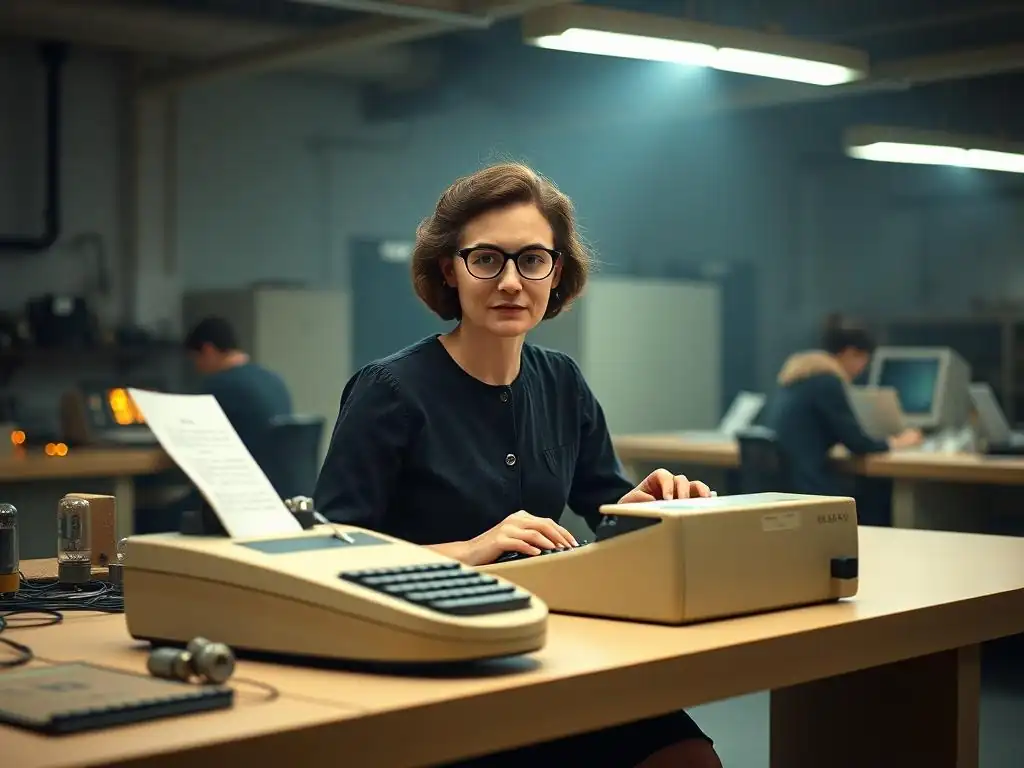
Worsley's Role in Early Canadian Computing Projects: Numerical Solutions to Differential Equations
After completing her PhD, Beatrice Worsley returned to Canada and joined the National Research Council (NRC) in Ottawa. She was instrumental in the NRC's Computation Centre, which was at the vanguard of applying computing technologies to scientific research in Canada. Her primary focus was on developing and implementing numerical solutions to complex differential equations, particularly those arising from problems in nuclear physics and aerodynamics.
This work was critical for the Chalk River Laboratories, Canada's premier nuclear research facility, where scientists were grappling with calculations too intricate for manual methods. Worsley’s expertise allowed for the efficient processing of data and simulations, significantly accelerating research in these high-priority areas. Her ability to translate theoretical mathematical problems into computable algorithms was a cornerstone of early Canadian scientific computing efforts.
Developing and Implementing Early Computing Systems: The Differential Analyser and Electronic Computers
Worsley's role at the NRC extended beyond theoretical analysis to hands-on involvement with the physical computing machines available at the time. She worked extensively with the Differential Analyser, a mechanical analog computer, adapting it to solve a range of scientific problems. Her experience with this machine provided invaluable insight into the challenges of programming and operating early computing systems.
As electronic digital computers began to emerge, Worsley quickly transitioned her expertise. She was involved in the implementation and application of these new electronic machines, helping to bridge the gap between their complex hardware and the practical needs of scientists. Her work was foundational in establishing the operational procedures and programming methodologies for Canada's nascent digital computing infrastructure, directly contributing to the country's early technological self-sufficiency.
Pioneering Work on the Ferranti Mark 1 and Transcode
Beatrice Worsley's Contributions to the Ferranti Mark 1 Project
Beatrice Worsley's pioneering spirit led her to the University of Manchester in the early 1950s, a global hub for early computer development. There, she contributed to the groundbreaking Ferranti Mark 1 project, one of the world's first commercially available electronic computers. Her involvement included programming and understanding the intricate architecture of this machine, which was a significant leap forward from earlier experimental models.
Her work on the Ferranti Mark 1 provided her with invaluable practical experience in the complexities of early digital computing. She was tasked with developing and implementing programs that pushed the boundaries of what these machines could do, further solidifying her reputation as a leading expert in the nascent field. This international exposure enhanced her understanding of global computing trends and brought cutting-edge knowledge back to Canada.
Transcode: Worsley's Compiler and its Impact
One of Beatrice Worsley's most significant contributions was the development of Transcode, a compiler she designed for the Ferranti Mark 1 computer. A compiler is a program that translates human-readable code (source code) into machine-readable instructions (object code), making programming significantly easier and less prone to errors. At a time when most programming was done in machine code or assembly language, Transcode was a visionary innovation.
Transcode, developed around 1951-1952, allowed programmers to write instructions in a higher-level language, abstracting away much of the underlying machine complexity. This dramatically improved programming efficiency and accessibility, making the Ferranti Mark 1 more usable for a wider range of scientific and engineering applications. Worsley's creation of Transcode demonstrated her profound understanding of both theoretical computer science and practical software engineering, marking her as a true pioneer in the development of programming tools.
Teaching and Mentorship: Shaping the Next Generation of Computer Scientists
Beatrice Worsley's Academic Career at the University of Toronto
After her groundbreaking work at the NRC and on the Ferranti Mark 1, Beatrice Worsley transitioned into academia, joining the faculty at the University of Toronto. This move allowed her to directly influence the next generation of computer scientists. She played a crucial role in shaping the early computer science curriculum at the university, which was among the first in Canada to establish formal programs in the field.
Worsley taught a range of courses, from fundamental programming concepts to advanced numerical methods, sharing her extensive knowledge and practical experience with eager students. Her presence as a faculty member helped legitimize computer science as a distinct academic discipline, attracting talented individuals to a field that was still finding its identity. Her lectures were informed by her firsthand experience with pioneering computers, providing students with unique insights.
Inspiring Students and Promoting Computer Science Education
Beyond her formal teaching duties, Beatrice Worsley served as an invaluable mentor and an inspiring figure for her students. As a woman holding a Beatrice Worsley computer science PhD and having contributed significantly to early computing, she was a powerful role model, especially for female students considering careers in STEM. Her dedication to education was evident in her commitment to making complex computational concepts accessible.
Worsley actively promoted the importance of computer science education, advocating for its integration into broader academic curricula. She understood that for Canada to thrive in the digital age, a robust educational foundation was necessary. Her efforts helped cultivate a new generation of researchers and practitioners who would go on to further advance the field, ensuring that her pioneering spirit continued to resonate through her students' achievements.
Legacy and Impact: Beatrice Worsley's Enduring Influence on Computer Science

Recognizing Beatrice Worsley's Achievements in Computer Science History
Beatrice Worsley's achievements are foundational to the history of computer science in Canada and beyond. Her status as Canada's first woman to earn a Beatrice Worsley computer science PhD is a testament to her intellectual prowess and tenacity. Beyond this singular achievement, her work on early computing devices like the Differential Analyser and the Ferranti Mark 1, coupled with her innovative development of the Transcode compiler, marks her as a true pioneer.
Her contributions, while perhaps not as widely known as some of her male contemporaries, were critical in establishing the theoretical and practical frameworks for digital computing. She not only understood the machines but also the methodologies required to unlock their potential, from numerical solutions to differential equations to creating user-friendly programming tools. Her legacy is one of quiet yet profound influence, shaping the very infrastructure of early computing.
The Lasting Impact of Her Work on Modern Computing
The principles and methodologies that Beatrice Worsley helped establish continue to underpin modern computing. Her work on compilers, for instance, laid the groundwork for the sophisticated programming languages and development tools that software engineers use today. The concept of abstracting machine-level details through higher-level languages, which Transcode exemplified, is fundamental to contemporary software development.
Furthermore, her emphasis on numerical methods for solving scientific problems remains a cornerstone of computational science, from climate modeling to drug discovery. Worsley’s pioneering efforts helped to define the interdisciplinary nature of computer science, demonstrating its indispensable role across various scientific fields. Her career provides a clear lineage from the earliest conceptualizations of computing to the pervasive digital world we inhabit today, proving the enduring relevance of her early innovations.
Overcoming Challenges: Worsley's Journey as a Woman in a Male-Dominated Field
Barriers Faced by Women in Computer Science During Worsley's Era
Beatrice Worsley pursued her passion for computer science during an era when pervasive societal and academic barriers significantly limited women's participation in STEM fields. In the mid-20th century, higher education, particularly in disciplines like mathematics, physics, and the nascent field of computer science, was largely a male domain. Women often faced skepticism regarding their intellectual capabilities, and opportunities for advanced study and professional roles were scarce.
Beyond overt discrimination, subtle biases often created an unwelcoming environment. Women were frequently relegated to supportive, clerical roles rather than leadership or research positions. Access to funding, mentorship, and recognition was often more challenging for women, making Worsley's ascent to a Beatrice Worsley computer science PhD and a prominent research career an exceptional feat against considerable odds.
Worsley's Resilience and Determination in Pursuing Her Passion
Despite these formidable challenges, Beatrice Worsley exhibited remarkable resilience and unwavering determination. Her decision to pursue a PhD at MIT, a globally recognized institution for advanced scientific research, in a field that was barely defined, speaks volumes about her resolve. She navigated environments where she was often the only woman, proving her intellectual mettle through rigorous academic work and impactful research.
Worsley's perseverance is evident in her continuous engagement with the cutting edge of computing technology, from mechanical analyzers to electronic digital computers and early compilers. She did not shy away from complex problems or male-dominated spaces but instead embraced them, allowing her passion for computation to drive her forward. Her journey is a powerful narrative of overcoming systemic barriers through sheer intellect, dedication, and an unyielding commitment to her scientific calling.
Beatrice Worsley: A Role Model for Aspiring Female Computer Scientists
Inspiring Future Generations of Women in Tech
Beatrice Worsley's life and career serve as a profound source of inspiration for future generations of women aspiring to careers in technology and science. Her story demonstrates that gender is no barrier to achieving excellence and making groundbreaking contributions in even the most technically demanding fields. For young women contemplating a Beatrice Worsley computer science PhD or a career in the digital realm, Worsley's journey offers a tangible example of success against historical headwinds.
Her achievements highlight the importance of perseverance, intellectual curiosity, and a willingness to venture into uncharted territories. In an industry still working towards full gender equity, Worsley's legacy encourages young women to pursue their passions in STEM with confidence and to challenge existing norms, just as she did decades ago.
Celebrating Women in Computer Science: Worsley's Place in History
Recognizing Beatrice Worsley's pivotal contributions is essential for a more complete and accurate understanding of computer science history. Her place among the early pioneers, particularly as Canada's first female Beatrice Worsley computer science PhD, underscores the critical role women played in shaping the digital age, often from behind the scenes or with less recognition than their male counterparts. Celebrating her story helps correct historical oversights and ensures that her impact is properly acknowledged.
Her inclusion in narratives about influential women in science not only honors her individual accomplishments but also reinforces the broader message that scientific progress is a collective human endeavor, enriched by diverse perspectives and talents. By highlighting figures like Worsley, we inspire a new generation to pursue STEM fields, ensuring that the future of computer science is as diverse and innovative as its pioneering past.
Conclusion: Remembering Beatrice Worsley's Pioneering Spirit
The Enduring Relevance of Beatrice Worsley's Contributions
Beatrice Worsley's pioneering spirit and profound contributions to computer science remain enduringly relevant in today's technologically advanced world. From her foundational Beatrice Worsley computer science PhD research at MIT to her practical work on early Canadian computing projects and the development of the Transcode compiler, her innovations laid critical groundwork for the digital revolution. Her ability to bridge theoretical mathematics with practical computational challenges defined the very essence of early computer science.
Her work on numerical methods continues to be vital in countless scientific and engineering applications, while the principles behind her compiler design are fundamental to modern software development. Worsley's legacy serves as a powerful reminder that the complex technologies we rely on daily have roots in the visionary efforts of individuals like her, who dared to explore the unknown frontiers of computation.
Continuing the Legacy of Women in Computer Science
The story of Beatrice Worsley is more than just a historical account; it is a call to action to continue the legacy of women in computer science. Her journey exemplifies the immense talent and determination that women bring to STEM fields, often in the face of significant adversity. By celebrating her achievements, we not only honor her memory but also reinforce the importance of fostering inclusive environments where all individuals, regardless of gender, can thrive and contribute to scientific advancement.
Her pioneering spirit reminds us that there are countless untold stories of women who have shaped scientific history. As we look to the future, Worsley's life encourages us to actively support, mentor, and elevate aspiring female computer scientists, ensuring that the next generation of innovators is diverse, equitable, and empowered to build upon the remarkable foundations laid by trailblazers like Beatrice Worsley.
Frequently Asked Questions
What was Beatrice Worsley's primary achievement?
Beatrice Worsley is best known as Canada's first female PhD in Computer Science. She also made significant contributions as an early computer designer and programmer.
What challenges did Beatrice Worsley likely face in her career?
As a woman in STEM during her time, Worsley likely faced gender bias and discrimination in a male-dominated field. Access to resources and opportunities may have also been limited.
What kind of work did Beatrice Worsley do as a computer designer?
Worsley contributed to the design and programming of early computers like FERUT (Ferranti Electronic Computer at the University of Toronto). She focused on developing software and algorithms.
Why is it important to remember Beatrice Worsley's contributions to science?
Remembering Worsley helps highlight the often-overlooked contributions of women in science. It also serves to inspire future generations of female scientists and engineers.
Where can I learn more about other women who have made significant contributions to science?
You can explore websites like WomenInScienceHistory.com which celebrates the achievements of pioneering female scientists across various scientific fields and historical periods.
Final Reflection: Honoring Innovation and Inspiring Future Generations
The story of Beatrice Worsley, Canada's first female PhD in computer science and a pioneering computer designer, resonates profoundly today. Her unwavering dedication to a field dominated by men serves as a powerful reminder of the importance of inclusivity and the untapped potential that lies within diverse perspectives. Worsley's contributions, often overlooked, laid a crucial foundation for the technological landscape we inhabit, highlighting the enduring impact of early innovators.
The legacy of Beatrice Worsley continues to shape the cultural landscape, reminding us that progress is built upon the shoulders of those who dared to challenge the status quo. Her journey underscores the vital role of mentorship and support systems in empowering women in STEM fields. The most effective way to do it, is to do it.
- Amelia Earhart. This quote encapsulates Worsley's spirit, urging us to embrace challenges and actively contribute to a more equitable and innovative future.
Let us all take a moment to reflect on Beatrice Worsley's remarkable journey and the obstacles she overcame. Consider how you can champion inclusivity in your own sphere of influence, whether by mentoring aspiring technologists, advocating for equal opportunities, or simply recognizing and celebrating the contributions of underrepresented voices. By honoring her legacy, we pave the way for a future where innovation flourishes, driven by the collective brilliance of all.
Unleash Your Inner Pioneer!
Thank you for exploring the incredible story of Beatrice Worsley and her groundbreaking contributions to computer science. Now, it's your turn to be inspired and take action!
Here are a few ways you can honor her legacy and contribute to the future of STEM:
- Share Beatrice Worsley's story with your network to inspire the next generation of women in tech!
- Explore resources for learning about early computer design and programming – rediscover the foundations of modern technology.
- Consider donating to or volunteering with organizations dedicated to supporting women and underrepresented groups in STEM fields.
What small step will you take today to champion innovation and equality in science and technology?