Addressing Stereotypes about Women in Science: Breaking Barriers and Building Truth
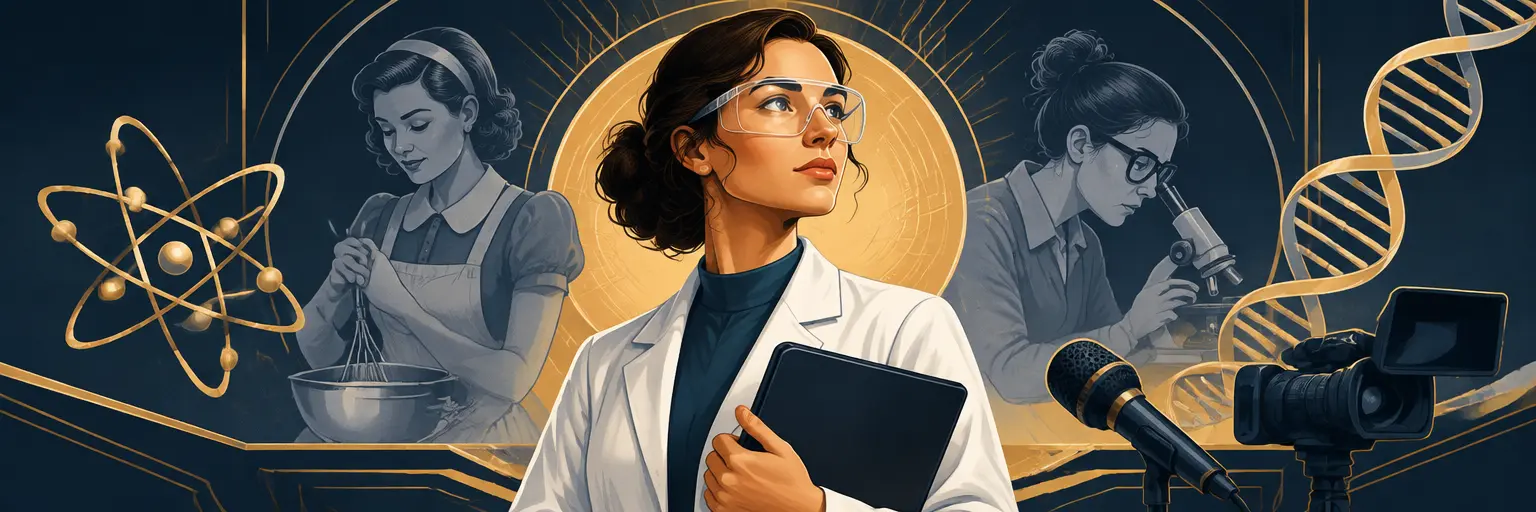
Welcome to our dedicated section on addressing stereotypes about women in science, a vital pillar of science journalism and communication. At WomenInScienceHistory.com, we believe that dismantling harmful myths is just as important as celebrating achievements. Here, we explore the persistent misconceptions that have historically marginalized female scientists, examine their origins, and offer evidence-based counter-narratives. This subcategory serves as both a corrective lens and an empowerment toolkit, helping educators, journalists, and curious readers recognize and challenge bias. By understanding gender bias in STEM, we can foster a more inclusive and accurate portrayal of scientific progress, ensuring that future generations inherit a field where talent, not gender, defines success.
🔬 The Myth of Innate Cognitive Differences
One of the most stubborn stereotypes suggests that men are biologically better suited for mathematics and abstract reasoning. Decades of research, including meta-analyses from the American Psychological Association, show that cognitive performance in math and science has no significant gender gap on average. Instead, differences in achievement often stem from societal expectations, stereotype threat, and unequal access to mentorship. For example, the PISA assessments reveal that girls outperform boys in science literacy in several countries when educational systems are equitable. As a journalist and scientist, you must challenge the "hard-wired" fallacy by presenting data, not dogma, and by highlighting female mathematicians like Maryam Mirzakhani, whose work reshaped geometry.
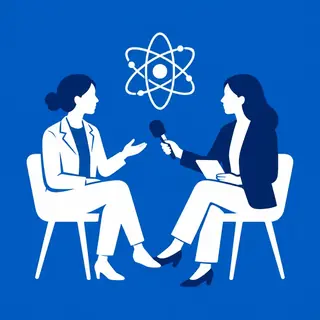
By debunking this myth, communication professionals can reshape hiring practices and classroom dynamics. Consider the impact of role model exposure: when girls see women like Katherine Johnson or Chien-Shiung Wu in STEM narratives, their own performance improves. The subcategory offers practical guides on how to frame stories that emphasize effort and environment over biology, thereby reducing stereotype threat. Expect to find critiques of popular science articles that misuse neuroscience, as well as strategies for journalists to interview scientists about their work, not their gender. This section empowers you to turn a false dichotomy into a nuanced conversation about human potential.
🧪 The "Lone Genius" Narrative vs. Collaborative Science
Popular media often paints scientists as solitary male geniuses—think Edison or Einstein—which implicitly excludes women from the archetype. In reality, science is profoundly collaborative, and many key discoveries emerged from teams, lab groups, and cross-disciplinary partnerships. The stereotype of the lone genius has historically erased women’s contributions, as their work was often subsumed under a male supervisor’s name. For instance, Rosalind Franklin’s critical role in DNA structure was long attributed to Watson and Crick, who worked collaboratively but overshadowed her data. This subcategory helps communicators adopt a co-creation narrative, acknowledging shared credit and the invisible labor of technicians and assistants, many of whom were women.
When you frame science as teamwork, you instantly make it more inclusive. Expect articles that dissect the historical "Matilda Effect," where women’s discoveries are attributed to men, and provide tools for journalists to actively credit all contributors. We also explore how modern open-science practices, like preprints and shared data, inadvertently or positively affect visibility for female researchers. By shifting the spotlight from individual heroics to collective discovery, you can tell richer, more honest stories that resonate with diverse audiences. This section gives you case studies and interview tips to ensure no contributor remains invisible in your coverage.
💡 Stereotype Threat in Laboratories and Classrooms
Psychological research confirms that when women are reminded of negative stereotypes ("women are bad at physics"), their performance drops—a phenomenon known as stereotype threat. This isn’t about innate ability but about anxiety from confirming a negative label. For science communicators, understanding this mechanism is crucial because media coverage can either trigger or reduce it. This H3 explores actionable communication strategies: highlighting counter-stereotypical examples, using inclusive language, and avoiding binary descriptions of gender. For example, featuring female engineers working on climate solutions, not just "female engineers," helps normalize their presence as experts first.
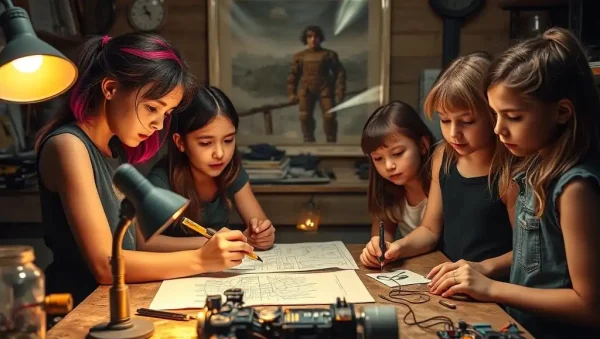
We also discuss how classroom communication—from textbooks to science fair messaging—can be redesigned to minimize threat. You’ll find checklists for inclusive vocabulary, recommendations for imagery that shows diversity in action, and critiques of well-meaning but harmful campaigns that overemphasize women’s emotionality. By adopting these practices, educators and media producers can create environments where women’s confidence matches their competence. Expect concrete examples from successful outreach programs, like the "If/Then" initiative, and evidence on how changing one word can alter performance outcomes. This section is your practical toolkit for fostering mental safety in every scientific interaction.
🕰️ Historical Erasure: How Stereotypes Were Built
To address contemporary stereotypes, you must trace their roots. This H3 section examines the 19th- and 20th-century pseudo-scientific arguments that confined women to domestic roles, from craniometry to hormonal determinism. These flawed studies were often promoted by male scientists to justify excluding women from universities and professional societies. By unearthing this history, communicators can expose how scientific bias is socially constructed, not empirically neutral. For instance, the 1890s "brain weight" debate was used to bar women from medical school, yet it was later debunked as irrelevant to intelligence. Understanding this legacy helps journalists contextualize why some people still harbor doubts about women’s capabilities.
When writing about historical figures, avoid the "exceptional woman" trope—presenting them as anomalies rather than products of supportive networks. Instead, highlight their persistence infrastructure—families, mentors, and institutions that enabled their success. This subcategory critiques traditional hagiography and offers a revisionist framework for storytellers. You’ll discover how to use archival letters, lab notebooks, and institutional records to reconstruct the collaborative and often adversarial environments women navigated. By shedding light on deliberate gatekeeping, you arm readers with historical literacy to recognize modern equivalents, from biased peer review to hostile workplace cultures. Expect profiles of pioneers like Lise Meitner, who was navigated away from Nobel recognition due to entrenched prejudice.
📊 Data-Driven Storytelling to Counter Myths
Statistics are powerful antidotes to stereotypes, but they must be wielded carefully. This H3 focuses on quantitative communication—how to cite inequity metrics without reinforcing deficit narratives. For example, while the gender gap in physics professorships is real, focusing solely on "absence" overlooks the many women who persist despite barriers. Effective science journalism uses data to expose systemic issues but pairs it with resilience stories. We provide guidance on sourcing reliable datasets (e.g., UNESCO, National Science Foundation) and visualizing gaps without using alienating language. A chart showing the underrepresentation of women in top-tier journals can be compelling, but it must include context: mentorship gaps, workload imbalances, and citation biases.
Moreover, we teach you to avoid overgeneralization: not all women in science face the same hurdles—intersectionality matters. Data should be disaggregated by race, class, and disability to avoid whitewashing or creating new stereotypes. Expect templates for infographics that clearly separate correlation from causation, and tips on interviewing women about their experiences without turning them into spokespersons for their whole gender. This section also covers the ethics of predictive metrics in hiring—how to use blind review and algorithmic fairness in your own writing or institutional practices. By grounding your communication in robust evidence, you build credibility and dismantle myths with logic, not just emotion.
Frequently Asked Questions
What is the biggest stereotype about women in science today?
The most persistent stereotype is that women lack innate spatial or quantitative ability compared to men. However, meta-analyses consistently show negligible average differences, and any small variation is overshadowed by cultural factors like stereotype threat and lack of mentorship. The real barrier is societal, not biological.
How can journalists avoid reinforcing stereotypes when covering female scientists?
Focus on their work and achievements first, not their gender or appearance. Quote female experts equally, avoid gendered adjectives like "brilliant but fierce," and credit co-authors and collaborators. Also, include data on systemic barriers without framing women as victims; instead, highlight their resilience and institutional changes needed.
Does stereotype threat affect women in science fields with higher female representation?
Yes, but the severity often correlates with the perceived masculinity of the field. Even in biology, where women are a majority, stereotype threat can arise in subfields like computational biology. The effect diminishes when environments are explicitly inclusive and when role models are visible.
What are some examples of women whose contributions were hidden by stereotypes?
Rosalind Franklin (DNA), Lise Meitner (nuclear fission), and Jocelyn Bell Burnell (pulsars) are classic examples. Their discoveries were initially credited to male colleagues or they received less recognition. Revisiting their stories with a critical lens helps correct historical records and inspires a more truthful narrative.
How can educators use this subcategory to improve classroom discussions?
Incorporate the myth-busting facts and historical context into lesson plans. Assign readings that emphasize collaborative science and showcase diverse role models. Use the communication tips to create a classroom climate where questions are welcomed without gender bias, and actively monitor participation to reduce stereotype threat.