Book Reviews: Women in Science – In-Depth Insights and Inspiring Reads
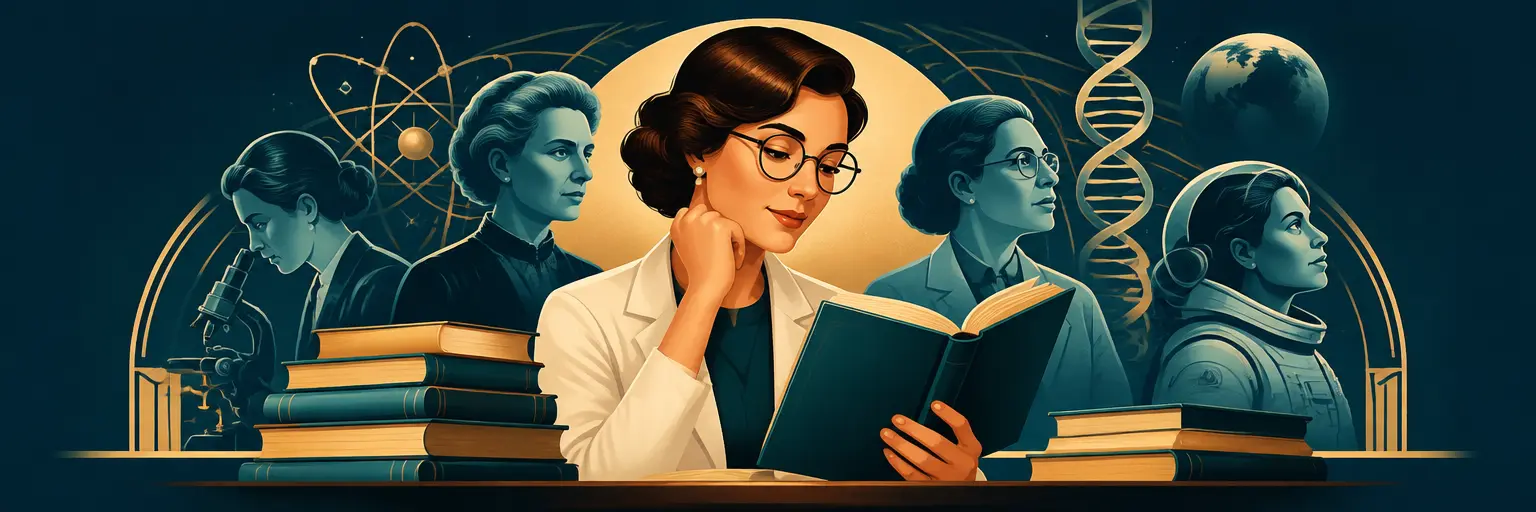
Welcome to our dedicated hub for Book Reviews: Women in Science, where we analyze and celebrate the finest literature that chronicles the lives, struggles, and triumphs of female pioneers in STEM. Whether you are an educator seeking classroom resources, a student researching role models, or a lifelong learner passionate about gender equity in science, this subcategory offers curated reviews of biographies, memoirs, and historical accounts. Our expert evaluations focus on narrative quality, historical accuracy, and the inspirational impact each book delivers, helping you choose your next powerful read while spotlighting the often-overlooked contributions of women in science history.
🎯 Why These Reviews Matter for STEM Enthusiasts
Our reviews go beyond simple summaries; they delve into how each book contextualizes the scientific breakthroughs within the societal barriers of their time. You will discover which titles best capture the raw determination of figures like Marie Curie, Rosalind Franklin, or Katherine Johnson, and which ones offer fresh perspectives on lesser-known contributors. We highlight the depth of research and the emotional resonance that make a biography truly transformative, ensuring your reading list is both intellectually rigorous and personally moving.
This section is designed to help you navigate the expanding genre of women-in-science literature, filtering out superficial accounts in favor of works that provide genuine insight into laboratory life, institutional sexism, and collaborative breakthroughs. Each review includes a clear verdict on the book’s suitability for different audiences—whether you are a young adult just discovering these stories or a professional historian seeking nuanced analysis. Expect actionable recommendations that connect each volume to broader themes of scientific legacy and feminist history.
📚 Top Biographies of Pioneering Women Scientists
Here, we dissect the most compelling biographies that bring historical female scientists to life. Our reviews evaluate how authors balance personal narrative with scientific explanation, making complex discoveries accessible without diluting their significance. We emphasize books that challenge conventional narratives, such as those revealing the overlooked role of women in the Manhattan Project or the hidden contributions of women in astronomy. Each review lists key takeaways, including specific experiments or theories discussed, and assesses the book’s use of primary sources like letters and lab notebooks.
For readers, this means a trusted shortcut to building a profound library. We compare similar biographies head-to-head, noting which offers better archival evidence, which is more engaging for casual readers, and which includes valuable appendices or illustrations. Whether you seek the definitive account of Ada Lovelace’s algorithms or the recent breakthrough analysis of Barbara McClintock’s maize genetics, our reviews will steer you toward the most authoritative and captivating volumes. This saves you hours of research while deepening your appreciation for these trailblazers’ intellectual courage.
💡 Thematic Analyses: Gender, Power, and Scientific Discovery
Beyond individual biographies, this subcategory reviews books that examine systemic themes—such as the exclusion of women from formal education, the politics of scientific recognition, and the intersection of race and gender in research. We focus on works like "The Glass Ceiling in Science" or "Bias in the Lab," highlighting how authors use quantitative data and personal testimonies to expose structural inequality. Our reviews underline the sociological significance of each text, connecting past discrimination to ongoing challenges in today’s scientific community.
You will find guidance on which titles serve as excellent supplementary reads for university courses or book clubs focused on gender studies. We also note where authors successfully integrate global perspectives, covering contributions from women in Africa, Asia, and Latin America, thus broadening the traditional Western-centric narrative. Each thematic review ends with discussion questions you can use to foster conversation, making this an invaluable resource for educators and group leaders. This approach ensures that your reading experience is not just informative but also socially impactful.
📖 Review Criteria: What Makes a Great Science Book?
Transparency is key to our selection process. In this section, we explain the four pillars of our evaluation: historical veracity, narrative clarity, scientific fidelity, and inspirational reach. We break down how we verify facts against primary sources, how we gauge the author’s ability to explain complex theories without jargon, and how we measure the book’s potential to motivate readers—especially young women—to pursue STEM careers. This meta-review approach helps you trust our recommendations and even apply the criteria to your own reading.
We also share insights into common pitfalls found in this genre, such as exaggerated heroism or erasure of collaborative work. By reading our critiques, you’ll learn to identify books that romanticize struggle rather than celebrate resilience, and those that prioritize entertainment over accuracy. This section includes a handy checklist you can use as you explore other reviews online. Ultimately, our goal is to empower you to become a critical consumer of science literature, ensuring that the stories you absorb are both truthful and transformative.
🌟 Early Career and Young Adult Book Picks
For younger readers and students, we review accessible, illustrated volumes and young adult novels that blend fact with engaging storytelling. This section highlights books that introduce the history of women in science without overwhelming young minds with technical detail. We emphasize titles that feature diverse role models—from astronaut Sally Ride to primatologist Jane Goodall—and that foster a growth mindset about scientific failure and experimentation. Our reviews note reading age suitability, visual quality, and whether the book includes practical activities or experiments.
Parents and teachers will appreciate our focus on educational value, including how each book aligns with school science curricula and supports discussions on historical context. We also recommend companion websites or museum guides that can extend the book’s lessons. By offering these curated selections, we aim to build a bridge between childhood curiosity and lifelong scientific passion, ensuring that the next generation sees women scientists as the norm, not the exception. Each review concludes with parent-tested tips for turning a book into a family or classroom project.
Frequently Asked Questions
What is the most comprehensive biography of Marie Curie that you have reviewed?
Our top recommendation is "Marie Curie: A Life" by Susan Quinn, which meticulously weaves personal correspondence with scientific context. We favor it for its balanced treatment of Curie’s public and private life, including her struggles with French society. The book successfully explains radioactivity’s history without obscuring human drama, making it ideal for both novices and experts.
Do your reviews include books about living women scientists?
Yes, we review memoirs and recent works by current researchers, such as "Lab Girl" by Hope Jahren and "The Code Breaker" by Walter Isaacson, which covers Jennifer Doudna. These reviews assess not only scientific content but also contemporary relevance, discussing ongoing research like CRISPR. We aim to show that the legacy of women in science is not just historical but actively evolving.
How do you ensure the accuracy of historical claims in reviewed books?
Our team cross-references each book against peer-reviewed journals, archived letters, and institutional records. We also consult with freelance historians who specialize in women’s studies. When a book contains dubious claims, we explicitly flag them and provide evidence for our counterpoints. This rigorous process guarantees that our reviews are trustworthy references for academic use.
Can I suggest a book for review in this subcategory?
Absolutely. We welcome suggestions from readers and authors. Send us the title, author, and a brief note on why it matters. While we cannot guarantee a review, we prioritize books that fill gaps in the current literature, especially those covering non-Western or queer scientists. Our goal is to expand the canon and represent the full diversity of women’s contributions.
Are there reviews suitable for children aged 8-12?
Yes, we have a dedicated section for early readers. Titles like "Little Dreamers" by Vashti Harrison and "She Persisted in Science" by Chelsea Clinton receive thorough, age-appropriate critiques. We evaluate vocabulary, illustration quality, and factual simplicity. These reviews include tips for parents on how to expand their child’s interest using museum visits or simple home experiments.